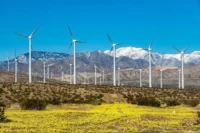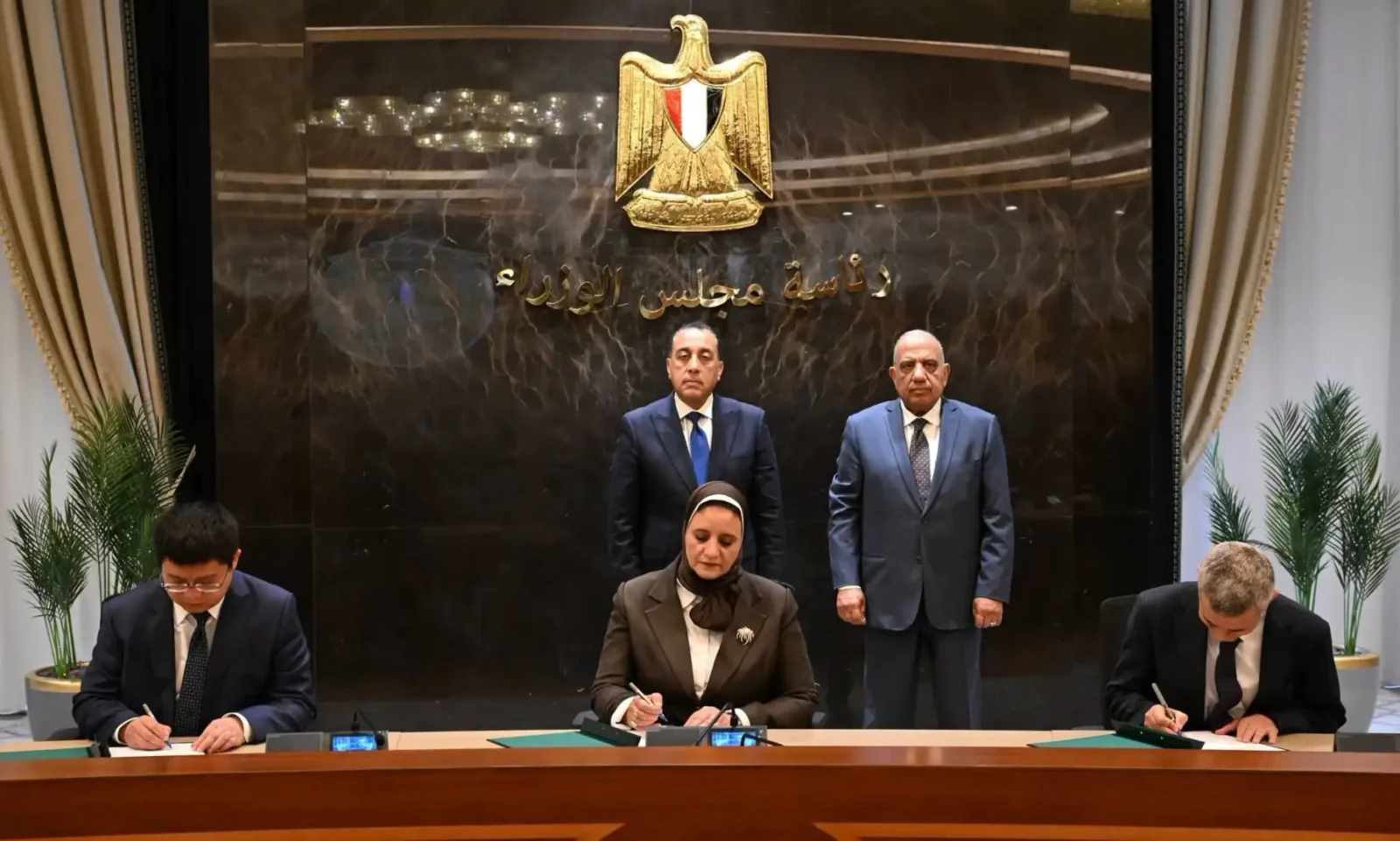
Alcazar Energy Partners has secured $436 million in financing for two wind farms in Ras Ghareb, Egypt, with a combined investment value of $626 million. The Niat and Rasgha projects will each have a capacity of 250 megawatts (MW), adding 500MW of wind power to Egypt’s electricity grid. Backed by European development finance institutions, the projects are expected to begin commercial operations by the end of 2028. Together, they are projected to generate more than 2.3 terawatt-hours (TWh) of electricity annually and avoid approximately 1.1 million tonnes of carbon dioxide-equivalent emissions each year.
Key Takeaways
- Alcazar Energy Partners has secured $436 million in debt financing for two Egyptian wind farms valued at $626 million.
- Niat and Rasgha will each have a capacity of 250MW, adding 500MW to Egypt’s electricity grid.
- The European Bank for Reconstruction and Development (EBRD), European Investment Bank (EIB) and Germany’s DEG are providing the financing in equal shares.
- The projects are expected to begin commercial operations by the end of 2028.
- They are projected to generate more than 2.3TWh of electricity annually and avoid approximately 1.1 million tonnes of CO₂-equivalent emissions each year.
- Egypt aims to increase renewable energy’s share of national electricity generation to 45% by 2028.
Why Is Alcazar Energy Investing $626 Million in Egyptian Wind Farms?
Alcazar Energy Partners has reached financial close on two wind power projects in Egypt, securing $436 million in financing to develop the Niat and Rasgha wind farms in Ras Ghareb, along the Red Sea coast.
Each facility will have an installed capacity of 250 megawatts, bringing their combined capacity to 500MW. The total investment is estimated at $626 million, with the debt package covering approximately 69.5% of the project costs.
The investment comes as Egypt seeks to diversify its electricity generation and reduce its dependence on natural gas. The country has faced electricity supply pressures, difficulties meeting domestic gas demand and exposure to fluctuations in international fuel prices.
Expanding wind generation offers an opportunity to use Egypt’s strong wind resources to produce electricity without increasing natural gas consumption.
The projects are therefore more than an expansion of renewable energy infrastructure. They form part of Egypt’s efforts to strengthen electricity supply, diversify its energy mix and attract international investment into its power sector.
Who Is Financing the Two Wind Projects?
The $436 million financing package is being provided in equal shares by three European development finance institutions:
- European Bank for Reconstruction and Development (EBRD)
- European Investment Bank (EIB)
- Deutsche Investitions- und Entwicklungsgesellschaft (DEG), a subsidiary of Germany’s KfW Group.
The financing also benefits from a guarantee provided through the European Union’s European Fund for Sustainable Development Plus.
This backing is significant because large renewable energy projects require substantial upfront investment before they can begin generating revenue. Development finance institutions can help mobilise the capital needed to build infrastructure that may otherwise be difficult or expensive to finance.
The European guarantee also supports the participation of European technology suppliers, including Siemens Gamesa.
For Egypt, the involvement of these institutions demonstrates how international development finance can support the expansion of domestic renewable energy capacity.
How Much Electricity Will the Wind Farms Generate?
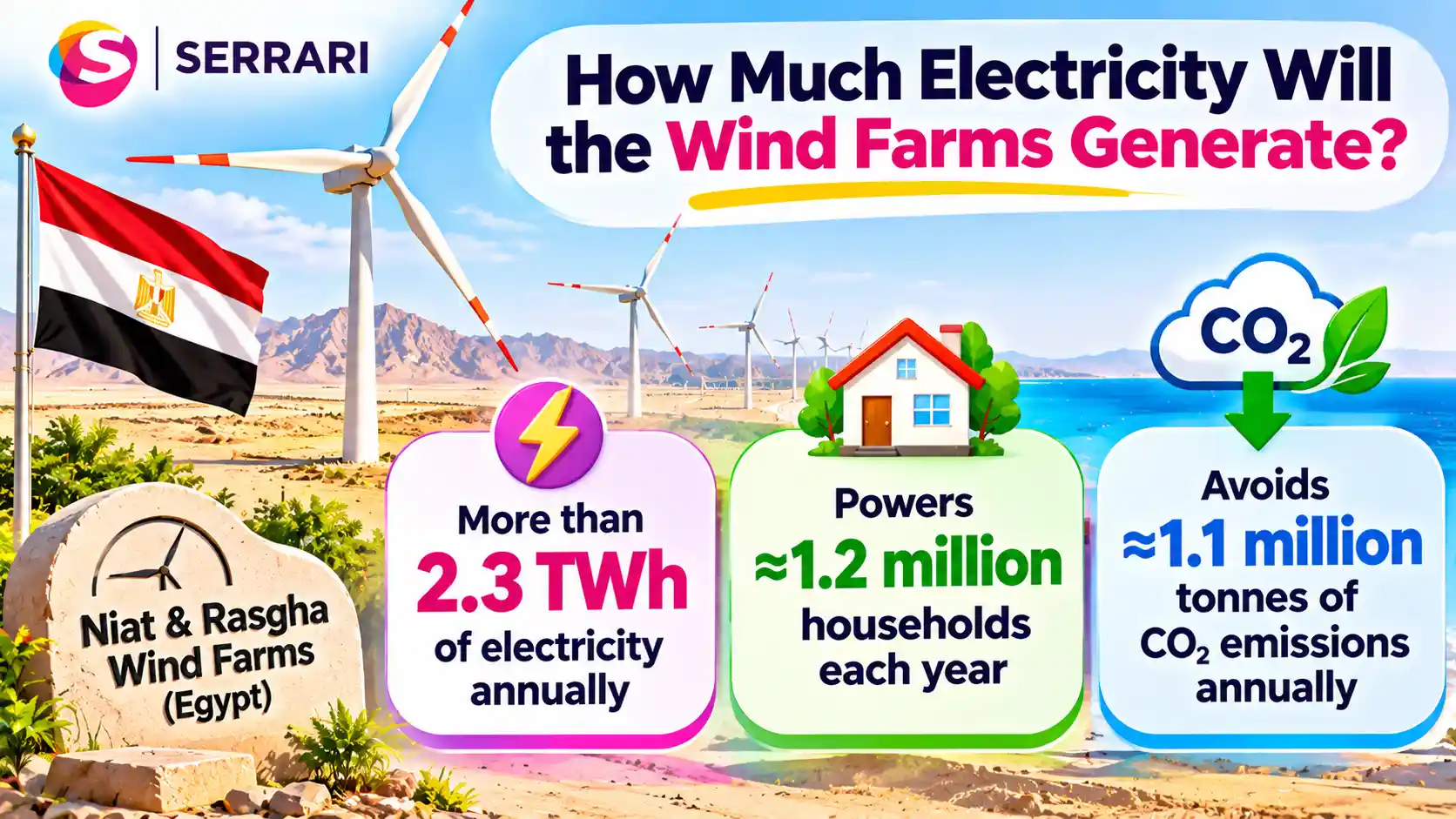
Once operational, the Niat and Rasgha wind farms are projected to generate more than 2.3 terawatt-hours of electricity annually.
According to the project estimates, this output is equivalent to the average annual electricity consumption of approximately 1.2 million households.
The facilities are also expected to avoid approximately 1.1 million tonnes of carbon dioxide-equivalent emissions every year.
This is important because electricity generation from natural gas contributes to the power sector’s emissions and exposes the country to fuel supply and price risks.
By adding 500MW of wind capacity, Egypt can diversify its electricity sources while reducing the amount of electricity that needs to be generated from fossil fuels.
The projects will not eliminate the country’s reliance on natural gas, but they represent an additional source of domestic electricity generation that can help reduce pressure on conventional power plants.
Who Will Build and Supply Equipment for the Projects?
The projects will involve several companies responsible for construction, equipment and operations.
Siemens Gamesa, part of Siemens Energy, will supply the wind turbines and provide operations and maintenance services. The company has received notice to proceed with the project.
Orascom Construction, an Egyptian infrastructure company, will undertake the civil and electrical works for both developments.
The involvement of an Egyptian construction company also connects the international investment with local infrastructure capabilities.
The projects are expected to begin commercial operations by the end of 2028.
Why Are 25-Year Power Purchase Agreements Important?
The Egyptian Electricity Transmission Company (EETC) will purchase electricity generated by the two wind farms through 25-year power purchase agreements (PPAs).
The agreed electricity price is $0.03 per kilowatt-hour (kWh).
These long-term agreements provide a defined structure for selling the electricity generated by the projects over several decades. This is particularly important for renewable energy developments because they require significant upfront capital, while revenue is earned gradually after operations begin.
For investors and lenders, long-term purchase agreements offer greater visibility over future project income, helping support financing decisions.
For Egypt, the agreements establish the price at which electricity from the wind farms will be purchased. Alcazar Energy’s CEO, Daniel Calderón, noted that the agreed rate is considerably lower than the cost of generating electricity from natural gas.
The projects therefore have the potential to provide a long-term source of renewable electricity at a contracted price, although their actual contribution will depend on successful construction and operation.
Context is everything. Stay ahead of shifting trends with today’s market updates, and uncover emerging opportunities using the Serrari Group Market Index and Marketplace. Then, take control of your own financial future by exploring our Money & Life Reset Transformation Blueprint ™ to build stronger habits, create better systems, and design a path toward lasting wealth.
How Do the Projects Fit into Egypt’s 45% Renewable Energy Target?
Egypt aims to increase renewable energy’s share of national electricity generation to 45% by 2028.
Achieving this target will require substantial investment in wind, solar and supporting electricity infrastructure, including battery storage.
The Niat and Rasgha projects will contribute 500MW of new wind capacity towards this wider ambition.
Their development is particularly relevant because Egypt is seeking to address electricity supply challenges while reducing its exposure to fossil fuel costs and natural gas demand.
Wind and solar projects can diversify the electricity mix, but their expansion also requires adequate transmission infrastructure and systems that can manage changes in renewable electricity generation.
The financing of Niat and Rasgha illustrates the role that international investors and development finance institutions can play in supporting this transition.
Is Alcazar Energy Expanding Its Renewable Energy Investments in Egypt?
The two wind farms are part of Alcazar Energy Partners’ broader expansion in Egypt.
In a separate transaction, the company signed agreements valued at $420 million relating to the privatisation, operation and modernisation of the existing 580MW Gabal El Zeit wind farm complex, located south of Ras Ghareb.
The Gabal El Zeit transaction is progressing towards its own project-finance close, which the company aims to secure before the end of 2026. Its financing should not be confused with the $436 million already secured for Niat and Rasgha.
Combined, the two developments represent approximately $1.05 billion in project and transaction value, although financing for Gabal El Zeit has not yet closed.
The expansion also supports Alcazar Energy’s wider investment ambitions. The company closed its second investment fund with $490 million in commitments in May 2024 and has outlined a goal of mobilising approximately $2 billion in renewable energy investment across growth markets.
The Bigger Picture: Why Does Egypt’s Wind Investment Matter Now?
Egypt’s investment in wind power reflects a wider shift among countries seeking to strengthen energy security while expanding renewable electricity generation.
For Egypt, the immediate challenge is balancing rising electricity needs with the cost and availability of natural gas. Heavy reliance on fossil-fuel generation can expose the power sector to fuel supply disruptions and international price volatility.
Projects such as Niat and Rasgha offer an alternative by harnessing domestic wind resources and securing long-term financing and electricity purchase arrangements.
However, the impact will depend on timely construction, grid integration and the ability to deliver the expected electricity output. With commercial operations planned for the end of 2028, the projects will contribute to Egypt’s renewable energy ambitions over the coming years rather than immediately resolving current electricity supply pressures.
The wider significance is the combination of international development finance, private investment and local infrastructure partnerships to expand renewable energy capacity in North Africa.
Frequently Asked Questions
1. How much is Alcazar Energy investing in Egypt’s new wind farms?
The Niat and Rasgha wind farms have a combined estimated investment cost of $626 million. Alcazar Energy Partners has secured $436 million in debt financing from three European development finance institutions.
2. How much electricity will the two Egyptian wind farms generate?
The two facilities are expected to generate more than 2.3TWh of electricity annually once operational, equivalent to the average annual electricity consumption of approximately 1.2 million households.
3. When will the Niat and Rasgha wind farms begin operating?
Both projects are expected to begin commercial operations by the end of 2028.
4. What is Egypt’s renewable energy target for 2028?
Egypt aims to increase renewable energy’s share of national electricity generation to 45% by 2028, supported by additional wind, solar and battery storage capacity.
Your financial future isn’t something you wait for—it’s something you build.
The real question is: when do you begin?
Move beyond simply staying informed.
Navigate the markets with clarity—track trends through the Serrari Group Market Index, uncover opportunities in the Serrari Marketplace, and build practical knowledge with our Curated Wealth Builder Platform.
Stay connected to what truly matters.
Get daily insights on macro trends and financial movements across Kenya, Africa, and global markets—delivered through the Serrari Newsletter.
Growth opens doors.
Advance your career through professional programs including ACCA, HESI A2, ATI TEAS 7 , HESI EXIT , NCLEX – RN and NCLEX – PN, Financial Literacy!🌟—designed to move you forward with confidence.
See where money is flowing—clearly and in real time.
Track Money Market Funds, Treasury Bills, Treasury Bonds, Green Bonds, and Fixed Deposits, alongside global and African indexes, key economic indicators, and the evolving Crypto and stablecoin landscape—all within Serrari’s Market Index.