



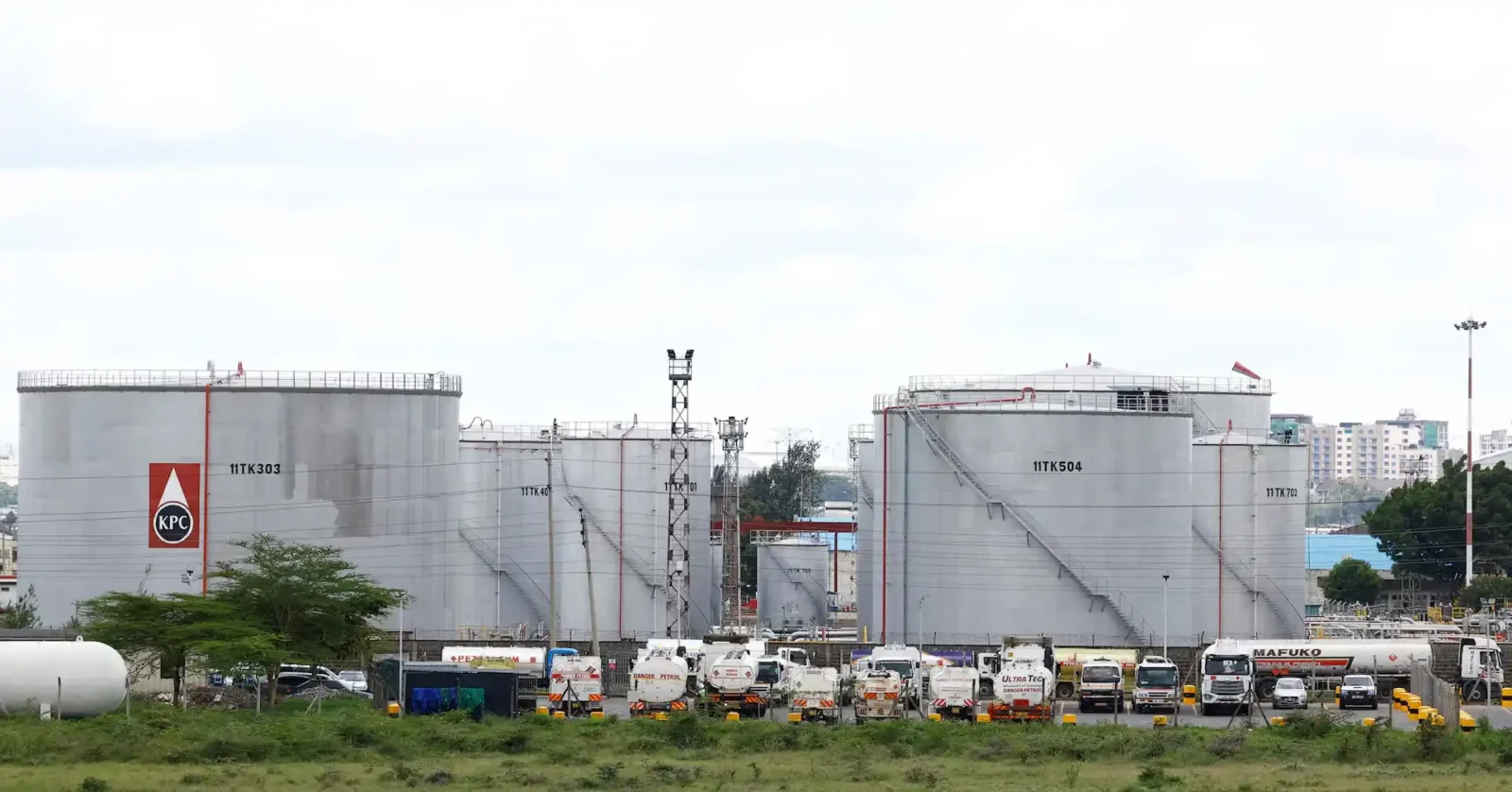
Kenya and Rwanda have activated a new government-to-government petroleum supply arrangement after the first 40,000-metric-tonne fuel shipment for Rwanda arrived at Mombasa’s Kipevu Oil Terminal 2. The agreement allows Rwanda to use Kenya’s port, pipeline and storage infrastructure to bring bulk refined petroleum products through the Northern Corridor. Petroleum volumes moving through Kenya to Rwanda are expected to increase more than tenfold, strengthening Mombasa’s role as a regional energy and logistics hub.
Key Overview
- The first 40,000-metric-tonne shipment arrived at Kipevu Oil Terminal 2 on September 29.
- The cargo was carried by MT Sea Wolf.
- Rwanda will use Mombasa, Kenya Pipeline Company infrastructure and the Northern Corridor for petroleum imports.
- Kenya and Rwanda signed the framework on June 29, 2026.
- Rwanda-bound petroleum volumes through Kenya are expected to increase tenfold.
- Volumes are projected to rise from about 60,000 cubic metres to 600,000 cubic metres annually.
- The arrangement is designed to improve Rwanda’s fuel security and diversify its import routes.
- Kenya expects the deal to strengthen its role as an East African energy transit hub.
First Rwanda Fuel Shipment Arrives in Mombasa
Kenya and Rwanda have activated a new petroleum supply route through the Northern Corridor after Rwanda’s first bulk fuel shipment under the new government-to-government arrangement arrived at Mombasa.
The 40,000-metric-tonne consignment arrived at Kipevu Oil Terminal 2 aboard MT Sea Wolf, marking the first major shipment under the new arrangement.
The cargo contained refined petroleum products destined for Rwanda and was received at the Port of Mombasa on September 29.
The shipment marks the practical start of a new supply corridor designed to allow Rwanda to import bulk refined petroleum products through Kenya.
Kenya’s Northern Corridor Takes on a Bigger Role
Under the arrangement, Rwanda will use Kenya’s port, pipeline and storage infrastructure before petroleum products continue towards Rwanda through the Northern Corridor.
The framework was signed by Kenya and Rwanda on June 29, 2026.
The agreement covers the importation, transportation and storage of Rwanda’s petroleum products through Kenya.
The arrangement is supported by agreements covering transportation, storage, scheduling and handling of Rwanda-bound petroleum imports through Kenya’s petroleum infrastructure.
This gives Rwanda an additional maritime supply route while increasing the use of Kenya’s transport and petroleum infrastructure.
Fuel Transit Could Rise Tenfold
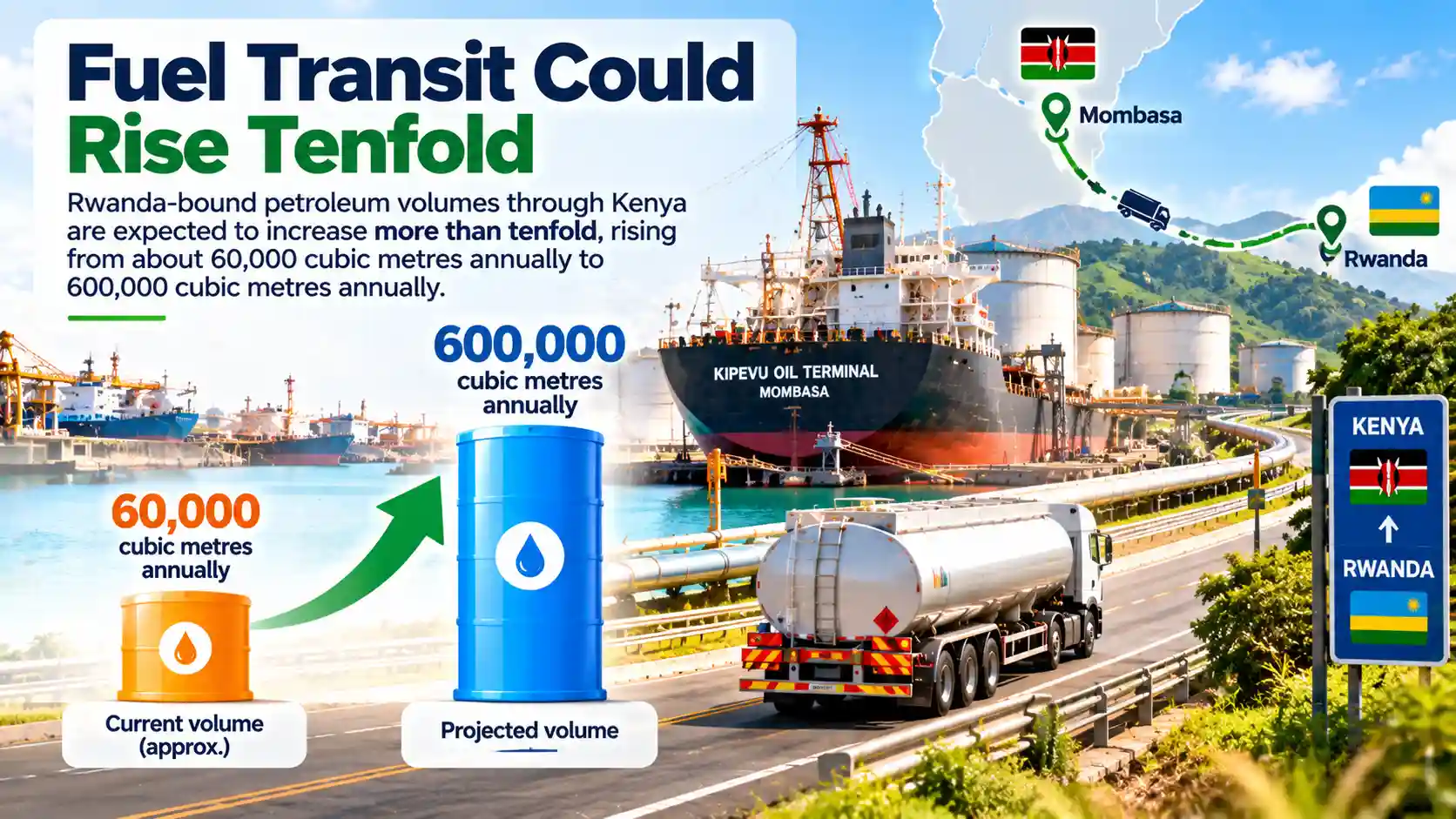
The biggest expected change is the potential increase in petroleum volumes moving through Kenya to Rwanda.
Kenyan officials expect Rwanda-bound volumes through Kenya to increase more than tenfold.
The projected increase is expected to take volumes from approximately 60,000 cubic metres annually to 600,000 cubic metres.
The increase would substantially expand the amount of petroleum moving through Kenya’s Northern Corridor and increase demand for port, pipeline and storage services.
Another projection puts the future volume at more than 500,000 cubic metres annually, reinforcing the scale of the expected increase.
Mombasa Strengthens Its Regional Energy Role
The new arrangement could increase Mombasa’s importance as a petroleum gateway for landlocked countries in East Africa.
Rwanda has traditionally relied heavily on Tanzania’s Dar es Salaam port for petroleum imports. The new arrangement gives the country another major maritime route and reduces dependence on a single supply corridor.
Kenya’s port infrastructure, pipeline network and storage facilities will provide the logistics needed to move Rwanda-bound fuel from the coast towards the inland market.
The arrangement is therefore expected to increase activity across several parts of the petroleum supply chain, including port handling, pipeline transportation and storage.
Rwanda Seeks Greater Fuel Supply Security
For Rwanda, the new route is also about diversifying its sources of petroleum supply.
The country imports its petroleum products and has been working to reduce exposure to disruptions affecting individual supply routes or suppliers.
The new arrangement allows Rwanda to use Kenya alongside its existing routes, giving the country greater flexibility in sourcing and transporting fuel.
Rwanda is also expanding its own storage capacity, while the extended storage arrangements available in Kenya are expected to provide additional flexibility during the transition.
Context is everything. Stay ahead of shifting trends with today’s market updates, and uncover emerging opportunities using the Serrari Group Market Index and Marketplace. Then, take control of your own financial future by exploring our Money & Life Reset Transformation Blueprint ™ to build stronger habits, create better systems, and design a path toward lasting wealth.
Kenya’s Infrastructure Is Ready for Higher Volumes
Kenya is positioning its existing petroleum infrastructure to handle the expected increase in Rwanda-bound cargo.
The new Kipevu Oil Terminal can accommodate three tankers, while the wider infrastructure connects the port with the Kenya Pipeline Company’s transportation and storage network.
Kenya Pipeline Company has invested ahead of expected demand. Its network spans 1,342 kilometers of pipeline and can transport approximately 14 billion litres of petroleum products annually.
The company also has 1.138 billion liters of storage capacity.
These facilities provide the infrastructure needed to accommodate additional regional petroleum traffic.
The First Shipment Opens a Larger Market
The arrival of MT Sea Wolf is the first practical implementation of the Kenya-Rwanda petroleum framework.
The cargo was supplied by OQ Trading and arrived at Kipevu Oil Terminal 2 on September 29.
The shipment demonstrates how the new government-to-government framework can operate in practice, moving petroleum products through Mombasa before they continue to Rwanda.
As volumes increase, the arrangement could create additional demand for port services, pipeline transportation, storage and other logistics activities along the Northern Corridor.
Link to Kenya’s Wider Energy Ambitions
The new fuel corridor also comes as Kenya develops plans to strengthen its position in regional energy markets.
The country is preparing for the development of the planned Lamu refinery, which is designed to process 700,000 barrels of crude oil per day.
The current Rwanda shipment is not connected to that planned refinery because the fuel was imported as refined petroleum products supplied by OQ Trading.
However, the new corridor demonstrates the type of regional market and logistics network that could eventually support a larger regional petroleum supply role for Kenya.
Outlook
The Kenya-Rwanda fuel agreement marks a new phase in regional petroleum trade, with the first 40,000-metric-tonne shipment now moving through Mombasa.
The planned increase in Rwanda-bound volumes from approximately 60,000 cubic metres to 600,000 cubic metres annually would significantly expand the role of Kenya’s Northern Corridor in Rwanda’s fuel supply chain.
For Rwanda, the arrangement provides another route for petroleum imports and greater flexibility in managing supply. For Kenya, higher transit volumes could strengthen the role of Mombasa, Kipevu and the Kenya Pipeline network as regional energy infrastructure.
The next stage will be the expansion of regular shipments and the ability of Kenya’s infrastructure to absorb the projected increase while maintaining reliable petroleum supplies for both Rwanda and other regional markets.
FAQs
1. How much fuel was in Rwanda’s first shipment through Kenya?
The first shipment carried 40,000 metric tonnes of refined petroleum products.
2. When did Kenya and Rwanda sign the fuel agreement?
The two countries signed the government-to-government framework on June 29, 2026.
3. How much could Rwanda’s fuel transit through Kenya increase?
Volumes are projected to increase tenfold, from approximately 60,000 cubic metres to 600,000 cubic metres annually.
4. Why is the deal important for Rwanda?
The arrangement gives Rwanda an additional petroleum import route through Mombasa and the Northern Corridor, helping diversify its fuel supply channels and improve supply-chain flexibility.
Sources: Kenya News Agency | Business Insider Africa | KBC | Kenyans.co.ke
Your financial future isn’t something you wait for—it’s something you build.
The real question is: when do you begin?
Move beyond simply staying informed.
Navigate the markets with clarity—track trends through the Serrari Group Market Index, uncover opportunities in the Serrari Marketplace, and build practical knowledge with our Curated Wealth Builder Platform.
Stay connected to what truly matters.
Get daily insights on macro trends and financial movements across Kenya, Africa, and global markets—delivered through the Serrari Newsletter.
Growth opens doors.
Advance your career through professional programs including ACCA, HESI A2, ATI TEAS 7 , HESI EXIT , NCLEX – RN and NCLEX – PN, Financial Literacy!🌟—designed to move you forward with confidence.
See where money is flowing—clearly and in real time.
Track Money Market Funds, Treasury Bills, Treasury Bonds, Green Bonds, and Fixed Deposits, alongside global and African indexes, key economic indicators, and the evolving Crypto and stablecoin landscape—all within Serrari’s Market Index.















Comments are closed.