Toyota’s compact electric SUV, the Toyota bZ3X, has emerged as one of the company’s biggest EV successes in China, surpassing 80,000 deliveries within its first year on the market and becoming the top-selling joint-venture new energy vehicle for seven consecutive months.
Developed under the GAC Toyota partnership, the bZ3X combines aggressive pricing, modern EV technology, and localized production to compete directly against dominant Chinese EV brands such as BYD and XPeng. Starting at just 109,800 yuan (about $15,000), the SUV highlights how quickly China’s EV market has evolved toward affordable, feature-rich electric vehicles.
The model’s rapid success also underscores the growing challenge facing global automakers outside China, where tariffs, higher manufacturing costs, and supply chain limitations make ultra-low-cost EVs difficult to replicate.
Key Overview
- Toyota bZ3X surpassed 80,000 deliveries within one year
- Held China’s top joint-venture NEV sales position for 7 straight months
- April 2026 sales reached a record 10,027 units
- Developed under GAC Toyota
- Starts at 109,800 yuan ($15,000), with promotional pricing below $14,500
- Offers up to 610 km (379 miles) CLTC range
- Equipped with Momenta 5.0 ADAS and optional LiDAR
- Will not be sold in the U.S. due to China-related trade barriers
Toyota Scores a Rare EV Success in China
Toyota’s Toyota bZ3X has had a year that most global automakers would consider a major breakthrough in the highly competitive and rapidly evolving Chinese EV market. Launched in March 2025 under the GAC Toyota partnership, the compact electric SUV surpassed 80,000 deliveries within its first year on the market, a significant milestone for a foreign-affiliated EV brand operating in China.
Since September 2025, the model has maintained the top sales position among all joint-venture new energy vehicles (NEVs) in China, a streak that has now extended for seven consecutive months.
In April 2026 alone, the SUV sold 10,027 units, setting a new monthly sales record and reinforcing its growing momentum in one of the world’s most competitive EV markets.
The achievement is particularly significant because China’s EV sector has become increasingly dominated by powerful domestic automakers such as:
- BYD
- Geely
- XPeng
These companies have steadily expanded market share through:
- Aggressive pricing strategies
- Faster product development cycles
- Advanced software integration
- Rapid battery innovation
- Strong domestic supply chain advantages
According to industry data, BYD alone accounted for roughly 29% of China’s NEV market share in 2025, highlighting the intense competitive pressure foreign automakers now face in the country.
For global legacy automakers, China’s EV market has become increasingly difficult to navigate, with many foreign brands struggling to compete against lower-cost and highly localized Chinese rivals.
Against that backdrop, the success of the bZ3X represents one of Toyota’s strongest EV performances globally and demonstrates how localized product strategies are becoming essential for survival in China’s automotive market.
Markets move fast; don’t get left behind. We’ve paired the Serrari Group Market Index with a curated Marketplace and a comprehensive Wealth Builder Course to ensure you have the data—and the skills—to act on it.
Why the GAC-Toyota Partnership Matters
In China’s automotive market, joint ventures operate in a very different competitive environment from purely domestic brands, particularly within the rapidly expanding new energy vehicle sector.
GAC Group—short for Guangzhou Automobile Group—is one of China’s largest state-owned automotive manufacturers and has partnered with Toyota for more than two decades through the GAC Toyota venture.
Historically, foreign automakers relied heavily on joint ventures to access the Chinese market, leveraging strong global brand recognition and established manufacturing expertise.
However, in today’s rapidly evolving EV landscape, simply carrying a well-known international automotive brand is no longer enough to guarantee success.
Chinese consumers are increasingly prioritizing:
- Advanced in-car technology
- Software and connectivity features
- Competitive pricing
- Fast charging capability
- Smart driving systems and ADAS functionality
The bZ3X represents Toyota’s localized response to mounting pressure from domestic Chinese EV makers that continue to dominate the market through:
- Lower-cost vehicles
- Faster development timelines
- Advanced digital ecosystems
- Aggressive battery and software innovation
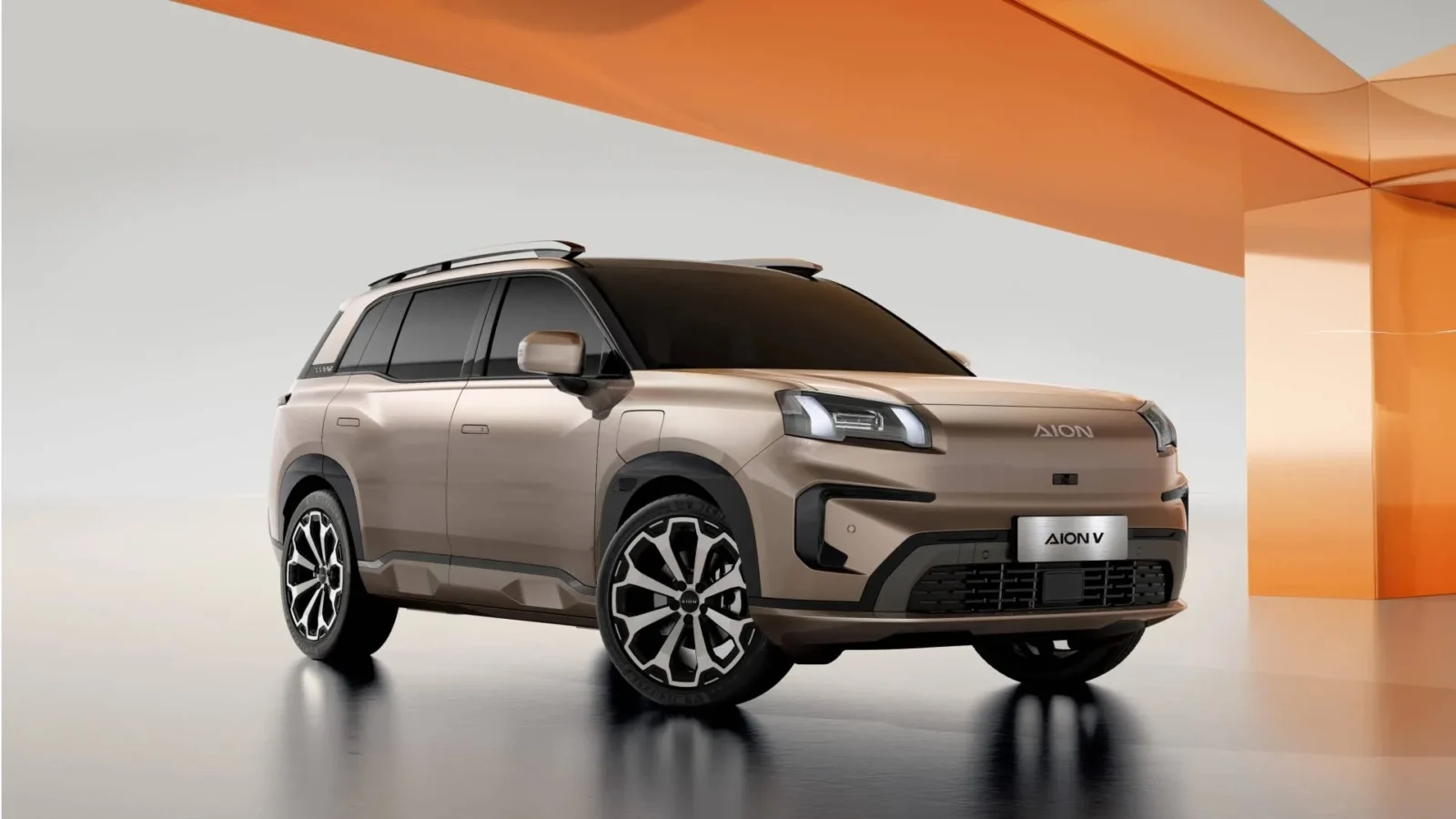
The SUV is based heavily on the GAC Aion V platform and has reportedly outsold the Aion V in GAC’s own domestic market, an important achievement given the strength of Chinese domestic EV brands.
The model also demonstrates how foreign automakers in China are increasingly relying on:
- Local partnerships
- Localized engineering and design
- Chinese battery and software supply chains
- China-specific vehicle development strategies
to remain competitive in the world’s largest EV market.
The broader shift reflects how China is no longer simply a manufacturing base for global automakers, but increasingly a center for EV innovation, pricing competition, and next-generation automotive technology development.
A $15,000 EV Packed With Features
The Toyota bZ3X is roughly the size of a Toyota RAV4 and competes in one of China’s fastest-growing EV segments: affordable compact electric SUVs designed to combine advanced technology with aggressive pricing.
The vehicle is available in seven trim levels and includes features typically associated with significantly more expensive premium EV models.
Key features include:
- A 14.6-inch floating infotainment screen
- An 8.8-inch digital driver display
- A Qualcomm Snapdragon 8155 chip
- 32-color ambient lighting
- Panoramic sunroof
- Toyota’s first integration of the Momenta 5.0 driver assistance system
- Optional roof-mounted LiDAR sensors on selected trims
The inclusion of advanced driver assistance features and premium interior technology at such a low price point highlights how quickly EV technology has become commoditized within China’s domestic market.
The EV is offered with two battery options:
- 50.04 kWh battery with a CLTC range of 430 km (267 miles)
- 67.92 kWh battery with a CLTC range of 610 km (379 miles)
Pricing starts at:
- 109,800 yuan (about $15,000)
- Promotional pricing temporarily lowered the starting price to 99,800 yuan (roughly $14,500)
For comparison, many entry-level EVs in North America and Europe still cost more than double that amount, even before optional features and incentives are considered.
The aggressive pricing highlights how Chinese EV manufacturers and joint ventures are reshaping global expectations around EV affordability, technology integration, and consumer value.
It also underscores the widening gap between China’s highly competitive EV ecosystem and Western automotive markets, where higher production costs, tariffs, and supply chain structures continue to limit the availability of ultra-low-cost electric vehicles.
Context is everything. While you follow today’s updates, use the Serrari Group Market Index and Marketplace to spot emerging shifts. Need to sharpen your edge? Our Wealth Builder Course turns these insights into a professional-grade strategy.
Why the bZ3X Won’t Reach the U.S.
Despite the model’s strong commercial success in China, the Toyota bZ3X is not expected to be sold in the United States due to current tariff structures, trade restrictions, and broader geopolitical tensions surrounding Chinese-made electric vehicles.
Because the SUV is manufactured entirely in China under the GAC Toyota partnership, importing it into the U.S. market would face significant commercial and regulatory barriers under existing trade policies.
The situation highlights the growing divide between China’s ultra-competitive EV market and Western automotive markets, where production costs and policy structures remain substantially different.
This creates a major pricing contrast between EVs sold in China and those available to American consumers.
For comparison:
- The 2026 Toyota bZ in the U.S. starts at approximately $34,900
- The Toyota C-HR EV starts around $37,000
While both models are positioned as relatively affordable EVs within the American market, neither comes close to the pricing level achieved by the bZ3X in China.
The pricing gap reflects broader structural differences involving:
- Manufacturing costs
- Battery supply chains
- Labor and production efficiency
- Government incentives and subsidies
- Domestic competition levels
- Trade and tariff policies
China’s EV ecosystem has evolved into one of the world’s most cost-efficient automotive manufacturing environments, supported by:
- Massive domestic battery production capacity
- Highly localized supply chains
- Intense price competition
- Large-scale EV adoption
- Strong government policy support
As a result, Chinese EV makers and joint ventures are increasingly able to deliver feature-rich electric vehicles at prices that remain difficult for Western automakers to match.
The inability to bring vehicles such as the bZ3X to the U.S. market also highlights how trade policy is increasingly shaping the future of global EV competition and access to affordable electric vehicles.
Toyota Expands Its EV Push Globally
The success of the Toyota bZ3X comes as Toyota accelerates its broader global EV strategy following years of criticism that the company had moved too slowly into battery-electric vehicles compared with rivals such as Tesla and leading Chinese automakers.
For years, Toyota focused heavily on hybrid technology and hydrogen fuel-cell vehicles while many competitors aggressively expanded battery-electric lineups.
However, growing global EV demand and intensifying competition—particularly in China—have pushed the company to accelerate investment in fully electric models and next-generation battery technologies.
Toyota also recently launched the Toyota bZ7, its new flagship electric sedan in China.
According to reports:
- The bZ7 secured more than 3,100 orders within its first hour
- GAC Toyota sold 4,637 bZ7 units in its first month on the market
The strong early demand suggests Toyota’s localized EV strategy is beginning to gain traction in China, where consumers increasingly prioritize technology integration, connectivity features, and competitive pricing.
Meanwhile, Toyota is also seeing growing momentum in the U.S. EV market.
Through the first three months of 2026:
- The Toyota bZ became the third best-selling EV in the U.S.
- Only Tesla’s Model Y and Model 3 sold more units
The progress suggests Toyota’s EV business is beginning to strengthen globally after a relatively slow start in the battery-electric segment.
However, the company still faces significant competitive pressure from Chinese automakers that continue to dominate the lower-cost EV category through faster innovation cycles and more aggressive pricing strategies.
Outlook: China Continues to Reshape the Global EV Market
The success of the Toyota bZ3X highlights how rapidly China’s EV market is transforming the global automotive industry and reshaping expectations around electric vehicle affordability, technology, and production scale.
China is increasingly emerging not only as the world’s largest EV market, but also as the global center for battery manufacturing, EV software integration, and low-cost electric vehicle production.
In the near term, attention will focus on:
- Whether Toyota can sustain the model’s rapid sales momentum
- Expansion into additional overseas markets such as Japan or Europe
- Competitive responses from Chinese automakers
- Continued pressure on EV pricing globally
Analysts also expect growing competition in the affordable EV segment as more global automakers attempt to introduce lower-cost electric vehicles capable of competing with Chinese brands.
Over the longer term, the bZ3X illustrates a much larger industry trend: China is increasingly setting the global benchmark for affordable, technology-rich electric vehicles.
For global automakers, competing in this environment will likely require:
- Faster vehicle development cycles
- Greater software integration and connectivity
- Lower manufacturing costs
- Stronger localized supply chains
- More aggressive EV pricing strategies
The model also demonstrates how localized partnerships and regional engineering are becoming increasingly important for success in international EV markets.
Ultimately, Toyota’s success with the bZ3X demonstrates both the opportunities and challenges of the global EV transition—showing how affordability, advanced technology, and localized production strategies are rapidly becoming essential for automakers seeking to remain competitive in the world’s largest electric vehicle market.
Your financial future isn’t something you wait for—it’s something you build.
The real question is: when do you begin?
Move beyond simply staying informed.
Navigate the markets with clarity—track trends through the Serrari Group Market Index, uncover opportunities in the Serrari Marketplace, and build practical knowledge with our Curated Wealth Builder Course.
Stay connected to what truly matters.
Get daily insights on macro trends and financial movements across Kenya, Africa, and global markets—delivered through the Serrari Newsletter.
Growth opens doors.
Advance your career through professional programs including ACCA, HESI A2, ATI TEAS 7 , HESI EXIT , NCLEX – RN and NCLEX – PN, Financial Literacy!🌟—designed to move you forward with confidence.
See where money is flowing—clearly and in real time.
Track Money Market Funds, Treasury Bills, Treasury Bonds, Green Bonds, and Fixed Deposits, alongside global and African indexes, key economic indicators, and the evolving Crypto and stablecoin landscape—all within Serrari’s Market Index.