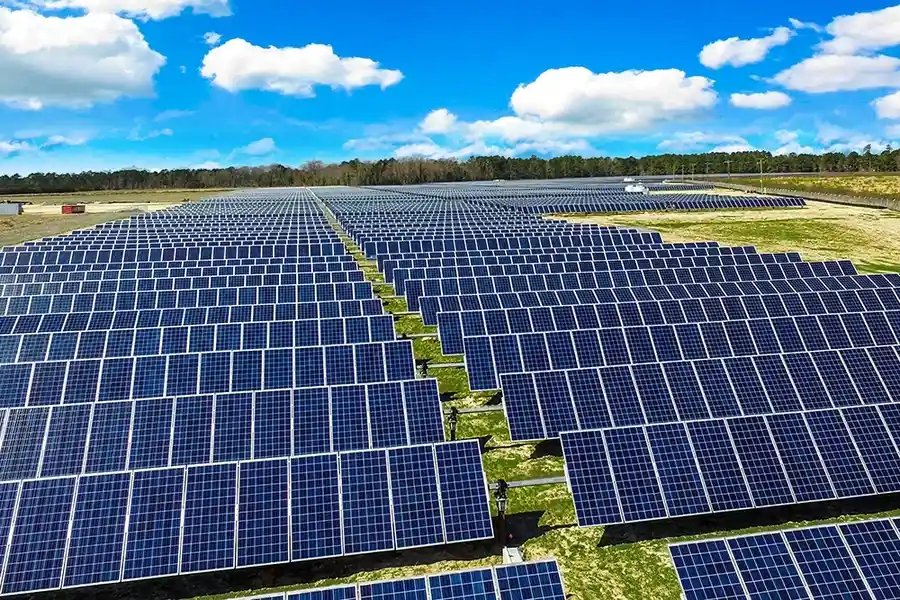
Renewvia Energy Corp. is planning a major $750 million expansion of its African operations focused on deploying solar-powered mini-grids across Uganda, Rwanda, Ethiopia, and Democratic Republic of the Congo. The company aims to deliver approximately 2.1 million new electricity connections, targeting rural communities that remain underserved by national power grids.
The expansion builds on Renewvia’s existing mini-grid operations in Kenya and Nigeria, where solar-powered local electricity networks have improved household incomes, water access, and economic opportunities. The company believes decentralized renewable energy systems represent one of the most practical solutions for addressing Africa’s persistent electricity access gap.
However, the expansion also highlights the significant financing and infrastructure challenges facing Africa’s electrification efforts, as developers compete for climate finance and attempt to scale renewable energy access across underserved regions.
Key Overview
- Renewvia Energy Corp. plans $750M African expansion
- Targets 2.1 million new electricity connections
- Focus countries include Uganda, Rwanda, Ethiopia, and DRC
- Expansion builds on existing operations in Kenya and Nigeria
- Mini-grids combine solar power with battery storage
- Survey showed Kenyan household incomes quadrupled after electrification
- Nigeria attracted over $900M in solar investment since 2018
- Renewvia recently secured $10M from Claritas Capital
A Major Expansion of Off-Grid Solar in Africa
Renewvia Energy Corp. is planning a major $750 million expansion of its African operations, targeting off-grid solar projects across Uganda, Rwanda, Ethiopia, and Democratic Republic of the Congo as part of a broader effort to improve electricity access in underserved rural communities across sub-Saharan Africa.
Renewvia Africa CEO Trey Jarrard said the company plans to deliver approximately 2.1 million new electricity connections through the expansion, significantly scaling operations beyond its current activities in Kenya and Nigeria, where the company has already deployed multiple solar-powered mini-grid systems serving communities with limited or no connection to national electricity networks.
The initiative reflects growing momentum behind decentralized renewable energy systems in Africa, where hundreds of millions of people still lack reliable electricity access despite increasing investment in large-scale power generation and transmission infrastructure.
Across many African countries, electricity access remains heavily concentrated in urban centers, while rural regions continue to experience limited grid coverage, unreliable supply, and high energy costs. This lack of reliable electricity continues to constrain:
- Economic development
- Healthcare delivery
- Educational access
- Agricultural productivity
- Digital connectivity and financial inclusion
Renewvia said the expansion specifically targets rural communities located far from national transmission networks, where extending traditional grid infrastructure remains:
- Technically difficult
- Financially expensive
- Time-consuming
- Operationally challenging in low-density regions
For many governments and development institutions, mini-grids are increasingly viewed as one of the fastest and most cost-effective solutions for expanding electricity access while supporting broader economic development and climate objectives simultaneously.
The expansion also reflects rising investor interest in Africa’s off-grid renewable energy sector, particularly as decentralized systems become increasingly important in achieving universal energy access goals while reducing dependence on diesel generation and fossil fuel imports.
Markets move fast; don’t get left behind. We’ve paired the Serrari Group Market Index with a curated Marketplace and a comprehensive Wealth Builder Course to ensure you have the data—and the skills—to act on it.
How Solar Mini-Grids Work
At the center of Renewvia’s strategy are solar-powered mini-grids, which combine:
- Solar photovoltaic generation
- Battery storage systems
- Localized electricity distribution networks
Together, these systems create self-contained renewable energy networks capable of delivering electricity directly to homes, businesses, and community facilities without relying on large national grid infrastructure.
These systems are capable of powering:
- Homes and residential communities
- Schools and educational institutions
- Clinics and healthcare centers
- Small businesses and local enterprises
- Community water systems and agricultural infrastructure
Unlike centralized national grids that require extensive transmission and distribution infrastructure, mini-grids operate independently at the local level and can supply electricity directly to entire communities.
Renewvia said the systems are particularly effective in remote regions where extending conventional power lines is either too expensive or impractical due to:
- Geographic isolation
- Mountainous or difficult terrain
- Low population density
- Limited transportation infrastructure
Battery storage also plays a critical role in the systems by allowing solar energy generated during the day to be stored and used during evening hours or periods of low sunlight, helping improve reliability and consistency of electricity supply.
The company believes decentralized renewable energy systems can help accelerate electrification far more rapidly than relying solely on traditional grid expansion projects, which often require years of planning, financing, and infrastructure development.
Mini-grids are also increasingly being viewed as a complementary solution to national grids rather than a replacement, helping governments expand electricity access more quickly while reducing pressure on centralized infrastructure systems.
Economic and Social Impact Already Visible
Renewvia says its existing projects in Kenya and Nigeria have already demonstrated measurable economic and social benefits for communities connected to mini-grid systems, reinforcing the broader development potential of decentralized renewable energy infrastructure.
A survey conducted among 2,658 households and business owners before and after electrification found significant improvements in household income, local economic activity, and access to essential services.
According to the company:
- Median household income in Kenyan communities quadrupled after electrification
- Communities gained improved access to water through electric-powered pumping systems
- Women were able to participate in new income-generating activities previously unavailable without electricity access
The findings reinforce growing evidence that electricity access can create substantial economic multiplier effects beyond basic household lighting and appliance use.
Improved electricity access can support:
- Small business creation and expansion
- Agricultural productivity and irrigation systems
- Education outcomes through improved lighting and digital access
- Healthcare delivery and refrigeration for medicines
- Mobile connectivity, internet access, and financial inclusion
For many rural communities, reliable electricity also reduces dependence on:
- Diesel generators
- Kerosene lighting
- Biomass fuels such as wood and charcoal
This transition can help lower household energy costs, reduce indoor air pollution, improve public health outcomes, and strengthen long-term environmental sustainability.
Renewvia argues that decentralized renewable energy systems therefore represent not only an energy solution, but also a broader development tool capable of supporting economic inclusion, poverty reduction, and improved living standards across underserved communities.
Context is everything. While you follow today’s updates, use the Serrari Group Market Index and Marketplace to spot emerging shifts. Need to sharpen your edge? Our Wealth Builder Course turns these insights into a professional-grade strategy.
Targeting Countries With Rural Electrification Gaps
Renewvia Energy Corp.’s expansion strategy focuses heavily on countries with substantial renewable energy potential but persistent rural electrification gaps, where millions of people still lack reliable access to modern electricity despite broader growth in national power generation capacity.
Countries including:
already generate significant amounts of electricity through large-scale hydropower infrastructure and other renewable energy resources. However, much of that generation capacity remains concentrated around major urban centers, industrial zones, and key economic corridors, leaving many rural and remote communities disconnected from national electricity systems.
In several of these markets, national grids cover only a limited share of the population outside major cities, while infrastructure expansion into sparsely populated rural areas remains financially and technically difficult.
As a result, millions of households, farms, schools, clinics, and small businesses continue to rely on:
- Diesel generators
- Kerosene lighting
- Biomass fuels such as wood and charcoal
- Limited or unreliable local electricity sources
Renewvia believes solar mini-grids can complement existing hydropower systems by extending electricity access into underserved regions where centralized grid expansion may take years or even decades to reach.
The company argues that decentralized renewable energy infrastructure can help bridge the gap between national power generation and last-mile electricity delivery, particularly in countries with difficult terrain, weak transmission infrastructure, or rapidly growing rural populations.
The strategy also aligns with broader government and regional electrification goals aimed at improving:
- Rural economic development
- Energy security
- Digital connectivity
- Agricultural productivity
- Access to healthcare and education services
Renewvia sees strong long-term growth opportunities in these markets due to:
- Rapid population growth
- Rising electricity demand
- Expanding mobile and digital economies
- Increasing government support for renewable energy deployment
- Greater international investment in energy access initiatives
The company also expects demand for decentralized energy systems to rise as African economies continue to urbanize and industrialize, placing additional pressure on already constrained national power systems.
In many cases, mini-grids are increasingly being viewed not only as temporary electrification solutions, but as permanent components of future energy systems capable of supporting localized economic activity and improving resilience against grid instability and fuel price volatility.
Financing Challenges and a Competitive Market
Despite growing investor interest in Africa’s renewable energy sector, securing financing for the full $750 million expansion remains one of Renewvia’s biggest challenges.
The company recently secured:
- $10 million from Claritas Capital for expansion in Kenya and Nigeria
- A separate $15 million development loan from Treehouse Development Finance for utility-scale solar projects in the United States
However, the planned four-country African expansion requires substantially larger financing commitments involving both debt and equity capital.
The challenge comes at a time when Africa’s electrification progress has slowed despite rising renewable energy investment.
According to industry estimates:
- Sub-Saharan Africa still accounts for more than 80% of the global population without electricity access
- Fewer than 19 million people annually gained electricity access in 2023 and 2024
At the same time, competition for renewable energy investment is intensifying.
Nigeria alone has attracted more than $900 million in solar investments since 2018, while the country has also launched its own $750 million renewable electrification programme targeting approximately 1,350 solar mini-grids.
Analysts note that Renewvia’s success will depend not only on financing, but also on overcoming broader structural challenges including:
- Regulatory complexity
- Distribution and logistics barriers
- Currency and financing risks
- Weak rural infrastructure
- Grid integration challenges
Outlook: Mini-Grids Become Central to Africa’s Energy Transition
Renewvia’s planned expansion highlights the growing strategic importance of decentralized renewable energy systems in Africa’s broader energy transition.
In the near term, attention will likely focus on:
- Securing financing for the broader expansion strategy
- Scaling mini-grid deployment across target countries
- Expanding rural electricity access
- Building local operational and distribution capacity
Over the longer term, mini-grids are expected to play an increasingly important role in helping African countries address persistent electricity shortages while reducing reliance on diesel generation and fossil fuel imports.
The expansion also reflects a broader shift in how governments, investors, and developers are approaching electrification—moving beyond centralized grid-only models toward more flexible and localized renewable energy systems.
Ultimately, Renewvia’s $750 million strategy demonstrates how off-grid solar infrastructure is evolving into a critical component of Africa’s energy, economic, and climate strategy, offering the potential to improve energy access, support local development, and accelerate clean energy adoption across millions of underserved communities.
Your financial future isn’t something you wait for—it’s something you build.
The real question is: when do you begin?
Move beyond simply staying informed.
Navigate the markets with clarity—track trends through the Serrari Group Market Index, uncover opportunities in the Serrari Marketplace, and build practical knowledge with our Curated Wealth Builder Course.
Stay connected to what truly matters.
Get daily insights on macro trends and financial movements across Kenya, Africa, and global markets—delivered through the Serrari Newsletter.
Growth opens doors.
Advance your career through professional programs including ACCA, HESI A2, ATI TEAS 7 , HESI EXIT , NCLEX – RN and NCLEX – PN, Financial Literacy!🌟—designed to move you forward with confidence.
See where money is flowing—clearly and in real time.
Track Money Market Funds, Treasury Bills, Treasury Bonds, Green Bonds, and Fixed Deposits, alongside global and African indexes, key economic indicators, and the evolving Crypto and stablecoin landscape—all within Serrari’s Market Index.