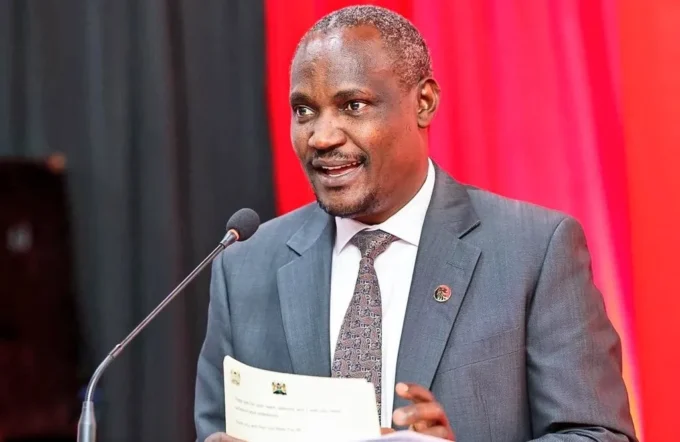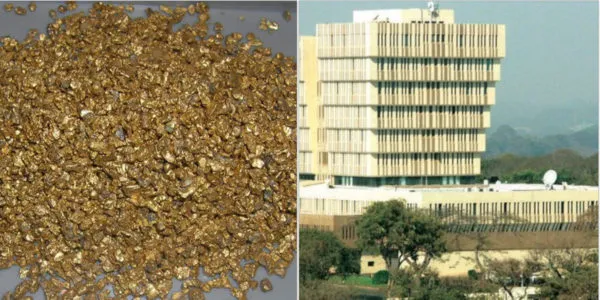
On April 22, 2026, the Malawian government confirmed a series of emergency financial maneuvers designed to stabilize the country’s collapsing fuel supply chain. Information Minister Shadric Namalomba revealed that the Reserve Bank of Malawi (RBM) has begun liquidating portions of its strategic gold reserves to generate immediate foreign exchange. This move comes as the ongoing war involving Iran has caused a global spike in energy costs and forced suppliers to demand upfront cash payments, bypassing traditional credit lines. To bolster these efforts, the administration of President Peter Mutharika is fast-tracking a $120 million loan request from the African Export-Import Bank (Afreximbank). The crisis marks a significant setback for the recently elected government, which had prioritized economic stabilization but now finds its progress derailed by external geopolitical shocks and a persistent shortage of hard currency.
Key Overview
- Emergency Liquidation: Malawi has sold gold from its international reserves, utilizing an initial $30 million from the sale to clear fuel shipments currently held at regional ports.
- Afreximbank Intervention: A $120 million credit facility is expected to be released within a week to provide a liquidity buffer for future petroleum imports.
- Geopolitical Impact: The Iran war is cited as the primary catalyst for the current crisis, driving up global oil prices and tightening the terms of international trade for smaller economies.
- Political Stakes: After a brief period of improvement following the September 2025 elections, the return of “snaking queues” at petrol stations threatens the political capital of President Mutharika’s administration.
- IMF Dependence: The government is simultaneously negotiating for a new support program with the International Monetary Fund (IMF) to address deeper structural fiscal imbalances.
Markets move fast; don’t get left behind. We’ve paired the Serrari Group Market Index with a curated Marketplace and a comprehensive Wealth Builder Platform to ensure you have the data—and the skills—to act on it.
The Gold-for-Fuel Gamble: Inside Malawi’s Desperate Race for Energy Security
The streets of Blantyre and Lilongwe have once again become theaters of economic anxiety. As of late April 2026, the temporary relief from fuel shortages that characterized the early months of President Peter Mutharika’s second term has evaporated. In its place are kilometer-long queues and a government forced to tap into its “ultimate” rainy-day fund: the national gold reserve.
The disclosure by Information Minister Shadric Namalomba that Malawi has begun selling its gold reserves to buy fuel is a stark admission of the country’s precarious position in the global financial hierarchy. As the war involving Iran disrupts shipping lanes and energy markets, landlocked and donor-dependent nations like Malawi are being squeezed by a perfect storm of rising costs and shrinking credit.
The Anatomy of the Forex Crunch
Malawi’s foreign exchange (forex) reserves have been under pressure for nearly a decade, but the 2026 crisis is unique in its intensity. Traditionally, Malawi relied on tobacco exports for the bulk of its hard currency. However, the seasonal nature of tobacco sales often creates “lean periods” where the country must rely on its central bank reserves.
The Iran war has fundamentally altered the procurement landscape. Previously, fuel suppliers provided Malawi with a degree of credit, allowing the government to pay 30 to 90 days after delivery. The uncertainty caused by the conflict has led these suppliers to move to a “cash-and-carry” model. Without immediate dollars, Malawian tankers remain idle at the ports of Beira and Dar es Salaam.
Minister Namalomba confirmed that the Reserve Bank of Malawi (RBM) took the unprecedented step of liquidating a portion of the gold it had been aggressively stockpiling since 2021. By converting gold into $30 million in cash, the government was able to secure the immediate release of fuel shipments to prevent a total national shutdown.
The Afreximbank Lifeline: A $120 Million Bridge
While the gold sale offers a temporary “firefighting” measure, the government’s medium-term hope lies with the African Export-Import Bank (Afreximbank). The $120 million loan currently under negotiation is intended to provide a “revolving” credit facility specifically for energy.
Afreximbank has increasingly become the “lender of last resort” for African nations facing commodity shocks. Unlike the IMF or World Bank, which often demand sweeping structural reforms and austerity before releasing funds, Afreximbank focuses on trade-related liquidity. For Malawi, this $120 million is a vital bridge to keep the economy moving until the next tobacco auction cycle or until a more permanent arrangement with the IMF is reached.
The Minister indicated that these funds are expected within seven days. However, financial analysts warn that if the war in the Middle East escalates, even $120 million may only cover 45 to 60 days of national fuel consumption at current inflated prices.
Context is everything. While you follow today’s updates, use the Serrari Group Market Index and Marketplace to spot emerging shifts. Need to sharpen your edge? Our Wealth Builder Platform turns these insights into a professional-grade strategy.
The Political Cost of the Return to Queues
Fuel is the lifeblood of the Malawian economy, and by extension, the most potent political indicator. President Peter Mutharika, who reclaimed the presidency in the high-stakes September 2025 election, campaigned on a platform of “Restoring Order.” For the first six months of his administration, the queues had largely vanished.
The return of petrol stockouts is a blow to the administration’s credibility. For the average Malawian, the nuance of “geopolitical shocks” and “Middle Eastern conflict” matters little when the cost of public transport doubles and small businesses cannot afford diesel for generators. The administration is now in a race against time to ensure that the Afreximbank funds are translated into visible improvements at the pump before social unrest begins to simmer.
Gold as a Strategic Asset: The RBM’s Pivot
The decision to sell gold is particularly painful for the Reserve Bank of Malawi. In 2021, the RBM launched a structured domestic gold-purchase program aimed at artisanal and small-scale miners. The goal was to build a diversified reserve that could shield the country from the volatility of the U.S. dollar.
By liquidating this gold now, Malawi is effectively “consuming its seed.” While it solves the immediate energy crisis, it leaves the central bank with fewer tools to defend the Kwacha (the national currency) in the future. The RBM has been tight-lipped about the exact volume of gold sold, but the $30 million figure suggests a significant portion of the domestic stockpile has been converted.
The IMF Support Program: The Long Game
Beyond the emergency loans and gold sales lies the necessity of an International Monetary Fund (IMF) Extended Credit Facility (ECF). Malawi has been in and out of IMF programs for years, frequently hampered by issues of “misreported data” and “unsustainable debt” under previous administrations.
The Mutharika government is desperate to secure a new program, which would act as a “seal of approval” for other international donors and private investors. An IMF program typically brings with it:
- Budget Support: Direct cash injections to the national treasury.
- Debt Restructuring: Negotiating with commercial lenders to extend payment periods.
- Technical Assistance: Improving the efficiency of tax collection and public spending.
However, the IMF often requires “market-reflective” pricing for fuel and electricity. If the government is forced to raise fuel prices further to satisfy IMF conditions while also dealing with war-time inflation, it could trigger the very inflation and social instability it is trying to avoid.
Geopolitical Fragility: The “Iran Factor”
The Southern African region is geographically distant from the Middle East, yet the Iran war has demonstrated the extreme interconnectedness of modern supply chains. For Malawi, the conflict has impacted three specific areas:
- Refining Costs: A significant portion of the refined petroleum products used in East and Southern Africa are sourced from Middle Eastern refineries.
- Shipping Insurance: “War risk premiums” have skyrocketed for vessels navigating the Indian Ocean, adding an invisible tax to every liter of fuel imported through the ports of Mozambique and Tanzania.
- Dollar Strength: Global uncertainty typically drives investors toward the safety of the U.S. dollar, making it more expensive for countries like Malawi to buy the currency they need for imports.
The Humanitarian and Economic Ripple Effects
The fuel crisis is not just about cars. In Malawi, diesel is the primary fuel for the transport of agricultural produce from rural farms to urban markets. A shortage leads to:
- Food Inflation: As transport costs rise, the price of maize and other staples follows.
- Healthcare Disruptions: Rural clinics rely on ambulances and refrigerated trucks for vaccines; both are paralyzed without fuel.
- Industrial Stagnation: Manufacturing, which is already a small sector in Malawi, faces total shutdown as power outages (ESCOM) force a reliance on diesel generators that can no longer be fed.
Conclusion: A Nation at a Crossroads
Malawi’s decision to sell its gold and seek an emergency loan from Afreximbank is a calculated move to prevent total economic collapse. It reflects a government that is proactive but ultimately vulnerable to external forces beyond its control.
As the country waits for the $120 million from Afreximbank and a potential breakthrough with the IMF, the resilience of the Malawian people is once again being tested. The coming weeks will be a litmus test for President Mutharika’s administration: can they transform emergency financing into sustainable energy security, or is Malawi destined for a cycle of “gold-for-gas” until its reserves are entirely depleted?
In the long term, the crisis highlights the urgent need for Malawi to diversify its energy sources—potentially moving toward the solar and hydro potential it possesses—to reduce its existential dependence on a global oil market that is increasingly at the mercy of geopolitical warfare.
Your financial future isn’t something you wait for—it’s something you build.
The real question is: when do you begin?
Move beyond simply staying informed.
Navigate the markets with clarity—track trends through the Serrari Group Market Index, uncover opportunities in the Serrari Marketplace, and build practical knowledge with our Curated Wealth Builder Platform.
Stay connected to what truly matters.
Get daily insights on macro trends and financial movements across Kenya, Africa, and global markets—delivered through the Serrari Newsletter.
Growth opens doors.
Advance your career through professional programs including ACCA, HESI A2, ATI TEAS 7 , HESI EXIT , NCLEX – RN and NCLEX – PN, Financial Literacy!🌟—designed to move you forward with confidence.
See where money is flowing—clearly and in real time.
Track Money Market Funds, Treasury Bills, Treasury Bonds, Green Bonds, and Fixed Deposits, alongside global and African indexes, key economic indicators, and the evolving Crypto and stablecoin landscape—all within Serrari’s Market Index.