














The Modern Energy Cooking Services (MECS) programme has committed $750,000 — roughly KES 97 million — to three Kenyan electric-cooking ventures, Ecobora, PowerUp and Sun-Power Box, in a targeted bet on locally manufactured, institution-ready clean-cooking technologies. The funding, announced in mid-April 2026, is aimed squarely at the so-called “valley of death” between early product-market fit and commercial scale, where most African clean-energy startups stall. MECS — a UK-aid-funded research and innovation programme led by Loughborough University and delivered in Kenya with CLASP — says the money will finance research, testing, validation and roll-out to schools, institutions and households. The announcement lands alongside a wave of government and donor action around clean cooking in Kenya, including Makueni County’s new partnership with CLASP and the launch of a multi-hundred-million-dollar Institutional Clean Cooking Sector Pack, amid estimates that about 37 million Kenyans and over 600 million sub-Saharan Africans still cook with biomass.
Key Overview
- MECS is investing $750,000 (KES 97 million) in three Kenyan clean-cooking innovators: Ecobora, PowerUp and Sun-Power Box.
- The funds will support research, testing, validation and scaling of locally manufactured electric-cooking (e-cooking) technologies for institutions, schools and households.
- About 37 million Kenyans and more than 600 million people across sub-Saharan Africa still rely on wood, charcoal or other biomass fuels, driving deforestation, health risks and household economic strain.
- Ecobora’s institutional e-cooker is already serving nine schools across seven counties in Kenya, feeding more than 12,000 students.
- The investment follows a five-year memorandum of understanding between the Government of Makueni County and CLASP that targets 63 vocational institutions, plus the launch of Kenya’s first Institutional Clean Cooking Sector Pack estimated at up to $589 million in opportunity.
- MECS is positioning this R&D-style investment as an “innovative finance model” to de-risk early-stage e-cooking ventures and unlock larger follow-on capital.
- Nyamolo Abagi, CLASP’s Director of Clean Energy Access and a MECS Investment Committee member, says “clean cooking is at a tipping point.”
Markets move fast; don’t get left behind. We’ve paired the Serrari Group Market Index with a curated Marketplace and a comprehensive Wealth Builder Platform to ensure you have the data—and the skills—to act on it.
A Targeted Bet on Three Kenyan Startups
The Modern Energy Cooking Services programme has put fresh capital behind three of Kenya’s most closely watched clean-cooking ventures, announcing a $750,000 investment — about KES 97 million — split between Ecobora, PowerUp and Sun-Power Box. The decision, disclosed in mid-April 2026, is designed to scale affordable electric-cooking technologies and extend access to clean energy for institutions, schools and households across the country.
Each of the three companies has been building in the space for years, but MECS is betting that a surgically placed chunk of research-and-development capital can tip them from proof-of-concept to commercial scale — a leap that has defeated many of Africa’s most promising clean-energy firms. MECS says the money will fund research, testing and validation work that helps the ventures strengthen their technologies, generate the evidence base that larger investors demand, and reach scale — essentially acting as patient capital in a segment where conventional venture money rarely ventures.
“Investing in the innovators at the forefront of electric cooking is one of the most impactful ways to drive the adoption of clean cooking,” said Nyamolo Abagi, Director of Clean Energy Access at CLASP and a member of the MECS Investment Committee, in statements widely reported by sector press. Abagi described MECS’ R&D investment as an innovative finance model for the broader sector, arguing that clean cooking is “at a tipping point” and that the moment needs to be seized.
Who Are the Recipients?
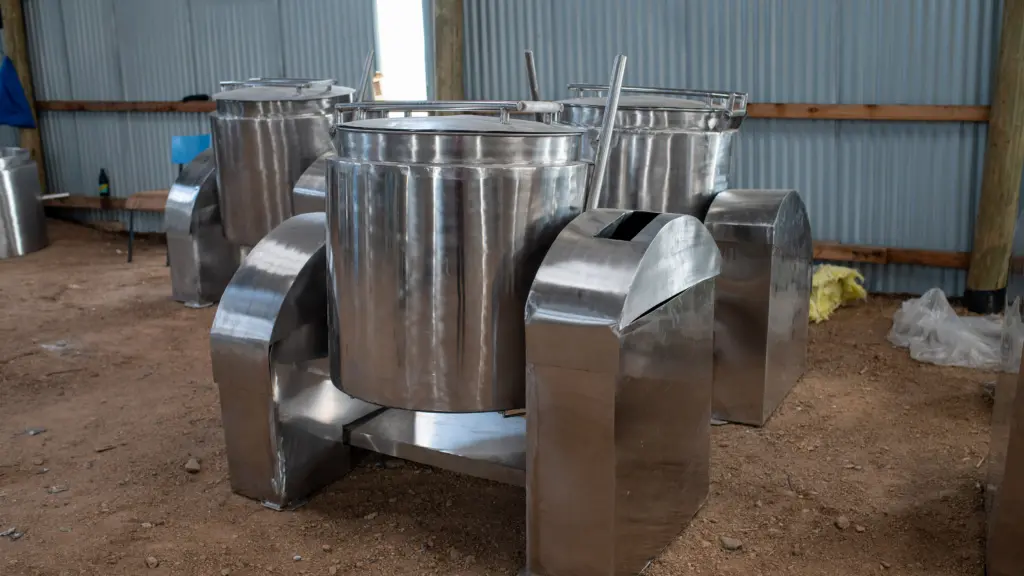
The best-known of the three recipients is Ecobora, a Nyamira-origin clean-energy venture that has become one of the faces of Kenya’s push to electrify school kitchens. Its flagship product — an institutional e-cooker built around a patented thermal conversion system that supports both solar and electric power — replaces firewood in large-batch cooking, cutting indoor air pollution and slashing fuel costs. By April 2025, Ecobora’s technology had been deployed in nine schools across seven counties in Kenya, helping feed more than 12,000 students. The company’s earlier solar-cooking boilers, which store solar energy via a repurposed oil-tank carbon sink, were built specifically for underfunded rural schools that had been paying ever-higher prices for firewood following a government logging ban.
Ecobora made a splash at the Kenya Clean Cooking Week 2024, where it displayed both grid and off-grid institutional cooking units to senior policymakers including the Principal Secretary for Energy and the Deputy Governor of Kajiado County. The company also sold units during the exhibition itself, a modest but real signal of institutional demand.
PowerUp and Sun-Power Box, while less widely profiled than Ecobora in mainstream press, have been active in the MECS and CLASP-supported ecosystem of locally manufactured e-cooking hardware. Both have been developing cost-effective, institution-ready solutions and have featured in MECS-linked capacity-building programmes aimed at embedding electric cooking in Kenyan schools.
All three ventures share a deliberately local manufacturing footprint — a posture MECS and CLASP have long argued is essential for durability, serviceability and forex-resilient pricing in African markets.
Why It Matters: 37 Million Kenyans, 600 Million Africans
The scale of the problem dwarfs the investment but explains its logic. About 37 million Kenyans and more than 600 million people across sub-Saharan Africa still cook primarily with wood, charcoal or other biomass, with all the attendant deforestation, respiratory illness and household economic strain. The International Energy Agency estimates that the number of people without access to clean cooking in sub-Saharan Africa has continued to rise since tracking began, reaching around 960 million in 2023 — the region that alone accounts for roughly half of the global access gap.
The health costs are severe. The IEA’s most recent progress report blames inadequate clean-cooking access for 815,000 premature deaths annually in sub-Saharan Africa, with women and children disproportionately affected. A recent Kenya Medical Research Institute-informed analysis found that school kitchens using firewood often produce PM2.5 concentrations nearly 20 times higher than World Health Organization safety thresholds — a slow-motion public-health emergency in the very places meant to nurture the next generation.
Kenya itself is an instructive case. Over 80 percent of Kenyan households still rely on biomass fuels for cooking, according to MECS’ reading of the Household Cooking Sector Study, even though only 3 percent own an electric-cooking appliance. The mismatch is striking given that electricity access has climbed from 29 percent to 75 percent in the last five years and the country is generating more electricity than it consumes. Kenya’s National Cooking Transition Strategy 2024–2028 explicitly targets electric cooking as one of the long-term sustainable pathways to universal clean-cooking access, alongside LPG, biogas and sustainable biomass.
Context is everything. While you follow today’s updates, use the Serrari Group Market Index and Marketplace to spot emerging shifts. Need to sharpen your edge? Our Wealth Builder Platform turns these insights into a professional-grade strategy.
The Financing Gap the Investment Is Built to Close
The question is not whether Kenya can move to electric cooking but how quickly, and on whose capital. MECS’ argument — and Abagi’s — is that most ready-to-scale e-cooking ventures stall not because of technical weakness but because they cannot access the risk capital that would let them move from market entry to scale.
By funding research, testing and validation directly, MECS is effectively acting as a de-risking layer between early-stage African hardware innovators and the larger commercial, development-finance and impact-investor pools that typically require more rigorous evidence than cash-strapped startups can afford to generate. The three recipient ventures will use the money to sharpen their technologies, generate commercially credible data and, MECS hopes, attract meaningful follow-on investment. In that sense, the KES 97 million is intended as much as a signalling instrument as a balance-sheet boost.
MECS itself is a £40 million UK-aid-funded research and innovation programme led by Loughborough University and delivered in partnership with the World Bank’s ESMAP unit. The programme is one of the main UK Foreign, Commonwealth and Development Office (FCDO) contributions to the £1 billion Ayrton Fund for clean-energy innovation between 2021 and 2026, targeting the 2.1 billion people globally who still lack clean-cooking access. Across the continent, MECS works with dozens of local partners, universities and startups, with CLASP leading much of its Kenya implementation.
Riding the Policy Wave
The announcement does not land in a vacuum. Over the past six months, Kenya’s clean-cooking story has shifted from niche development-sector concern to mainstream policy priority, and MECS’ bet is timed to ride that wave.
In late March, the Government of Makueni County and CLASP signed a five-year Memorandum of Understanding to scale clean cooking across the county’s public institutions, targeting 63 vocational training centres as an initial cohort. Makueni Governor Mutula Kilonzo Jr., speaking at the Kenya International Investment Conference 2026, framed the deal as an opportunity for the county, which has already committed KSh157 million to solar-energy investments and built policy scaffolding through the County Energy Plan (2023–2032) and Energy Policy 2025. “This partnership with MECS and CLASP is about turning that commitment into scale,” Kilonzo said, according to reporting by Kisii Press Club.
The same event saw the launch of Kenya’s first Institutional Clean Cooking Sector Pack, which the Makueni county government valued at roughly $589 million in clean-cooking opportunity, while the Kisii Press Club report pegged it at KSh72 billion (about $559 million) to transition more than 100,000 institutions serving 12.6 million Kenyans to modern cooking. The exact dollar figure varies slightly between sources, but the message is consistent: Kenya’s institutional kitchens — schools, hospitals, prisons, training centres — represent one of the most commercially tractable clean-cooking markets on the continent.
That institutional focus was also on display in Nairobi in late October 2025, when the Office of Kenya’s Special Envoy for Climate Change hosted a high-level summit on unlocking finance and investments for institutional clean cooking. About 250 participants, including First Lady Rachel Ruto and the CEO of the Clean Cooking Alliance, committed to a Nairobi Action Plan aimed at financing a complete transition to institutional clean cooking by 2028.
Part of a Broader Capital Shift
MECS’ $750,000 commitment is also part of a growing pattern of dedicated capital moving into Kenya’s clean-cooking sector. In October 2024, the European Investment Bank signed a $15 million debt investment with Kenyan manufacturer BURN to scale the distribution of its ECOA induction cooker to over a million East African households under a pay-as-you-cook model, a deal BURN founder Peter Scott said would shift low-income households to grids that are “80–95% powered by renewable energy.” Kenyan bioethanol-cooking company KOKO has meanwhile attracted World Bank Group political-risk guarantees via MIGA to expand its network of fuel vendors and cookstoves.
Different deals, different instruments, but the direction is unmistakable: capital is finally moving, and moving to Kenya. What has been missing for the Ecobora–PowerUp–Sun-Power Box tier of the market is exactly the kind of evidence-generating, confidence-building R&D money that MECS has just put on the table.
What to Watch Next
Three things will determine whether the MECS investment punches above its weight. The first is deployment: how quickly the three ventures can convert the capital into installed units in schools, hospitals and households, where the health and cost data accumulate. The second is evidence: whether the testing and validation work produces the kind of independent, commercially credible performance data that unlocks follow-on capital from impact funds, development-finance institutions and, increasingly, carbon-credit buyers. The third is policy traction: whether Kenya’s government — county and national — leans further into institutional e-cooking as the default, using tools like the new Sector Pack and Makueni’s county-level MoU to aggregate demand and de-risk procurement.
For now, MECS has framed the KES 97 million not as a finish line but as a starting gun. “MECS invites impact investors, development finance institutions, and technology partners to engage with these ventures and explore how their capital can help accelerate the clean cooking transition across Africa,” the programme said in its announcement. If the model works — modest, targeted, research-led investment catalysing much larger commercial capital — it may prove to be one of the most consequential $750,000 cheques written in Kenya’s clean-energy transition this year.
Your financial future isn’t something you wait for—it’s something you build.
The real question is: when do you begin?
Move beyond simply staying informed.
Navigate the markets with clarity—track trends through the Serrari Group Market Index, uncover opportunities in the Serrari Marketplace, and build practical knowledge with our Curated Wealth Builder Platform.
Stay connected to what truly matters.
Get daily insights on macro trends and financial movements across Kenya, Africa, and global markets—delivered through the Serrari Newsletter.
Growth opens doors.
Advance your career through professional programs including ACCA, HESI A2, ATI TEAS 7 , HESI EXIT , NCLEX – RN and NCLEX – PN, Financial Literacy!🌟—designed to move you forward with confidence.
See where money is flowing—clearly and in real time.
Track Money Market Funds, Treasury Bills, Treasury Bonds, Green Bonds, and Fixed Deposits, alongside global and African indexes, key economic indicators, and the evolving Crypto and stablecoin landscape—all within Serrari’s Market Index.