














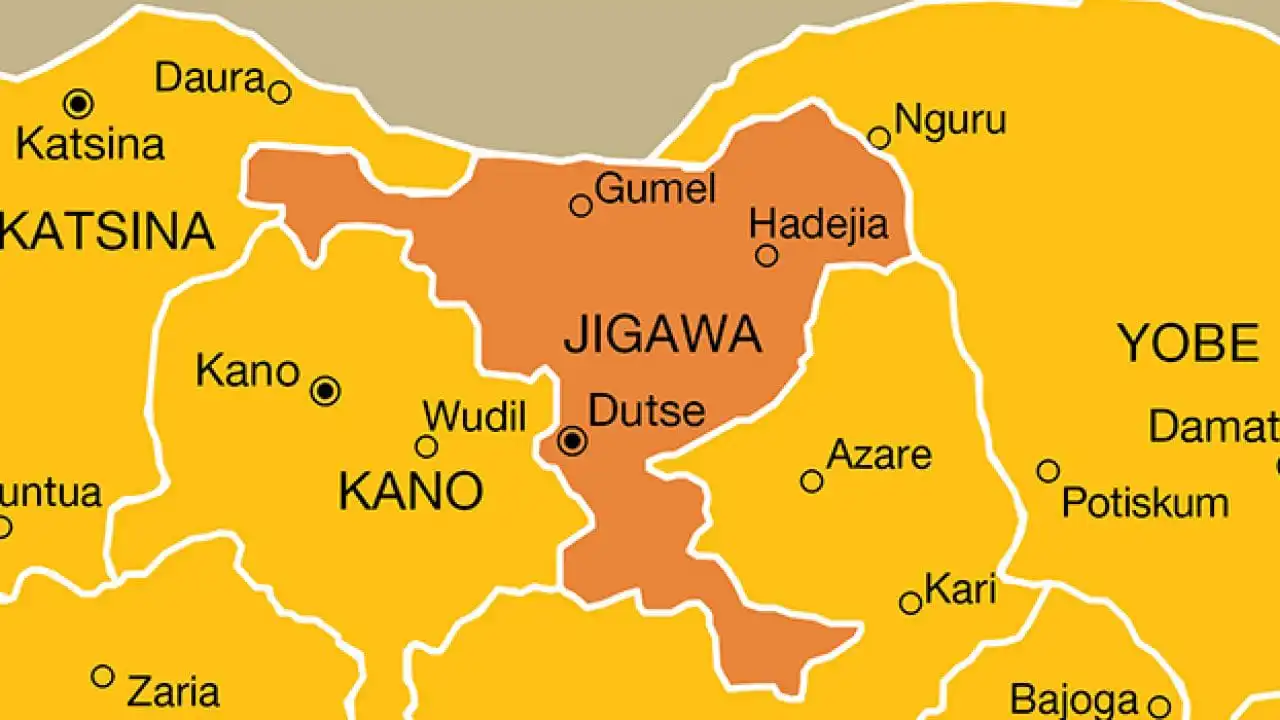
The Jigawa State Executive Council (SEC), chaired by Governor Umar A. Namadi, has approved more than ₦11.3 billion (roughly $8.3 million) in fresh spending to expand a cryogenic oxygen plant in Dutse, roll out solar mini-grids across key government complexes, and finance primary healthcare delivery in all 27 local government areas. The package — unveiled at the council’s first sitting under Namadi on April 13, 2026 — layers on top of an earlier ₦91 billion capital programme and signals a continued push to anchor the Greater Jigawa 12-point agenda in healthcare, renewable energy and climate resilience. It lands at a moment of national momentum for primary healthcare financing reform under the Basic Health Care Provision Fund (BHCPF 2.0) and a rapid scale-up of decentralised, state-level electricity generation across Nigeria.
Key Overview
- Council approves over ₦11.3 billion for healthcare and renewable energy projects.
- ₦1.22 billion added for the Dutse cryogenic oxygen plant, raising total cost to ₦3.42 billion.
- ₦362.8 million in Direct Facility Financing (DFF) for 281 accredited primary healthcare centres covering July–December 2025.
- ₦56.67 million in allowances for 75 midwives, 650 CHIPS agents and 130 Community Engagement Focal Persons.
- Solar mini-grid package revised upward to ₦7.46 billion, delivering 3MWp of capacity with 4.5MWh battery storage.
- State joins the Green Nigeria Challenge, Jigawa State Edition, to combat desertification and restore degraded lands.
The Jigawa State Executive Council (SEC) has approved over ₦11.3 billion for the construction of a cryogenic oxygen plant, solar mini-grid projects and other healthcare delivery initiatives across the state, marking one of the most consequential single-sitting capital approvals so far in Governor Umar A. Namadi’s second-term agenda.
The Commissioner for Information, Youth, Sports and Culture, Mr Sagir Musa Ahmed, disclosed the approvals while briefing newsmen after the first State Executive Council meeting presided over by the governor. According to Tribune Online, Ahmed said the decisions reflect the government’s commitment to improving citizens’ welfare and strengthening key sectors of the economy.
He disclosed that the council also approved the participation of the State Ministry of Environment and Climate Change in the Green Nigeria Challenge, Jigawa State Edition, aimed at addressing environmental challenges in a state that sits in the Sahelian frontline of desertification.
He explained that the initiative would promote afforestation, combat desertification, enhance biodiversity and encourage community participation in environmental conservation — all priorities that align with Nigeria’s obligations under the African Union’s Great Green Wall initiative, covering 11 frontline states in the country’s arid north.
According to Ahmed, the programme would also provide a platform for strengthening climate action, restoring degraded lands and contributing to national and global sustainability goals. The commissioner added that the ministry would collaborate with local communities, development partners and civil society organisations to ensure effective implementation of the programme — an approach that echoes broader local-ownership lessons from the Sahel’s ecological reclamation drive.
Markets move fast; don’t get left behind. We’ve paired the Serrari Group Market Index with a curated Marketplace and a comprehensive Wealth Builder Platform to ensure you have the data—and the skills—to act on it.
Cryogenic oxygen plant gets a ₦1.22 billion top-up
On healthcare, Ahmed said the council approved additional works for the ongoing cryogenic oxygen plant project in Dutse to boost the supply of medical oxygen. The project — one of three flagship tertiary health facilities broken ground for at Fanisau, Dutse — was billed by Governor Namadi as a cornerstone of his vision to position Jigawa as a regional health tourism hub, serving residents of neighbouring states as well.
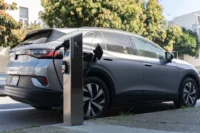
The additional works, according to the commissioner, include the provision of digital oxygen and nitrogen cylinders, as well as electric vehicles to improve distribution and operational efficiency. Ahmed disclosed that ₦1,222,945,203.58 was approved for the additional components, raising the total project cost from ₦2,202,161,079.93 to ₦3,425,160,283.51.
The plant, the governor has previously explained, will “not only provide 100% pure liquid medical oxygen for patients’ needs but is also designed to produce nitrogen at commercial quantity, thereby creating another value chain for fertilizer companies in Nigeria.” Namadi has also flagged that the finished oxygen will be transported in branded, digitally optimised cylinders using electric vehicles “to minimize cost and promote green energy.”
Ahmed noted that the move underscores the government’s resolve to strengthen healthcare infrastructure, improve emergency response and ensure a sustainable supply of oxygen to health facilities — a critical gap exposed during the COVID-19 pandemic when dozens of Nigerian hospitals ran short of medical oxygen and patient deaths climbed. Cryogenic air-separation technology is widely considered the gold standard for high-purity hospital oxygen, producing gas that can be stored in liquid form and distributed through cylinders or intra-hospital piping.
The facility fits into a wider health capex push. In December 2025, the same SEC approved ₦91 billion for critical projects, which included ₦8.05 billion for renovating, remodelling, upgrading and equipping general hospitals in Hadejia, Gumel, Kazaure and Birniwa; upgrading facilities in Gwiwa, Garki, Guri, Gantsa, Gagarawa and Kirikasamma; and supplying dialysis equipment to general hospitals in Dutse, Ringim and Kazaure.
₦362.8m flows to 281 primary healthcare centres
The council also approved the disbursement of ₦362.8 million as Direct Facility Financing (DFF) for 281 accredited primary healthcare centres (PHCs) across the 27 local government areas. The commissioner said the funds, covering July to December 2025, were released under the Basic Health Care Provision Fund (BHCPF) to enhance service delivery at the grassroots.
The BHCPF — established under Section 11 of the National Health Act 2014 — is Nigeria’s primary statutory financing vehicle for primary care and is jointly managed by the National Primary Health Care Development Agency (NPHCDA), the Federal Ministry of Health and the National Health Insurance Authority. The NPHCDA gateway channels DFF directly into commercial bank accounts of eligible PHCs for vaccines, essential drugs, consumables, equipment maintenance and human resources, with over 8,300 validated BHCPF PHCs currently receiving quarterly disbursements nationwide.
The Jigawa disbursement comes against a backdrop of a major national scale-up. In October 2025, the Federal Government approved the release of ₦32.9 billion under the BHCPF — the third disbursement of 2025 — and unveiled the BHCPF 2.0 Revised Guideline to tighten accountability. According to a briefing by Coordinating Minister of Health Muhammad Ali Pate, the disbursement was expected to support over 8,000 primary health care centres nationwide, with planned expansion to 13,000 facilities under the new phase.
National-level data published by Nairametrics shows that in 2025 alone, twelve inflows totalling ₦131.5 billion were recorded under the BHCPF, supporting quarterly disbursements to PHC facilities. An additional Q1 2026 disbursement of ₦32.88 billion was set for consideration earlier this year, with Nigeria’s health insurance coverage reaching 21.7 million by Q4 2025 (13% attributable to the BHCPF). Jigawa’s ₦362.8 million DFF slice is designed to ensure its 281 accredited centres can plan and spend locally without having to wait on federal releases alone.
Context is everything. While you follow today’s updates, use the Serrari Group Market Index and Marketplace to spot emerging shifts. Need to sharpen your edge? Our Wealth Builder Platform turns these insights into a professional-grade strategy.
₦56.67 million for midwives, CHIPS agents and community health workers
In a related development, Ahmed said the council approved ₦56.67 million for the payment of allowances to frontline health workers. The beneficiaries include 75 midwives, 650 Community Health Influencers, Promoters and Services (CHIPS) agents, and 130 Community Engagement Focal Persons (CEFPs).
He added that the six-month allowances are aimed at boosting community health mobilisation, maternal and child healthcare, as well as public health awareness. The CHIPS programme, launched by the Federal Government in 2018, is a community-based, volunteer-led initiative spearheaded by the NPHCDA to close human-resource gaps in primary healthcare. The agents — typically women aged 25 and above with at least primary education — are trained to conduct household visits, link pregnant women and children under five to PHCs, provide basic counselling and treat common childhood illnesses such as malaria, pneumonia and diarrhoea.
CEFPs (preferably male) provide supervisory layer support, aggregate ward-level reports, and promote male involvement in reproductive, maternal, newborn, child and adolescent health (RMNCAH+N) uptake, according to UNICEF Nigeria. While engagement is officially on a volunteer basis, NPHCDA guidelines encourage states to provide small stipends to CHIPS personnel to cover logistics, communication and other programme costs — a gap the Jigawa approval directly addresses.
The programme is now implemented in 34 states plus the FCT and has been credited with substantial improvements in community service utilisation. In Nasarawa State, where the programme was first piloted in 2018, CHIPS host communities recorded a drop in maternal deaths from 120 to 90 within a year. Nationally, WHO has flagged CHIPS as a central pillar of efforts to identify and vaccinate zero-dose children, of whom Nigeria has the highest concentration in the world.
The council further approved ₦57,444,558.62 for the operational management of the BHCPF at the state level in line with the approved work plan — funds intended to cover monitoring, verification and reporting overheads that sit between federal guidelines and facility-level delivery.
Solar mini-grids scaled up to 3MWp with 4.5MWh storage
On power, the commissioner said the council approved a review of cost and scope for solar mini-grid projects at key government facilities, including the State Secretariat Complex, the State Judiciary Building and the State House of Assembly Complex. Ahmed said the project cost was revised from ₦6,084,775,433.75 to ₦7,461,246,577.13 to accommodate the expanded scope and improved infrastructure.
He explained that the upgraded projects would deliver 3MWp capacity with 4.5MWh battery storage, ensuring reliable and sustainable power supply to critical government institutions. According to him, the initiative will enhance productivity, improve operational efficiency, reduce dependence on conventional power sources and promote environmentally sustainable energy solutions within public facilities.
The move builds directly on Jigawa’s ongoing renewable energy push. In August 2025, Governor Namadi commissioned a ₦1.2 billion solar-hybrid mini-grid in Kafin Hausa local government area — the first of a planned 10MW rollout across the state — developed by Bagaja Renewables in partnership with Future Energies Africa and the Kano Electricity Distribution Company (KEDCO). The 500kWp project features a 3.5km 33kV distribution line, a 350MVA backup diesel generator and step-up and step-down transformers, powering 10 major distribution transformers and sparing the national grid.
The governor has tied the broader push to structural reforms. In December 2024 he signed the Jigawa State Electricity Regulatory Commission law, and in 2024 the administration created a dedicated Ministry of Power and Renewable Energy. The state has also raised its stake in KEDCO from 7.5% to 10%, with Namadi framing the Kafin Hausa mini-grid as one of the dividends of that investment. A further 21 mini-grid projects are under development in remote communities through the Nigerian Electrification Project (NEP).
The December 2025 ₦91 billion capital approval similarly featured contracts for solar mini-grids at the Government House, the Deputy Governor’s Office, official residences of the SSG and HOS, the State Secretariat Complex and the House of Assembly, as well as ₦689.4 million for electrification and solarisation of institutions ranging from Jigawa State Polytechnic Dutse to Khadija University and several markets and general hospitals.
Desertification, climate action and a frontline state
Jigawa’s environmental participation in the Green Nigeria Challenge is not incidental. The state sits along the Sahelian belt, where the Sahara has expanded by up to 18% over the past century. Nigeria is one of 11 participating countries in the African Union’s Great Green Wall, which targets the restoration of 100 million hectares of degraded land across the Sahel by 2030.
Historically, afforestation in northern Nigeria has been uneven: the American Scientist has documented how three-quarters of 50 million trees planted under an early phase of the initiative in northern Nigeria died within two months because planting strategies overlooked local ecological and social knowledge. China-backed demonstration projects in neighbouring Kano State have more recently tested innovative afforestation techniques, including non-irrigated methods and vegetation restoration in flowing sand — methods that have implications for Jigawa’s own land-restoration ambitions.
A layered package tied to the Greater Jigawa agenda
Taken together, the latest approvals fit the architecture Governor Namadi has been constructing since his inauguration: a 12-point agenda in which healthcare revitalisation, renewable energy, climate resilience and community-level service delivery are explicitly linked. The ₦1.22 billion top-up for the Dutse cryogenic oxygen plant will feed the diagnostic, cardiac and oxygen complexes the governor has positioned for an eventual public-private partnership model with certified health investment firms. The ₦362.8 million DFF will pass through the NPHCDA gateway into 281 facilities’ commercial bank accounts. The ₦56.67 million in allowances will keep midwives and CHIPS agents in the field during one of the country’s most challenging periods for sub-national health financing. And the ₦7.46 billion solar mini-grid overhaul will insulate core arms of government from the persistent weakness of the national grid.
For Jigawa’s roughly seven million residents, the aggregate effect is a state administration betting simultaneously on hospital infrastructure, grassroots health personnel, clean electricity and environmental restoration — layered on top of earlier ₦91 billion and ₦1.2 billion commitments that have already begun to reshape the state’s hard infrastructure.
Whether the projects meet their delivery timelines will depend on procurement execution, the continued flow of federal BHCPF disbursements and the state’s ability to manage foreign-exchange exposure on imported equipment such as cryogenic air-separation units and solar components. But with a package that touches medical oxygen supply, primary care financing, frontline community health workers, solar generation and desertification control all in a single Executive Council sitting, Jigawa’s first SEC meeting of 2026 is shaping up as a template for how a northern Nigerian state can marry social spending with infrastructure investment at a moment when both are in short supply across much of the country.
Your financial future isn’t something you wait for—it’s something you build.
The real question is: when do you begin?
Move beyond simply staying informed.
Navigate the markets with clarity—track trends through the Serrari Group Market Index, uncover opportunities in the Serrari Marketplace, and build practical knowledge with our Curated Wealth Builder Platform.
Stay connected to what truly matters.
Get daily insights on macro trends and financial movements across Kenya, Africa, and global markets—delivered through the Serrari Newsletter.
Growth opens doors.
Advance your career through professional programs including ACCA, HESI A2, ATI TEAS 7 , HESI EXIT , NCLEX – RN and NCLEX – PN, Financial Literacy!🌟—designed to move you forward with confidence.
See where money is flowing—clearly and in real time.
Track Money Market Funds, Treasury Bills, Treasury Bonds, Green Bonds, and Fixed Deposits, alongside global and African indexes, key economic indicators, and the evolving Crypto and stablecoin landscape—all within Serrari’s Market Index.