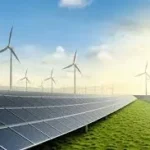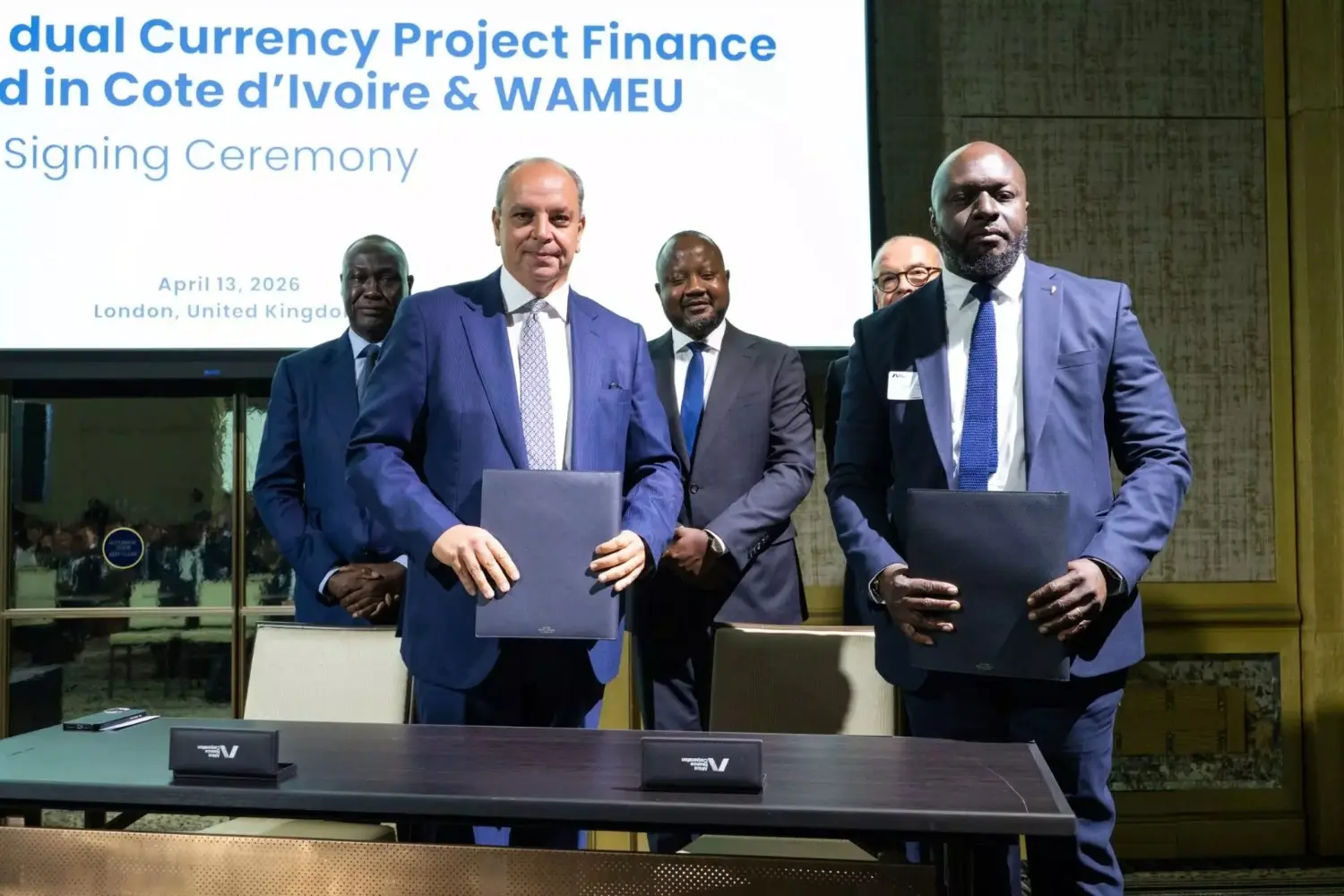
Africa Finance Corporation has reached financial close on a €65 million dual-currency green bond to fund a 66MW solar project in Côte d’Ivoire, marking a significant step in financing renewable energy infrastructure on the continent.
The deal represents the first project finance green bond in both the country and the WAEMU region, signaling a broader shift toward locally funded infrastructure and the development of scalable climate finance models. It also highlights growing momentum in mobilising African institutional capital and structuring innovative financing solutions to support long-term energy transition goals.
Key Overview
- €43M disbursed under a €65M green bond facility
- Funds a 66MW solar plant in Korhogo
- First project finance green bond in Côte d’Ivoire & WAEMU
- Dual-currency structure (EUR/XOF) reduces FX risk
- Fully African-led and funded transaction
- Powers 100,000+ households
- Cuts 72,000+ tonnes CO₂ annually
Africa Finance Corporation has reached financial close and disbursed €43 million under the Poro Power Green Bond, marking the first project finance green bond issued in Côte d’Ivoire and across the West African Economic and Monetary Union (WAEMU).
The financing forms part of a broader €65 million dual-currency facility, structured in euros and CFA francs (EUR/XOF), designed to fund the development of a 66MW solar power plant in Korhogo, a key region for expanding energy access in northern Côte d’Ivoire.
Once operational in 2027, the project is expected to become the largest solar installation in the country, significantly expanding Côte d’Ivoire’s renewable energy capacity while contributing to a more diversified and sustainable energy mix.
The transaction represents a major milestone in the evolution of Africa’s sustainable finance and infrastructure ecosystem.
Beyond its scale, the deal signals a shift in how infrastructure projects are financed across the continent, demonstrating increasing confidence in locally structured financial instruments and the ability of African institutions to deliver complex, large-scale projects.
It also highlights the growing alignment between energy transition objectives and financial innovation, where capital markets are being leveraged to support climate-focused infrastructure development.
Markets move fast; don’t get left behind. We’ve paired the Serrari Group Market Index with a curated Marketplace and a comprehensive Wealth Builder Platform to ensure you have the data—and the skills—to act on it.
A New Model for Infrastructure Financing
A defining feature of the transaction is its dual-currency structure, which combines euro-denominated and local currency financing to reduce foreign exchange risk—a major barrier that has historically limited infrastructure investment across emerging markets.
By mitigating currency volatility, the structure enhances financial stability and makes long-term infrastructure projects more attractive to both local and international investors.
AFC acted as lead underwriter and co-arranger, designing the framework to mobilise African institutional capital, including banks and investment funds, while ensuring the project remains financially viable over its lifecycle.
This approach reflects a broader shift toward locally sourced financing for infrastructure projects that have traditionally depended on international capital flows.
Unlike conventional financing models, the Poro Power Green Bond was African-led, structured, and fully funded by institutions on the continent, signaling a growing level of financial independence and institutional maturity within regional markets.
This development is particularly significant in the context of Africa’s infrastructure financing gap, where reliance on external capital has often introduced constraints related to cost, currency risk, and project timelines.
The transaction introduces a scalable and replicable financing model, which can be applied to future infrastructure projects across sectors such as energy, transport, and climate resilience.
By combining domestic capital mobilisation with innovative structuring, the model provides a blueprint for accelerating infrastructure development while strengthening local financial ecosystems.
Advancing Renewable Energy and Climate Goals
The Korhogo solar project is expected to deliver substantial environmental and social impact once completed, contributing to both climate objectives and energy access across the region.
It will reduce carbon emissions by more than 72,000 tonnes annually and provide electricity to over 100,000 households, addressing energy shortages while supporting cleaner and more sustainable power generation.
Large-scale renewable projects are becoming central to meeting rising energy demand while reducing carbon intensity across developing economies.
The project also supports Côte d’Ivoire’s national objective of increasing the share of renewable energy in its energy mix to 45% by 2030, aligning with broader climate commitments and long-term sustainability goals.
As energy demand continues to grow across West Africa—driven by population growth, urbanisation, and industrial expansion—investments in solar infrastructure are playing a critical role in balancing economic development with environmental responsibility.
Renewable energy is increasingly seen as both an economic necessity and a climate solution.
By expanding access to clean electricity while reducing dependence on fossil fuels, projects like this are helping to build more resilient and sustainable energy systems across the region.
Strengthening African Capital Markets
The transaction is widely seen as a milestone for regional capital markets, particularly within the West African Economic and Monetary Union (WAEMU), where long-term project financing has traditionally been limited and often dependent on external funding sources.
By successfully issuing a project-backed green bond, the deal demonstrates the growing maturity of African financial institutions and their increasing ability to structure, underwrite, and execute complex financing solutions for large-scale infrastructure projects.
This marks an important step in the evolution of Africa’s financial ecosystem, where local markets are beginning to play a more central role in funding development.
Mobilising domestic capital is emerging as a key priority in addressing Africa’s infrastructure financing gap, which remains one of the largest constraints to economic growth across the continent.
By tapping into local liquidity pools, such as pension funds, insurance companies, and commercial banks, projects can reduce exposure to foreign exchange risks while fostering stronger internal financial systems.
The structure also creates new opportunities for local institutional investors to participate in infrastructure financing, broadening the investor base and enhancing market depth.
Greater participation from domestic investors not only strengthens capital markets, but also aligns long-term investments with national development priorities.
Over time, such transactions are expected to contribute to increased confidence in African financial markets, encouraging more issuers and investors to engage in similar financing structures.
Context is everything. While you follow today’s updates, use the Serrari Group Market Index and Marketplace to spot emerging shifts. Need to sharpen your edge? Our Wealth Builder Platform turns these insights into a professional-grade strategy.
Building on AFC’s Infrastructure Track Record
The Poro Power project builds on the expanding footprint of Africa Finance Corporation in Côte d’Ivoire’s infrastructure sector, where it has played a significant role in financing and developing key projects across energy and transport.
These include major investments such as the Henri Konan Bédié Bridge in Abidjan, which has helped ease urban congestion and improve connectivity, and the Singrobo-Ahouaty hydropower project, the country’s first private hydro independent power producer.
In addition, AFC supported the government in awarding €691.6 million in road development contracts in 2024, further strengthening transport infrastructure and supporting economic activity.
These projects highlight AFC’s role as a long-term partner in national infrastructure development.
The Poro Power Green Bond builds on this track record by extending AFC’s involvement into innovative financing structures, combining its experience in infrastructure development with its ability to mobilise capital.
By integrating financing, structuring expertise, and strategic partnerships, the institution is helping to accelerate the delivery of large-scale infrastructure projects across the continent.
AFC’s approach reflects a broader shift toward institutions acting not just as financiers, but as catalysts for systemic infrastructure transformation.
What This Means for Energy and Investment
The deal highlights several key trends shaping Africa’s energy and investment landscape, pointing to a broader transformation in how infrastructure is financed and developed across the continent.
First, local capital mobilisation is becoming increasingly important, as countries seek to reduce reliance on external financing and build more resilient and self-sustaining financial systems.
This shift not only strengthens financial independence but also enhances the ability of governments and institutions to fund long-term development priorities.
Domestic capital is emerging as a critical driver of infrastructure growth.
Second, innovative financing structures—such as dual-currency green bonds—are gaining traction as effective tools for managing risk, particularly foreign exchange volatility, while attracting a broader range of investors.
These instruments provide greater flexibility and stability, making infrastructure projects more bankable and scalable.
Third, renewable energy projects are becoming central to infrastructure investment, driven by the dual pressures of rising energy demand and the need to meet climate commitments.
As economies expand and energy consumption increases, clean energy solutions are being prioritised to ensure sustainable growth.
Energy transition and infrastructure development are becoming increasingly interconnected.
Overall, Africa’s infrastructure financing model is evolving toward more sustainable, locally driven, and scalable solutions, where financial innovation, policy support, and institutional capacity work together to unlock long-term investment opportunities.
Outlook: A New Era for African Infrastructure Finance
In the short term, the immediate focus will be on the construction and execution of the Korhogo solar project, ensuring that development milestones are met and that the facility is delivered on schedule for operational readiness by 2027.
This phase will be critical in translating the financing structure into tangible infrastructure, while also demonstrating the effectiveness of the dual-currency model in supporting project delivery under real market conditions.
Execution will be key in validating the credibility and scalability of this financing approach.
Over the medium term, the success of the Poro Power Green Bond is likely to encourage similar transactions across Côte d’Ivoire and the wider WAEMU region, accelerating the development of renewable energy and other infrastructure projects.
As confidence in locally structured financing grows, more governments and developers may turn to similar models to fund projects, particularly in sectors that require long-term capital and risk mitigation.
Replication of the model could significantly expand access to infrastructure financing across the region.
In the long term, scalable financing frameworks like this have the potential to play a central role in closing Africa’s infrastructure gap, particularly in critical sectors such as energy, transport, and climate resilience.
By combining local capital mobilisation with innovative structuring, these models can unlock new funding sources and support sustained investment over time.
The future of African infrastructure will depend on the ability to mobilise domestic capital at scale while maintaining financial stability and investor confidence.
Ultimately, the success of this approach could mark a broader transition toward self-sustaining, locally driven infrastructure development, where African institutions play a leading role in financing and delivering the continent’s growth.
Your financial future isn’t something you wait for—it’s something you build.
The real question is: when do you begin?
Move beyond simply staying informed.
Navigate the markets with clarity—track trends through the Serrari Group Market Index, uncover opportunities in the Serrari Marketplace, and build practical knowledge with our Curated Wealth Builder Platform.
Stay connected to what truly matters.
Get daily insights on macro trends and financial movements across Kenya, Africa, and global markets—delivered through the Serrari Newsletter.
Growth opens doors.
Advance your career through professional programs including ACCA, HESI A2, ATI TEAS 7 , HESI EXIT , NCLEX – RN and NCLEX – PN, Financial Literacy!🌟—designed to move you forward with confidence.
See where money is flowing—clearly and in real time.
Track Money Market Funds, Treasury Bills, Treasury Bonds, Green Bonds, and Fixed Deposits, alongside global and African indexes, key economic indicators, and the evolving Crypto and stablecoin landscape—all within Serrari’s Market Index.