Iraq has invited international energy companies to compete for opportunities to develop gas fields in the country’s western region, as Baghdad seeks to expand domestic production, attract foreign capital and reduce its exposure to imported energy.
Oil Minister Bassim Mohammed Khudair al-Abadi issued the invitation during the Oil Companies International Forum in Baghdad. He described foreign operators as partners rather than contractors and called for closer dialogue over contractual obligations, costs and operational challenges.
Key Overview
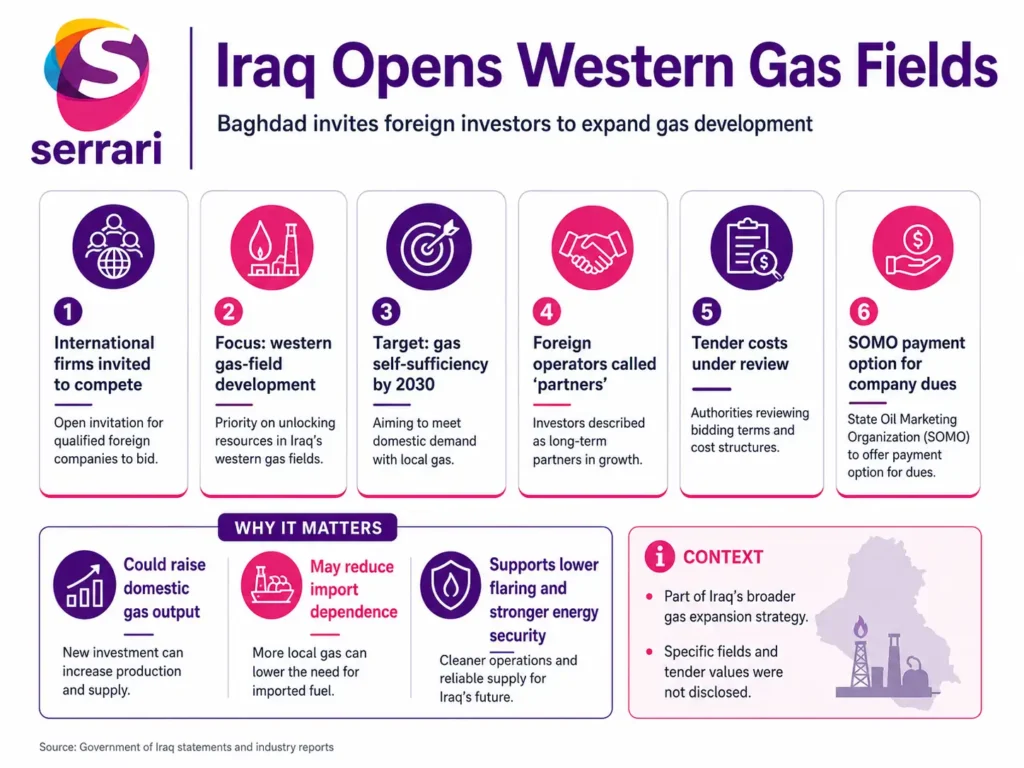
- Iraq is opening western gas-development opportunities to international companies.
- The government wants to increase output and reach gas self-sufficiency by 2030.
- Foreign companies were described as long-term partners in Iraq’s energy strategy.
- Baghdad is reviewing high-cost tenders while seeking to preserve quality standards.
- Companies may apply to receive outstanding payments through state oil marketer SOMO.
Baghdad Seeks Investors for Western Gas Development
The Oil Ministry’s invitation marks another step in Iraq’s attempt to bring international expertise and financing into underdeveloped parts of its gas industry. According to the announcement from the Baghdad forum, overseas companies were encouraged to compete for projects in the country’s western region.
The ministry did not disclose the names, reserves, investment values or tender deadlines for the fields in the initial announcement. Those details will be critical for potential bidders assessing geology, infrastructure requirements, security risks and the commercial terms available.
Al-Abadi said Iraq viewed foreign companies operating in the country as partners rather than merely contractors. That message reflects Baghdad’s broader attempt to offer a more collaborative investment environment after years in which rigid service contracts, delayed payments and political uncertainty discouraged some major international operators.
Gas Expansion Supports Energy-Security Goals
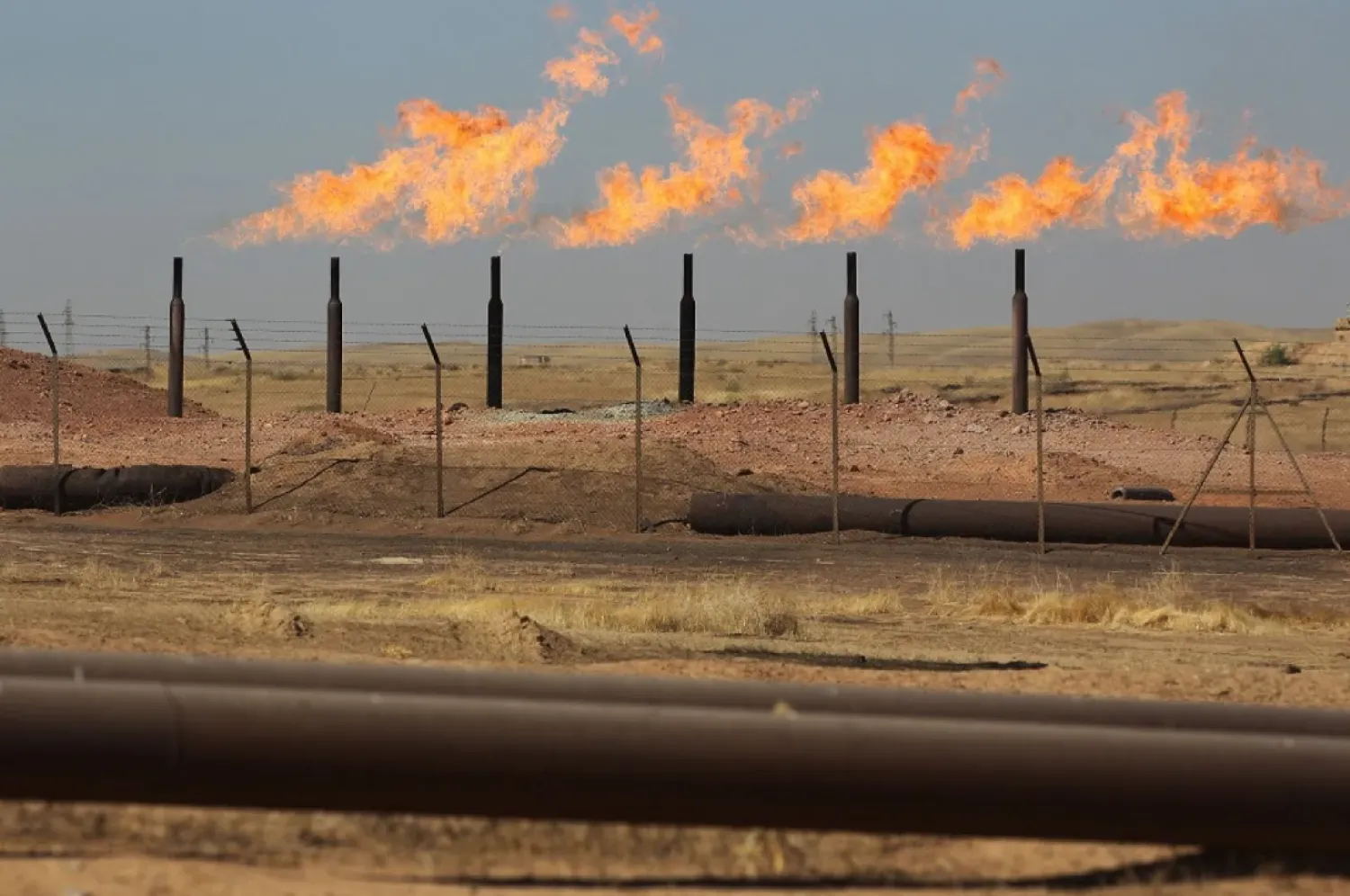
Iraq holds large oil and gas resources but has struggled to capture and process enough gas for domestic demand. The country has historically burned large quantities of associated gas produced alongside crude oil while relying on imported fuel to support electricity generation.
The new oil minister has set a goal of reaching gas self-sufficiency by 2030, combining development of domestic fields with efforts to reduce flaring and improve processing infrastructure.
The economic and environmental costs of wasted gas remain significant. Iraq was again listed among the world’s largest flaring countries in the 2026 Global Gas Flaring Tracker. Capturing more of that resource could supply power plants, support industry and reduce emissions.
Developing non-associated gas fields in western Iraq could complement projects designed to recover gas from oil production in southern fields. It could also diversify supply geographically and reduce pressure on existing infrastructure.
Context is everything. Stay ahead of shifting trends with today’s market updates, and uncover emerging opportunities using the Serrari Group Market Index and Marketplace. Then, take control of your own financial future by exploring our Money & Life Reset Transformation Blueprint ™ to build stronger habits, create better systems, and design a path toward lasting wealth.
Government Reviews Costs and Contract Performance
During the forum, al-Abadi highlighted Prime Minister Ali al-Zaidi’s directive to reassess tender costs, particularly where contract prices appear inflated. The minister said the review should reduce unnecessary expenditure without weakening approved technical and quality standards.
Cost control will be important as Iraq tries to finance energy infrastructure while managing volatile oil revenues and broader public spending demands. However, aggressive cost reductions could deter investors if they weaken commercial returns or create uncertainty over signed agreements.
The minister therefore emphasised dialogue with operating companies and implementation of contractual obligations. Investors will watch whether this approach results in clearer payment schedules, competitive fiscal terms and faster government approvals.
SOMO Payment Option Addresses Company Dues
Al-Abadi also invited international companies to apply to receive outstanding dues through the State Organization for Marketing of Oil, commonly known as SOMO. The proposal followed an easing of concerns surrounding shipping through the Strait of Hormuz.
Because Iraq depends heavily on crude exports for government revenue, disruptions affecting Gulf shipping can quickly complicate payments to contractors and project partners. Allowing approved dues to be settled through SOMO could provide companies with an alternative mechanism linked to oil sales, although the government has not publicly detailed its full structure in the announcement.
The payment issue matters because delays have previously affected confidence among foreign companies operating in Iraq. Reliable settlement arrangements could make the new western gas opportunities more attractive, particularly for projects requiring upfront investment.
Commercial Terms Will Determine Investor Response
Iraq’s invitation provides a signal that international participation is welcome, but investor interest will depend on the terms attached to each field. Companies will assess contract structure, pricing, payment security, infrastructure access, security conditions and the ability to sell gas into a dependable domestic market.
Baghdad’s immediate challenge is to convert the forum announcement into transparent licensing documents and bankable projects. Successful development could increase domestic fuel supply, reduce flaring and imports, strengthen electricity reliability and create new investment in western Iraq.
Sources: Shafaq News / Iraqi News Agency / 964media / World Bank / Reuters
Your financial future isn’t something you wait for—it’s something you build.
The real question is: when do you begin?
Move beyond simply staying informed.
Navigate the markets with clarity—track trends through the Serrari Group Market Index, uncover opportunities in the Serrari Marketplace, and build practical knowledge with our Curated Wealth Builder Platform.
Stay connected to what truly matters.
Get daily insights on macro trends and financial movements across Kenya, Africa, and global markets—delivered through the Serrari Newsletter.
Growth opens doors.
Advance your career through professional programs including ACCA, HESI A2, ATI TEAS 7 , HESI EXIT , NCLEX – RN and NCLEX – PN, Financial Literacy!🌟—designed to move you forward with confidence.
See where money is flowing—clearly and in real time.
Track Money Market Funds, Treasury Bills, Treasury Bonds, Green Bonds, and Fixed Deposits, alongside global and African indexes, key economic indicators, and the evolving Crypto and stablecoin landscape—all within Serrari’s Market Index.