
















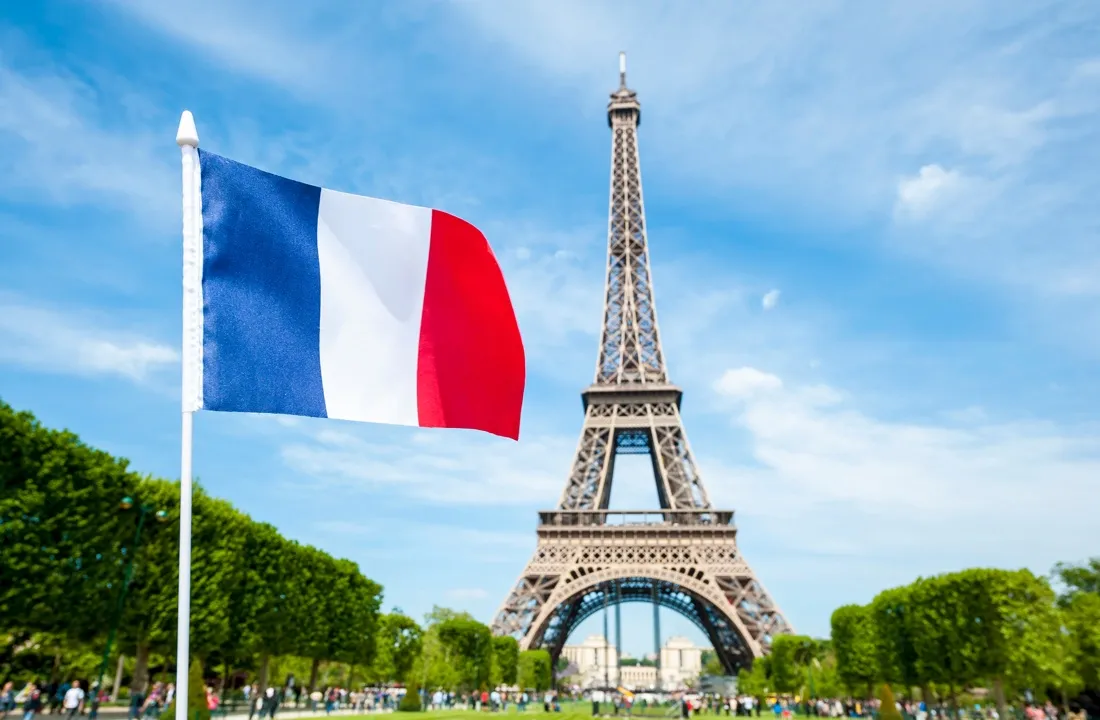
French President Emmanuel Macron announced a €23 billion ($27 billion) investment package for Africa during the Africa Forward summit in Nairobi on Monday, 11 May 2026. The package comprises €14 billion in public and private funds from French entities and €9 billion from African investors, targeting energy transition, digital infrastructure and AI, the maritime economy, and agriculture. The announcement was made at the two-day summit co-hosted by Kenyan President William Ruto and Macron, which is the first time in over 50 years that such a France-Africa forum has been held in an English-speaking country. The investment is expected to create 250,000 direct jobs across both continents. The summit brought together more than 30 African heads of state, over 2,000 private-sector leaders, and executives from major French firms including TotalEnergies and Orange, along with Nigerian industrialist Aliko Dangote, to discuss a new model of France-Africa partnership.
Markets move fast; don’t get left behind. We’ve paired the Serrari Group Market Index with a curated Marketplace and a comprehensive Wealth Builder Platform to ensure you have the data—and the skills—to act on it.
Key Overview
- Total investment announced: €23 billion ($27 billion)
- French contribution: €14 billion in public and private funds
- African investor contribution: €9 billion
- Projected jobs: 250,000 direct positions across Africa and France
- Summit location: Kenyatta International Convention Centre (KICC), Nairobi
- Summit dates: 11–12 May 2026
- Co-hosts: President William Ruto (Kenya) and President Emmanuel Macron (France)
- Attendance: 30+ heads of state, 4,000+ delegates, 2,000+ private-sector leaders
- Focus sectors: Energy transition, digital and AI, maritime economy, agriculture
- Pre-summit bilateral deals: 11 agreements signed between Kenya and France
- Key bilateral deals: KSh 12.5 billion Nairobi Commuter Rail modernisation; €700 million CMA CGM investment in Mombasa port
A Summit Designed to Reset the Relationship
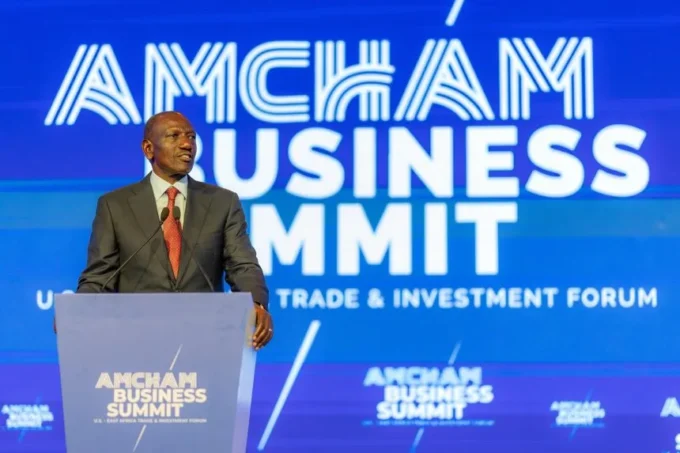
The Africa Forward summit opened on Monday at the University of Nairobi with a business forum before moving to the Kenyatta International Convention Centre for the heads-of-state plenary on 12 May. Themed “Africa–France Partnerships for Innovation and Growth,” the event was announced at the 79th UN General Assembly by Presidents Ruto and Macron and is designed to produce concrete, bankable commitments rather than symbolic declarations.
The choice of Nairobi as the host city was itself a strategic signal. This marks the first time a France-Africa summit of this kind has been held in a non-Francophone country in over five decades, reflecting what Macron described as the definitive end of France’s traditional “pré carré” — its exclusive sphere of influence in Francophone Africa. “The decision to host the Africa Forward Summit in Kenya, for the first time in a non-Francophone country, is a strong affirmation of the growing ties between our two countries,” President Ruto said at the opening session.
The event drew an attendance of more than 4,000 delegates, 2,000 private-sector leaders, and over 30 African heads of state. Among the leaders attending were Nigeria’s President Bola Ahmed Tinubu, Senegal’s President Bassirou Diomaye Faye, Rwanda’s President Paul Kagame, and the Prime Minister of Mauritius, Navinchandra Ramgoolam. UN Secretary-General António Guterres also arrived in Kenya for high-level engagements at the summit. On the business side, executives from TotalEnergies, Orange, and CMA CGM joined alongside Africa’s wealthiest businessman, Aliko Dangote.
Breaking Down the €23 Billion Package
The investment package Macron unveiled is structured as a blend of public development finance and private capital, with a €14 billion share from French public and private entities and €9 billion from African investors. The funds are targeted at four strategic sectors: energy transition, digital technology and artificial intelligence, the maritime or blue economy, and agriculture. Macron said the investments would generate 250,000 direct jobs across both France and the African continent.
Crucially, Macron framed the investment not as one-directional aid but as a two-way commercial relationship. “We are not simply here to come and invest on the African continent alongside you — we need the great African business leaders to come and invest in France,” he told the audience at Nairobi’s convention centre, adding that the relationship was now “entirely free of hang-ups”.
Speaking at the University of Nairobi, Macron argued that Africa “needs investment to become more sovereign”, replacing aid with economic opportunity. He called on French companies to pursue “joint venture” models that promote local job creation and technology transfer rather than extractive, export-driven approaches. He also emphasised the need for an overhaul of international finance to create a system of financial guarantees capable of unlocking private capital for the continent. “There is no reason today for there to be so little private investment coming into a continent as full of energy and youth as yours,” he said.
Context is everything. While you follow today’s updates, use the Serrari Group Market Index and Marketplace to spot emerging shifts. Need to sharpen your edge? Our Wealth Builder Platform turns these insights into a professional-grade strategy.
Kenya and France Seal 11 Bilateral Deals
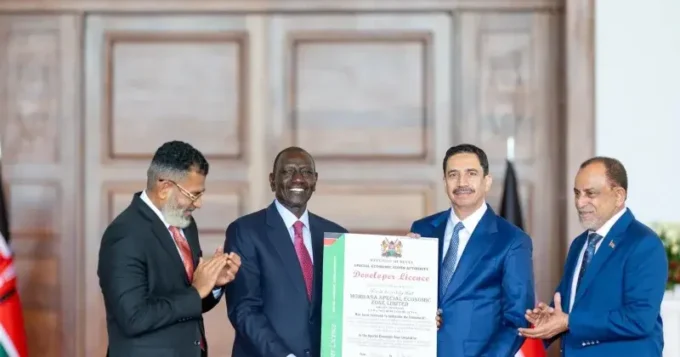
Ahead of the summit’s formal opening, Macron and Ruto signed 11 bilateral agreements at State House Nairobi on 10 May, covering transport, energy, digital infrastructure, agriculture, healthcare, and education. The agreements provide some of the most concrete evidence of the summit’s action-oriented approach.
The flagship deal is the KSh 12.5 billion (€83 million) rehabilitation and modernisation of the Nairobi Commuter Rail network, which will upgrade connections linking the capital to Syokimau, Embakasi, Ruiru, and Kikuyu, as well as the Riruta-Ngong line currently under construction. The project is expected to significantly ease congestion in the Nairobi metropolitan area.
Other major agreements include a joint venture for logistics and port infrastructure development valued at approximately KSh 104 billion ($800 million), deals covering cybersecurity and AI, cooperation in nuclear energy, a 100-megawatt expansion of the Kipeto Wind Power project worth $250 million, an agreement to promote Kenyan premium and specialty tea across French retail markets, and partnerships in healthcare and epidemic preparedness. Ruto noted that Kenya would benefit from France’s expertise in nuclear energy as the country works toward its target of 10,000 megawatts of generation capacity.
Separately, during his state visit on Sunday, Macron announced that French shipping group CMA CGM planned to invest €700 million ($823 million) to modernise a terminal at the port of Mombasa, one of East Africa’s busiest trade gateways. CMA CGM’s CEO Rodolphe Saadé also signed a strategic partnership agreement with the Kenyan government on the sidelines of the summit.
The Shadow of Françafrique
The summit takes place against the backdrop of a dramatic deterioration in France’s relationships with its traditional African partners. Between 2022 and 2025, France was forced to withdraw its military forces from Mali, Burkina Faso, Niger, Chad, Senegal, and Ivory Coast after a wave of coups and rising anti-French sentiment swept across Francophone West and Central Africa. At its peak, France’s Sahel deployment under Operation Barkhane numbered more than 5,000 troops. By January 2025, when France handed over its last base in Chad, that military footprint on the continent had been reduced to bases in Djibouti and Gabon.
The military juntas in Mali, Burkina Faso, and Niger pivoted toward Russia, accepting the deployment of Russian mercenaries to replace French counterterrorism support. These three countries formed the Alliance of Sahel States and formally withdrew from ECOWAS in January 2025. Senegal’s President Faye pushed for the closure of French bases, describing permanent French military presence as incompatible with Senegalese sovereignty, and France completed its withdrawal from Senegal last July.
In Nairobi, Macron addressed this history directly. He defended France’s former military deployments as having been requested by governments to fight the jihadist threat. “When our presence was no longer wanted after the coups, we left,” he told The Africa Report. “That wasn’t a humiliation but a logical response to a given situation.” He expressed confidence that the Sahel would eventually return to normal governance under democratically elected leaders.
Macron’s Critique of China and the US
A central theme of the summit was Macron’s effort to position Europe — and France in particular — as a more reliable trade and investment partner than either China or the United States. In interviews with Jeune Afrique and The Africa Report, Macron argued that Europe defends the international order, effective multilateralism, the rule of law, and free and open trade at a time when the two largest global powers are locked in a trade standoff.
On critical minerals and rare earths — resources that have made Africa a key battleground for global supply chain competition — Macron singled out China for operating according to what he called a “predatory logic” that involves processing raw materials domestically and creating “dependencies with the rest of the world”. Speaking alongside Ruto at the business forum, Macron framed France and Africa as sharing a “common fight” to build strategic autonomy against both American and Chinese dominance. “If we build it together, we will be much stronger,” he said.
Kenya hopes to leverage the summit to attract French investors interested in the African Continental Free Trade Area (AfCFTA), which is being rolled out across the continent. Ruto also wants to advance talks on reforming the global financial system to be fairer to heavily indebted African countries, a campaign France has pledged to support. Kenyan Foreign Minister Musalia Mudavadi told Reuters the country hopes that key outcomes of the summit can be “mainstreamed as critical agenda items by the G7”.
Colonial-Era Artefacts: The Restitution Push
In his speech at the summit, Macron declared that the process of returning African artworks looted during the colonial era had become “unstoppable.” The French parliament unanimously passed a framework law on 13 April 2026 to simplify the return of cultural property taken from former colonies, replacing the previous slow, case-by-case approach that required a separate act of parliament for each restitution.
Under the new legislation, the government can now authorise restitutions through executive decree, subject to oversight by the Council of State and review by bilateral scientific committees. The law covers items taken between the Vienna Congress of June 1815 and April 1972, when UNESCO’s convention for the protection of cultural heritage came into force. Disputes relating to objects taken after 1972 must be submitted to civil courts.
France still holds tens of thousands of artefacts from its colonial empire. The Quai Branly museum in Paris alone houses around 70,000 objects of African origin. Several countries have active pending claims, including Benin, which is seeking a statue of the Vodun deity Gou; Senegal and Mali, which jointly claim the Ségou hoard of gold and jewels seized by French troops in 1890; and Algeria, Ivory Coast, Madagascar, Ethiopia, and Chad, which have all filed formal requests. In March 2026, France repatriated the Djidji Ayokwe drum — also known as the Talking Drum — to Ivory Coast after the parliament approved its return. The drum had been looted by French colonial troops in 1916.
The legislation’s passage marks the culmination of a process that began with Macron’s landmark speech in Ouagadougou, Burkina Faso in November 2017, when he pledged to return African heritage within five years. While the bill was introduced in 2023, it was delayed by political instability and two changes of government before finally passing. Critics, including the far-right National Rally, have argued that restitutions should depend on diplomatic relations with recipient countries, while the left-wing France Unbowed party has pushed for the law’s scope to be broadened.
Governance, Colonialism, and the Road Ahead
Macron’s summit messaging was not without controversy. In his interview with The Africa Report, he argued that colonialism could no longer be held solely responsible for Africa’s challenges, stating that the “seven decades that followed independence” should not be exonerated from responsibility, and calling on African leaders to improve governance. He maintained that Europe’s former colonial powers were not “the predators of this century” — a framing likely to be challenged by critics on the continent and within France itself.
The summit builds on a series of earlier diplomatic milestones, including the Summit on the Financing of African Economies in Paris in 2021, the New Global Financing Pact in Paris in 2023, the Africa Climate Summit in Nairobi that same year, and the EU-African Union Summit in Luanda in November 2025. Its second day, themed around development finance and global issues, focused on youth employment, sovereignty, competitiveness, and a plenary on peace and security supporting African mediation efforts and the African Union.
Whether the Africa Forward summit represents a genuine turning point or merely the latest in a series of ambitious declarations remains an open question. President Ruto’s assertion that Kenya is “not looking East or West, but forward” captures the pragmatic mood across much of the continent — a preference for partnerships driven by results rather than ideology. The true test will be whether the €23 billion in announced commitments materialises into tangible projects, jobs, and technology transfer in the years ahead.
Your financial future isn’t something you wait for—it’s something you build.
The real question is: when do you begin?
Move beyond simply staying informed.
Navigate the markets with clarity—track trends through the Serrari Group Market Index, uncover opportunities in the Serrari Marketplace, and build practical knowledge with our Curated Wealth Builder Platform.
Stay connected to what truly matters.
Get daily insights on macro trends and financial movements across Kenya, Africa, and global markets—delivered through the Serrari Newsletter.
Growth opens doors.
Advance your career through professional programs including ACCA, HESI A2, ATI TEAS 7 , HESI EXIT , NCLEX – RN and NCLEX – PN, Financial Literacy!🌟—designed to move you forward with confidence.
See where money is flowing—clearly and in real time.
Track Money Market Funds, Treasury Bills, Treasury Bonds, Green Bonds, and Fixed Deposits, alongside global and African indexes, key economic indicators, and the evolving Crypto and stablecoin landscape—all within Serrari’s Market Index.





Comments are closed.