
















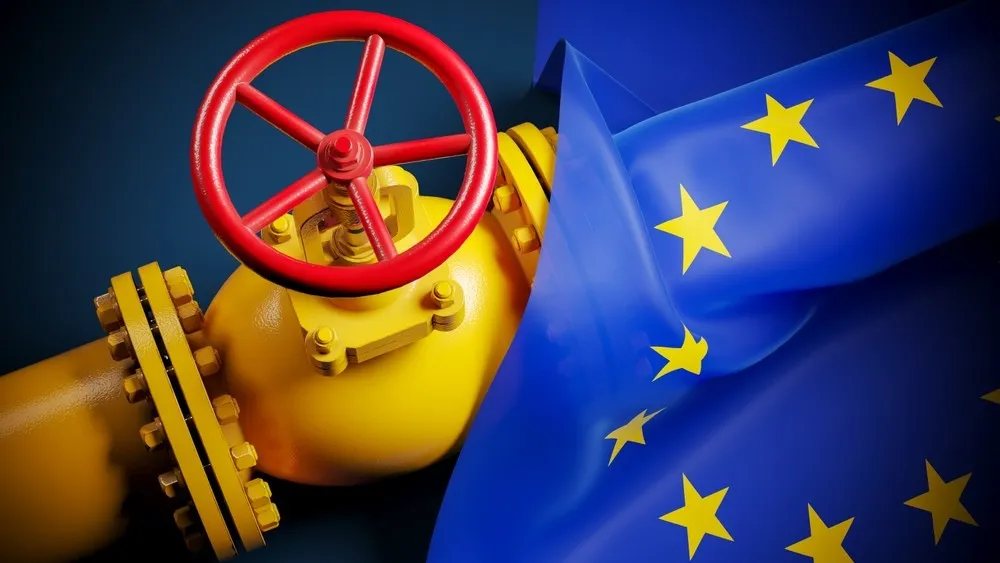
The European Union is preparing to discuss expanding domestic natural gas production as escalating Middle East tensions and volatile LNG markets expose the bloc’s energy vulnerabilities. With EU gas production having fallen by 50% over the past decade and Russian gas imports set to end next year, policymakers are increasingly reassessing local drilling as a potential tool for price stability and energy security.
The debate highlights a growing tension between Europe’s climate ambitions and the immediate need to secure reliable energy supplies. While officials insist the discussions are not intended to reverse the clean energy transition, countries such as Romania and Cyprus are already planning to increase domestic gas production.
The shift signals a broader strategic rethink across Europe as policymakers attempt to balance decarbonization goals with geopolitical and economic realities.
Key Overview
- European Union ministers to discuss domestic gas drilling
- EU gas production has fallen 50% over the last decade
- EU imports cover roughly 80% of gas demand
- Russian gas ban set to take effect next year
- LNG market volatility rising amid Middle East conflict
- Romania and Cyprus planning production increases
- Debate highlights tension between energy security and climate goals
EU Reopens Debate on Domestic Gas Production
Energy ministers from across the European Union are preparing to hold an unusual but increasingly important discussion on domestic natural gas production as the bloc confronts growing energy security risks linked to escalating geopolitical tensions in the Middle East. The talks, which will take place under the rotating EU presidency of Cyprus, signal a notable shift in thinking within Europe’s energy policy circles.
For years, the EU’s strategy focused heavily on reducing domestic fossil fuel dependence while expanding renewable energy deployment and relying on imported gas to bridge the transition toward net zero. However, repeated supply disruptions over the past several years—including the collapse of Russian gas flows and the latest instability in global LNG markets—have exposed the vulnerabilities of that approach.
According to internal documents seen by Reuters, ministers are expected to examine whether indigenous gas resources could act as “a collective mechanism for price stability for the entire Union,” particularly during periods of severe market volatility and external supply shocks.
The discussion reflects growing concern that Europe’s heavy reliance on imported energy has created strategic and economic risks that are becoming increasingly difficult to manage. Over the past two decades, many EU governments discouraged domestic oil and gas exploration through stricter environmental policies, declining investment support, and long-term decarbonization plans. During the same period, Europe increasingly turned to external suppliers such as:
- Russia for pipeline gas
- Norway for stable regional supply
- LNG exporters including the United States and Qatar
That strategy worked relatively well while global markets remained stable and gas prices were low. However, the sharp deterioration in relations with Russia following the Ukraine conflict, combined with the latest Middle East tensions, has fundamentally altered Europe’s energy outlook.
The renewed debate does not necessarily signal a reversal of Europe’s climate agenda, but rather a growing willingness among policymakers to adopt a more pragmatic approach that balances decarbonization goals with immediate energy security concerns.
Markets move fast; don’t get left behind. We’ve paired the Serrari Group Market Index with a curated Marketplace and a comprehensive Wealth Builder Course to ensure you have the data—and the skills—to act on it.
Energy Security Pressures Intensify
The European Union currently imports approximately 80% of its natural gas needs, making it one of the world’s most import-dependent major economies. This reliance has become increasingly problematic as geopolitical instability disrupts global supply chains and drives extreme volatility in energy markets.
The latest supply concerns have been intensified by conflict involving Iran and disruptions linked to the Strait of Hormuz, one of the world’s most critical transit routes for oil and liquefied natural gas. A substantial portion of globally traded LNG moves through the strait, meaning any disruption immediately affects international gas prices and supply availability.
Since the outbreak of the conflict earlier this year, benchmark gas prices in Europe have risen sharply, reigniting fears of another prolonged energy crisis similar to the one triggered after Russian gas flows collapsed in 2022. The latest price surge has increased pressure on households, manufacturers, and energy-intensive industries already struggling with elevated operating costs.
At the same time, Europe’s alternatives remain constrained:
- Russian gas imports are scheduled to be phased out beginning next year under EU policy
- U.S. LNG, while increasingly important, remains significantly more expensive than traditional pipeline gas due to liquefaction and shipping costs
- Norway, Europe’s largest pipeline supplier, lacks sufficient spare production capacity to fully replace lost Russian volumes
- Qatar is unlikely to significantly expand exports to Europe in the short term due to existing long-term contracts and infrastructure limitations
These overlapping pressures are forcing policymakers to reconsider assumptions that imported gas alone can guarantee long-term energy stability.
As a result, domestic gas production—once politically sensitive and largely sidelined in policy discussions—is increasingly being viewed as a potential tool for:
- Improving energy resilience
- Reducing exposure to external geopolitical risks
- Stabilizing prices during supply disruptions
- Supporting industrial competitiveness during the energy transition
The debate highlights a broader shift underway in Europe, where energy security is becoming more tightly integrated into climate and industrial policy decisions.
Balancing Climate Goals With Energy Reality
Despite the growing openness toward domestic gas drilling, EU officials remain highly cautious about the climate implications of expanding fossil fuel production. Policymakers are increasingly trying to balance two competing priorities: maintaining long-term decarbonization commitments while ensuring that Europe has sufficient and affordable energy during periods of geopolitical instability and supply disruption.
The internal discussion document reportedly stresses that any consideration of local gas development must avoid “locking us into carbon-intensive systems that undermine our long-term climate goals.” This language reflects the EU’s broader concern that short-term energy security measures could slow progress toward climate neutrality if governments become overly reliant on new fossil fuel infrastructure.
The debate highlights a growing tension at the center of European energy policy. The EU remains firmly committed to:
- Achieving climate neutrality by 2050
- Expanding renewable energy deployment across member states
- Reducing long-term dependence on fossil fuels
- Lowering greenhouse gas emissions under the European Green Deal
At the same time, the realities of global energy markets are increasingly challenging earlier assumptions that imported gas would remain abundant, affordable, and geopolitically secure. Recent crises have exposed how vulnerable Europe can become when external supply chains are disrupted by war, sanctions, or market volatility.
This has triggered a broader reassessment within European policymaking circles, where energy resilience is becoming almost as important as decarbonization itself. Officials are increasingly acknowledging that a successful energy transition may require maintaining some level of domestic conventional energy production during the transition period.
A spokesperson for Cyprus’s EU presidency emphasized that the discussions are intended to take “a pragmatic look” at future energy preparedness rather than reverse the bloc’s climate agenda.
“This is about preparedness and balance, not about reversing the energy transition,” the spokesperson said.
The statement reflects a broader effort by EU leaders to position domestic gas production as a temporary stabilizing mechanism rather than a long-term alternative to clean energy expansion.
Context is everything. While you follow today’s updates, use the Serrari Group Market Index and Marketplace to spot emerging shifts. Need to sharpen your edge? Our Wealth Builder Course turns these insights into a professional-grade strategy.
Declining European Gas Production
Domestic natural gas production within the European Union has fallen sharply over the past decade, declining by approximately 50% as investment in exploration and production weakened across much of the region. The decline has been driven by a combination of:
- Reduced investment in new exploration and development
- Stricter environmental regulations and permitting requirements
- Long-term net-zero strategies discouraging fossil fuel expansion
For years, many European governments viewed declining domestic production as consistent with broader climate goals, assuming that imported gas could reliably fill the gap during the transition to renewable energy systems.
One of the most significant developments was the gradual closure of the massive Groningen gas field in the Netherlands. Once among Europe’s largest and most strategically important gas fields, Groningen was phased out after years of seismic activity linked to extraction damaged thousands of homes and buildings in surrounding communities.
The closure became symbolic of Europe’s broader retreat from domestic fossil fuel production. However, as local output declined, Europe became increasingly dependent on imports from external suppliers, particularly Russia and global LNG markets.
Recent geopolitical crises have now exposed the vulnerabilities of that strategy. The collapse of Russian pipeline gas supplies, combined with disruptions in global LNG trade, has highlighted the risks associated with relying too heavily on external energy sources.
As a result, some EU member states are beginning to reconsider the role domestic gas production could play in strengthening long-term energy resilience. Countries such as Romania and Cyprus—which hold some of the EU’s largest commercially recoverable gas reserves—are already planning to increase domestic production.
These developments suggest the possibility of a broader strategic shift, where select domestic gas projects may increasingly be viewed as compatible with Europe’s transition strategy, provided they are framed as transitional or security-oriented investments.
Outlook: A Pragmatic Shift in Europe’s Energy Strategy
The upcoming ministerial discussions may mark the beginning of a more pragmatic phase in European energy policy, where energy security concerns play a larger role alongside climate objectives and decarbonization targets.
In the near term, policymakers are likely to focus on:
- Improving resilience against external supply disruptions
- Stabilizing gas and electricity prices for households and industries
- Expanding LNG and pipeline diversification strategies
- Evaluating the role of domestic reserves in future energy planning
The discussions are also likely to examine how Europe can reduce exposure to increasingly volatile global energy markets while maintaining industrial competitiveness during the energy transition.
Over the longer term, the debate is expected to intensify around how Europe can balance:
- Short-term energy security needs
- Long-term climate and decarbonization commitments
- Industrial competitiveness and manufacturing stability
- Energy affordability for consumers and businesses
This balancing act is becoming increasingly complex as geopolitical instability, supply chain disruptions, and rising energy demand place new pressure on policymakers.
Ultimately, the renewed discussion around domestic gas drilling underscores how global energy priorities are evolving in response to geopolitical realities. While Europe remains committed to its clean energy transition, recent crises have reinforced the importance of maintaining flexible, diversified, and resilient energy systems capable of withstanding external shocks.
The emerging debate suggests that Europe’s future energy strategy may become less ideologically rigid and more focused on combining renewables, efficiency, energy security, and selective domestic production into a more balanced and resilient framework.
Your financial future isn’t something you wait for—it’s something you build.
The real question is: when do you begin?
Move beyond simply staying informed.
Navigate the markets with clarity—track trends through the Serrari Group Market Index, uncover opportunities in the Serrari Marketplace, and build practical knowledge with our Curated Wealth Builder Course.
Stay connected to what truly matters.
Get daily insights on macro trends and financial movements across Kenya, Africa, and global markets—delivered through the Serrari Newsletter.
Growth opens doors.
Advance your career through professional programs including ACCA, HESI A2, ATI TEAS 7 , HESI EXIT , NCLEX – RN and NCLEX – PN, Financial Literacy!🌟—designed to move you forward with confidence.
See where money is flowing—clearly and in real time.
Track Money Market Funds, Treasury Bills, Treasury Bonds, Green Bonds, and Fixed Deposits, alongside global and African indexes, key economic indicators, and the evolving Crypto and stablecoin landscape—all within Serrari’s Market Index.