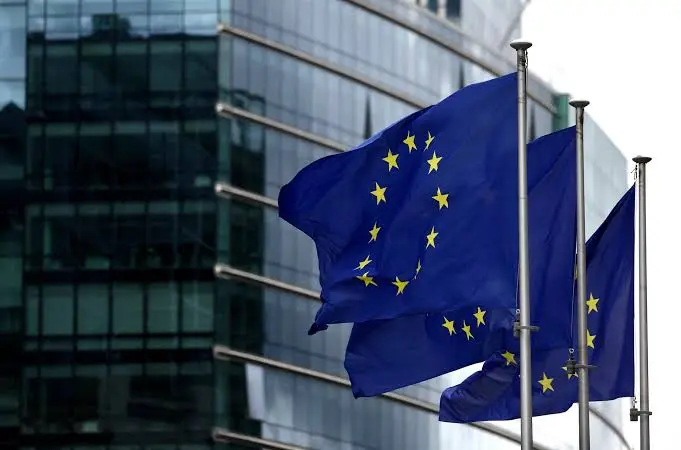
The European Union has launched the Global Green Bond Initiative Fund with partners to mobilise up to €20 billion for sustainable infrastructure in developing economies.
The European Union, alongside the European Investment Bank and several development finance institutions, has launched the Global Green Bond Initiative (GGBI) Fund. The platform aims to mobilise up to €20 billion in private capital for sustainable infrastructure projects in low- and middle-income countries. The fund will focus on first-time green bond issuers such as governments, municipalities, and businesses, while allocating at least 20% of investments to the world’s least developed countries. Structured under the EU’s Global Gateway strategy, the initiative also seeks to deepen domestic capital markets, expand local currency financing, and strengthen the international role of the euro.
Markets move fast; don’t get left behind. We’ve paired the Serrari Group Market Index with a curated Marketplace and a comprehensive Wealth Builder Platform to ensure you have the data—and the skills—to act on it.
Introduction: Europe Makes a Major Bet on Green Finance
The European Union has launched one of its most ambitious sustainable finance initiatives yet, aiming to channel billions of euros into climate-resilient infrastructure across developing economies.
Together with the European Investment Bank and a coalition of partner development finance institutions, the EU has formally signed the Global Green Bond Initiative Fund, commonly referred to as the GGBI Fund.
The objective is substantial. The initiative seeks to mobilise up to €20 billion in private capital for sustainable infrastructure projects in low- and middle-income countries. In practical terms, this means using public institutions and blended finance structures to attract commercial investors into markets that often struggle to access affordable long-term capital.
This is more than a climate story. It is also a capital markets story, a geopolitical story, and a development story.
The deeper question is whether this fund can genuinely transform sustainable financing in emerging economies—or whether it risks becoming another well-branded initiative with limited real-world scale.
What Is the Global Green Bond Initiative Fund?
The GGBI Fund forms a central pillar of the wider Global Green Bond Initiative under the EU’s Global Gateway strategy.
Global Gateway is Europe’s answer to large-scale international infrastructure financing competition. It is designed to deepen partnerships with developing countries through sustainable investment, connectivity, and strategic capital deployment.
Within that broader framework, the GGBI Fund is focused specifically on bonds.
Its initial target fund size is up to €3 billion. That capital base is intended to catalyse much larger outcomes by helping generate around €3 billion in green bond issuance directly and ultimately support mobilisation of up to €20 billion in private capital over time.
That difference between fund size and total mobilisation is critical.
The fund itself is not handing out €20 billion in cash. Instead, it is using guarantees, equity capital, credibility, and market-building tools to attract much larger sums from external investors.
This is the logic of leverage in development finance.
Why Green Bonds Matter
Green bonds are debt securities where proceeds are earmarked for environmentally beneficial projects. These may include renewable energy, water systems, resilient transport, energy efficiency, waste management, or climate adaptation infrastructure.
Over the past decade, green bonds have become a major asset class in developed markets. Governments, corporations, and multilateral institutions have used them to raise capital while appealing to sustainability-focused investors.
However, access has remained uneven.
Many low- and middle-income countries still face barriers such as limited domestic bond markets, higher risk premiums, shallow institutional investor pools, and lack of issuance experience.
That is where the GGBI Fund intends to intervene.
Rather than financing projects directly in the traditional sense, it aims to help countries and companies enter bond markets for green financing.
That could have longer-term benefits far beyond one transaction.
The Focus on First-Time Issuers
One of the most strategically important features of the fund is its focus on first-time issuers.
This includes governments, local authorities, and businesses entering green bond markets for the first time.
That matters because first issuance is often the hardest step.
Markets may hesitate to buy unfamiliar issuers. Legal documentation can be costly. ESG reporting frameworks may be underdeveloped. Credit enhancement may be needed. Domestic institutions may lack experience in structuring labelled bonds.
Once an issuer successfully enters the market, repeat issuance often becomes easier.
So the GGBI Fund appears designed not merely to buy bonds, but to create new market participants.
That is a much deeper form of financial development.
Why At Least 20% Goes to Least Developed Countries
The EU said at least 20% of investments will be directed toward the world’s least developed countries.
This is notable because many blended finance programmes drift toward middle-income markets where returns are easier and risks are lower.
Least developed countries often need capital the most, yet receive less of it because perceived risk is higher.
By ringfencing a minimum share for these countries, the fund is attempting to address that imbalance.
Still, a critical observer should ask whether 20% is sufficiently ambitious.
If the stated mission is development impact, some may argue that the poorest countries deserve a larger allocation. Others would counter that market realities require balance, since excessive concentration in high-risk jurisdictions could deter private co-investors.
This is the core tension in blended finance: development goals versus investor appetite.
The Capital Stack: Public Money Crowding In Private Money
The structure of the fund is revealing.
It aims to attract around €2 billion from private investors, supported by approximately €1 billion in public equity contributions.
Nearly €800 million comes from a consortium of European development finance institutions led by the EIB, alongside participation from institutions in Spain, Italy, the Netherlands, Germany, and France.
Additional support is expected from EU guarantees under the European Fund for Sustainable Development Plus, as well as contributions from Luxembourg and the Green Climate Fund.
This layered structure is intentional.
Public institutions absorb part of the risk, improve confidence, and make the opportunity more investable for private capital.
Without that support, many institutional investors would likely avoid these markets entirely.
Context is everything. While you follow today’s updates, use the Serrari Group Market Index and Marketplace to spot emerging shifts. Need to sharpen your edge? Our Wealth Builder Platform turns these insights into a professional-grade strategy.
Why Private Investors Might Participate
Private investors increasingly seek exposure to sustainability themes. But they also need liquidity, governance standards, return potential, and manageable risk.
The GGBI Fund may appeal because it combines:
European institutional backing, diversified exposure, professional management, policy support, and access to markets difficult to enter independently.
Participation by Amundi is also significant. As a major European asset manager, Amundi brings market credibility and execution capability.
Still, private investors are not philanthropic actors. They will assess risk-adjusted returns carefully.
If yields are unattractive or currency risks remain severe, fundraising may be slower than policy ambitions suggest.
Local Currency Bonds: Why This Could Be a Game Changer
One of the strongest elements of the initiative is support for both local currency and euro-denominated bonds.
This matters enormously.
Many developing countries borrow externally in hard currencies like dollars or euros. When local currencies weaken, repayment burdens rise sharply.
Local currency bond markets reduce that mismatch by allowing governments and businesses to borrow in their own currency.
That can improve debt sustainability and deepen domestic financial systems.
However, local currency markets require local investors, reliable inflation management, legal certainty, and benchmark yield curves.
Those conditions are uneven across countries.
So while the intention is excellent, success will vary market by market.
Strengthening the International Role of the Euro
The fund also explicitly supports the international role of the euro.
This is not accidental.
Global finance remains heavily dollar-dominated. By encouraging euro-denominated green bond issuance abroad, Europe can gradually expand the euro’s use in international capital markets.
This gives the initiative a strategic monetary dimension.
Climate finance becomes not only an environmental tool, but also a currency influence tool.
Critics may view this as geopolitics wrapped in sustainability language. Supporters would argue that multiple reserve currencies improve global resilience.
Both interpretations can be true simultaneously.
What This Means for Emerging Markets
If successful, the fund could help reshape financing options for developing economies.
Instead of relying solely on bank loans, aid flows, or expensive sovereign borrowing, countries and companies could tap labelled bond markets for targeted infrastructure capital.
That may support projects in:
Renewable energy grids, ports, urban transit, clean water systems, resilient agriculture, digital infrastructure with sustainability features, and climate adaptation measures.
More importantly, it could create financing ecosystems rather than one-off transactions.
That is how capital markets mature.
What This Means for Africa
Africa could be one of the most important beneficiaries.
Many African economies need major infrastructure investment while also facing climate vulnerability. Yet long-term affordable capital remains scarce.
A fund that helps sovereigns, cities, utilities, and corporations issue green bonds could unlock financing for solar power, transport corridors, water systems, and resilient agriculture.
Countries such as Kenya, South Africa, Morocco, Egypt, Nigeria, Rwanda, and Côte d’Ivoire may be especially relevant candidates depending on readiness and market structure.
However, readiness matters. Strong institutions, reporting standards, pipeline quality, and debt discipline will influence who benefits most.
Risks and Skeptical Questions
Every large initiative deserves scrutiny.
First, can €20 billion truly be mobilised, or is that a theoretical leverage number based on optimistic assumptions?
Second, will private investors participate at scale if global rates remain attractive elsewhere?
Third, can first-time issuers maintain reporting standards needed for green bond credibility?
Fourth, will the poorest countries actually receive transformational financing, or mainly symbolic allocations?
Fifth, how will greenwashing risk be managed?
These are legitimate questions, not cynicism.
Strong intentions do not automatically guarantee strong outcomes.
Why Timing Matters in 2026
The launch comes at an important time.
Many developing countries are dealing with tighter global liquidity, higher debt costs, climate shocks, and infrastructure gaps.
Meanwhile, institutional investors globally continue seeking diversified yield and ESG-aligned opportunities.
That creates a potential alignment: markets needing capital and investors needing opportunities.
The GGBI Fund is trying to bridge that gap.
Whether it succeeds depends on execution speed, project quality, pricing realism, and trust.
Looking Ahead
The next phase matters more than the announcement.
Markets will watch:
- Which countries issue first.
- How much private money is actually raised.
- Whether bonds price efficiently.
- Whether least developed countries receive meaningful support.
- Whether repeat issuance follows.
If the fund creates successful first issuers that return again and again, it may become a landmark initiative.
If not, it risks being remembered as a well-designed concept with modest impact.
Conclusion: Ambition Is Real, Execution Is Everything
The European Union’s Global Green Bond Initiative Fund is ambitious in scale and sophisticated in design.
By combining public capital, guarantees, development finance institutions, and private investment objectives, it aims to mobilise up to €20 billion for sustainable infrastructure in lower-income economies.
That could be powerful.
It could deepen domestic capital markets, expand green finance access, support infrastructure growth, and strengthen Europe’s strategic financial influence.
But mobilisation targets are promises, not results.
The real measure of success will not be the launch ceremony or headline number.
It will be whether roads, grids, water systems, renewable plants, and resilient economies are actually built because of it.
That is where policy becomes reality.
Your financial future isn’t something you wait for, it’s something you build.
The real question is: when do you begin?
Move beyond simply staying informed.
Navigate the markets with clarity—track trends through the Serrari Group Market Index, uncover opportunities in the Serrari Marketplace, and build practical knowledge with our Curated Wealth Builder Platform.
Stay connected to what truly matters.
Get daily insights on macro trends and financial movements across Kenya, Africa, and global markets—delivered through the Serrari Newsletter.
Growth opens doors.
Advance your career through professional programs including ACCA, HESI A2, ATI TEAS 7 , HESI EXIT , NCLEX – RN and NCLEX – PN, Financial Literacy!🌟—designed to move you forward with confidence.
See where money is flowing—clearly and in real time.
Track Money Market Funds, Treasury Bills, Treasury Bonds, Green Bonds, and Fixed Deposits, alongside global and African indexes, key economic indicators, and the evolving Crypto and stablecoin landscape—all within Serrari’s Market Index.