
















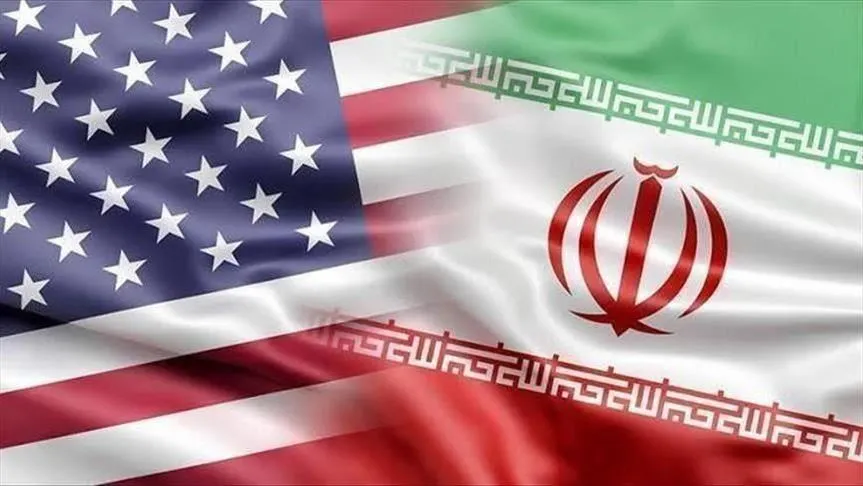
Brent crude fell below $80 a barrel on Monday after the first round of high-level United States–Iran talks in Switzerland concluded with signs of economic and diplomatic progress. Tehran said it had secured waivers covering oil and petrochemical exports, the release of some frozen assets and the start of a reconstruction and development programme.
The announcements reduced immediate fears of a prolonged supply shortage, although shipping risks around the Strait of Hormuz and renewed regional violence remain significant.
Key Overview
- Brent reversed an early rise above $82 and fell below $80 as traders reacted to the outcome of the Switzerland talks.
- Iran said waivers had been secured for oil and petrochemical exports, potentially allowing more Iranian crude to reach international buyers.
- The talks form part of a 60-day process aimed at turning a fragile ceasefire into a broader agreement.
- The Strait of Hormuz remains the main source of market risk because it normally carries about 20 million barrels per day of crude and refined products.
- Additional supply signals from Iraq, the United Arab Emirates and Kuwait also reduced concerns about near-term shortages.
Diplomatic Progress Pushes Brent Lower
Oil prices initially climbed as the negotiations opened amid threats of renewed conflict and another Iranian announcement that the Strait of Hormuz had been closed. Brent reached $82.30 a barrel in early trading before reversing course as the diplomatic picture improved.
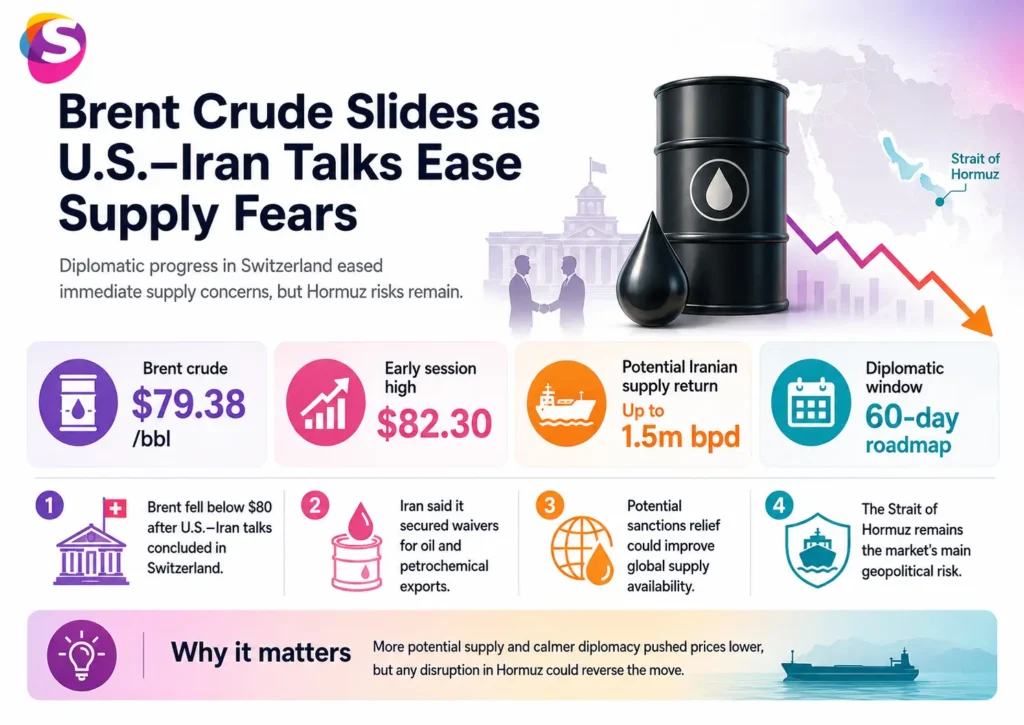
By later in the session, Brent had fallen below $80, while the more actively traded August West Texas Intermediate contract also weakened. The decline reflected expectations that a broader agreement could reduce sanctions pressure on Iran and restore more oil to the global market.
According to the latest market report, Iran’s foreign minister said Tehran had obtained waivers for oil and petrochemical exports, access to some frozen assets and support for reconstruction projects.
The high-level talks also produced a roadmap for further technical discussions during a 60-day negotiating period.
The prospect of sanctions relief is important because it could improve Iran’s ability to sell crude internationally. Market analysts cited in the report estimated that as much as 1.5 million barrels per day of Iranian supply could eventually return to international markets if the waivers are fully implemented and shipping conditions normalise.
Hormuz Risks Still Limit Market Confidence
Despite the price decline, the market has not removed the geopolitical risk premium completely. Commercial traffic through the Strait of Hormuz fell sharply before the talks, and uncertainty remains over whether vessels can move safely and consistently through the waterway.
The strait is critical to global energy security. The International Energy Agency estimates that roughly 15 million barrels of crude and five million barrels of refined products normally pass through it each day, equal to about 20% of global oil consumption.
Any renewed closure, military confrontation or disruption to tanker movements could therefore reverse the recent decline in prices. The ceasefire remains fragile, with violence in Lebanon and disagreements over implementation continuing to threaten the wider diplomatic process.
Context is everything. Stay ahead of shifting trends with today’s market updates, and uncover emerging opportunities using the Serrari Group Market Index and Marketplace. Then, take control of your own financial future by exploring our Money & Life Reset Transformation Blueprint ™ to build stronger habits, create better systems, and design a path toward lasting wealth.
Regional Supply Recovery Adds Downward Pressure
Oil prices also came under pressure from signs that Gulf producers were preparing to restore supply. More than 25 million barrels of Iranian oil had reportedly moved through the blockade line during the previous week, while the United Arab Emirates, Kuwait and Iraq offered additional cargoes to customers.
Iraq also announced plans to gradually restore crude production to between 4.2 million and 4.3 million barrels per day. That would bring output closer to pre-crisis levels and provide further relief to buyers concerned about limited Middle Eastern supply.
The combination of returning Iranian barrels, higher Gulf output and moderate global demand growth has shifted the immediate market focus away from scarcity. Brent had already fallen by more than 8% in the previous week as expectations of improved shipping flows and possible sanctions relief strengthened.
Oil Market Outlook Remains Highly Sensitive
The latest price movement shows that oil traders are placing greater weight on diplomacy, but the outlook remains vulnerable to sudden reversals. A lasting decline in Brent will depend on whether the export waivers are implemented, frozen assets are released and the Strait of Hormuz remains open to commercial traffic.
For now, the conclusion of the Switzerland talks has reduced the probability of an immediate supply shock. However, with the final agreement still under negotiation and regional hostilities unresolved, oil prices are likely to remain highly sensitive to political statements, shipping data and developments during the 60-day ceasefire period.
Sources: Reuters / International Energy Agency
Your financial future isn’t something you wait for—it’s something you build.
The real question is: when do you begin?
Move beyond simply staying informed.
Navigate the markets with clarity—track trends through the Serrari Group Market Index, uncover opportunities in the Serrari Marketplace, and build practical knowledge with our Curated Wealth Builder Platform.
Stay connected to what truly matters.
Get daily insights on macro trends and financial movements across Kenya, Africa, and global markets—delivered through the Serrari Newsletter.
Growth opens doors.
Advance your career through professional programs including ACCA, HESI A2, ATI TEAS 7 , HESI EXIT , NCLEX – RN and NCLEX – PN, Financial Literacy!🌟—designed to move you forward with confidence.
See where money is flowing—clearly and in real time.
Track Money Market Funds, Treasury Bills, Treasury Bonds, Green Bonds, and Fixed Deposits, alongside global and African indexes, key economic indicators, and the evolving Crypto and stablecoin landscape—all within Serrari’s Market Index.