



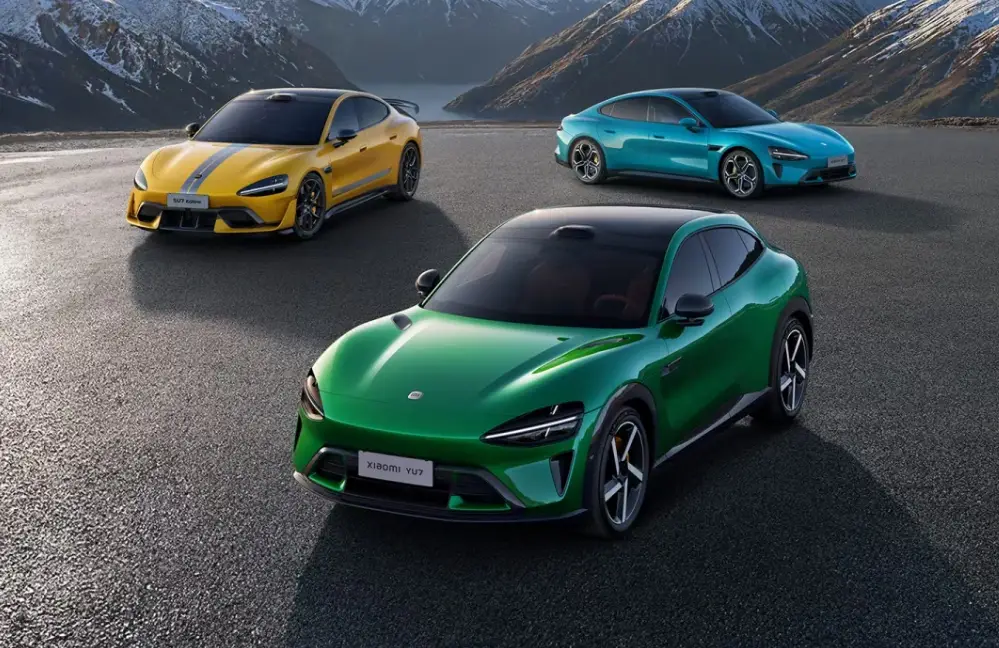
Xiaomi’s electric vehicle division maintained strong delivery momentum in May, surpassing 30,000 vehicle deliveries as competition intensifies in China’s EV market.
The company recently expanded its lineup with a lower-cost YU7 SUV variant and a high-performance YU7 GT model, targeting both mass-market and premium EV buyers.
Despite strong sales growth, Xiaomi’s EV and AI division continues facing profitability pressure as it pushes toward its ambitious 2026 delivery target of 550,000 vehicles.
Key Overview
- Xiaomi EV delivered over 30,000 vehicles in May
- April deliveries reached 36,702 vehicles
- Xiaomi launched a cheaper YU7 SUV model in May
- The company also introduced the high-performance YU7 GT
- Xiaomi aims to deliver 550,000 vehicles in 2026
- Its EV and AI business recorded a 3.1 billion yuan operating loss in Q1
- The company is intensifying competition with Tesla in China
Xiaomi EV Sustains Strong Delivery Growth
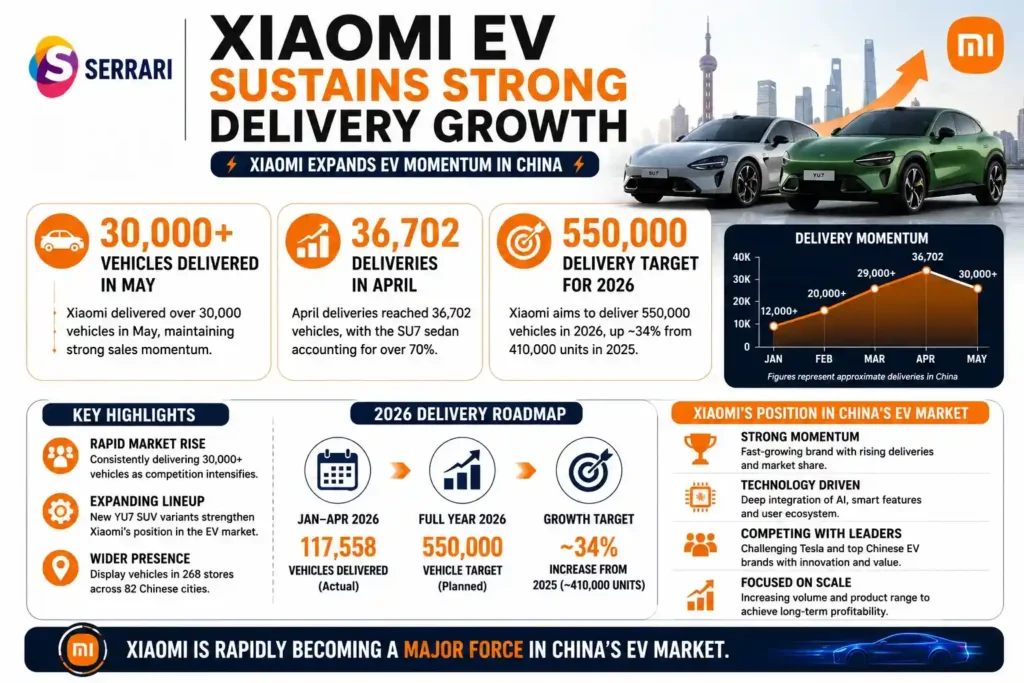
Xiaomi’s electric vehicle business continued to maintain strong delivery momentum in May, delivering over 30,000 vehicles in China’s increasingly competitive EV market.
The Beijing-based technology giant shared the update through Chinese social media platform Weibo, though it did not provide a specific figure.
Detailed monthly delivery data is expected later this month through the China Passenger Car Association’s official report.
The performance follows April deliveries of 36,702 vehicles, with Xiaomi’s SU7 sedan accounting for more than 70% of total sales during the month.
The remaining share came from Xiaomi’s growing SUV lineup, particularly the YU7 model series.
The company’s ability to consistently maintain deliveries above 30,000 vehicles highlights Xiaomi’s rapid rise within China’s electric vehicle industry, where local manufacturers continue intensifying competition through aggressive pricing and rapid product expansion.
Xiaomi Expands Product Lineup
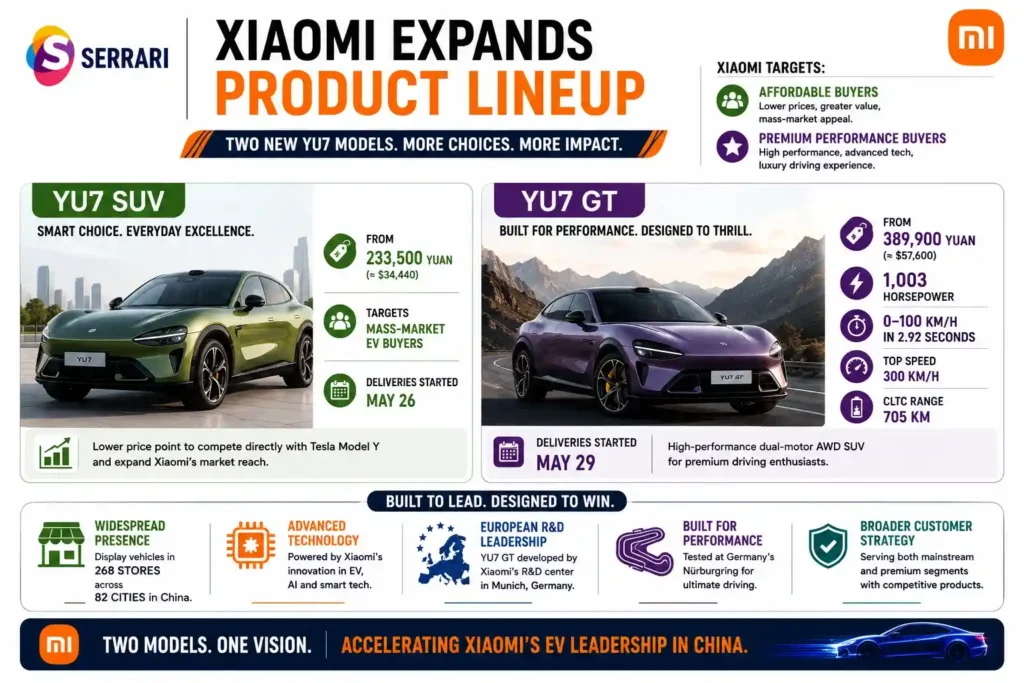
To strengthen its market position further, Xiaomi launched two new YU7 SUV variants in May targeting different customer segments.
On May 21, the company introduced a lower-cost base version of the YU7 SUV priced from 233,500 yuan ($34,440), with deliveries beginning on May 26.
The new model is designed to lower purchasing barriers for consumers while helping Xiaomi compete more directly against Tesla’s Model Y in the world’s largest EV market.
At the same event, Xiaomi also launched the high-performance YU7 GT, expanding into the premium performance EV category.
The YU7 GT starts at 389,900 yuan ($57,600) and features a powerful dual-motor all-wheel-drive system producing approximately 1,003 horsepower.
According to Xiaomi, the SUV can accelerate from zero to 100 km/h in 2.92 seconds and reach a top speed of 300 kilometers per hour.
The model also offers a CLTC-rated driving range of 705 km.
Deliveries of the YU7 GT officially began on May 29.
Xiaomi Targets Both Affordable and Premium Buyers
Analysts say Xiaomi’s latest strategy reflects an effort to capture a broader customer base by simultaneously targeting affordable and premium EV segments.
The lower-priced YU7 variant is aimed at mainstream consumers looking for more affordable electric SUVs, while the YU7 GT targets buyers seeking luxury performance vehicles.
The company also aggressively prepared for the launch by positioning display vehicles across 268 stores in 82 Chinese cities ahead of the rollout.
Development of the YU7 GT was led by Xiaomi’s European research and development center in Munich, established in March 2025.
The model represents the center’s first production-ready vehicle and had previously been spotted testing at Germany’s Nürburgring race track ahead of launch.
Industry analysts say Xiaomi’s combination of aggressive pricing, rapid innovation, and technology-focused branding is helping the company establish itself quickly within China’s crowded EV market.
Context is everything. Stay ahead of shifting trends with today’s market updates, and uncover emerging opportunities using the Serrari Group Market Index and Marketplace. Then, take control of your own financial future by exploring our Money & Life Reset Transformation Blueprint ™ to build stronger habits, create better systems, and design a path toward lasting wealth.
Financial Pressure Remains
Despite strong delivery growth, Xiaomi’s automotive business continues facing profitability challenges.
The company’s innovative business segment, which includes electric vehicles and artificial intelligence operations, recorded a 3.1 billion yuan operating loss during the first quarter.
Xiaomi attributed part of the financial pressure to seasonal factors linked to the Chinese New Year holiday period, as well as temporary disruptions associated with upgrades to the SU7 lineup.
The company is now aiming to improve profitability through broader product offerings and increased delivery volumes.
Xiaomi has set a full-year vehicle delivery target of 550,000 units for 2026, representing an increase of about 34% from roughly 410,000 units in 2025.
Between January and April 2026, Xiaomi EV delivered 117,558 vehicles, according to data compiled by CnEVPost.
Competition in China’s EV Market Intensifies
China remains the world’s largest electric vehicle market and one of the most competitive automotive sectors globally.
Domestic automakers continue battling aggressively on pricing, technology integration, performance, and production scale.
Xiaomi’s growing EV presence comes as established Chinese brands such as BYD and newer entrants intensify efforts to dominate both domestic and international markets.
Tesla also remains a major competitor in China despite increasing pressure from local manufacturers offering cheaper and increasingly advanced electric vehicles.
Analysts say Xiaomi’s success will depend heavily on whether it can maintain strong delivery growth while gradually reducing operating losses and scaling production efficiently.
Outlook
Xiaomi EV’s ability to sustain deliveries above 30,000 vehicles while rapidly expanding its product lineup signals growing momentum in China’s electric vehicle market.
The launch of both affordable and high-performance YU7 models reflects the company’s broader strategy of targeting multiple customer segments while challenging rivals such as Tesla.
As Xiaomi pushes toward its ambitious 2026 delivery target, investors and industry analysts will closely watch whether the company can balance rapid growth with improving profitability in one of the world’s most competitive EV industries.
Your financial future isn’t something you wait for—it’s something you build.
The real question is: when do you begin?
Move beyond simply staying informed.
Navigate the markets with clarity—track trends through the Serrari Group Market Index, uncover opportunities in the Serrari Marketplace, and build practical knowledge with our Curated Wealth Builder Platform.
Stay connected to what truly matters.
Get daily insights on macro trends and financial movements across Kenya, Africa, and global markets—delivered through the Serrari Newsletter.
Growth opens doors.
Advance your career through professional programs including ACCA, HESI A2, ATI TEAS 7 , HESI EXIT , NCLEX – RN and NCLEX – PN, Financial Literacy!🌟—designed to move you forward with confidence.
See where money is flowing—clearly and in real time.
Track Money Market Funds, Treasury Bills, Treasury Bonds, Green Bonds, and Fixed Deposits, alongside global and African indexes, key economic indicators, and the evolving Crypto and stablecoin landscape—all within Serrari’s Market Index.
Sources: CnEVPost, EV, English News

















Comments are closed.