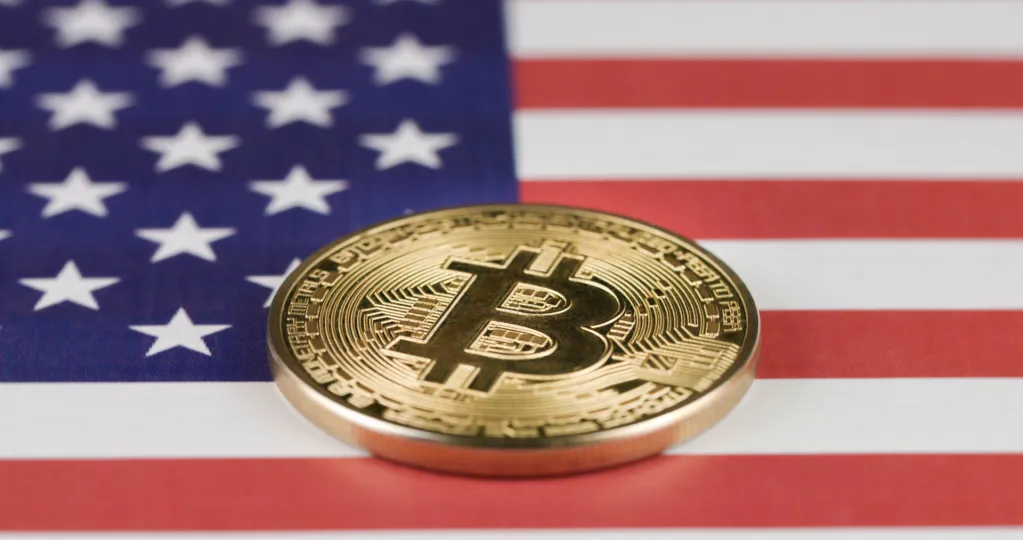
Viral social media posts are circulating claims that Donald Trump is directly involved in launching a cryptocurrency called $USA, citing a signed “crypto contract” and an allegedly imminent presale deadline. No verified announcement from official channels, credible documentation, or regulatory disclosure supports these claims. The promotion follows patterns commonly associated with speculative and potentially fraudulent crypto campaigns — leveraging a high-profile name, manufactured urgency, and exclusivity framing to pressure individuals into fast financial decisions. Investors are strongly advised to conduct thorough due diligence, rely only on verified sources, and treat any unsubstantiated presale promotion as a significant financial risk until credible evidence of legitimacy is independently confirmed.
Key Overview
- Claim: Donald Trump has signed a “crypto contract” and is directly involved in launching a $USA token
- Verification Status: No credible documentation or official announcement confirmed
- Presale Status: Promoted as “nearing completion” — a common urgency tactic
- Red Flags: Unverified backing, urgency messaging, lack of regulatory disclosure
- Pattern Match: Consistent with known speculative and potentially fraudulent crypto campaign tactics
- Risk Level: High — absence of transparency and verified backing
- Recommended Action: Do not participate without independent verification from official, regulated sources
- Key Principle: High-profile name association does not equal legitimacy
When a Name Becomes a Risk
In the history of financial markets, few forces are as reliably exploited by bad actors as the combination of a famous name, a novel asset class, and manufactured urgency. The viral claims currently circulating about a cryptocurrency called $USA — purportedly connected to Donald Trump through a signed “crypto contract” and promoted through a presale described as nearing completion — fit that pattern with uncomfortable precision.
The claims have spread across social media platforms with the velocity that characterises modern misinformation cycles: fast, wide, and largely unchecked. For anyone encountering them without context, the messaging can appear persuasive. Trump is a name that commands attention. Cryptocurrency is a sector where rapid gains — and rapid losses — are well documented. The combination, dressed in the language of exclusivity and urgency, is designed to compress the decision-making window to the point where critical evaluation is abandoned in favour of impulse.
This article is a circuit breaker for that impulse. It examines what is actually known about the $USA token claims, why the absence of verified evidence is itself the most important data point, how this campaign’s tactics map onto well-established patterns of crypto fraud and manipulation, and what investors must do before ever considering participation in any presale — regardless of whose name is attached.
Markets move fast; don’t get left behind. We’ve paired the Serrari Group Market Index with a curated Marketplace and a comprehensive Wealth Builder Course to ensure you have the data—and the skills—to act on it.
Historical Context: Celebrity Crypto and the Anatomy of Hype
The use of celebrity endorsements and high-profile name associations to promote speculative cryptocurrency projects is not a new phenomenon. It is, in fact, one of the most consistent and well-documented tactics in the history of crypto market manipulation — and its track record for ordinary investors is deeply instructive.
The 2017 initial coin offering boom was the first large-scale demonstration of how effectively celebrity association could be weaponised to generate investment inflows into projects with little or no underlying substance. Dozens of ICOs in that period attracted tens of millions of dollars by securing endorsements — paid or falsely implied — from actors, musicians, athletes, and social media influencers. When regulators eventually caught up with many of these projects, investors had lost billions of dollars in aggregate, and the endorsing celebrities faced civil and regulatory consequences in several jurisdictions.
The pattern intensified with the meme coin explosion of 2021. Tokens with no utility, no whitepaper, and no development roadmap attracted hundreds of millions of dollars in investment on the strength of celebrity tweets, social media posts, and in some cases outright fabricated endorsements. Dogecoin’s price movements in response to Elon Musk’s tweets demonstrated the extraordinary price sensitivity of speculative crypto assets to high-profile name associations — and the subsequent losses suffered by retail investors who bought at peak prices illustrated the risk on the downside.
The “rug pull” — a category of crypto fraud in which developers or promoters collect investment through a presale or token launch, then withdraw liquidity and abandon the project, leaving investors with worthless tokens — became one of the defining financial crimes of the crypto boom period. According to Chainalysis data, crypto scams and fraud cost investors approximately $7.7 billion in 2021 alone, with rug pulls accounting for a significant and growing share of that total.
Politicians and world leaders have not been exempt from having their names used — with or without consent — to promote fraudulent crypto schemes. Multiple sitting and former heads of government have had their identities leveraged in fake crypto endorsements, deepfake video promotions, and fabricated contract announcements. The sophistication of these campaigns has increased over time, with AI-generated content now enabling the production of convincing fake video endorsements and fabricated documentation that can be difficult for non-experts to identify as fraudulent on casual inspection.
It is within this well-documented historical context that the $USA token claims must be evaluated — not as an isolated curiosity, but as a recognisable instance of a repeating pattern.
Dissecting the $USA Claims: What the Evidence Actually Shows
The core claims circulating about the $USA token rest on three assertions: that Donald Trump is directly involved in launching the token, that a signed “crypto contract” exists as evidence of that involvement, and that a presale is nearing completion, creating time pressure for prospective investors.
Each of these assertions warrants careful scrutiny.
On Trump’s direct involvement: As of the time of writing, no verified announcement from any official Trump organisation, campaign entity, or personal communications channel confirms direct involvement in a $USA cryptocurrency launch. No regulatory filing — the kind that would be required in most jurisdictions for a token sale involving a named individual with a public profile of this magnitude — has been identified. No statement from Trump’s legal team, business organisation, or any verified spokesperson has confirmed the project. The claim rests entirely on unverified social media posts and promotional content circulating in channels specifically designed to generate hype.
This matters enormously. Trump is a former and current public figure with an extensive and well-documented public communications apparatus. Any legitimate cryptocurrency project bearing his name and involving his direct participation would generate immediate, verifiable, and official confirmation across multiple channels — legal disclosures, press releases from named representatives, and documentation accessible to journalists and regulators. The complete absence of such confirmation in a high-profile claims environment is not a minor gap. It is the central evidentiary finding.
On the “signed crypto contract”: The reference to a signed contract is a specific and deliberate rhetorical device. Contracts imply legal formality, verified commitment, and bilateral obligation. The invocation of a signed contract, in the absence of any actual document available for independent verification, is designed to create an impression of legitimacy that the underlying facts do not support. In the history of crypto fraud, the fabrication or exaggeration of contractual and legal documentation is a recurring tactic precisely because it exploits the trust that legal language commands in financial contexts.
On the presale nearing completion: The “presale nearing completion” framing is a textbook urgency mechanism. Its function is not to convey factual information about token availability — it is to activate loss aversion in prospective investors. The fear of missing out on a limited opportunity is one of the most reliably effective psychological levers in financial manipulation, and its presence in the $USA promotion is a structural red flag independent of any other consideration.
The Anatomy of a High-Risk Crypto Campaign
The $USA token promotion, as described in the source material, exhibits a cluster of characteristics that consistently appear in speculative and fraudulent crypto campaigns. Recognising these characteristics is a practical investor skill that goes well beyond this specific situation.
Name leverage without verified endorsement is the foundation of this category of scheme. The choice of a highly recognisable name — particularly one with strong emotional associations among a large audience — is calculated to transfer perceived legitimacy from the individual to the project. The critical word is “perceived.” Legitimate use of a public figure’s name in a financial promotion requires explicit, documented consent and typically triggers regulatory disclosure requirements. Illegitimate use simply invokes the name and relies on the audience’s insufficient scrutiny to conflate association with endorsement.
Urgency and scarcity framing serves to shorten the evaluation window. A presale that is “nearing completion” communicates implicitly that the opportunity is finite and time-sensitive. This framing is designed to move prospective investors from evaluation mode to action mode before the due diligence process that rational investment decision-making requires can be completed. Any financial promotion that emphasises urgency as a primary motivator should be treated as a red flag regardless of its other claimed attributes.
Exclusivity and insider access language creates a sense of privilege around participation that further suppresses critical evaluation. The implication that participants are accessing something special, limited, or known only to an informed group exploits social proof dynamics and the human tendency to value things more highly when they are perceived as scarce or exclusive.
Absence of verifiable technical documentation is a defining characteristic of this type of promotion. Legitimate crypto projects — those with genuine utility, credible development teams, and honest intentions — publish whitepapers detailing their technical architecture, tokenomics, governance structures, and use cases. They disclose the identities of their development teams and advisers. They engage with legal counsel and produce regulatory-compliant offering documents. The absence of any such documentation in the $USA promotion is consistent with projects that have no genuine technical substance to document.
Context is everything. While you follow today’s updates, use the Serrari Group Market Index and Marketplace to spot emerging shifts. Need to sharpen your edge? Our Wealth Builder Course turns these insights into a professional-grade strategy.
Why Trump’s Name Amplifies Rather Than Validates the Risk
It is important to be precise about what a famous name does and does not do in the context of a crypto promotion.
What it does is amplify reach, accelerate sharing, and increase the probability that individuals who would ordinarily apply basic scepticism to an unsolicited investment opportunity will lower their guard. The psychological mechanism is well understood: cognitive authority transfer, in which credibility associated with a known name is unconsciously attributed to the product or project that name is associated with. It is the same mechanism that makes fake celebrity endorsement advertisements for financial products — a category that has caused enormous harm globally — so persistently effective.
What a famous name does not do is validate a project’s technical merits, confirm the security of investor funds, guarantee the existence of liquidity for token sales, or substitute for regulatory compliance. The history of crypto fraud is populated with projects that attracted enormous investment on the strength of celebrity association and delivered catastrophic losses. The name is the hook, not the substance.
In Trump’s specific case, it is also worth noting that the political dimensions of his public profile create an additional layer of emotional engagement that bad actors can exploit. Supporters who feel positive associations with Trump may be more likely to perceive a Trump-associated project as trustworthy. Critics who believe the association plausible based on prior crypto-adjacent activities may be more likely to share the claims widely, amplifying their reach to audiences who will encounter them without adequate context.
Neither dynamic constitutes evidence of legitimacy. Both dynamics serve the interests of anyone seeking to maximise the spread and impact of a speculative promotion.
Risks to Consider
Total capital loss is the most severe and realistic risk for investors who participate in unverified presales. Rug pulls — in which project creators collect presale funds and subsequently abandon the project — are among the most common outcomes for promotions of this type. Once funds are transferred to a crypto wallet controlled by unknown parties, recovery through legal channels is exceptionally difficult and often impossible.
Regulatory risk for participants is a secondary but real concern. In several jurisdictions, participation in an unregistered token sale may carry legal and tax implications for investors that are not immediately apparent at the time of participation. As global crypto regulation matures, retroactive compliance requirements on undisclosed token holdings are an evolving area of risk.
Reputational and identity risk associated with participation in fraudulent schemes — including the possibility that personal financial information shared during a presale process could be used for subsequent fraud — is an additional dimension that prospective participants should consider carefully.
Challenges for Investors Navigating the Information Environment
Distinguishing authentic from fabricated content is increasingly difficult in an environment where AI-generated text, images, and video can produce convincing fake endorsements and documentation at minimal cost. The traditional heuristics for assessing source credibility — official-looking formatting, authoritative language, named individuals — are no longer reliable guides in isolation.
The speed of social media propagation means that false claims can reach millions of people before fact-checkers, journalists, or regulators have had the opportunity to investigate and publish corrections. By the time authoritative debunking reaches audiences, financial decisions based on the original false claim may already have been made.
The novelty premium that many investors attach to crypto projects — the sense that getting in early on a genuinely new technology can generate extraordinary returns — creates a bias toward optimistic interpretation of ambiguous information that bad actors consistently exploit.
Looking Ahead: Due Diligence as the Only Reliable Defence
The $USA token situation will not be the last instance of this type of promotion. The template — famous name, urgency framing, unverifiable claims, absence of regulatory documentation — is too effective and too easily deployed to disappear from the crypto landscape in the near term. What investors can control is the rigour and consistency of their own evaluation process.
Verified official announcements from named, accountable representatives are the minimum standard for any claim involving a public figure’s involvement in a financial product. Regulatory filings or legal disclosures — the kind that create legal accountability for the parties making them — are a further essential checkpoint. Technical documentation in the form of audited smart contracts, published whitepapers, and identified development teams with verifiable professional histories provides the foundation for assessing whether a project has genuine substance.
In the absence of all three, the appropriate response to any presale promotion — regardless of whose name is attached — is to disengage, conduct independent research through verified channels, and allow adequate time for the claims to be either substantiated or refuted by authoritative sources.
The crypto market offers genuine opportunities for informed, patient, and rigorous investors. It also offers a disproportionate concentration of schemes specifically engineered to separate impulsive investors from their capital. The $USA token claims are, on current evidence, a textbook example of the latter. The most powerful protection available is the simplest: do not act until you can verify, independently and through official channels, that what you are being told is true.
Your financial future isn’t something you wait for, it’s something you build.
The real question is: when do you begin?
Move beyond simply staying informed.
Navigate the markets with clarity—track trends through the Serrari Group Market Index, uncover opportunities in the Serrari Marketplace, and build practical knowledge with our Curated Wealth Builder Course.
Stay connected to what truly matters.
Get daily insights on macro trends and financial movements across Kenya, Africa, and global markets—delivered through the Serrari Newsletter.
Growth opens doors.
Advance your career through professional programs including ACCA, HESI A2, ATI TEAS 7 , HESI EXIT , NCLEX – RN and NCLEX – PN, Financial Literacy!🌟—designed to move you forward with confidence.
See where money is flowing—clearly and in real time.
Track Money Market Funds, Treasury Bills, Treasury Bonds, Green Bonds, and Fixed Deposits, alongside global and African indexes, key economic indicators, and the evolving Crypto and stablecoin landscape—all within Serrari’s Market Index.