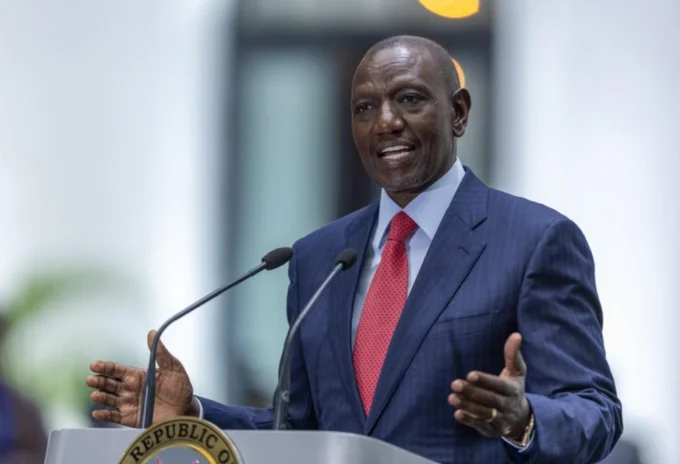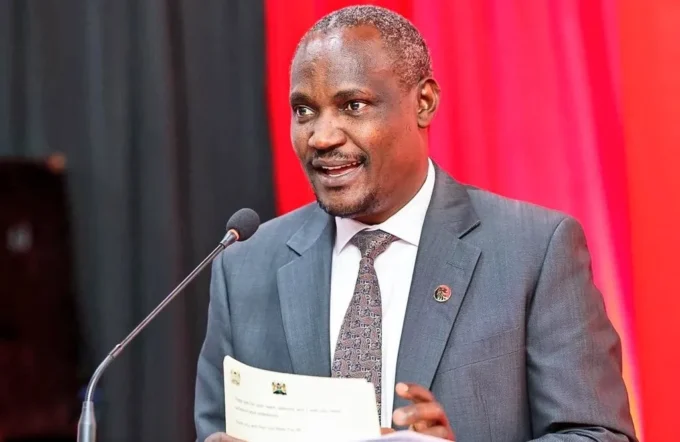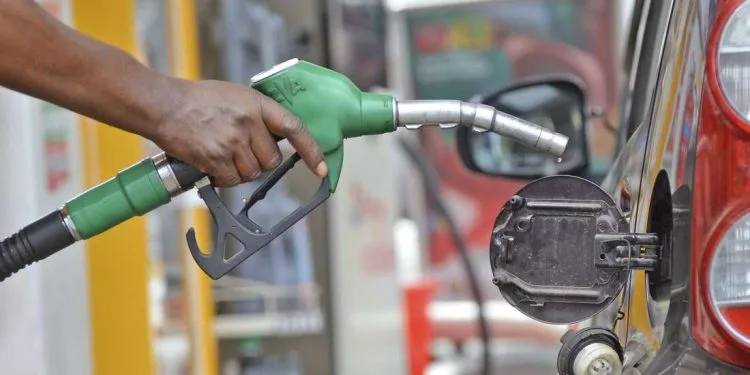
On April 22, 2026, the Petroleum Outlets Association of Kenya (PAOK) issued a dire warning regarding the stability of the country’s energy sector, asserting that the government’s recent fiscal interventions are “cosmetic” and insufficient to prevent a massive price hike. Despite a publicized reduction in Value Added Tax (VAT) on petroleum products, PAOK Chairperson Martin Chomba argues that the move ignores the “weighted average” of arriving fuel shipments and the volatility of the Middle Eastern conflict. Central to the dispute is the National Treasury’s decision to release only KSh 6.2 billion of the KSh 17 billion currently held in the Petroleum Development Levy (PDL) Fund. While the government claims this is a strategic move to manage long-term liquidity, petrol station owners and economic analysts warn that failing to utilize the full fund now leaves Kenya defenseless against the next three months of global shocks. Concurrently, the National Taxpayers Association (NTA) has flagged a growing “exploitation gap” in the public transport sector, where matatu operators are allegedly raising fares by up to 500% more than the actual increase in fuel input costs.
Key Overview
- The “Pointless” VAT Debate: PAOK argues that VAT on fuel is conceptually flawed as the government “adds no value” to the product, merely regulating logistics.
- Stabilisation Fund Shortfall: Only 36% (KSh 6.2B) of the available KSh 17B Petroleum Development Levy has been deployed, leaving a KSh 10.8B gap in consumer protection.
- The 90-Day Forecast: Industry experts predict “exponentially higher” prices by July 2026 due to the specific timing of ship arrivals and the depletion of moderation reserves.
- Fare Exploitation: NTA data reveals that while a Nairobi-Nakuru round trip costs only KSh 587 more in fuel, operators are collecting an additional KSh 4,200 from passengers.
- Structural Decay: The “muffling” of the National Oil Corporation (NOC) is cited as a primary reason why the state lacks the leverage to intervene effectively in the private-dominated market.
Markets move fast; don’t get left behind. We’ve paired the Serrari Group Market Index with a curated Marketplace and a comprehensive Wealth Builder Platform to ensure you have the data—and the skills—to act on it.
Anatomy of a Crisis: Logistics, Levies, and the Looming Fuel Shock
Kenya’s energy landscape in April 2026 has become a battlefield of conflicting economic theories and populist politics. As the government attempts to appease a restless public through tax adjustments, the boots-on-the-ground stakeholders—petrol station owners and logistics managers—are sounding an alarm that suggests the worst is yet to come. The warning from the Petroleum Outlets Association of Kenya (PAOK) isn’t just about the price at the pump today; it is a critique of the very architecture of how Kenya fuels its economy.
The VAT Paradox: Value vs. Regulation
The primary contention raised by PAOK Chairperson Martin Chomba focuses on the philosophical and practical application of Value Added Tax (VAT) on fuel. In a heated television interview on April 21, Chomba highlighted a fundamental disconnect in government policy.
“The government of Kenya doesn’t own even one litre of oil,” Chomba noted. “All they do is regulate and control logistics.”
The argument presented is that VAT, by definition, should be applied to the “value added” during a production process. In the case of imported refined petroleum, the government’s role is purely administrative. By applying VAT—even at a reduced rate—the state is effectively taxing its own logistical inefficiencies and regulatory oversight. PAOK suggests that rather than “lowering” VAT, the government should be looking at the structural costs within the Open Tender System (OTS) and the logistical bottlenecks at the Port of Mombasa, which contribute more to the final price than the tax itself.
The PDL Fund Contention: Why KSh 10.8 Billion is Missing
The most explosive revelation in the current standoff involves the Petroleum Development Levy (PDL) Fund. The PDL was established specifically as a “buffer” to cushion Kenyans against the exact scenario the world faces in 2026: a protracted conflict in the Middle East causing global oil price spikes.
Industry data shows that the fund currently holds KSh 17 billion. However, the government has opted to release only KSh 6.2 billion.
- The Government’s Stance: The Treasury argues that a “phased release” is necessary to ensure that the fund isn’t depleted in a single month, given the uncertainty of the Iran-Israel conflict’s duration.
- PAOK’s Stance: Petrol station owners argue that the shock is happening now. By withholding KSh 10.8 billion, the government is allowing current prices to climb, which in turn triggers “second-round” inflation in food and transport that cannot be easily reversed once established.
Chomba warns that fuel pricing in Kenya is calculated based on the “weighted average” of ships arriving between the 9th and 10th of every month. Without the full moderation of the PDL Fund to offset the current high-cost shipments, the price review for the next three months will likely see diesel and petrol breach historical psychological barriers.
Context is everything. While you follow today’s updates, use the Serrari Group Market Index and Marketplace to spot emerging shifts. Need to sharpen your edge? Our Wealth Builder Platform turns these insights into a professional-grade strategy.
The Fare Hike “Robbery”: NTA’s Mathematical Indictment
While petrol station owners battle the government, the National Taxpayers Association (NTA) has turned its focus to the “predatory” behavior of the Matatu (Public Service Vehicle) sector. On April 20, NTA CEO Patrick Nyangweso presented a mathematical breakdown that has sparked outrage among commuters.
The NTA used the popular Nairobi-Nakuru route as a case study:
- Fuel Consumption: A standard 14-seater diesel matatu uses roughly 32 litres for a 320km round trip.
- Price Increase: Diesel rose by KSh 18.35 per litre (from KSh 178 to KSh 196.63).
- Real Cost Impact: The total extra fuel cost for the trip is KSh 587.20.
- Passenger Impact: When divided by 14 passengers, the “fair” fare increase should be approximately KSh 42 per person.
Instead, the NTA reports that operators have hiked fares by KSh 300 per person. This results in an “excess profit” of KSh 3,612 per trip above the fuel cost increase. Nyangweso described this as “robbing Kenyans in broad daylight,” calling on the Ministry of Transport to enforce stricter fare regulations to prevent operators from using fuel price reviews as a smokescreen for profiteering.
The Muffling of the National Oil Corporation (NOC)
A recurring theme in the 2026 fuel crisis is the perceived impotence of the National Oil Corporation of Kenya (NOC). Historically, NOC was intended to act as a “price stabilizer” by holding strategic reserves and competing with private oil majors to keep margins thin.
However, Chomba and other industry analysts point out that NOC has been “muffled” by debt and a lack of political will. Without a functional state-owned entity to import a significant portion of the country’s fuel (the “G-to-G” or Government-to-Government deal notwithstanding), the market is at the mercy of private marketers whose primary loyalty is to shareholders, not the Kenyan taxpayer. The “unresolved systemic issues” mentioned by PAOK refer largely to this lack of a state-controlled “swing” player in the petroleum market.
Geopolitical Pressures: The Middle East Factor
The Energy and Petroleum Regulatory Authority (EPRA) has signaled that Kenya’s “hand is forced” by the global market. As of April 2026, the situation in the Middle East has entered a critical phase, impacting the Strait of Hormuz.
- Insurance Premiums: Ships carrying refined products to East Africa are facing “war risk” premiums that have doubled since January.
- Supply Diversion: Some shipments intended for the Port of Mombasa are being diverted to European markets willing to pay a higher premium, creating a local “artificial” scarcity that PAOK warns will lead to the next price jump.
The Political Fallout: Ruto, Kalonzo, and the Public Pulse
The fuel crisis has predictably become a political lightning rod. Opposition leaders, led by Kalonzo Musyoka, have scoffed at President William Ruto’s recent remarks comparing Kenya’s prices to neighboring countries. Musyoka argued that the “neighbor comparison” is a fallacy because it ignores Kenya’s higher tax-to-income ratio and the fact that Kenya serves as the transit hub for landlocked neighbors like Uganda and Rwanda.
Meanwhile, in the Senate, voices like Senator Nyutu have slammed the police for arresting demonstrators protesting the fuel hikes. The “Fuel Protests” of early April have created a tense atmosphere, where any “exponential” increase in prices over the next 90 days could lead to widespread civil unrest.
EPRA’s Strategy: Electricity vs. Fuel
In an effort to provide some good news, EPRA recently revealed a strategy to lower electricity costs. The plan involves shifting away from Thermal Power Plants (which use expensive heavy fuel oil) toward more geothermal and wind energy. However, for the average Kenyan, lower electricity bills in the future do little to alleviate the “transport poverty” caused by KSh 196 diesel today.
The NTA has urged the government to consider “direct transport subsidies” for PSV operators who agree to cap their fares, rather than broad VAT cuts that seem to be absorbed by the supply chain before reaching the consumer.
Conclusion: A Summer of Discontent?
As we move toward the second half of 2026, the warnings from PAOK and the NTA paint a picture of an economy on the brink. The government’s decision to hold back KSh 10.8 billion in stabilization funds appears to be a gamble that the Middle East conflict will resolve itself quickly. If that gamble fails, the “weighted average” of ship arrivals in May and June will hit the Kenyan economy with the force of a tidal wave.
The solution, according to industry stakeholders, requires more than just tax tweaks. It requires:
- Full Deployment of the PDL Fund: Using the entire KSh 17 billion to flatten the price curve immediately.
- NOC Resuscitation: Empowering the National Oil Corporation to act as a genuine market participant.
- Fare Enforcement: Using data from the NTA to crack down on “exorbitant” matatu profits.
- Logistical Overhaul: Reducing the “non-tax” costs of moving fuel from the ship to the pump.
Without these structural changes, the “exponential” price increase warned of by Martin Chomba may not just be a prediction—it may be an inevitability.
Your financial future isn’t something you wait for—it’s something you build.
The real question is: when do you begin?
Move beyond simply staying informed.
Navigate the markets with clarity—track trends through the Serrari Group Market Index, uncover opportunities in the Serrari Marketplace, and build practical knowledge with our Curated Wealth Builder Platform.
Stay connected to what truly matters.
Get daily insights on macro trends and financial movements across Kenya, Africa, and global markets—delivered through the Serrari Newsletter.
Growth opens doors.
Advance your career through professional programs including ACCA, HESI A2, ATI TEAS 7 , HESI EXIT , NCLEX – RN and NCLEX – PN, Financial Literacy!🌟—designed to move you forward with confidence.
See where money is flowing—clearly and in real time.
Track Money Market Funds, Treasury Bills, Treasury Bonds, Green Bonds, and Fixed Deposits, alongside global and African indexes, key economic indicators, and the evolving Crypto and stablecoin landscape—all within Serrari’s Market Index.