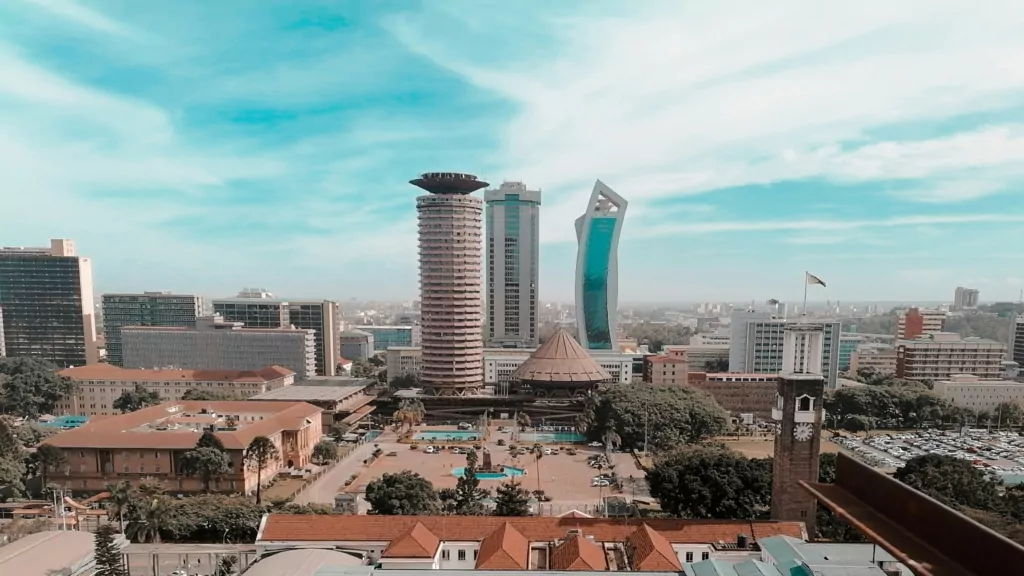
Africa’s real estate market is on a powerful long-term growth trajectory, valued at $160.5 billion in 2024 and projected to reach as high as $347.31 billion by 2034, driven by rapid urbanisation, a young and growing population, and deepening infrastructure investment across the continent’s major cities. Nigeria alone hosts the continent’s largest real estate market, with a projected value of approximately $2.4 trillion in 2025, while property prices in Lagos’s infrastructure-linked corridors such as Lekki and Ibeju-Lekki have recorded appreciation rates of between 20% and 25%. With Africa’s urban population expected to reach 722 million by 2026, demand pressure on housing, office, and retail infrastructure is intensifying across cities including Lagos, Nairobi, Cape Town, and Cairo — reshaping how developers, institutional investors, and governments think about property allocation on the continent.
Key Overview
- Market Value (2024): $160.5 billion
- Projected Value (2031): $282.4 billion
- Projected Value (2034): $347.31 billion
- CAGR: 8.6%
- Nigeria Market Size (2025): ~$2.4 trillion
- Lagos Appreciation Rate (Key Corridors): 20–25%
- Africa Urban Population (2026 Projection): 722 million
- Key Growth Cities: Lagos, Nairobi, Cape Town, Cairo
- Primary Demand Drivers: Urbanisation, infrastructure investment, population growth
- Dominant Development Trend: Mixed-use and high-density projects
The Continent’s Most Compelling Investment Story
Africa’s real estate market does not move in headlines the way its technology or natural resources sectors do. It moves in foundation pours, title deed registrations, infrastructure corridors, and the quiet but relentless pressure of millions of people moving from rural areas into cities every single year. That movement — demographic, economic, and spatial — is now translating into one of the most structurally compelling investment opportunities on the planet.
The numbers frame the scale of what is underway. A market valued at $160.5 billion in 2024 is projected to reach $282.4 billion by 2031 and $347.31 billion by 2034. That is more than a doubling of market value in a decade — growth driven not by speculative enthusiasm but by the most durable of all economic fundamentals: people need places to live, work, and trade, and Africa’s cities are filling faster than its built environment can accommodate them.
For investors — Nigerian, pan-African, and international — understanding what is driving this growth, where the opportunities are most concentrated, and what risks could complicate returns is no longer a niche analytical exercise. It is a core portfolio question.
Markets move fast; don’t get left behind. We’ve paired the Serrari Group Market Index with a curated Marketplace and a comprehensive Wealth Builder Course to ensure you have the data—and the skills—to act on it.
Historical Context: From Informality to Institutional Capital
Africa’s relationship with real estate as a formalised investment asset class is relatively recent, and appreciating its evolution helps explain both the scale of current opportunity and the persistence of structural challenges.
For most of the post-independence period across sub-Saharan Africa, property markets were characterised by informality, weak title systems, and limited institutional participation. Land tenure in many countries remained a complex patchwork of customary rights, colonial-era allocations, and state ownership frameworks that created uncertainty for private investors and made large-scale formal development difficult. Mortgage markets, where they existed at all, were accessible only to a narrow segment of the formally employed population. The vast majority of urban housing was self-built, incrementally constructed, and financed through personal savings and informal credit.
The formal real estate sector that did exist in the 1980s and 1990s was dominated by government housing estates, a small number of commercial property developers serving multinational corporations and expatriate communities, and luxury residential developments in the wealthiest urban neighbourhoods. Institutional investment — pension funds, REITs, private equity real estate funds — was virtually absent from sub-Saharan African markets outside South Africa.
The transformation began in earnest in the early 2000s, driven by a convergence of factors: sustained economic growth across a broad range of African economies following debt relief and commodity price recovery, the emergence of a growing middle class with disposable income and aspirations for formal housing, improvements in regulatory frameworks and land administration systems in several key markets, and the arrival of pan-African and international institutional capital seeking yield in a low-rate global environment.
South Africa, with the most developed property market on the continent, provided an early template. Its REIT structure, established in 2013, created a transparent and liquid vehicle for institutional real estate investment that attracted both domestic and international capital. Retail mall development across South Africa and, subsequently, across East and West Africa, demonstrated that formal commercial real estate could generate competitive returns in African markets. Nairobi’s rapid development of Grade-A office space in the 2010s, Lagos’s emergence as a hub for luxury residential and mixed-use development, and Cairo’s sustained growth in residential construction all reflected the same underlying dynamic: formal real estate was becoming a genuine asset class across the continent.
The current growth cycle, projected to sustain an 8.6% compound annual growth rate, represents the maturation of that transition — a market moving from early-stage formalisation to institutional scale
The Urbanisation Engine: Why the Demand Is Structural
No factor shapes Africa’s real estate growth story more fundamentally than urbanisation. The continent’s urban population is projected to reach 722 million by 2026 — a figure that represents not just a statistical milestone but an enormous, ongoing reconfiguration of where Africans live and how they need to be housed, serviced, and connected.
Africa is urbanising faster than any other region in the world. In 1950, fewer than 15% of Africans lived in cities. By 2024, that share had risen to approximately 44%, and the trajectory continues steeply upward. The United Nations projects that by 2050, over 60% of Africa’s population — which will itself have grown to approximately 2.5 billion — will be urban. The absolute numbers involved are staggering: Africa’s cities will need to accommodate roughly a billion additional urban residents over the next 25 years.
This is not future tense. It is happening now, in Lagos, Nairobi, Abidjan, Dar es Salaam, Accra, and Cairo, and the pressure it creates on housing, commercial space, and urban infrastructure is immediate and intense.
Lagos is the most extreme case. Africa’s largest city by population — estimates range from 15 to 25 million depending on how the metropolitan boundary is defined — is growing by an estimated 600,000 people annually. Formal housing supply has chronically lagged that growth, creating a structural deficit that has driven property prices sharply upward, particularly in areas with reliable infrastructure access. The Lekki-Epe corridor, anchored by the Lekki Free Trade Zone, the under-construction Lekki Deep Sea Port, and the Lekki-Epe Expressway infrastructure, has become the focal point of Lagos’s most intense property price appreciation, with rates reaching 20 to 25% annually in prime corridors.
Nairobi, Johannesburg, Cape Town, and Cairo each reflect their own versions of the same underlying dynamic: urban populations growing faster than formal real estate supply, infrastructure investment creating new value corridors, and a growing professional and middle-class population seeking formal housing and commercial space that meets international quality standards.
The developer response — a shift toward mixed-use and high-density projects — is a rational adaptation to this environment. Mixed-use developments that combine residential, retail, and office components on a single site extract maximum value from scarce, well-located urban land. High-density residential development extends the supply of formal housing units without requiring proportional expansion of urban land area. Both approaches reflect a maturing development market responding intelligently to supply constraints and demographic demand.
Nigeria: The Continent’s Largest Market in Focus
Nigeria’s real estate market warrants specific attention, both for its scale and for the dynamics that make it simultaneously the most compelling and most complex opportunity on the continent.
The market’s projected value of approximately $2.4 trillion in 2025 — revised slightly downward from earlier estimates of $2.5 to $2.6 trillion but still representing an enormous absolute figure — reflects a combination of factors unique to Nigeria’s economic structure. The size of the population, at over 220 million, the scale of Lagos as a megacity, the concentration of corporate headquarters and financial institutions that drive commercial real estate demand, and the depth of Nigeria’s middle and upper-middle class all contribute to a market of exceptional scale.
The Lekki and Ibeju-Lekki corridor is the single most important spatial development story within Nigeria’s market today. Infrastructure investment — the Lekki Deep Sea Port, the Dangote Refinery, the Lekki Free Trade Zone, and ongoing road and bridge improvements — has transformed what was relatively undeveloped coastal land into the city’s most dynamic growth zone. Appreciation rates of 20 to 25% in this corridor are not driven by speculation alone. They reflect genuine infrastructure-linked demand — the rational expectation that land and property adjacent to major economic infrastructure will command premium values as that infrastructure becomes operational.
The inflation and high construction cost environment that has characterised Nigeria in recent years adds complexity to the investment picture. Construction costs in Nigeria have risen sharply, driven by naira depreciation — which increases the cost of imported building materials and equipment — and by domestic inflation that raises labour and locally sourced material costs. For developers, this compression between rising input costs and a market that, while growing, has limits on how much end users can absorb in property prices, is a genuine margin challenge. For investors purchasing completed assets, however, the inflation environment provides a degree of real asset protection that fixed income instruments in the same market cannot match.
Context is everything. While you follow today’s updates, use the Serrari Group Market Index and Marketplace to spot emerging shifts. Need to sharpen your edge? Our Wealth Builder Course turns these insights into a professional-grade strategy.
Why This Matters: The Investment Case in Context
Africa’s real estate growth story matters for several interconnected reasons that go beyond the headline market size projections.
The yield premium is real and substantial. Prime commercial real estate in Lagos, Nairobi, and other major African cities offers rental yields that significantly exceed those available in equivalent-quality assets in European or North American markets. Gross rental yields of 7 to 10% on well-located Lagos commercial property, compared to 3 to 5% in comparable London or New York assets, reflect both higher risk premia and genuine supply-demand dynamics. For yield-seeking institutional investors, that differential is increasingly hard to ignore.
The demographic tailwind is multi-decade. Africa’s urbanisation story will not be complete in five or ten years. It is a structural transformation that will play out over the remainder of this century. Investors entering the market now are positioning for compounding growth in urban property demand that has more in common with the long arc of East Asian urbanisation between 1970 and 2010 than with a typical real estate cycle.
The infrastructure-property nexus is becoming more legible. As major infrastructure projects — ports, expressways, free trade zones, energy facilities — reach completion across key markets, the property value creation they generate is becoming more predictable. The Lekki corridor in Lagos is the clearest current example, but equivalent infrastructure-linked appreciation dynamics are visible in Nairobi’s Nairobi Expressway corridor, Cairo’s New Administrative Capital, and Abidjan’s ongoing port and road investment programme.
Diaspora and foreign direct investment is accelerating. Nigerian investors, both domestic and diaspora-based, are increasingly directing capital into real estate as a preferred store of value and wealth-building vehicle. The same pattern is visible across the Ghanaian, Kenyan, and South African diaspora communities. This demand channel is growing, digitally connected, and increasingly served by platforms and fund structures designed specifically to facilitate remote real estate investment.
Risks to Consider
The growth trajectory is compelling, but Africa’s real estate market carries specific risk characteristics that investors must price carefully.
Currency risk is the most immediate concern for international investors. Real estate assets are denominated and generate returns in local currencies — naira, shilling, rand — that have experienced significant depreciation against hard currencies over recent years. A 20% property appreciation in naira terms can translate into a flat or negative dollar return if the naira has depreciated by a corresponding amount during the same period.
Title and land tenure risk persists across several markets, particularly in Nigeria where competing claims on land, inadequate title registration systems, and the risk of government revocation remain genuine concerns for investors without the local expertise to conduct thorough due diligence.
Liquidity risk is a structural feature of African real estate markets. Transaction volumes are lower, buyer pools are shallower, and exit timelines are longer than in more liquid developed markets. Investors who need to realise capital quickly may find that achievable exit prices fall significantly below paper valuations.
Regulatory and political risk — including changes to foreign ownership rules, taxation of property transactions, rent control legislation, and expropriation risk in certain markets — requires careful country-specific assessment.
Challenges Ahead
Mortgage market depth remains a critical constraint. Across most African markets, mortgage penetration as a share of GDP is below 5%, compared to 50 to 80% in developed economies. Without accessible mortgage finance, the majority of the population that could theoretically drive housing demand remains unable to translate that demand into purchasing power. Expanding mortgage availability — through both commercial banks and government-backed housing finance schemes — is the single most important structural enabler for deepening formal residential real estate markets.
Infrastructure gaps continue to constrain development in all but the most prime locations. Reliable electricity, water supply, road access, and internet connectivity are prerequisites for formal real estate development that commands institutional-quality rents and values. In many secondary cities and urban periphery locations where land is more affordable, infrastructure deficits limit the viability of formal development without significant additional investment.
Skills and capacity constraints in construction, project management, and property management create both cost pressures and quality inconsistencies that affect investor confidence and end-user satisfaction. Building the human capital base to support the continent’s construction pipeline is a challenge that will take time and deliberate investment to address.
Looking Ahead: The Decade of African Property
The projection of a $347 billion market by 2034 is, if anything, conservative when measured against the demographic and economic forces behind it. What that market looks like in terms of asset composition, investor mix, and geographic distribution will depend substantially on how governments, developers, and financial institutions respond to the structural challenges that currently constrain supply and accessibility.
The cities that emerge as the decade’s standout real estate markets will be those that most effectively combine infrastructure investment, regulatory clarity, mortgage market development, and openness to institutional and foreign capital. Lagos, Nairobi, and Cairo are already in that conversation. Abidjan, Kigali, Dar es Salaam, and Accra are making credible claims to join it.
For investors — Nigerian entrepreneurs diversifying wealth, diaspora professionals seeking home-country exposure, and international institutions looking for yield in a low-growth global environment — the core message from the data is consistent: the structural case for African real estate is strong, the growth is measurable, and the window for early-mover positioning in a market approaching institutional scale is open but will not remain so indefinitely.
The foundation, in every sense, is being laid.
Your financial future isn’t something you wait for, it’s something you build.
The real question is: when do you begin?
Move beyond simply staying informed.
Navigate the markets with clarity—track trends through the Serrari Group Market Index, uncover opportunities in the Serrari Marketplace, and build practical knowledge with our Curated Wealth Builder Course.
Stay connected to what truly matters.
Get daily insights on macro trends and financial movements across Kenya, Africa, and global markets—delivered through the Serrari Newsletter.
Growth opens doors.
Advance your career through professional programs includingACCA,HESI A2,ATI TEAS 7,HESI EXIT ,NCLEX – RNandNCLEX – PN,Financial Literacy!🌟—designed to move you forward with confidence.
See where money is flowing—clearly and in real time.
Track Money Market Funds, Treasury Bills, Treasury Bonds, Green Bonds, and Fixed Deposits, alongside global and African indexes, key economic indicators, and the evolving Crypto and stablecoin landscape—all withinSerrari’s Market Index.