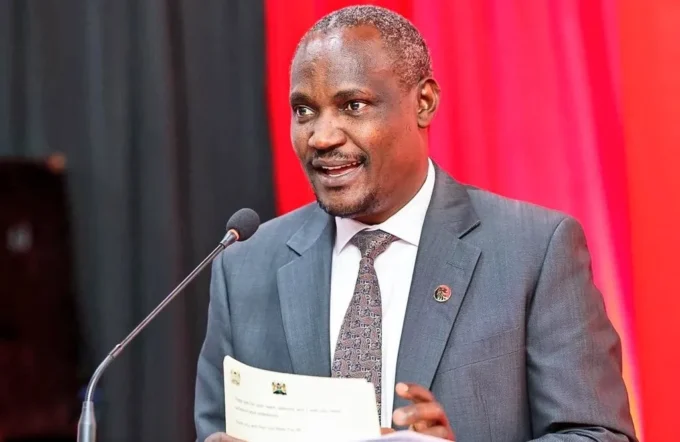
Tunisian Prime Minister Sarra Zaafrani Zenzri met with EBRD President Odile Renaud-Basso on the sidelines of the Africa Forward Summit in Nairobi on May 11, 2026, signaling Tunisia’s intent to elevate its partnership with the European Bank for Reconstruction and Development to a more advanced level. The discussions centred on expanding cooperation across infrastructure, energy, renewables, phosphate, digital transition, public sector governance, and human capital development. A key focus was the ELMED project — a planned 600 MW submarine electricity interconnection between Tunisia and Italy that represents the first direct current link between Europe and North Africa. The meeting came weeks after the EBRD Board of Directors approved the Tunisia Country Strategy 2026–2031, a new roadmap designed to align with Tunisia’s national Development Plan 2026–2030. The two sides also discussed emergency financing mechanisms to mitigate the impact of the current global economic crisis.
Markets move fast; don’t get left behind. We’ve paired the Serrari Group Market Index with a curated Marketplace and a comprehensive Wealth Builder Platform to ensure you have the data—and the skills—to act on it.
Key Takeaways
- PM Zenzri met EBRD President Renaud-Basso at the University of Nairobi during the Africa Forward Summit to discuss advancing the bilateral partnership.
- The EBRD approved the Tunisia Country Strategy 2026–2031 in February 2026, aligning with Tunisia’s Development Plan 2026–2030.
- The ELMED project, a €850 million submarine cable linking Tunisia and Italy, was highlighted as a flagship cooperation priority expected to enter service by 2028.
- The EBRD invested €398 million across 12 projects in Tunisia in 2025, a record level for the country.
- Tunisia’s GDP grew 2.5 percent in 2025, but the economy faces structural challenges including 15.2 percent unemployment, high public debt, and energy import dependence.
- Emergency financing mechanisms were reviewed to help Tunisia manage the ongoing global economic turbulence.
Tunisia’s push to modernise its economy and reduce its dependence on imported fossil fuels received a high-level diplomatic boost when Prime Minister Sarra Zaafrani Zenzri met with Odile Renaud-Basso, the President of the European Bank for Reconstruction and Development, on the sidelines of the Africa Forward Summit in Nairobi on May 11, 2026.
The meeting, held at the University of Nairobi in the presence of Tunisia’s Ambassador to Kenya Anouar Ben Youssef, was framed by both sides as a pivotal moment in the bilateral relationship. Zenzri said Tunisia is keen to take partnership priorities to a more advanced level, adding that this would “instil new dynamics in bilateral partnership and expand cooperation in the service of Tunisia’s interests and the aspirations of its people for equitable development and social justice.”
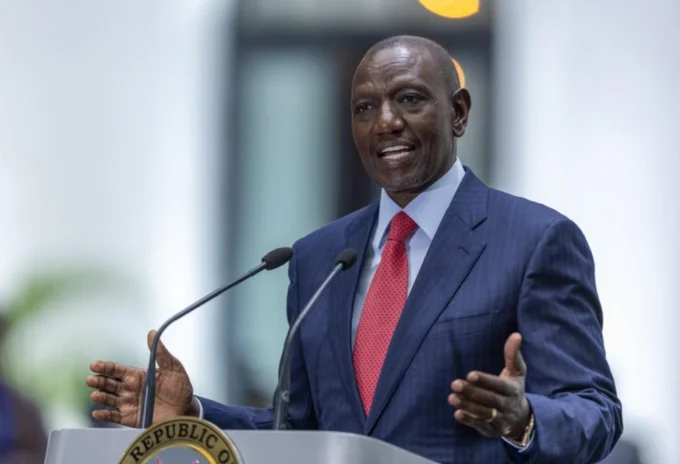
The Prime Minister also affirmed that Tunisia has chosen to broaden its strategic partnerships on the international stage through an approach based on mutual respect, equality, and the pursuit of shared interests — language that reflects the broader diplomatic tone of the Africa Forward Summit, which was co-hosted by Kenyan President William Ruto and French President Emmanuel Macron and drew leaders from more than 30 nations.
The EBRD’s New Tunisia Strategy
A central element of the Nairobi discussions was the EBRD’s newly approved Tunisia Country Strategy 2026–2031, which the bank’s Board of Directors signed off on in February 2026. The strategy is designed to align with the priorities and objectives of Tunisia’s national Development Plan 2026–2030, and Renaud-Basso expressed satisfaction that Tunisia’s national priorities now closely match the bank’s areas of action, particularly in renewables, infrastructure, transport, digital transition, and public sector governance.
The EBRD has been investing in Tunisia since 2012 and has grown into one of the largest international financial institutions supporting the country’s private sector. In 2025, the bank reached a record €398 million in investment across 12 projects in Tunisia, part of a broader €2.8 billion record investment across the southern and eastern Mediterranean region. Key projects included a €50 million development-linked loan to Tunisie Telecom to upgrade mobile networks and expand fibre connections, as well as EU-supported loans for youth-led small and medium enterprises under the Youth in Business programme.
The Tunisian government’s own 2026 economic strategy projects investment rising by 12 percent in current prices in 2026, reaching approximately TND 29,978.5 million (equivalent to 16 percent of GDP), supported by roughly TND 4,000 million in foreign direct investment. Priority sectors include agriculture, renewable energy, transport infrastructure, and digital transformation — areas that closely mirror the EBRD’s stated focus areas for the country.
The ELMED Project: Centrepiece of Energy Cooperation
The most prominent infrastructure project discussed during the Nairobi meeting was ELMED, the planned Tunisia–Italy electricity interconnection that both sides regard as a flagship of their partnership. ELMED will be a 600 MW high-voltage direct current submarine cable running approximately 200 kilometres from the Partanna electrical substation in Sicily, Italy, to a new substation at Mlaabi on the Tunisian peninsula of Cape Bon, at a maximum depth of around 800 metres.
The project, managed jointly by Tunisia’s state-owned electricity utility STEG and Italian grid operator Terna, represents the first direct current electricity connection between Europe and North Africa. It carries a total estimated cost of approximately €850 million and is supported by a broad coalition of international financiers, including Team Europe, which committed €472.6 million (including €334.6 million in EU grants), the World Bank (which provided a $268.4 million loan to Tunisia for the project), and additional financing from the EBRD, the European Investment Bank, and Germany’s KfW.
The EBRD itself is providing a €45 million financing package to STEG to support ELMED’s construction, along with a €5 million EU grant for a comprehensive technical cooperation package covering regulatory alignment between the Italian and Tunisian grids. In September 2025, Italian cable manufacturer Prysmian was awarded the tender for the submarine cable construction, with the contract valued at approximately €460 million.
Renaud-Basso told Zenzri that ELMED is likely to open up wider horizons for bilateral cooperation and give impetus to regional energy integration. The interconnection is scheduled to enter service by the end of 2028 and, once operational, would allow bidirectional electricity exchange between the European and North African grids — a development that proponents argue could accelerate renewable energy investment on both sides of the Mediterranean.
Tunisia’s Prime Minister has been personally pushing to accelerate ELMED’s implementation, calling in January 2026 for “rigorous and continuous monitoring through periodic control mechanisms that accompany the progress of the works.”
Context is everything. While you follow today’s updates, use the Serrari Group Market Index and Marketplace to spot emerging shifts. Need to sharpen your edge? Our Wealth Builder Platform turns these insights into a professional-grade strategy.
Tunisia’s Economic Context
The EBRD partnership deepening comes at a time when Tunisia’s economy shows signs of recovery but continues to face significant structural challenges. According to the World Bank’s latest country overview, Tunisia’s GDP grew 2.5 percent in 2025, driven by an agricultural recovery, increased activity in the components industry, and private consumption growth. This followed years of stagnation — growth was just 0.2 percent in 2023 and 1.6 percent in 2024.
However, major headwinds persist. Public debt, while declining from 84.9 percent of GDP in 2024 to an estimated 82.2 percent in 2025, remains well above the pre-COVID level of 67.8 percent in 2019. The unemployment rate stood at 15.2 percent in the fourth quarter of 2025, down from 16.5 percent a year earlier but still elevated. Inflation has moderated to 5.7 percent on average in 2025, aided by a policy interest rate that was maintained at 8 percent through most of the year before being cut to 7 percent in December 2025.
Tunisia’s energy situation adds urgency to the EBRD partnership. The country’s energy independence rate has been falling, with approximately 48 percent of energy needs imported in 2022 and around 97 percent of electricity still generated from fossil fuels, predominantly natural gas imported from Algeria. The energy trade balance accounted for over half of Tunisia’s merchandise trade deficit. This dependency makes the country acutely vulnerable to global commodity price swings and underscores why the ELMED interconnection and broader renewable energy development are considered strategic priorities.
The Tunisian government has set a target of 35 percent renewable energy in its electricity system capacity by 2030, up from roughly 3 percent currently, with a pathway toward 50 percent by 2035 and 100 percent by 2050. To reach these targets, the government is building 500 megawatts of solar capacity through projects in Kairouan, Sidi Bouzid, and Tozeur, with plans to award another 1,700 megawatts by 2026. Tunisia’s solar potential is vast — the World Bank estimates the country has a production potential of approximately 320 gigawatts compared to current peak demand of around 5 GW.
Beyond Energy: Phosphate, Governance, and Social Development
The Nairobi discussions were not limited to energy. According to the Prime Ministry’s statement, the two sides discussed cooperation on infrastructure, phosphate, business environment, human capital development, and socially oriented sectors.
Phosphate is a particularly significant sector for Tunisia. The country is a major global producer of phosphate rock, which the European Commission has classified as one of 20 critical raw materials. State-owned Compagnie des Phosphates de Gafsa (CPG) has faced years of production disruptions linked to governance issues and social unrest, but the sector retains enormous potential — particularly as phosphate gains importance in lithium ferro phosphate (LFP) batteries used in electric vehicles and energy storage systems. Revitalising phosphate production and processing is considered central to Tunisia’s export diversification and industrial development ambitions.
Public sector governance reform is another priority area flagged by both sides. The EBRD has historically focused on improving governance of state-owned enterprises in its partner countries, and Tunisia — where the state utility STEG controls over 90 percent of installed power generation capacity and state-owned companies play outsized roles across multiple sectors — presents a natural focus for this work.
The Italian news agency Agenzia Nova reported that the EBRD’s new country strategy for Tunisia acknowledges that the country’s economic model remains vulnerable to external shocks due to concentrated export markets, currency restrictions, weak capital markets, and limited access to credit for small businesses, women, young people, and populations in inland regions. The strategy aims to address these structural vulnerabilities through a combination of private sector financing, institutional reform, and targeted support for underserved communities.
Emergency Financing and the Broader Summit Context
The two sides also reviewed emergency financing mechanisms that the EBRD can make available to member states to mitigate the impact of the current global economic crisis. The discussion reflects the broader pressures facing North African economies — from volatile commodity prices and tightening global financial conditions to climate-related challenges and trade disruptions.
The meeting took place within the broader context of the Africa Forward Summit, a two-day event co-hosted by Presidents Ruto and Macron that mobilised €23 billion ($27 billion) in combined investment commitments from French and African companies across energy transition, agriculture, and artificial intelligence. Macron’s framing of the summit emphasised a shift from aid to investment — a theme that resonated with Zenzri’s emphasis on partnerships built on mutual respect and shared interests rather than dependency.
For Tunisia, the Nairobi engagement represents a diplomatic effort to position the country as a serious partner for international development finance at a time when its economy is recovering but its structural reform agenda remains unfinished. The EBRD’s new country strategy, the ELMED project’s advancing construction timeline, and the record investment levels reached in 2025 collectively suggest that the partnership is entering a more substantive phase — one that could help shape Tunisia’s economic trajectory through the end of the decade.
Sources
Zawya / AllAfrica / Tunis Afrique Presse / News Tunisia (Tunisie Numérique) / Tunisie Tribune / African Manager / Agenzia Nova / SolarQuarter / FundsforNGOs / EBRD News / EBRD Strategies and Policies / ELMED Project (elmedproject.com) / EU External Action Service (EEAS) / Prysmian / Energy Capital & Power / World Bank Tunisia Overview / World Bank Economic Monitor Tunisia / World Bank Green Energy Production Tunisia / Transnational Institute / France 24 / Al Jazeera / Billionaires.Africa / Africa Forward Summit Official Site / Natural Resource Governance Institute
Your financial future isn’t something you wait for—it’s something you build.
The real question is: when do you begin?
Move beyond simply staying informed.
Navigate the markets with clarity—track trends through the Serrari Group Market Index, uncover opportunities in the Serrari Marketplace, and build practical knowledge with our Curated Wealth Builder Platform.
Stay connected to what truly matters.
Get daily insights on macro trends and financial movements across Kenya, Africa, and global markets—delivered through the Serrari Newsletter.
Growth opens doors.
Advance your career through professional programs including ACCA, HESI A2, ATI TEAS 7 , HESI EXIT , NCLEX – RN and NCLEX – PN, Financial Literacy!🌟—designed to move you forward with confidence.
See where money is flowing—clearly and in real time.
Track Money Market Funds, Treasury Bills, Treasury Bonds, Green Bonds, and Fixed Deposits, alongside global and African indexes, key economic indicators, and the evolving Crypto and stablecoin landscape—all within Serrari’s Market Index.