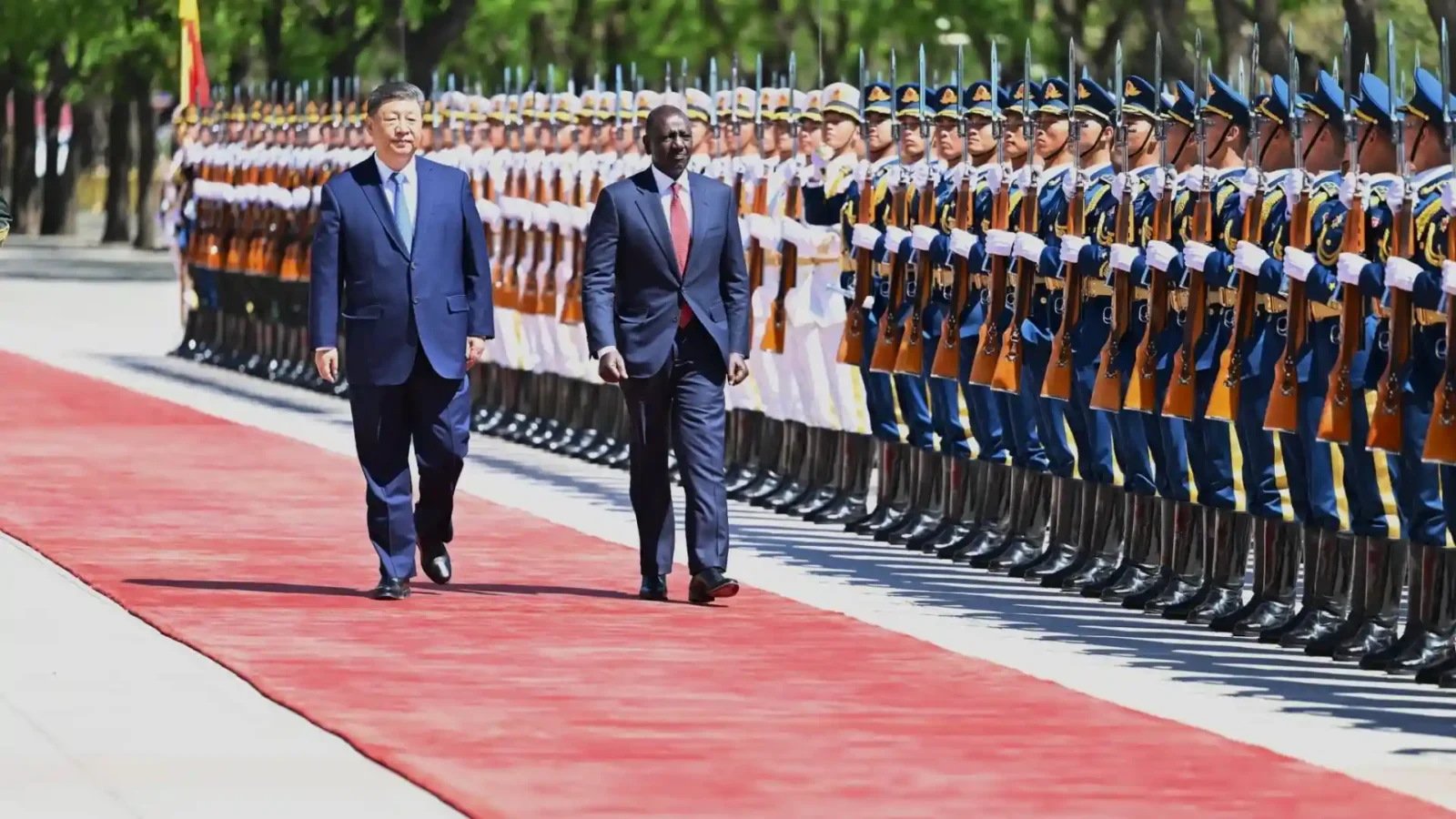
In late April 2025, Kenyan President William Ruto embarked on a highly anticipated state visit to China. The trip came at a time when many had speculated that it would focus on securing further loans for Kenya’s infrastructure development. However, President Ruto sought to dispel such notions during his remarks at the Cooperative University on Tuesday, making it clear that his administration is focused on building sustainable development partnerships rather than deepening the country’s debt burden.
This visit is a significant moment in Kenya’s ongoing efforts to address infrastructure challenges while ensuring long-term economic stability. Kenya’s relationship with China has evolved rapidly over the past two decades, with China becoming one of the country’s key partners in financing development projects. However, this trip marked a departure from traditional forms of borrowing, as President Ruto emphasized alternative financing mechanisms that do not push the nation into further debt.
Alternative Financing: A New Approach to Development
In addressing the growing concerns about national debt, President Ruto clarified that his visit to China was not about securing loans. Rather, it was an opportunity to explore new and innovative financing models. Kenya, he emphasized, has been exploring mechanisms that reduce the reliance on loans, instead favoring partnerships and projects that avoid saddling future generations with unsustainable debt.
One example of this shift in financing strategy is the Rironi-Mau Summit highway project, a crucial road that connects Nairobi to western Kenya. Instead of borrowing funds to construct the road, Kenya will pursue a toll infrastructure model under a public-private partnership (PPP). This approach enables the contractor to recover costs through toll collections rather than through government loans, a model that mitigates debt exposure.
The Rironi-Mau Summit project aims to upgrade the existing single carriageway into a four-lane dual carriageway. This expansion is expected to ease traffic congestion, reduce travel times, and improve road safety, ultimately benefiting both commuters and the economy. The government anticipates that construction will begin in June 2025 and will take 24 months to complete. This is part of a broader strategy to modernize Kenya’s road network and boost regional connectivity. The project is in line with the government’s vision to create an efficient transportation corridor linking Nairobi to western Kenya, a region that is crucial for agriculture and trade.
Key Infrastructure Projects: Strengthening Regional Connectivity
Infrastructure development was a major highlight of the discussions between Presidents Ruto and Xi Jinping. Kenya, through this visit, has deepened its commitment to infrastructure transformation, a cornerstone of its long-term growth strategy. Among the most notable projects agreed upon was the extension of the Standard Gauge Railway (SGR), one of Kenya’s flagship infrastructure projects.
The SGR extension will connect Naivasha to Kisumu and eventually to Malaba, facilitating faster and more efficient transport of goods and passengers between key regional hubs. This will not only enhance Kenya’s domestic connectivity but also position the country as a key transit point for goods moving through East Africa.
In addition to the SGR extension, the two nations agreed on several other major infrastructure projects, including the dualing of the Northern Bypass, the extension of Kiambu Road to the Northern Bypass, and the construction of the Nithi Bridge. These projects will significantly improve road networks and reduce congestion, helping Kenya maintain its position as a key regional trade and logistics hub.
These infrastructure investments are aligned with Kenya’s broader strategy of regional integration. By enhancing connectivity within East Africa, Kenya is strengthening its position within the African Continental Free Trade Area (AfCFTA), facilitating cross-border trade and investment.
Bilateral Agreements: Expanding Cooperation Beyond Infrastructure
The state visit to China was not limited to infrastructure alone. During the five-day visit, Kenya and China signed 20 agreements across various sectors, including trade, education, technology, and cultural exchanges. These agreements reflect the growing depth of the bilateral relationship between the two nations, with mutual interests extending far beyond roads and railways.
A key area of focus was agriculture, where China has expressed interest in importing more Kenyan products, such as avocados and anchovies. This is a significant move for Kenyan farmers and exporters, as it opens up a vast new market for their products. To facilitate these exports, the two countries signed agreements related to hygiene and quarantine standards, ensuring that Kenyan agricultural products meet Chinese requirements.
In addition, China pledged to provide more scholarships and vocational training opportunities for Kenyan students, an area that will significantly benefit Kenya’s educational system. These opportunities are not only aimed at increasing the number of trained professionals but also at fostering deeper collaboration between universities in both countries. Collaborative research in fields such as biotechnology, renewable energy, and artificial intelligence is expected to open new avenues for innovation and development.
Fostering Job Creation Through Investments
One of the most significant outcomes of the visit was the signing of investment deals worth Sh137 billion (USD 1.06 billion). These deals are expected to generate over 28,000 jobs across various sectors, including manufacturing, agriculture, tourism, and infrastructure.
The investment agreements include the establishment of a Special Economic Zone (SEZ) in Kilifi County, which will focus on manufacturing and processing industries. The SEZ is expected to attract both domestic and foreign investment, creating thousands of jobs and providing a boost to the local economy.
In addition, Kenya and China have agreed to set up new agribusiness ventures in Kajiado and Baringo counties. These ventures will focus on enhancing agricultural productivity and value addition, with an emphasis on creating employment opportunities for local communities. The development of agribusinesses in these counties will also contribute to Kenya’s broader goal of food security and agricultural sustainability.
During the Kenya-China Private Sector Roundtable and Business Forum, President Ruto reiterated the importance of fair trade practices, condemning global trade wars that undermine the international economic order. He emphasized the need for an equitable global trading system that supports the rights of developing nations, particularly in Africa. In response, President Xi Jinping expressed China’s readiness to collaborate with developing countries to address global challenges and advocate for multilateral trade systems.
Strengthening Kenya’s Role in the Belt and Road Initiative
Kenya’s involvement in China’s Belt and Road Initiative (BRI) has been a key component of its development strategy. As one of Africa’s top recipients of Chinese development financing, Kenya has benefited greatly from BRI-funded projects, including the Nairobi Expressway and the Standard Gauge Railway.
The agreements signed during President Ruto’s visit further cement Kenya’s role as a strategic partner in the BRI. The BRI, which seeks to improve global connectivity through infrastructure investments, aligns with Kenya’s Vision 2030 and its own infrastructure development plans. Kenya’s participation in the BRI is crucial for its long-term economic growth, as it enhances regional integration, promotes trade, and opens up new markets for Kenyan goods and services.
The Kenya-China partnership has also led to closer collaboration in the fields of technology and innovation. With both nations focusing on digital infrastructure, smart cities, and green energy, the cooperation promises to drive Kenya’s transition towards a more sustainable and technologically advanced economy.
Sustainability and Environmental Considerations
While infrastructure development and economic growth remain the primary focus, President Ruto has also emphasized the importance of ensuring that projects are sustainable and environmentally friendly. Kenya is keen on ensuring that infrastructure projects adhere to stringent environmental and social standards. This approach is particularly important given the potential impact of large-scale infrastructure projects on local communities and ecosystems.
Kenya’s commitment to sustainable development extends to its focus on renewable energy and climate change mitigation. The government has set ambitious targets for increasing the share of renewable energy in the national grid, with an emphasis on wind, solar, and geothermal power. In addition, Kenya is working towards reducing its carbon footprint and building resilience to climate change through initiatives such as reforestation and water conservation.
Conclusion: A New Chapter in Kenya-China Relations
President William Ruto’s visit to China has marked a significant turning point in Kenya’s approach to development. By prioritizing alternative financing models, strengthening regional connectivity, and deepening cooperation in key sectors like trade and education, Kenya is positioning itself for sustainable growth. The agreements signed during this visit reflect a strategic alignment between Kenya’s development goals and China’s Belt and Road Initiative, promising long-term benefits for both nations.
The successful outcomes of this trip signal a new chapter in Kenya-China relations, one that emphasizes collaboration over debt accumulation. With a clear focus on job creation, infrastructure development, and regional integration, Kenya is poised to continue its path towards becoming a more competitive and prosperous nation in East Africa and beyond.
Ready to take your career to the next level? Join our dynamic courses: ACCA, HESI A2, ATI TEAS 7 , HESI EXIT , NCLEX – RN and NCLEX – PN, Financial Literacy!🌟 Dive into a world of opportunities and empower yourself for success. Explore more at Serrari Ed and start your exciting journey today! ✨
Photo source: Google
By: Montel Kamau
Serrari Financial Analyst
2nd May, 2025