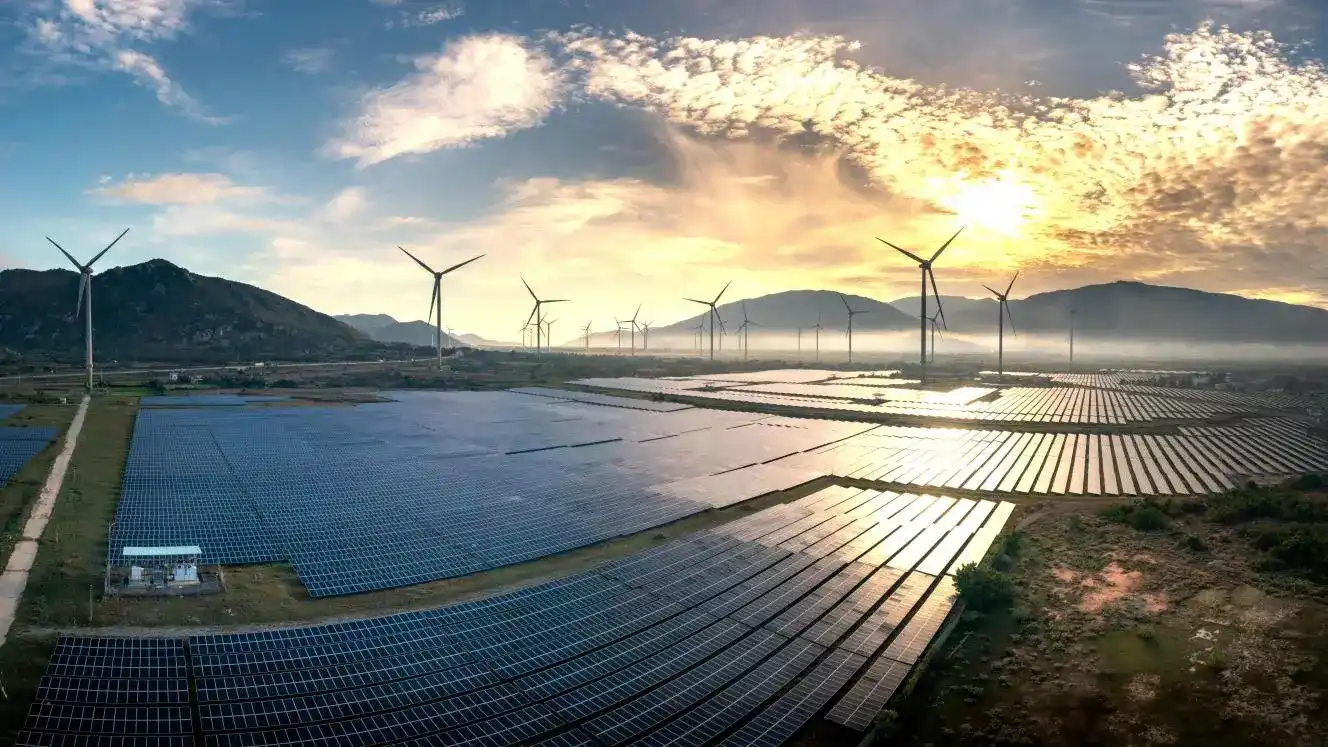
At the sixth South Africa Investment Conference (SAIC) held in Sandton on 31 March 2026, renewable energy developer Mulilo announced a landmark commitment of nearly R15 billion — the single largest green energy pledge at the event. The capital will fund the immediate development of three large-scale solar photovoltaic (PV) projects and a battery energy storage system (BESS), adding a combined 716 megawatts of new export capacity to the national grid. The announcement arrives as South Africa pushes to deliver on the ambitious targets set out in its Integrated Resource Plan 2025 and comes on the heels of a year in which Mulilo has secured major international backing, reached financial close on new utility-scale projects, and positioned itself as a tier-one independent power producer with a pipeline exceeding 30 GW. The investment forms part of a broader wave of R890 billion in total pledges secured across 81 projects at the conference, which President Cyril Ramaphosa hailed as the highest cumulative value since the investment drive was launched in 2018.
Key Overview
- Investment value: R14.8 billion (nearly R15 billion) across four renewable energy projects in the Free State, North West, and Western Cape provinces
- Capacity added: 716 MW of new grid-tied generation from three solar PV plants and a battery energy storage system
- Annual deployment target: 1 GW of renewable energy capacity per year, backed by a development pipeline exceeding 30 GW
- Shareholders: Majority-owned by Copenhagen Infrastructure Partners (CIP), with minority stake held by Norwegian investment fund Norfund
- Conference context: Mulilo’s pledge was the largest single green energy commitment at SAIC 2026, which attracted over R50 billion in combined renewable energy pledges
- National policy alignment: Supports the IRP 2025’s target of adding 105 GW of new generation capacity by 2039 through a R2.2 trillion investment roadmap
- Recent milestone: Mulilo reached financial close on the 219 MW Orkney Solar PV project in February 2026
Markets move fast; don’t get left behind. We’ve paired the Serrari Group Market Index with a curated Marketplace and a comprehensive Wealth Builder Platform to ensure you have the data—and the skills—to act on it.
A Conference Defined by Domestic Confidence
The sixth South Africa Investment Conference was, by the government’s own reckoning, its most successful to date. Speaking at the closing session, President Ramaphosa noted that the R890 billion in pledges across 81 projects represented both the highest cumulative value and the highest number of individual projects in the conference’s history. A substantial share of these commitments came from domestic investors, a dynamic the President described as a measure of “strong and growing confidence” in South Africa’s economic trajectory.
Renewable energy featured prominently. Beyond Mulilo, other major green energy pledges came from Anthem Energy (R10.2 billion), Seriti Green (R10 billion), NOA (R9.9 billion), and Italy’s Enel Green Power (R9.8 billion), with combined renewables commitments exceeding R50 billion. Additional contributions from Hosano Energy, Mzansi Energy, and Parsons Power Park further underscored the depth of investor appetite for South Africa’s clean energy market.
The scale of these pledges must be set against a backdrop of hard-won progress. South Africa’s energy sector has endured years of chronic underinvestment, ageing coal-fired infrastructure, and the corrosive impact of prolonged load shedding. As President Ramaphosa acknowledged, securing record investment despite a difficult global economic climate — marked by geopolitical uncertainty and intense competition for capital — was itself an indicator of how far the country has come. Emboldened by the conference results, the government has set a new target to mobilise R3 trillion in investment over the next five years.
Mulilo: From Developer to Tier-One IPP
Mulilo’s R15 billion pledge did not materialise in a vacuum. The company, founded in 2008 as a South African renewable energy developer specialising in wind, solar, and battery storage, has undergone a rapid transformation in recent years — evolving from a mid-tier project developer into what its backers describe as a tier-one independent power producer.
The trajectory accelerated in November 2025 when the Norwegian government-owned investment fund Norfund announced a US$75 million investment in Mulilo Energy Holdings, taking a minority ownership position alongside Copenhagen Infrastructure Partners (CIP), the Danish-headquartered firm that manages approximately EUR 33 billion in greenfield energy investments globally. CIP’s New Markets Fund I remains a key shareholder. Norfund’s entry brought not only fresh capital but also the credibility of a government-backed institution with an extensive track record in sub-Saharan African energy markets and a committed portfolio of US$3.8 billion.
At the time of Norfund’s investment, Mulilo had 765 MW of renewable energy capacity under construction and was planning to add a further 1 GW to its construction portfolio in 2026. The company’s combined wind, solar, and battery storage projects are projected to avoid roughly 11 million tonnes of CO₂ emissions annually and supply clean electricity to approximately 14 million South African households.
Then in February 2026, Mulilo reached financial close on the 219 MW Orkney Solar PV project in North West Province, backed by a power purchase agreement with electricity trading platform Etana Energy. The Orkney facility is expected to generate about 478 GWh of clean electricity each year, displacing over 500,000 tonnes of CO₂ emissions annually — the equivalent of removing 140,000 internal combustion engine vehicles from the road. Financing was provided by a consortium including Absa Bank and Standard Bank South Africa, following an earlier R7 billion corporate facility from Standard Bank that gave the company a robust financial foundation. The Orkney deal was the second project between Mulilo and Etana to reach financial close within 12 months, following the 105 MW Du Plessis Dam Solar PV2 project.
This track record of execution is precisely what lends weight to the SAIC commitment. As Seithati Bolipombo, Mulilo’s Chief Commercial Officer, said at the conference, the R15 billion pledge reflects the company’s conviction that South Africa is on “a positive trajectory towards a just energy transition supported by private sector investment.” But Bolipombo was careful to frame the investment as more than a financial commitment: “We are investing in long-term partnerships that unlock infrastructure, create jobs, and deliver tangible impact where it is needed most.”
Context is everything. While you follow today’s updates, use the Serrari Group Market Index and Marketplace to spot emerging shifts. Need to sharpen your edge? Our Wealth Builder Platform turns these insights into a professional-grade strategy.
The Investment in Detail: Solar PV and Battery Storage
The R15 billion will fund the immediate development of three large-scale solar PV projects and a battery energy storage system, with the four projects spanning the Free State, North West, and Western Cape provinces. Together, these assets will contribute 716 MW of new export capacity to the national grid.
The inclusion of battery storage alongside solar generation is strategically significant. While solar provides low-cost bulk generation during daylight hours, battery energy storage systems make that power dispatchable — meaning it can be released into the grid during peak demand periods when supply is most constrained. As analysis from Africa.com noted, the integration of BESS is critical because it ensures that renewable capacity is not merely additive but actively supports grid stability, addressing one of the most persistent weaknesses in South Africa’s electricity system.
South Africa’s IRP 2025 recognises this imperative, targeting 8,500 MW of additional battery storage capacity by 2039. The country has already secured 1.7 GW of grid-scale BESS capacity through its procurement programme, and private offtake demand from mines, data centres, and industrial users is accelerating. Mulilo’s BESS investment places it at the centre of this growth market.
Beyond the immediate 716 MW, Mulilo is actively advancing a substantial pipeline with the goal of deploying 1 GW of renewable capacity annually. The company’s total development pipeline now exceeds 30 GW, with a near-term pipeline of 5.5 GW expected to reach financial close before the end of 2027. If delivered, this rate of deployment would make Mulilo one of the most prolific renewable energy builders on the African continent.
Aligning With South Africa’s Energy Masterplan
Mulilo’s investment sits squarely within the policy architecture that South Africa has built to guide its energy transition. The Integrated Resource Plan 2025, approved by cabinet in October 2025, is the most ambitious energy blueprint the country has ever produced. It calls for 105 GW of new generation capacity by 2039 — equivalent to roughly two-and-a-half times Eskom’s current installed base — underpinned by a projected R2.2 trillion in investment. Of that total, nearly 80% of new capacity is earmarked for renewables and storage: 34 GW of onshore wind, 25 GW of utility-scale solar PV, 16 GW of distributed generation, and 8,500 MW of battery storage.
This represents a dramatic shift from an energy system that currently derives approximately 58% of its capacity from coal. Under IRP 2025, coal’s share of the energy mix is projected to decline to 27% by 2039 as the country pivots toward cleaner sources. The investment prospectus released at SAIC 2026 underscored the scale of this opportunity, noting that more than 220 GW of renewable energy projects are now in development across South Africa, with 36 GW already in the grid connection process.
The broader regulatory and market reforms have been critical enablers. Since the launch of the Renewable Energy Independent Power Producer Procurement Programme (REIPPPP) in 2011, the programme has attracted more than R292 billion in investment and secured over 9.6 GW of generation capacity. According to a BDO South Africa report, the sector has generated 133,764 GWh of electricity cumulatively, offsetting 129.2 million tonnes of CO₂ and creating nearly 93,000 job-years. South Africa’s installed renewable capacity now exceeds 15 GW, with solar PV leading at 7.4 GW and wind contributing 6.2 GW.
Jobs, Communities, and the Just Transition
Mulilo’s investment carries significance that extends well beyond megawatts and grid capacity. As SAnews reported, the SAIC commitments are expected to create more than 230,000 permanent jobs across all nine provinces, with renewable energy projects playing a central role. Large-scale solar and wind developments are labour-intensive during construction, requiring engineers, technicians, project managers, and local workers. Once operational, they continue to support employment in maintenance, security, and plant management.
For Mulilo specifically, community engagement is a stated strategic priority. The company has emphasised that its projects incorporate education, healthcare, and business development initiatives in host communities. With projects spanning the Free State, North West, and Western Cape — regions where economic opportunity has historically been limited — the investment has the potential to deliver a dual benefit: closing the energy gap while creating sustainable livelihoods in sectors that barely existed a decade ago.
The theme of a “just energy transition” has become central to South Africa’s policy discourse. The country’s Just Energy Transition Investment Plan, developed in collaboration with the private sector and international partners, aims to mobilise climate finance while safeguarding jobs in coal-dependent communities. As President Ramaphosa noted in his closing address, the private sector has already created more than 200,000 work opportunities for young people through the Youth Employment Service, and collaboration with business helped shape the transition plan that underpins current efforts.
Execution Challenges Remain
For all the optimism surrounding the announcement, significant execution risks persist. As Business Day noted, South Africa’s independent power producers have historically faced delays due to grid constraints, and Mulilo did not provide specific timelines for construction or commercial operation of the four projects. Battery storage developments in particular require close coordination with grid operators to ensure effective integration and dispatchability.
Grid infrastructure remains the single greatest bottleneck. South Africa’s transmission network was built to serve centralised coal-fired power stations, not a distributed fleet of renewable generators spread across the Northern Cape, Free State, and Western Cape. While the Department of Electricity and Energy has issued a request for qualifications for transmission projects valued at R390 billion and Eskom currently has 31 transmission projects underway, the pace of grid expansion will ultimately determine how quickly renewable capacity can be connected and utilised.
Skills shortages in engineering, project management, and operations represent another constraint. According to the BDO Renewables Report, without adequate skills development aligned with the transition, localisation strategies risk falling short and investment will be underutilised.
Looking Ahead
Despite these challenges, Mulilo’s R15 billion commitment represents precisely the kind of scaled, private-sector-led investment that South Africa’s energy transition requires. The company is backed by credible international shareholders, has a demonstrated track record of reaching financial close and moving projects from commitment to construction, and is operating within a policy environment that — for all its imperfections — has become materially more supportive of renewable deployment.
As Jan Fourie, Mulilo’s CEO, put it when announcing the Orkney project earlier this year: the financial close “reflects the strength of our partnerships, the capabilities of our team, and the growing role of private-sector generation in solving South Africa’s energy challenges.”
With South Africa’s business confidence index climbing to a decade-high of 47 points in early 2026, and the government setting its sights on R3 trillion in new investment over the next five years, the conditions for large-scale renewable deployment have arguably never been more favourable. The question is no longer whether private capital is willing to flow into South Africa’s energy sector — it is whether the country’s infrastructure, regulatory apparatus, and grid can absorb it fast enough.
Your financial future isn’t something you wait for—it’s something you build.
The real question is: when do you begin?
Move beyond simply staying informed.
Navigate the markets with clarity—track trends through the Serrari Group Market Index, uncover opportunities in the Serrari Marketplace, and build practical knowledge with our Curated Wealth Builder Platform.
Stay connected to what truly matters.
Get daily insights on macro trends and financial movements across Kenya, Africa, and global markets—delivered through the Serrari Newsletter.
Growth opens doors.
Advance your career through professional programs including ACCA, HESI A2, ATI TEAS 7 , HESI EXIT , NCLEX – RN and NCLEX – PN, Financial Literacy!🌟—designed to move you forward with confidence.
See where money is flowing—clearly and in real time.
Track Money Market Funds, Treasury Bills, Treasury Bonds, Green Bonds, and Fixed Deposits, alongside global and African indexes, key economic indicators, and the evolving Crypto and stablecoin landscape—all within Serrari’s Market Index.