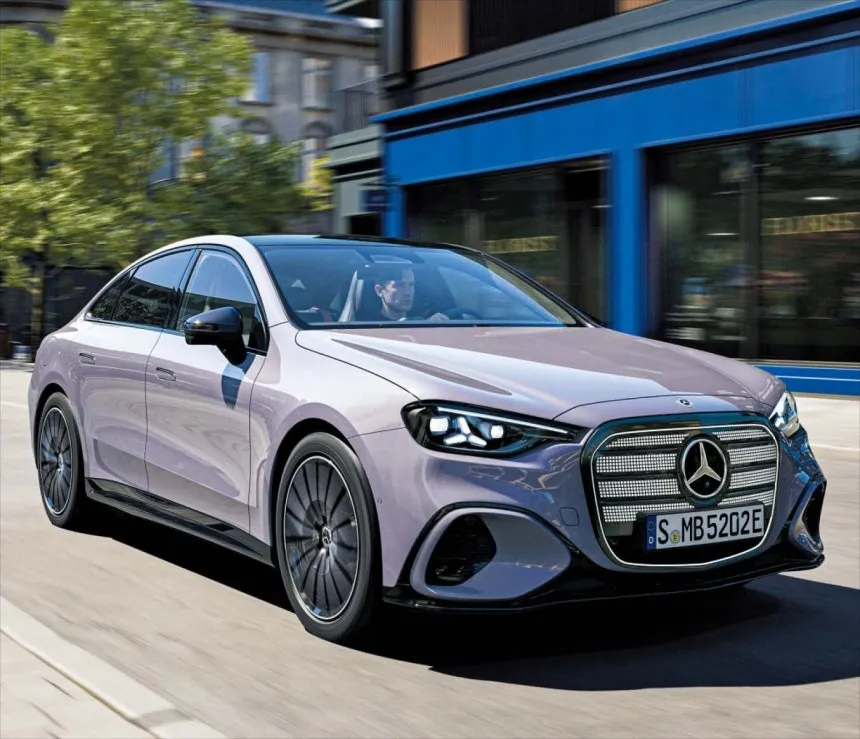
Mercedes-Benz has unveiled its all-new electric C-Class sedan in Seoul, signaling a strategic push into the premium EV segment. The model combines long-range performance, ultra-fast charging, and advanced digital integration through the MB.OS platform.
The launch highlights South Korea’s importance as a key global EV market and technology hub. With new battery partnerships and AI-driven features, the vehicle reflects the shift toward software-defined mobility and next-generation automotive innovation.
Key Overview
- Mercedes-Benz unveils all-electric C-Class in Seoul
- Up to 762 km range (WLTP) with ultra-fast charging
- MB.OS platform integrates driving, charging, and infotainment
- Expands battery partnerships with Korean firms
A Strategic Global Debut in Seoul
Mercedes-Benz unveiled its all-new electric C-Class sedan during a high-profile global premiere event in Seoul, underscoring the country’s growing importance within the automaker’s global strategy. The decision to host the world premiere in Seoul reflects a deliberate focus on markets that combine strong demand for premium vehicles with rapid adoption of advanced automotive technologies.
The event brought together a senior delegation of executives, including Ola Källenius, Chief Technology Officer Jörg Burzer, and Sales and Customer Experience Chief Mathias Geisen. Their presence, alongside approximately 80 international journalists, highlighted the significance of the launch not only as a product unveiling but also as a strategic statement about the company’s future direction.
“Korea is such an important market for us… one of the most important by size, and the fifth biggest,” Källenius noted during the event, emphasizing the country’s technology-oriented customer base. South Korea’s consumers are known for their early adoption of innovation, making it an ideal testing ground for new digital and electric mobility solutions.
Mercedes-Benz sold 68,467 vehicles in Korea last year, ranking second among imported brands. This strong market performance reinforces the company’s decision to position Korea at the center of its EV rollout strategy. By launching the electric C-Class in Seoul, Mercedes-Benz is signaling confidence in the market’s continued growth and its role as a key driver of demand in the premium EV segment.
Markets move fast; don’t get left behind. We’ve paired the Serrari Group Market Index with a curated Marketplace and a comprehensive Wealth Builder Platform to ensure you have the data—and the skills—to act on it.
Performance, Range, and Charging Capabilities
The electric C-Class delivers a range of up to 762 kilometers on a single charge under the Worldwide Harmonized Light Vehicle Test Procedure (WLTP), placing it among the leading models in its segment in terms of driving range. This extended range enhances practicality for both daily commuting and long-distance travel, addressing one of the primary concerns among EV consumers.
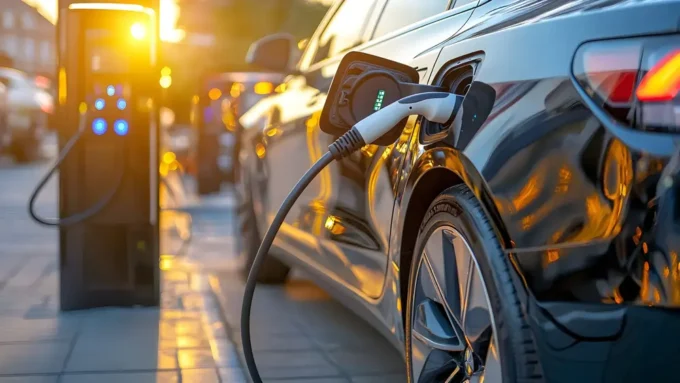
Fast-charging capabilities further strengthen the model’s appeal, allowing the vehicle to gain approximately 325 kilometers of range in just 10 minutes. A full fast-charge cycle from 10% to 80% can be completed in around 22 minutes, significantly reducing downtime and improving overall convenience for drivers who rely on public charging infrastructure.
In terms of performance, the electric C-Class combines efficiency with high-output capabilities. Key specifications include:
- 360 kW maximum output
- 800 Nm peak torque
- 0–100 km/h acceleration in approximately 4 seconds
These figures position the vehicle competitively within the premium EV segment, offering both strong acceleration and responsive driving dynamics.
Additional engineering enhancements contribute to a refined driving experience. The inclusion of rear-wheel steering reduces the turning radius to approximately 5.6 meters, improving maneuverability in urban environments. Meanwhile, the air suspension system with damping control enhances ride comfort by adapting to road conditions in real time, delivering a smoother and more controlled driving experience.
Together, these features reflect a balanced approach to performance—combining speed, efficiency, and comfort to meet the expectations of premium vehicle customers.
Software-Defined Architecture and AI Integration
At the core of the new electric C-Class is Mercedes-Benz’s proprietary MB.OS operating system, which integrates infotainment, driving functions, charging management, and autonomous capabilities into a unified digital platform. This architecture represents a shift toward software-defined mobility, where digital systems play a central role in vehicle performance and user experience.
The platform supports over-the-air (OTA) updates, enabling continuous improvements and feature enhancements without requiring visits to service centers. This allows the vehicle to evolve over time, keeping pace with technological advancements and user expectations.
A key feature of the system is the next-generation MBUX virtual assistant, powered by generative artificial intelligence. This assistant enables more natural and complex voice interactions, allowing users to control various functions and access information through conversational commands. The system is designed to learn user preferences over time, creating a more personalized driving experience.
Additional digital features include:
- Augmented reality navigation, which overlays directions onto real-world visuals
- Real-time route guidance, optimizing travel based on traffic conditions
- AI-enhanced driving assistance systems, improving safety and efficiency
Mercedes-Benz is also planning to introduce NVIDIA’s autonomous driving platform Alpamayo in Korea, subject to regulatory approval. The system is described as a Level 2++ point-to-point navigation solution, combining traditional software layers with an end-to-end AI-driven model.
According to the company, the platform enables faster learning and improved training capabilities, particularly in complex urban environments such as Seoul. This positions the electric C-Class as not only an electric vehicle but also a highly advanced digital platform capable of adapting to evolving mobility needs.
Battery Strategy and Supply Chain Partnerships
While Mercedes-Benz did not disclose the specific battery suppliers for the electric C-Class, the company confirmed its intention to deepen collaboration with South Korean battery manufacturers such as LG Energy Solution and Samsung SDI. This signals a continued focus on securing high-quality battery supply from one of the world’s most advanced EV battery ecosystems.
On the same day as the unveiling, Mercedes-Benz announced its first formal battery partnership with Samsung SDI, with plans to equip upcoming SUV and coupe models with batteries supplied by the company. This move reflects a broader strategy to diversify battery sourcing while strengthening ties with key suppliers in Asia.
South Korea plays a pivotal role in the global EV value chain, particularly in battery innovation, production capacity, and technological development. By aligning more closely with Korean firms, Mercedes-Benz is positioning itself to benefit from advancements in battery performance, energy density, and charging efficiency.
These partnerships also provide strategic advantages in terms of supply chain resilience, as automakers increasingly seek to mitigate risks associated with battery sourcing and geopolitical uncertainties. Strengthening regional collaboration allows Mercedes-Benz to maintain flexibility while supporting its long-term electrification roadmap.
Context is everything. While you follow today’s updates, use the Serrari Group Market Index and Marketplace to spot emerging shifts. Need to sharpen your edge? Our Wealth Builder Platform turns these insights into a professional-grade strategy.
Design, Interior, and Space Enhancements
The electric C-Class introduces a refined design language that blends sportiness with modern EV aesthetics. The exterior features a coupe-like silhouette, an illuminated front grille composed of 1,050 backlit elements, and a distinctive GT-style rear design that enhances the vehicle’s visual presence on the road.
Inside the cabin, the focus shifts to comfort, personalization, and advanced user experience. The vehicle is equipped with a panoramic “Sky Control” roof featuring 162 customizable lighting stars, creating a dynamic and immersive atmosphere that adapts to user preferences.
- Vegan-certified materials and premium finishes, reflecting evolving consumer preferences
- “Twisted Diamond” Nappa leather design, emphasizing craftsmanship and luxury
- Advanced seating systems with massage, ventilation, lumbar support, and integrated 4D sound functions
Beyond aesthetics, the vehicle offers significant improvements in space and practicality. The wheelbase has been extended to approximately 2,962 mm, resulting in increased legroom and overall cabin comfort. Headroom has also been enhanced, with an additional 22 mm in the front and 11 mm in the rear, providing a more spacious interior environment.
Storage capacity has been optimized, with a rear trunk offering approximately 470 liters and a front trunk providing around 100 liters of additional space. These features enhance usability for both daily commuting and longer journeys.
An optional 39.1-inch MBUX Hyperscreen, equipped with over 1,000 LEDs and advanced matrix backlight technology, delivers a fully immersive digital experience. The system provides clear driver information and personalized entertainment for passengers, further reinforcing the vehicle’s position as a technology-driven premium offering.
Market Competition and Expansion Strategy
The launch of the electric C-Class comes amid intensifying competition in South Korea’s premium automotive market, as global manufacturers expand their presence to capture growing demand for imported and electric vehicles.
Companies such as Audi, BMW, and BYD are actively investing in retail networks, showrooms, and service facilities across the country. This expansion reflects both rising consumer interest in EVs and the importance of after-sales service in maintaining brand loyalty.
In response, Mercedes-Benz Korea is also strengthening its local infrastructure. The company plans to open a large-scale service center in Gumi, North Gyeongsang Province, by March 2026. The facility will span multiple levels and include both maintenance services and showroom space, enhancing accessibility and convenience for customers in the region.
This broader expansion strategy is designed to reinforce Mercedes-Benz’s competitive positioning by improving customer experience, increasing brand visibility, and ensuring strong after-sales support. As EV adoption continues to accelerate, the ability to provide reliable service infrastructure will be a key differentiator in the premium segment.
By combining product innovation with strategic market expansion, Mercedes-Benz aims to maintain its leadership position while capturing a larger share of the growing EV market in South Korea and beyond.
Outlook: Strengthening Position in a Key EV Market
The debut of the electric C-Class underscores Mercedes-Benz’s strategic focus on technology-driven markets such as South Korea, as it accelerates the rollout of its global electrification strategy. By choosing Seoul as the launch platform, the company is not only introducing a new model but also reinforcing its commitment to markets where innovation, digital adoption, and premium demand converge.
In the near term, market adoption will be influenced by several key factors, including pricing competitiveness, the availability and expansion of charging infrastructure, and consumer readiness to embrace advanced technologies. Features such as AI integration, over-the-air updates, and enhanced driver-assistance systems are expected to play an important role in shaping purchasing decisions, particularly among tech-savvy buyers.
Infrastructure development will also be critical. As charging networks expand and become more accessible, barriers to EV adoption are likely to decrease, supporting broader market penetration. At the same time, after-sales service capabilities and battery performance will remain important considerations for consumers evaluating long-term ownership costs and convenience.
Over the longer term, sustained investment in battery partnerships, software platforms, and autonomous driving technologies will be essential for maintaining competitiveness in an increasingly crowded EV market. Collaborations with firms such as LG Energy Solution, Samsung SDI, and NVIDIA position Mercedes-Benz to leverage advancements in both hardware and software, strengthening its technological edge.
As the premium EV segment continues to evolve, the electric C-Class places Mercedes-Benz at the intersection of performance, luxury, and digital innovation. This positioning reflects broader industry trends, where success will depend not only on vehicle design and engineering but also on the ability to deliver integrated, software-driven mobility experiences that meet the expectations of next-generation consumers.
Your financial future isn’t something you wait for—it’s something you build.
The real question is: when do you begin?
Move beyond simply staying informed.
Navigate the markets with clarity—track trends through the Serrari Group Market Index, uncover opportunities in the Serrari Marketplace, and build practical knowledge with our Curated Wealth Builder Platform.
Stay connected to what truly matters.
Get daily insights on macro trends and financial movements across Kenya, Africa, and global markets—delivered through the Serrari Newsletter.
Growth opens doors.
Advance your career through professional programs including ACCA,HESI A2,ATI TEAS 7,HESI EXIT ,NCLEX – RNandNCLEX – PN, Financial Literacy!🌟—designed to move you forward with confidence.
See where money is flowing—clearly and in real time.
Track Money Market Funds, Treasury Bills, Treasury Bonds, Green Bonds, and Fixed Deposits, alongside global and African indexes, key economic indicators, and the evolving Crypto and stablecoin landscape—all withinSerrari’s Market Index.