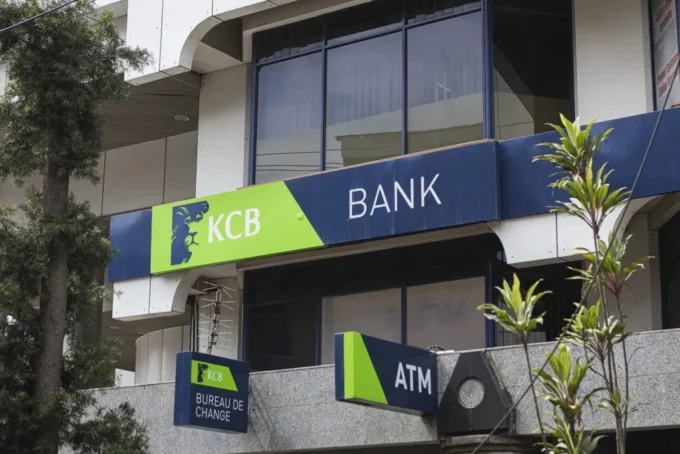

















Anzens’ partnership with Credit Bank PLC introduces USDA, a dollar-backed stablecoin, into Kenya’s banking system—potentially reducing cross-border costs to 1.5% and settlement times to minutes.
Anzens has partnered with Credit Bank PLC to integrate its dollar-backed stablecoin, USDA, into Kenya’s financial system. The model allows customers to convert fiat into stablecoins and transact globally at a flat 1.5% fee, significantly lower than traditional remittance costs of 6.45% globally and nearly 8% in Sub-Saharan Africa. With Credit Bank acting as custodian for both Kenyan shilling and US dollar reserves, the system bridges traditional banking and blockchain infrastructure while maintaining regulatory oversight. The move comes as Kenya’s diaspora remittances hit $5 billion in 2024 and stablecoin transactions reached $3.3 billion locally, reflecting growing demand for faster and cheaper cross-border payments.
Introduction: A Quiet Shift With Massive Implications
At first glance, the partnership between Anzens and Credit Bank PLC may appear to be just another fintech collaboration. But beneath the surface, it represents something far more significant—a structural shift in how money moves across borders in Kenya and potentially across Africa.
The integration of USDA, a dollar-backed stablecoin, into a regulated banking environment introduces a new model for cross-border payments. One that promises not just incremental improvement, but a fundamental rethinking of cost, speed, and infrastructure.
For a country like Kenya, where remittances reached a record $5 billion in 2024—surpassing traditional export sectors like tea and horticulture—this is not just innovation. It is a direct response to a real economic bottleneck.
Markets move fast; don’t get left behind. We’ve paired the Serrari Group Market Index with a curated Marketplace and a comprehensive Wealth Builder Platform to ensure you have the data—and the skills—to act on it.
The Core Problem: Cross-Border Payments Are Broken
To understand the significance of this development, it is necessary to start with the problem it aims to solve.
Cross-border payments, particularly in Africa, remain expensive, slow, and inefficient. Traditional systems such as SWIFT rely on multiple intermediary banks to complete a single transaction. Each intermediary adds cost, complexity, and delay.
The result is a system where transactions can take up to five working days to settle. Costs are equally problematic. The World Bank estimates the global average remittance cost at 6.45%, rising to nearly 8% in Sub-Saharan Africa.
This is not just a technical issue—it is an economic one. High transaction costs reduce the value of remittances, limit business efficiency, and create barriers to trade.
The Proposed Solution: A 1.5% Flat Fee and Instant Settlement
Anzens’ model directly targets these inefficiencies. By leveraging USDA, a dollar-backed stablecoin, the partnership proposes a system where cross-border transactions can settle in minutes at a flat fee of 1.5%, regardless of the payment corridor.
This is a dramatic shift. Moving from 6.45%–8% costs to 1.5% represents a reduction of more than 70% in transaction fees. At the same time, reducing settlement times from days to minutes fundamentally changes how businesses and individuals interact with global financial systems.
However, this raises an important question: is this model sustainable at scale, or is it simply an early-stage incentive to drive adoption?
The Bridge Model: Banking Meets Blockchain
One of the most interesting aspects of this partnership is the role of Credit Bank. Unlike many crypto-based solutions that operate outside traditional financial systems, this model integrates directly into regulated banking infrastructure.
Credit Bank will act as custodian for both Kenyan shilling and US dollar funds. This creates a bridge between fiat currency and stablecoin-based settlement, allowing users to move seamlessly between the two.
Importantly, the underlying blockchain layer is designed to remain largely invisible to end users. This is a strategic decision. For mainstream adoption, simplicity is critical. Users care about cost and speed, not the technical details of how transactions are processed.
This hybrid model—combining the efficiency of blockchain with the trust and regulation of banking—may be the key to unlocking wider adoption.
The Demand Side: Why Kenya Matters
Kenya is not just another market for this kind of innovation. It is one of the most advanced financial ecosystems in Africa, with widespread adoption of mobile money and digital financial services.
The scale of remittances underscores this point. At $5 billion in 2024, diaspora inflows are a major component of the economy, surpassing key export sectors.
At the same time, stablecoin adoption is already significant. Transactions reached $3.3 billion in Kenya in the year to June 2024, while across Africa, stablecoins now account for 43% of all crypto transactions.
This suggests that the demand for alternative payment methods is not theoretical—it is already happening. The missing piece has been regulatory integration.
Regulatory Reality: The Missing Link
Despite the growth of stablecoin usage, one major barrier has remained: the lack of regulated frameworks to support their integration into mainstream banking.
This is where the Anzens–Credit Bank partnership becomes particularly important. By operating within a regulated environment, it addresses one of the key concerns associated with crypto-based solutions—trust.
USDA is fully backed by dollar-denominated reserves, including US government treasuries, and held under institutional custody by BitGo Trust. This backing is critical for maintaining stability and confidence.
However, this also introduces new questions. How transparent are these reserves? How frequently are they audited? And what happens in a scenario where redemption demand spikes?
These are not trivial concerns. The history of stablecoins includes multiple examples where confidence has been shaken by questions around reserves.
Infrastructure Play: More Than Just Payments
Anzens positions itself not just as a stablecoin issuer, but as a provider of digital asset infrastructure. Its network spans more than 80 countries and 41 currencies, supported by regulated liquidity providers and licensing in jurisdictions such as Lithuania and Dubai.
This suggests that the partnership is not just about Kenya—it is about building a global payments network.
From this perspective, USDA is less a product and more a layer within a broader infrastructure stack. The goal is to create a system where money can move seamlessly across borders, bypassing traditional bottlenecks.
This raises an important strategic question: is this the beginning of a new global payments architecture, or simply an incremental improvement within existing systems?
Context is everything. While you follow today’s updates, use the Serrari Group Market Index and Marketplace to spot emerging shifts. Need to sharpen your edge? Our Wealth Builder Platform turns these insights into a professional-grade strategy.
A Critical Lens: What Could Go Wrong?
While the benefits are clear, it is important to examine the risks.
First, regulatory risk remains significant. While this partnership operates within a regulated framework, broader regulatory environments—both in Kenya and globally—are still evolving. Changes in policy could impact how such systems operate.
Second, there is the issue of adoption. While the model is compelling, it requires both individuals and businesses to trust and use a new system. Behavioral change in financial services can be slow, particularly when trust is involved.
Third, the economics of the 1.5% fee must be scrutinized. Is this sustainable as volumes grow, or will costs increase over time?
Finally, there is the broader question of competition. As more players enter the space, margins may compress, and differentiation will become more challenging.
Alternative Perspective: Is This Overhyped?
A skeptical observer might argue that this development is being framed as more revolutionary than it actually is.
After all, stablecoins have been used for cross-border transactions for years. What is new here is the integration with a regulated bank.
But even this can be questioned. Will traditional banks fully embrace this model, or will they adopt it cautiously, limiting its impact?
It is also worth considering whether the benefits will be evenly distributed. While large businesses may benefit significantly, smaller users may face barriers to entry or limited access.
The Strategic Implication: A Shift in Financial Power
If successful, this model could have broader implications for the financial system.
Traditional cross-border payment networks, such as SWIFT, could face increased competition from blockchain-based alternatives. This could lead to lower costs and improved efficiency across the industry.
At the same time, it could shift power dynamics. Institutions that control digital infrastructure may gain influence, potentially reshaping the financial landscape.
What This Means for Kenya and Africa
The implications of the Anzens–Credit Bank partnership go far beyond faster payments or lower fees. At its core, this development introduces the possibility of a fundamental shift in how money flows across Kenya and, by extension, across Africa. It challenges long-standing inefficiencies in cross-border finance and opens the door to a new kind of financial infrastructure—one that is faster, cheaper, and potentially more inclusive. However, whether this promise translates into real economic transformation depends on a number of deeper forces, including trust, regulation, and adoption behavior.
To begin with, the most immediate and tangible impact is on remittances. Kenya’s diaspora inflows, which reached $5 billion in 2024, are not just a macroeconomic indicator—they are a critical pillar of household income, small business financing, and overall economic stability. Yet a significant portion of these funds is lost to transaction costs imposed by traditional payment systems. If the proposed stablecoin model succeeds in reducing costs to 1.5% while enabling near-instant settlement, it effectively increases the value of every dollar sent into the country. Over time, this could translate into higher consumption, increased savings, and greater investment at the household and SME level.
Looking Ahead: A Turning Point or a Test Case?
The success of the Anzens–Credit Bank partnership will depend on execution. Technology alone is not enough. Trust, regulation, and user experience will all play critical roles.
If the model works as intended, it could mark a turning point in how cross-border payments are conducted. If not, it may serve as a valuable learning experience for future innovations.
Conclusion: A Quiet Revolution in Motion
The integration of USDA into Kenya’s banking system is not just a technological upgrade—it is a potential redefinition of financial infrastructure.
By combining the efficiency of stablecoins with the trust of regulated banking, the partnership addresses one of the most persistent challenges in global finance.
But as with any innovation, the outcome is not guaranteed. The path forward will depend on how well the model balances cost, trust, and scalability.
What is clear, however, is that the direction of travel has changed. The question is no longer whether cross-border payments will evolve—but how fast, and who will lead that transformation.
Your financial future isn’t something you wait for, it’s something you build.
The real question is: when do you begin?
Move beyond simply staying informed.
Navigate the markets with clarity—track trends through the Serrari Group Market Index, uncover opportunities in the Serrari Marketplace, and build practical knowledge with our Curated Wealth Builder Platform.
Stay connected to what truly matters.
Get daily insights on macro trends and financial movements across Kenya, Africa, and global markets—delivered through the Serrari Newsletter.
Growth opens doors.
Advance your career through professional programs includingACCA,HESI A2,ATI TEAS 7,HESI EXIT ,NCLEX – RNandNCLEX – PN,Financial Literacy!🌟—designed to move you forward with confidence.
See where money is flowing—clearly and in real time.
Track Money Market Funds, Treasury Bills, Treasury Bonds, Green Bonds, and Fixed Deposits, alongside global and African indexes, key economic indicators, and the evolving Crypto and stablecoin landscape—all within Serrari’s Market Index.