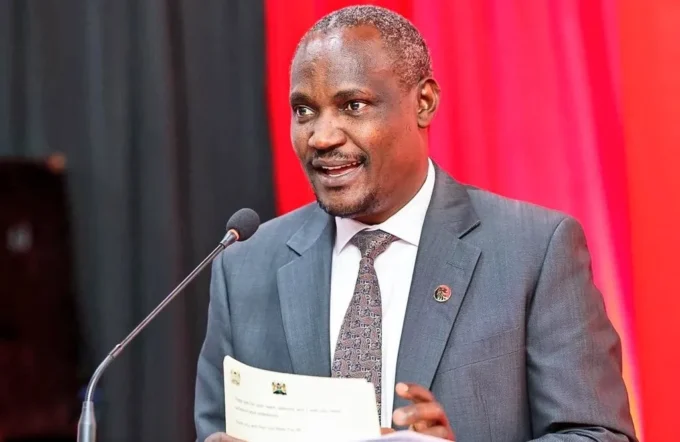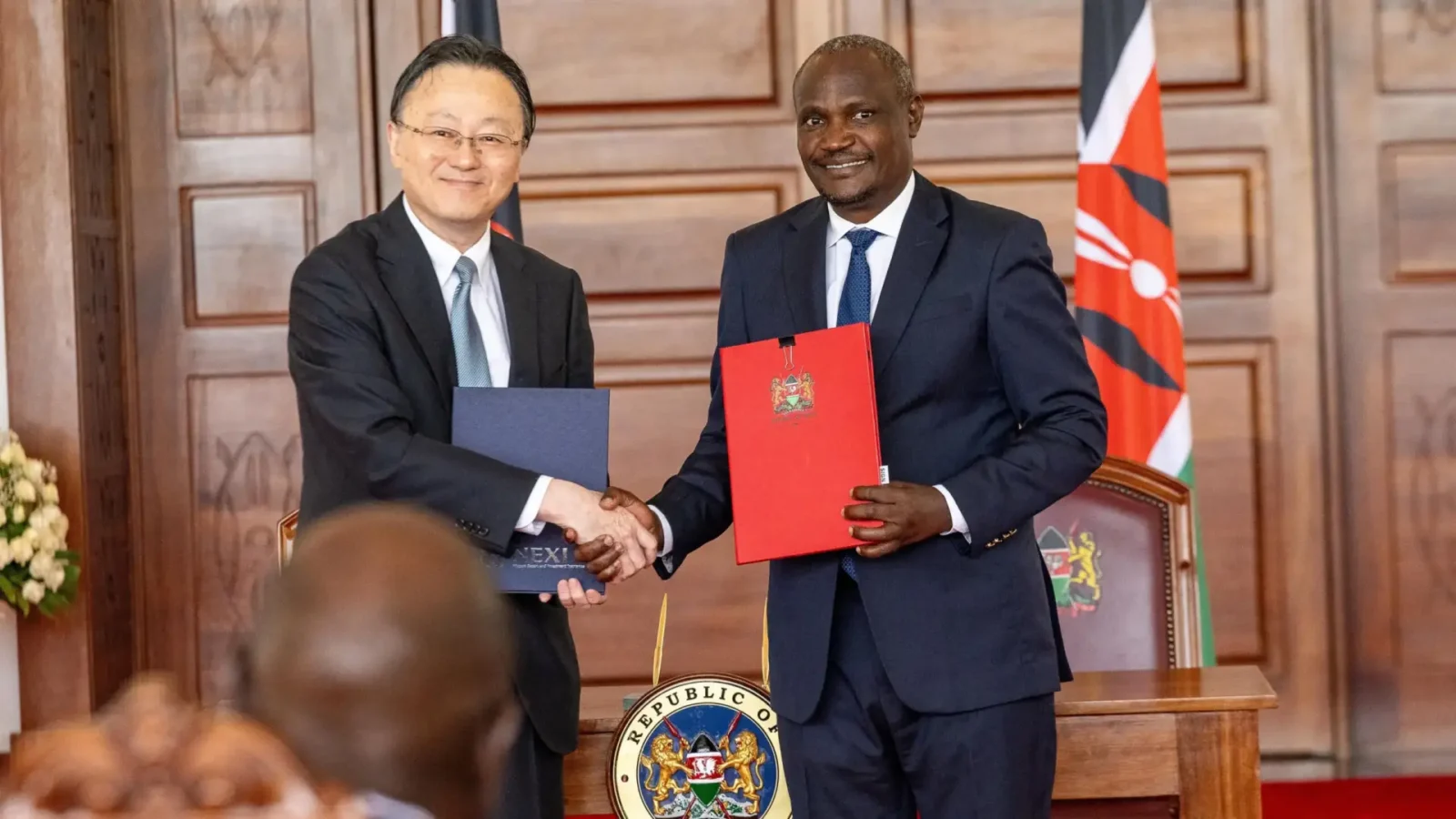
Kenya has formalised a KSh22.1 billion, or JPY25 billion, financing facility backed by Japan’s Nippon Export and Investment Insurance to support industrial development, electricity-network efficiency and the government’s reform agenda.
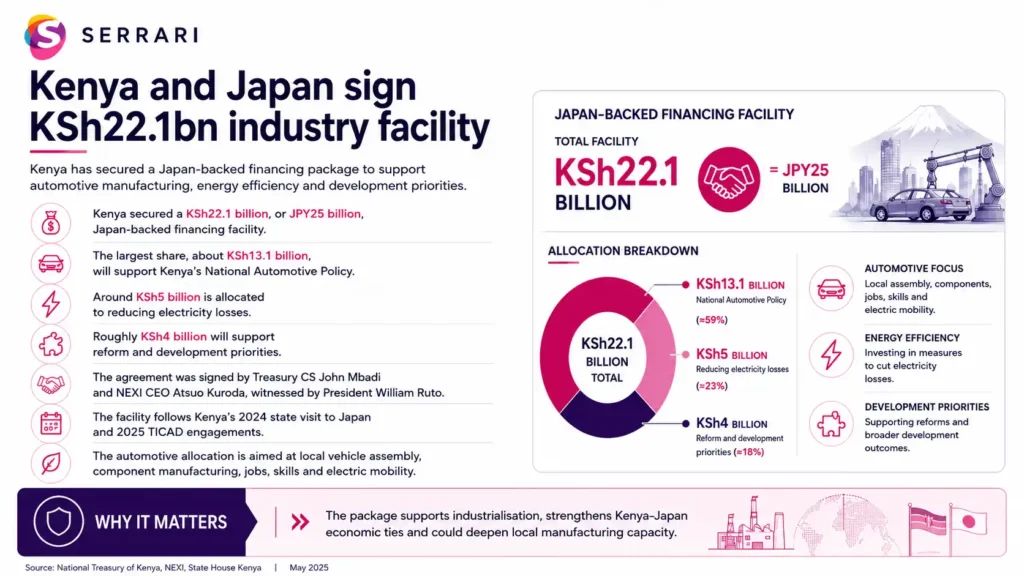
The largest allocation, JPY15 billion or approximately KSh13.1 billion, will support Kenya’s National Automotive Policy. The funding is intended to expand local vehicle assembly, strengthen component manufacturing, promote electric mobility and create skilled jobs.
The remaining package includes about KSh5 billion for reducing electricity losses and approximately KSh4 billion for broader reform and development programmes. The agreement was signed at State House in Nairobi on June 22, 2026, by Treasury Cabinet Secretary John Mbadi and NEXI Chairman and Chief Executive Atsuo Kuroda.
Key Overview
The JPY25 billion credit facility is structured as yen-denominated financing from Japanese commercial banks, insured by NEXI. It follows a memorandum signed during President William Ruto’s 2024 state visit to Japan and a statement of intent unveiled at the ninth Tokyo International Conference on African Development in 2025.
The automotive allocation is the centrepiece of the package, but the full KSh22.1 billion is not exclusively for vehicle manufacturing. About KSh13.1 billion will support the automotive sector, KSh5 billion will finance electricity-loss reduction, and KSh4 billion will support reform and development priorities.
The facility is expected to help Kenya diversify its funding sources while accessing Japanese capital, technology and industrial expertise.
Automotive Industry Receives Largest Allocation
The National Automotive Policy allocation is designed to move Kenya beyond basic assembly toward deeper manufacturing and local value addition. It may support vehicle assemblers, motorcycle producers, parts manufacturers and institutions developing technical skills for the industry.
Kenya currently assembles vehicles from imported semi-knocked-down and completely knocked-down kits. The government wants more components to be produced locally, reducing import dependence and retaining a larger share of the industry’s value within the country.
According to the State Department for Industry, the KSh13.1 billion automotive allocation could provide grants and affordable financing for manufacturers to acquire machinery, expand production and improve technical standards.
Industry stakeholders have also called for support for electric vehicles, local battery and component production, technical training and compliance with international vehicle standards.
Local Assembly Could Create Wider Economic Benefits
Expanding vehicle production could generate demand for steel, glass, plastics, electronics, tyres, paint, logistics and professional services. These linkages mean automotive investment can support a broader manufacturing ecosystem rather than benefiting assembly plants alone.
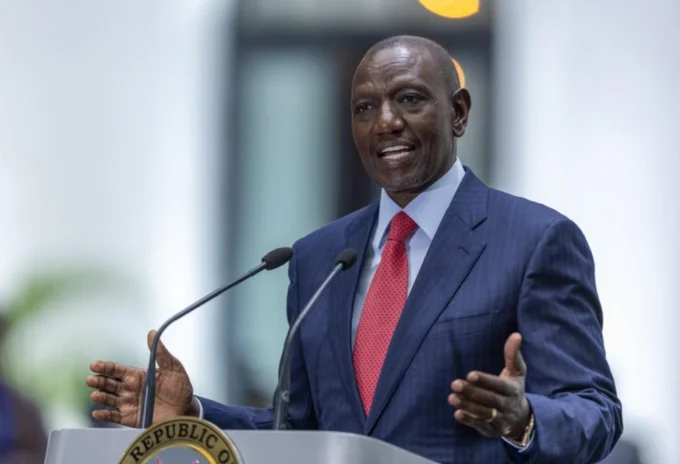
President Ruto said the policy aims to stop exporting jobs through the importation of finished vehicles. Greater local assembly could build technical expertise, create employment and improve Kenya’s ability to serve regional markets.
However, the economic impact will depend on how much local content is achieved. Importing nearly all components and performing final assembly domestically would create fewer benefits than developing competitive Kenyan suppliers.
Manufacturers will also require predictable taxation, consistent automotive regulations, affordable electricity and access to long-term capital before committing to larger production facilities.
Energy Programme Targets Power Losses
A second allocation of JPY5.5 billion, equivalent to about KSh5 billion, will fund the Reduction of Energy Losses Programme. The initiative is expected to support improvements in Kenya’s electricity transmission and distribution systems.
Technical losses occur as electricity moves through lines and transformers, while commercial losses arise from theft, faulty meters, billing failures and uncollected revenue. Reducing these losses could improve grid reliability and lower operating costs.
The three-part financing package links industrial policy with energy infrastructure because manufacturers require stable and affordable power. Electricity interruptions and high energy costs remain major constraints for Kenyan factories.
Japan’s earlier description of the facility said it would support the purchase and installation of efficient equipment and contribute to reducing losses across the transmission and distribution network.
Context is everything. Stay ahead of shifting trends with today’s market updates, and uncover emerging opportunities using the Serrari Group Market Index and Marketplace. Then, take control of your own financial future by exploring our Money & Life Reset Transformation Blueprint ™ to build stronger habits, create better systems, and design a path toward lasting wealth.
Reform Funding Completes the Package
The final JPY4.5 billion, or roughly KSh4 billion, will support Kenya’s reform and development agenda. The government says the funding will help protect essential public services, sustain social investment and strengthen institutions.
This component makes the agreement broader than an automotive-sector deal. It combines targeted industrial and energy investments with general development support under one yen-denominated facility.
The structure may allow Kenya to borrow at lower interest rates than it faces in some international dollar markets. However, yen-denominated financing creates exchange-rate exposure because the government must eventually service the debt in Japanese currency.
The value of the facility in Kenyan shillings can therefore change as the yen and shilling move against each other.
Japan Deepens Its Economic Partnership With Kenya
The agreement builds on more than six decades of diplomatic relations between Kenya and Japan. Cooperation has covered transport, energy, health, agriculture, education and technology through institutions including NEXI and the Japan International Cooperation Agency.
More than 120 Japanese companies are reported to operate in Kenya. The country’s position as an East African commercial hub gives Japanese businesses access to a larger regional market.
NEXI has said the financing should support Kenyan industrial development and job creation while creating opportunities for Japanese companies. Japanese vehicle brands already hold a significant share of Kenya’s market, making automotive cooperation commercially important to both countries.
Implementation Will Determine the Deal’s Impact
The facility gives Kenya access to substantial financing, but its success will depend on transparent allocation, commercially viable projects and measurable local production.
Key indicators will include the number of vehicles assembled, the value of locally manufactured components, new jobs created, technical skills developed and reductions in electricity losses.
The KSh22.1 billion package could strengthen Kenya’s manufacturing base and improve energy efficiency. Delivering those outcomes will require disciplined implementation, coordination with private industry and clear reporting on how each allocation is used.
Sources: Nippon Export and Investment Insurance / State Department for Industry / Kenya Broadcasting Corporation / People Daily
Your financial future isn’t something you wait for—it’s something you build.
The real question is: when do you begin?
Move beyond simply staying informed.
Navigate the markets with clarity—track trends through the Serrari Group Market Index, uncover opportunities in the Serrari Marketplace, and build practical knowledge with our Curated Wealth Builder Platform.
Stay connected to what truly matters.
Get daily insights on macro trends and financial movements across Kenya, Africa, and global markets—delivered through the Serrari Newsletter.
Growth opens doors.
Advance your career through professional programs including ACCA, HESI A2, ATI TEAS 7 , HESI EXIT , NCLEX – RN and NCLEX – PN, Financial Literacy!🌟—designed to move you forward with confidence.
See where money is flowing—clearly and in real time.
Track Money Market Funds, Treasury Bills, Treasury Bonds, Green Bonds, and Fixed Deposits, alongside global and African indexes, key economic indicators, and the evolving Crypto and stablecoin landscape—all within Serrari’s Market Index.