
















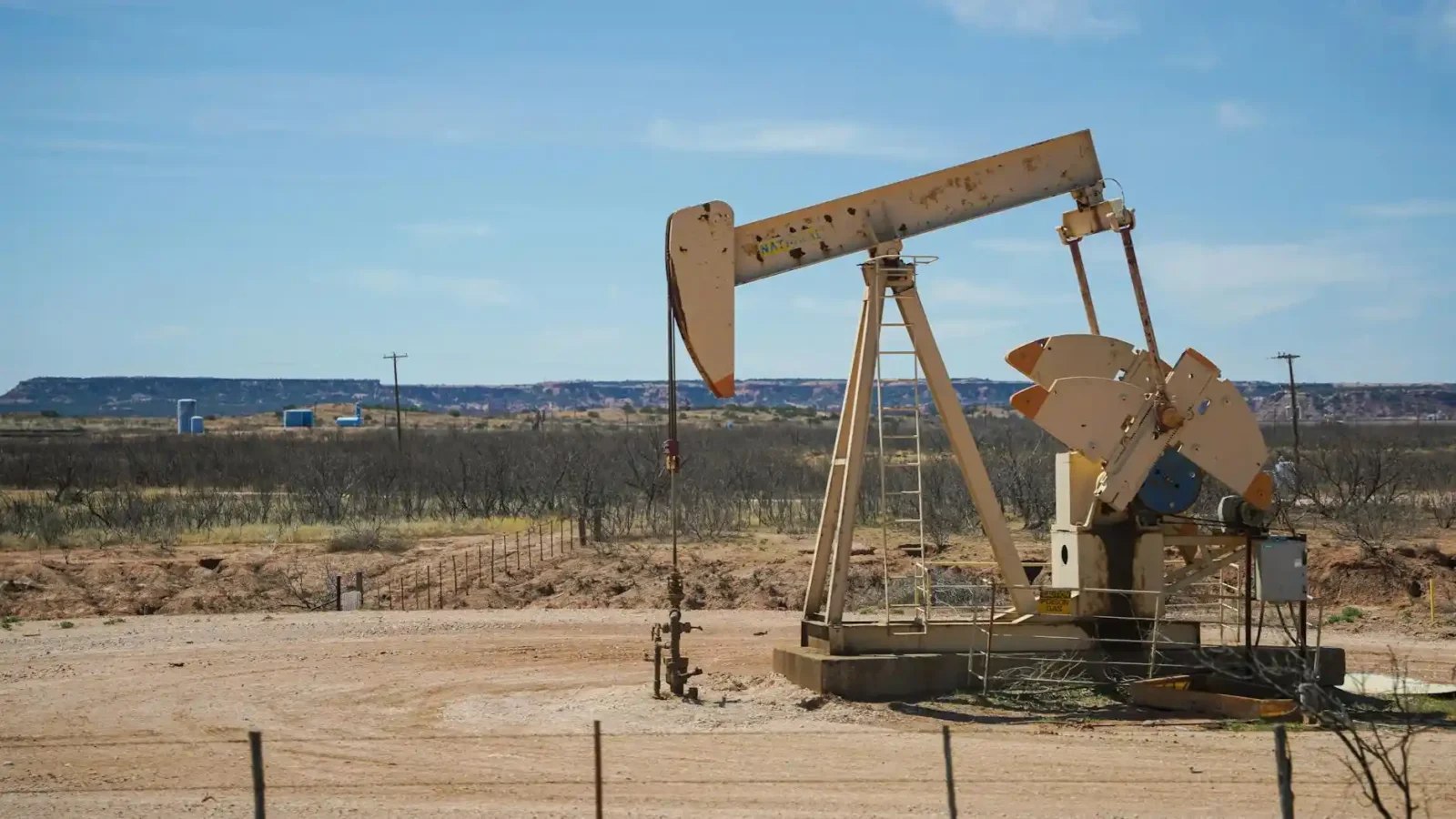
Global fixed income markets staged a broad-based rally as oil prices retreated meaningfully from their conflict-driven peaks, offering central banks and bond investors a degree of breathing room in what has been one of the most geopolitically turbulent starts to a financial year in decades. Brent crude, which had surged above $119 a barrel in the days following the most intense phase of the US-Israel military operations against Iran, pulled back by roughly 20% from its March 8 peak as traders assessed signals of potential de-escalation and the gradual emergence of alternative energy supply routes. The pullback sent a powerful signal through global interest rate markets, triggering a reassessment of the peak inflation scenario that had driven bond yields sharply higher in the preceding weeks.
The relief was palpable across the curve. In the United States, the 10-year Treasury yield eased to approximately 4.18% from recent highs, while short-duration bills stabilised in a range consistent with the Federal Reserve’s current policy stance. In Europe, Bund yields retreated from their elevated levels. Across emerging market sovereign bond markets — including African Eurobonds and Asian government paper — spreads tightened as the global risk premium associated with a prolonged Middle East oil shock began to moderate.
Markets move fast; don’t get left behind. We’ve paired the Serrari Group Market Index with a curated Marketplace and a comprehensive Wealth Builder Course to ensure you have the data—and the skills—to act on it.
The Oil-Bond Nexus: Why Energy Prices Drive Interest Rates
To understand why an oil price retreat produces a bond market rally, it helps to trace the transmission channels through which energy prices affect interest rates. The most direct channel runs through headline inflation: when oil and gasoline prices rise sharply, the consumer price index rises with them. Higher inflation forces central banks — particularly the Federal Reserve, which has a formal 2% inflation target — to consider maintaining higher interest rates for longer, or even to raise rates. Higher central bank policy rates push bond yields upward throughout the curve as the market prices in a tighter monetary environment.
The oil shock of early March 2026 — with Brent crude topping $119 a barrel — had precisely this effect. The Federal Reserve’s March 18 SEP update raised the PCE inflation projection for 2026 to 2.7% on both headline and core bases, reflecting the expected pass-through of energy costs into broader prices. The futures markets sharply curtailed their expectations for Fed rate cuts in 2026: what had been priced as two cuts at the start of the year was reduced to at most one cut. Bond investors, anticipating a tighter monetary environment, sold duration — pushing yields higher.
The partial reversal of the oil shock — with prices falling to the low-$90s by mid-March from their $119 peak — ran this logic in reverse. Lower energy costs imply lower near-term inflation, creating room for central banks to maintain their intended easing trajectories. For bond investors with duration positions, this is incrementally positive: the feared scenario of a prolonged oil shock forcing central banks to abandon their easing plans becomes less probable as oil prices moderate.
Saxo Bank’s Global Markets Assessment
The Saxo Bank Market Quick-Take from March 18 captured the market dynamics in real time, noting that Bitcoin held steady near $74,100 as institutional inflows via spot ETFs offset Fed-related caution, while Uber’s Nvidia-linked software stocks rallied 4.2% on the new robotaxi partnership. The Quick-Take framed the 10-year Treasury yield at 4.18% as a dovish signal embedded in the Fed’s dot plot, consistent with a market that had not abandoned its expectation of eventual rate normalisation even in the face of the oil shock.
The convergence of these data points — oil retreating from extreme levels, the Fed signalling one cut in 2026, Bitcoin rallying on institutional flows — created a mixed but ultimately risk-constructive global environment in which bond markets could find their footing. The Saxo analysis highlighted the particular sensitivity of global markets to whether oil price relief would prove durable: a sustained retreat from the $119 peak would allow central banks to proceed with planned rate cuts; a return to $110-plus levels would force a more prolonged reassessment.
The Iran Conflict’s Asymmetric Effect on Global Markets
The Iran conflict has introduced an asymmetric risk profile into global financial markets that is difficult to hedge and harder to model. On one hand, the conflict has driven oil prices sharply higher — a clearly inflationary development that complicates monetary policy in the United States, Europe and other major economies. On the other hand, as CNN Business reporting on the Federal Reserve noted, the same oil shock that drives up consumer prices also acts as a tax on consumer spending and business investment — a deflationary force in a growth sense that, if severe enough, could actually lower the natural rate of interest and eventually require more monetary accommodation rather than less.
This dual-channel effect is what makes the conflict particularly challenging for central banks to respond to. The Fed historically distinguishes between demand-driven inflation — which monetary policy is well suited to address — and supply-driven inflation, which monetary policy can only address at the cost of greater economic damage. An oil shock is a classic supply-side shock. Raising interest rates in response to oil-driven inflation risks tipping the economy into recession without actually reducing the oil price that is the root cause of the inflation. This is precisely the stagflation dynamic that Powell was at pains to distance himself from in his March 18 press conference.
Context is everything. While you follow today’s updates, use the Serrari Market Index and Marketplace to spot emerging shifts. Need to sharpen your edge? Our Wealth Builder Course turns these insights into a professional-grade strategy.
Emerging Market Bond Markets: The Secondary Effect of Oil
For emerging market bond issuers — including several African sovereign issuers who access international capital markets through Eurobond issuances — the global oil shock and the subsequent rally in global bonds has complex secondary effects. On one hand, many sub-Saharan African economies are oil importers, meaning that higher oil prices directly increase their import bills, worsen their current account positions and put pressure on local currencies and foreign exchange reserves. Kenya, for example, which imports all of its crude oil, faces higher fuel costs and wider trade deficits when global oil prices spike. The fiscal and monetary pressures this creates are significant and can complicate the CBK’s ability to maintain its easing cycle.
On the other hand, the global bond market rally that accompanies oil price moderation reduces the spread between US Treasuries and emerging market sovereign bonds — the metric that determines Africa’s external borrowing costs. A lower 10-year Treasury yield at 4.18%, relative to the 4.5%+ levels seen at the peak of the oil shock, reduces the absolute cost of any Eurobond issuance by an African sovereign, even if credit spreads remain unchanged. For countries like Kenya, Ethiopia and Ghana — all of which are navigating debt sustainability challenges — any reduction in the base rate for international borrowing provides material fiscal relief.
The Money Market Dimension: T-Bill Buying and the Fed’s Balance Sheet
The Investing.com report on the Federal Reserve’s Treasury bill buying programme noted that the programme remained on track to moderate as the Fed works to adjust its balance sheet holdings. This activity — the Fed’s quantitative tightening programme that has been reducing the size of its securities portfolio since 2022 — continues to be a background influence on Treasury market liquidity. By reinvesting only a portion of maturing securities and allowing a fixed amount to roll off each month, the Fed has been gradually withdrawing reserves from the banking system — a process that can occasionally tighten money market conditions and push short-term rates above the Fed’s target.
The coordination between the Fed’s balance sheet management and its interest rate policy is a subject of ongoing market scrutiny. With the federal funds rate at 3.5%–3.75% and the balance sheet still above pre-pandemic levels, the Fed has two distinct levers for managing financial conditions — and the interaction between them is not always predictable. The Q1 2026 moderation of Treasury bill buying reflects the Fed’s judgment that sufficient reserves remain in the system without additional purchases, though this assessment could change if money market pressures emerge unexpectedly.
Structural Forces Behind the 2026 Bond Market
Looking beyond the immediate oil shock and its partial reversal, the 2026 global bond market is shaped by several structural forces that will influence performance for the remainder of the year. The secular decline in global neutral interest rates — driven by demographics, technological progress and the structural savings glut in Asia — provides a long-term gravitational pull toward lower yields. Against this, the significant increase in government debt issuance required to fund fiscal deficits across the G7 creates supply pressure that can push yields higher than the neutral rate alone would imply.
For investors managing global fixed income portfolios — including pension funds in Kenya, Nigeria and South Africa that hold international bonds as part of their diversification strategies — the 2026 environment requires careful duration management. A yield at 4.18% on the 10-year Treasury offers considerably more compensation for interest rate risk than the sub-2% levels that prevailed in the post-COVID easing era. Whether that compensation is adequate depends on the investor’s view of where inflation, growth and monetary policy converge over the next twelve to twenty-four months — and in an environment defined by geopolitical uncertainty, honest uncertainty may be the most defensible position of all.
Your financial future isn’t something you wait for—it’s something you build.
The real question is: when do you begin?
Move beyond simply staying informed.
Navigate the markets with clarity—track trends through the Serrari Group Market Index, uncover opportunities in the Serrari Marketplace, and build practical knowledge with our Curated Wealth Builder Course.
Stay connected to what truly matters.
Get daily insights on macro trends and financial movements across Kenya, Africa, and global markets—delivered through the Serrari Newsletter.
Growth opens doors.
Advance your career through professional programs including ACCA, HESI A2, ATI TEAS 7 , HESI EXIT , NCLEX – RN and NCLEX – PN, Financial Literacy!🌟—designed to move you forward with confidence.
See where money is flowing—clearly and in real time.
Track Money Market Funds, Treasury Bills, Treasury Bonds, Green Bonds, and Fixed Deposits, alongside global and African indexes, key economic indicators, and the evolving Crypto and stablecoin landscape—all within Serrari’s Market Index.
Photo Source: Google
By: Montel Kamau
Serrari Financial Analyst
19th March, 2026