Key Overview
- Brazil and Germany announce €700M cooperation package
- €500M allocated to Brazil’s Climate Fund via BNDES
- €200M targeted at sustainable transport and mobility
- Focus on climate finance, energy transition, and bioeconomy
Brazil and Germany have launched a major cooperation initiative to mobilize €700 million for climate and sustainable mobility projects. The funding includes support for Brazil’s Climate Fund and investments in green transport solutions.
The partnership reflects growing international collaboration on climate finance and energy transition. It also highlights Brazil’s role as a key destination for green investment, particularly in renewable energy and bioeconomy sectors. Over time, the initiative could accelerate project deployment while strengthening bilateral economic ties.
A Major Bilateral Climate Finance Initiative
Brazil and Germany have announced a significant economic cooperation agreement aimed at mobilizing approximately R$4.1 billion (€700 million) for green projects across Brazil.
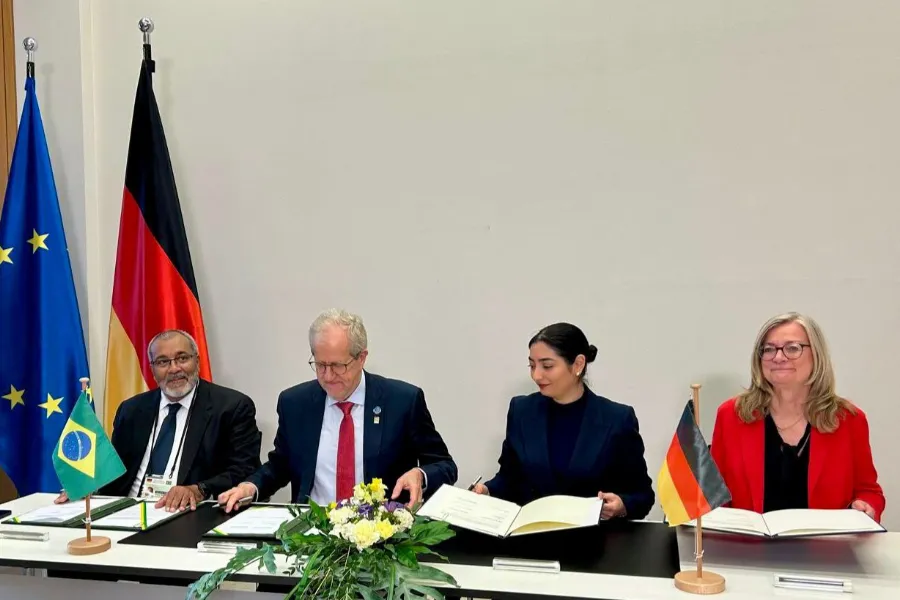
The agreement was formalized through two joint declarations of intent signed during the Hanover Fair in Germany on April 20, one of the world’s largest industrial technology events. The signing brought together key institutions including Brazilian National Bank for Economic and Social Development (BNDES), Kreditanstalt für Wiederaufbau (KfW), and the Federal Ministry for Economic Cooperation and Development (BMZ), alongside other international partners.
The initiative reflects a deepening of economic and financial cooperation between the two countries, particularly in areas linked to climate finance and sustainable industrial development. It also signals a broader commitment to aligning bilateral partnerships with global climate objectives, as both countries seek to accelerate investment into low-carbon and climate-resilient infrastructure.
By combining public financing, development bank support, and international collaboration, the agreement creates a framework for scaling capital deployment into priority sectors. It highlights the increasing role of cross-border partnerships in mobilizing funding for large-scale climate projects, particularly in emerging markets where investment needs remain substantial.
Markets move fast; don’t get left behind. We’ve paired the Serrari Group Market Index with a curated Marketplace and a comprehensive Wealth Builder Platform to ensure you have the data—and the skills—to act on it.
Funding Structure: Climate and Mobility Focus
The cooperation is structured around two core funding components, each targeting a key pillar of the energy transition—climate finance and sustainable mobility.
The first declaration of intent allocates approximately €500 million (R$2.94 billion) from Germany to Brazil’s National Climate Change Fund, managed by Brazilian National Bank for Economic and Social Development (BNDES).
This fund is designed to support a broad range of initiatives, including projects that reduce greenhouse gas emissions, promote climate adaptation, and finance technical studies related to environmental sustainability. The funding is expected to accelerate the development of climate-focused projects by improving access to capital and supporting early-stage project preparation.
Germany’s contribution is part of a wider international financing effort that includes institutions such as Agence Française de Développement, Cassa Depositi e Prestiti, and Inter-American Development Bank. This multi-institutional approach enhances the scale and impact of the fund, while also diversifying sources of financing.
The second declaration of intent provides an additional €200 million (R$1.17 billion) aimed at sustainable transport and mobility initiatives. This component will focus on financing and implementing cleaner transport systems, supporting the adoption of innovative technologies, and facilitating knowledge exchange between Brazilian and German stakeholders.
By addressing both climate finance and mobility, the funding structure reflects a comprehensive approach to decarbonization—targeting emissions reductions across multiple sectors while supporting technological innovation and infrastructure development.
Strengthening Brazil’s Climate Investment Pipeline
Officials from both countries emphasized the importance of the initiative in scaling climate-related investments and strengthening Brazil’s overall project pipeline.
João Paulo Capobianco, Brazil’s Minister of the Environment and Climate Change, described Germany’s contribution as a strong signal of confidence in Brazil’s investment environment and its ongoing climate efforts. He highlighted the significant growth in climate-related funding in recent years, noting that annual investments have increased from approximately R$400 million to a projected R$27 billion in 2026.
This rapid expansion in funding reflects a broader shift in Brazil’s economic strategy, with increased emphasis on sectors such as energy transition, bioeconomy, circular economy, resilient infrastructure, and climate adaptation. The scale of planned investment indicates a growing pipeline of projects that require both domestic and international financing support.
The partnership with Germany is expected to further accelerate this momentum by providing additional capital, technical expertise, and institutional backing. It also enhances Brazil’s ability to attract further international investment by demonstrating strong policy alignment and credible financing frameworks.
Overall, the initiative strengthens Brazil’s position as a key destination for climate-focused capital in emerging markets, while supporting the development of a more robust and diversified green investment ecosystem.
Sustainable Mobility and Technology Collaboration
The €200 million allocation for mobility is expected to play a transformative role in advancing cleaner, more efficient transportation systems across Brazil, addressing one of the most challenging sectors to decarbonize.
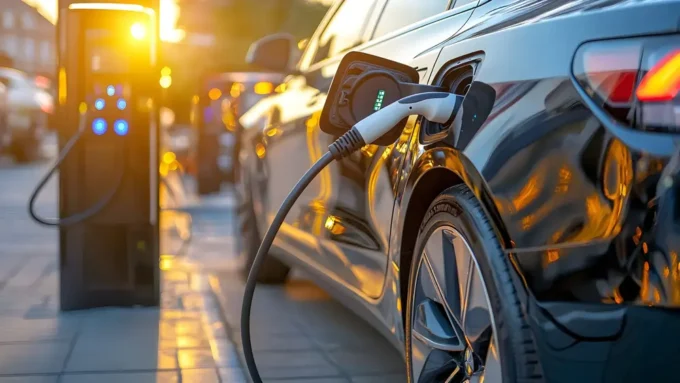
The initiative will support the deployment of sustainable transport solutions across both urban and intercity networks, including low-emission public transit systems, electrification of vehicle fleets, and the integration of digital technologies to improve traffic management and energy efficiency. These investments are aimed at reducing emissions intensity while enhancing the overall performance and resilience of mobility systems.
A key component of the program is the promotion of technological innovation. This includes the adoption of advanced mobility solutions such as smart grid integration for electric vehicles, data-driven traffic optimization, and intelligent transport systems that improve connectivity and reduce congestion. By incorporating these technologies, the initiative seeks to modernize Brazil’s transport infrastructure while aligning it with global sustainability standards.
In addition to physical infrastructure, the program places strong emphasis on institutional collaboration and knowledge exchange. Partnerships between Brazilian and German institutions will facilitate the transfer of technical expertise, regulatory best practices, and policy frameworks. This exchange is expected to accelerate implementation timelines, reduce project risks, and improve the effectiveness of deployed solutions.
Such collaboration is particularly important in the context of global decarbonization efforts, as transport remains a major source of greenhouse gas emissions worldwide. By combining financial resources with technical cooperation, the initiative aims to create scalable models that can be replicated across other emerging markets facing similar challenges.
Context is everything. While you follow today’s updates, use the Serrari Group Market Index and Marketplace to spot emerging shifts. Need to sharpen your edge? Our Wealth Builder Platform turns these insights into a professional-grade strategy.
Bioenergy and Renewable Cooperation
During his visit to Germany, Luiz Inácio Lula da Silva emphasized Brazil’s openness to expanding bilateral cooperation on alternative energy sources, with a strong focus on biofuels as a cornerstone of the energy transition.
Brazil has established itself as a global leader in bioenergy, particularly in the production of biodiesel and ethanol, supported by decades of policy development, technological advancement, and large-scale agricultural capacity. This expertise positions the country as a critical partner in advancing renewable energy solutions that can be deployed at scale.
Lula highlighted that biofuels offer a pragmatic and cost-effective pathway for reducing greenhouse gas emissions, particularly in sectors where electrification remains challenging. One of the key advantages of biofuels is their compatibility with existing fuel infrastructure, allowing for rapid deployment without the need for extensive new investment in distribution systems.
The ability to blend biodiesel with conventional fuels provides immediate emissions reductions while maintaining operational flexibility. This approach also contributes to energy security by reducing reliance on imported fossil fuels, thereby mitigating exposure to global price volatility and supply disruptions.
Beyond domestic benefits, the expansion of bioenergy cooperation between Brazil and Germany could support the development of international supply chains and technology transfer, combining Brazil’s production capacity with Germany’s expertise in industrial processing and innovation. This synergy has the potential to accelerate the global adoption of biofuels as part of a diversified energy transition strategy.
Institutional Support and Strategic Alignment
Brazilian National Bank for Economic and Social Development (BNDES) is expected to play a central role in implementing the initiative, acting as the primary conduit for climate finance and the coordination of project funding.
As Brazil’s leading development finance institution, BNDES brings significant experience in structuring and financing large-scale infrastructure and sustainability projects. Its involvement ensures that funds are allocated efficiently, with rigorous evaluation processes to ensure alignment with both environmental objectives and financial viability.
According to BNDES President Aloizio Mercadante, the agreement represents a continuation of long-standing cooperation between Brazil and Germany, now increasingly focused on climate action and sustainable development. He emphasized that the partnership reflects a shared commitment to inclusive growth, where economic development is aligned with environmental sustainability.
The initiative also fits within a broader global framework of climate finance mobilization, where collaboration between public institutions, development banks, and international partners is essential to bridging the investment gap. By leveraging multiple sources of funding and expertise, the partnership enhances the scale and impact of climate investments.
Furthermore, the alignment of financial resources with policy objectives strengthens investor confidence, creating a more favorable environment for additional capital inflows. This is particularly important in emerging markets, where clear governance structures and credible institutions play a critical role in attracting long-term investment.
Overall, the collaboration demonstrates how coordinated institutional efforts can accelerate the transition to low-carbon economies, providing a model for future partnerships aimed at scaling sustainable development across regions.
Outlook: Expanding Cross-Border Climate Finance
The €700 million cooperation package between Brazil and Germany signals a growing role for international partnerships in financing the global energy transition. As climate investment needs continue to outpace available domestic resources in many emerging markets, cross-border collaboration is becoming an essential mechanism for mobilizing large-scale capital and accelerating project deployment.
In the near term, the effectiveness of the initiative will depend on how quickly funds can be deployed and translated into tangible, bankable projects. This will require efficient coordination among key institutions such as Brazilian National Bank for Economic and Social Development (BNDES), Kreditanstalt für Wiederaufbau (KfW), and Federal Ministry for Economic Cooperation and Development (BMZ), as well as the establishment of clear governance structures and implementation frameworks. Streamlining approval processes and ensuring alignment between policy objectives and project execution will be critical to maintaining momentum.
Another key factor will be the ability to crowd in additional private-sector investment. By demonstrating strong institutional backing and well-structured financing mechanisms, the initiative has the potential to de-risk projects and attract further capital from institutional investors, development finance institutions, and corporate participants.
Over the longer term, the partnership could serve as a scalable model for cross-border climate finance, illustrating how public funding, development bank financing, and international cooperation can be effectively combined to support large-scale green investments. This blended finance approach is increasingly viewed as a critical tool for bridging the global climate finance gap.
As demand for climate-aligned capital continues to grow, initiatives like this are likely to play an increasingly central role in channeling investment toward sustainable infrastructure, clean energy, and low-carbon technologies. If successfully implemented, the partnership could not only accelerate Brazil’s transition but also reinforce broader global efforts to build resilient, low-carbon economies through coordinated international action.
Your financial future isn’t something you wait for—it’s something you build.
The real question is: when do you begin?
Move beyond simply staying informed.
Navigate the markets with clarity—track trends through the Serrari Group Market Index, uncover opportunities in the Serrari Marketplace, and build practical knowledge with our Curated Wealth Builder Platform.
Stay connected to what truly matters.
Get daily insights on macro trends and financial movements across Kenya, Africa, and global markets—delivered through the Serrari Newsletter.
Growth opens doors.
Advance your career through professional programs including ACCA, HESI A2, ATI TEAS 7 , HESI EXIT , NCLEX – RN and NCLEX – PN, Financial Literacy!🌟—designed to move you forward with confidence.
See where money is flowing—clearly and in real time.
Track Money Market Funds, Treasury Bills, Treasury Bonds, Green Bonds, and Fixed Deposits, alongside global and African indexes, key economic indicators, and the evolving Crypto and stablecoin landscape—all within Serrari’s Market Index.