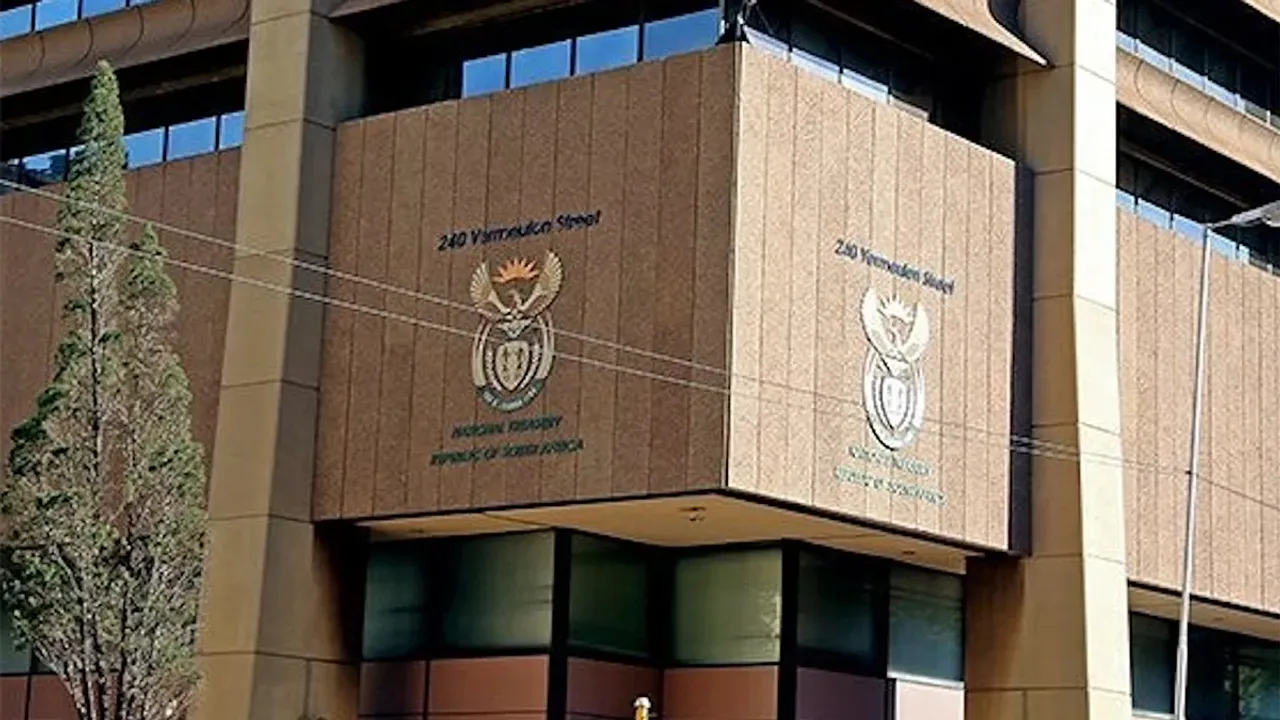
South Africa is reducing its weekly government bond auctions and introducing a bond buyback programme to manage future debt repayments and reinforce its commitment to fiscal discipline. Announced on October 21, 2026, the changes come as the country faces larger debt maturities later this decade, even though the government expects its budget deficit to narrow.
The new bond auction arrangements prompted an immediate rally in benchmark government bonds. However, fewer weekly bond sales and debt buybacks do not, on their own, mean South Africa’s total public debt will fall.
Key Overview
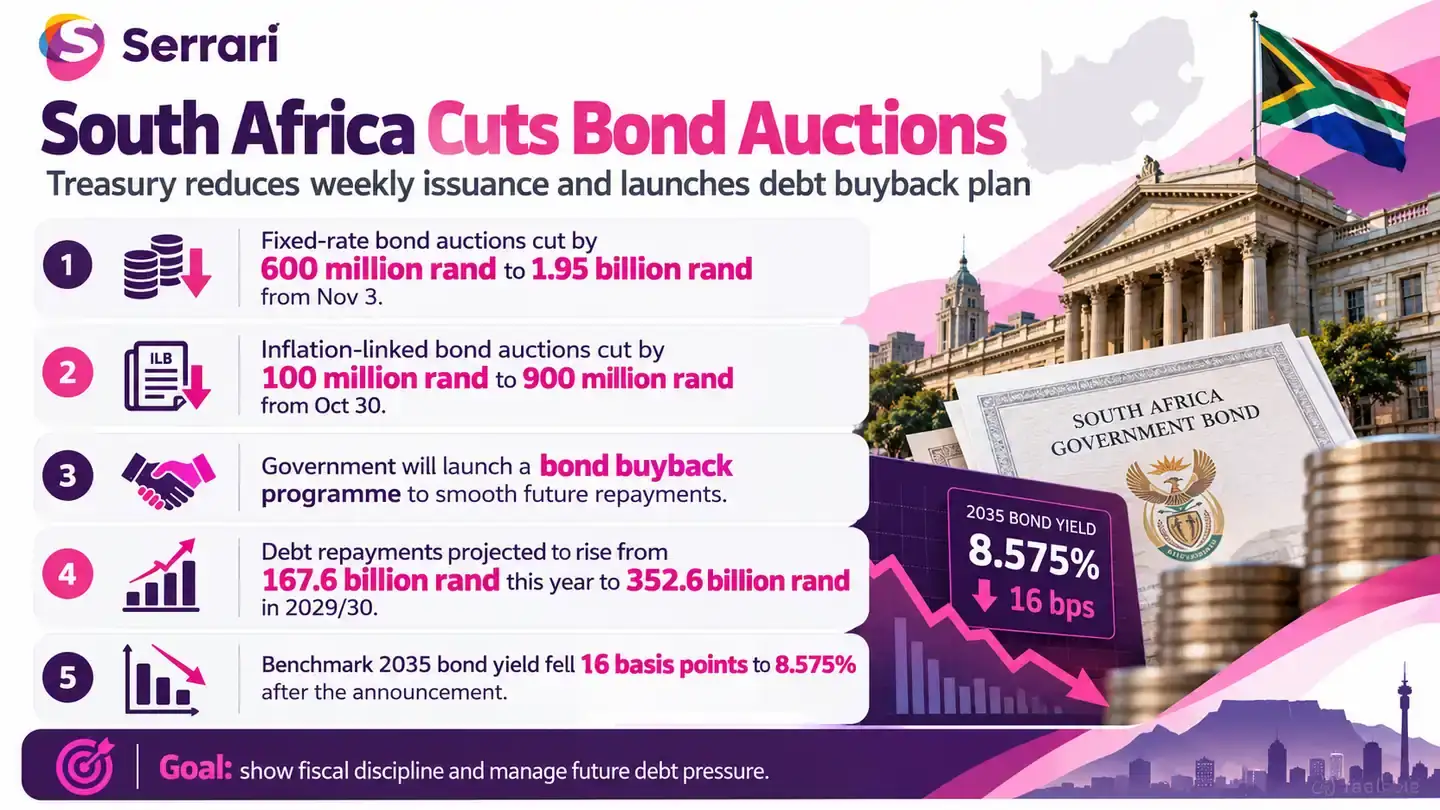
- Fixed-rate bonds: Competitive weekly auction volumes will fall by R600 million to R1.95 billion from November 3, 2026.
- Inflation-linked bonds: Weekly offerings will decline by R100 million to R900 million from October 30, 2026.
- Debt buybacks: The government plans to repurchase selected bonds before maturity to help manage concentrated future repayments.
- Repayment pressure: Scheduled debt redemptions are projected to rise from R167.6 billion in 2026/27 to R352.6 billion in 2029/30.
- Market reaction: The benchmark 2035 bond yield fell sharply after the announcement, reflecting higher bond prices.
Treasury Reduces Weekly Government Bond Auctions
Under the revised schedule, competitive fixed-rate issuance will decrease from R2.55 billion to R1.95 billion per week, a reduction of about 23.5%. The first affected auction is scheduled for November 3, with settlement on November 9.
Inflation-linked bond offerings will fall from R1 billion to R900 million, or 10%, beginning with the October 30 auction, which settles on November 5. The non-competitive fixed-rate allocation remains at 75% of the competitive amount offered, while floating-rate notes and switch auctions remain part of the government’s funding strategy.
Lower issuance can reduce the immediate supply of new bonds in the market. If investor demand remains steady, this may support existing bond prices and potentially improve the terms at which the government raises funds.
Context is everything. Stay ahead of shifting trends with today’s market updates, and uncover emerging opportunities using the Serrari Group Market Index and Marketplace. Then, take control of your own financial future by exploring our Money & Life Reset Transformation Blueprint ™ to build stronger habits, create better systems, and design a path toward lasting wealth.
Bond Buybacks Aim to Ease Future Repayment Pressure
South Africa also plans a programme to buy back some outstanding bonds before their scheduled maturity. The objective is to spread out major repayments and reduce the risk of having to refinance unusually large amounts of debt in a single period.
The medium-term borrowing projections show why this matters. Debt repayments are expected to more than double from R167.6 billion in the current 2026/27 financial year to R352.6 billion in 2029/30. The gross borrowing requirement is projected to reach R586.2 billion in 2029/30, despite plans to reduce the budget deficit.
Buybacks can improve the timing and structure of government debt obligations, but their effect on total indebtedness depends on how the purchases are financed. The announcement did not specify the bonds to be repurchased or the programme’s total size.
Bond Yields Fall as Investors Respond
The benchmark 2035 government bond strengthened after the announcement. During Wednesday’s trading, its yield fell by as much as 16 basis points to 8.575%, while the rand was broadly stable, according to the reported market reaction.
Bond prices generally rise when yields fall. The move suggests investors welcomed the prospect of lower near-term bond supply and more active management of upcoming maturities. However, a single day’s price movement does not establish that borrowing costs will remain lower over time.
Fiscal Discipline Still Faces an Economic Test
Finance Minister Enoch Godongwana’s October budget address stated that government debt had stabilised at 78.4% of gross domestic product in 2025/26. The government aims to grow its primary budget surplus and bring the deficit down to 2.5% of GDP by 2030.
Yet weaker economic activity remains a constraint. The 2026 growth forecast was reduced to 1.2% from the 1.6% estimated in February. Sustained progress will therefore depend on fiscal management, economic growth and the government’s ability to refinance maturing obligations without excessive costs.
For bond investors, the next signals to watch are auction demand, the details of the buyback programme and whether lower yields persist as the Treasury implements its financing plan.
Sources: Sharenet / CNBC Africa / MarketScreener / South African Government
Your financial future isn’t something you wait for—it’s something you build.
The real question is: when do you begin?
Move beyond simply staying informed.
Navigate the markets with clarity—track trends through the Serrari Group Market Index, uncover opportunities in the Serrari Marketplace, and build practical knowledge with our Curated Wealth Builder Platform.
Stay connected to what truly matters.
Get daily insights on macro trends and financial movements across Kenya, Africa, and global markets—delivered through the Serrari Newsletter.
Growth opens doors.
Advance your career through professional programs including ACCA, HESI A2, ATI TEAS 7 , HESI EXIT , NCLEX – RN and NCLEX – PN, Financial Literacy!🌟—designed to move you forward with confidence.
See where money is flowing—clearly and in real time.
Track Money Market Funds, Treasury Bills, Treasury Bonds, Green Bonds, and Fixed Deposits, alongside global and African indexes, key economic indicators, and the evolving Crypto and stablecoin landscape—all within Serrari’s Market Index.