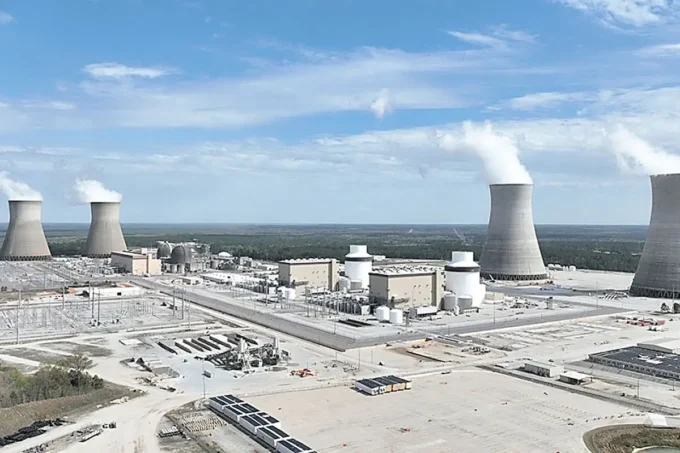
South Korea plans to launch the Global Verified Carbon Market (GVCM) in 2027 to facilitate trading in carbon credits generated by overseas greenhouse gas reduction projects. The system will classify credits according to host-country approval, use blockchain to record key project information and rely on the Korea Exchange (KRX) for trading. The government is also considering digital-asset-based credit issuance and links with its domestic emissions trading scheme.
Key Overview
- Launch target: 2027.
- Market: Global Verified Carbon Market (GVCM).
- Trading platform: Korea Exchange (KRX).
- Credit categories: GVCM A and GVCM NA.
- Technology: Blockchain-based records of key project and emissions-reduction information.
- Future options: Digital-asset issuance and possible links with South Korea’s domestic emissions trading scheme.
- International cooperation: Participation by other countries and potential conversion of selected World Bank and Green Climate Fund project outcomes into GVCM credits.
South Korea Prepares to Launch an International Carbon Market
South Korea is preparing to establish an international marketplace for carbon credits generated through overseas greenhouse gas reduction projects, with full operations targeted for 2027. The initiative, called the Global Verified Carbon Market (GVCM), is designed to support the issuance and trading of credits while addressing concerns about the credibility and consistency of carbon markets.
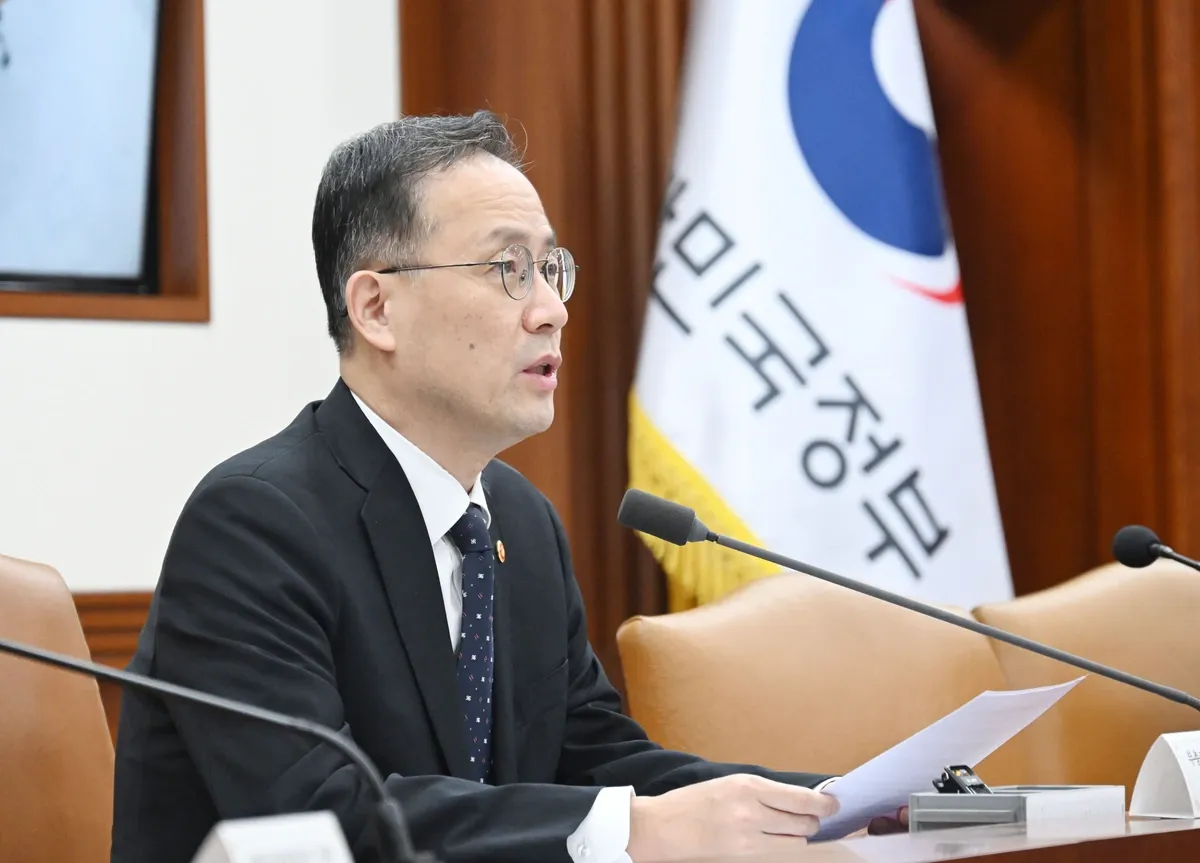
The government discussed the detailed implementation plan at a ministerial meeting on international economic affairs on 12 October 2026, chaired by Deputy Prime Minister and Minister of Economy and Finance Lee Hyung-il.
Under the proposed system, verified emissions-reduction outcomes from overseas projects will be converted into carbon credits that can be traded through the Korea Exchange. Depending on the relevant approvals, the credits could support corporate environmental activities and certain regulatory obligations, including national climate targets.
The initiative represents a move beyond a market limited to voluntary corporate offsetting. The government has replaced the earlier name, Global Voluntary Carbon Market, with Global Verified Carbon Market to reflect the broader intended uses of eligible credits.
Two Credit Categories Will Determine How Credits Can Be Used
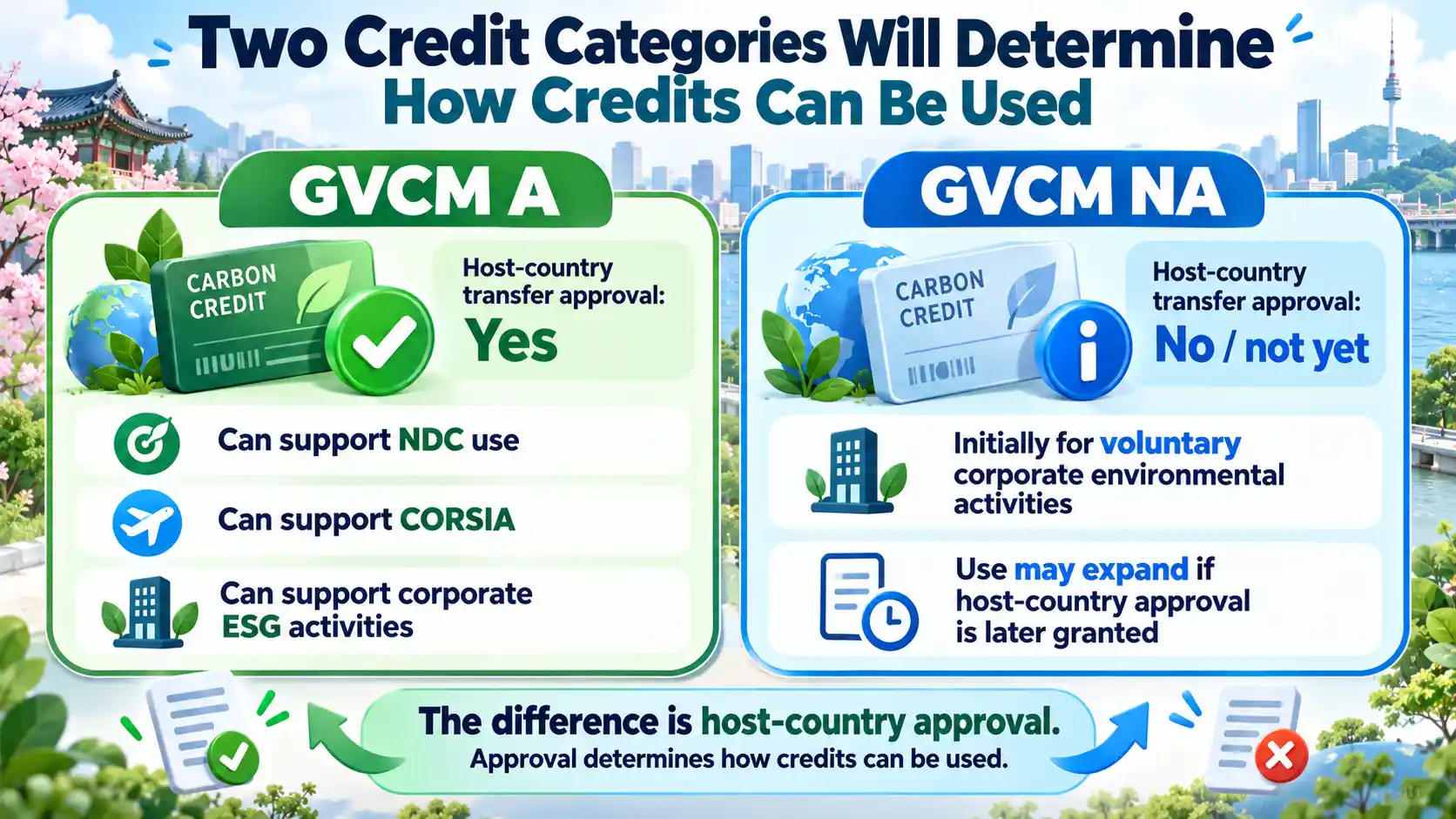
A central feature of the framework is the distinction between credits approved for international transfer by the host country and those without that approval.
Credits classified as GVCM A will be eligible for specified compliance uses, including contributions towards the investing country’s nationally determined contribution (NDC) and compliance with international aviation requirements under the Carbon Offsetting and Reduction Scheme for International Aviation (CORSIA). They may also support corporate environmental, social and governance activities.
Credits classified as GVCM NA will initially be restricted to voluntary corporate environmental activities. Their permitted uses could expand if the host country subsequently grants the required transfer approval.
This distinction matters because approval by the country hosting a carbon-reduction project affects whether the resulting credits can be used towards international climate commitments. It also provides a basis for separating credits intended for voluntary claims from those eligible for specified compliance purposes.
The two categories of carbon credits are therefore central to the proposed market’s structure and the conditions under which buyers can use the credits they acquire.
Blockchain Records to Support Credit Credibility
South Korea plans to use blockchain technology to strengthen the traceability of carbon credits. Key information, including project operators and emissions-reduction volumes, will be recorded on the blockchain to help establish a more transparent record of the credits issued.
The system is intended to improve confidence in transactions in a market where the credibility of claimed emissions reductions has been a longstanding concern. Better access to project information can help participants track the origins and reported outcomes of credits.
The government also plans to use the Korea Exchange as the trading platform. The approach combines blockchain-based information management with an established exchange infrastructure for trading the credits.
However, blockchain records alone cannot guarantee that a project has delivered the emissions reductions it claims. The effectiveness of the framework will also depend on project assessment, reliable measurement and verification, and compliance with the applicable approval requirements.
Context is everything. Stay ahead of shifting trends with today’s market updates, and uncover emerging opportunities using the Serrari Group Market Index and Marketplace. Then, take control of your own financial future by exploring our Money & Life Reset Transformation Blueprint ™ to build stronger habits, create better systems, and design a path toward lasting wealth.
Digital-Asset Issuance and Domestic Market Links Under Review
Beyond the initial trading framework, South Korea is considering whether carbon credits could eventually be issued in digital-asset form. This remains under review rather than a confirmed feature of the initial launch.
The government will need to consider the relevant legal framework, market conditions and the reliability of the proposed infrastructure before deciding how digital-asset issuance might operate.
It is also examining whether GVCM credits could be linked to the domestic emissions trading scheme and greenhouse gas target management system, subject to the necessary conditions. Such a link could create additional uses for eligible credits, although the proposal has not yet been confirmed as an operational arrangement.
The review of digital-asset credit issuance highlights the government’s interest in using digital infrastructure to support carbon markets while retaining a distinction between the initial system and possible future developments.
International Participation Will Shape Implementation
South Korea plans to secure interested participating countries during 2026 and establish an issuing body in 2027 as it prepares for full operations. It will also discuss whether emissions-reduction outcomes from projects supported by the World Bank(WB) and the Green Climate Fund(GCF) could be converted into GVCM credits.
International participation will be important because the credits originate from projects conducted outside South Korea. The host countries’ involvement and approval will help determine how credits are issued and which uses are permitted.
The issuing body’s structure, technical procedures and oversight arrangements will also influence the market’s credibility. The government will need to establish processes that can assess project outcomes, maintain reliable records and support the appropriate use of credits.
Outlook
South Korea’s planned 2027 launch could create a new route for trading internationally generated carbon credits, combining blockchain records with a market operated through the Korea Exchange. The two-category system is intended to distinguish credits eligible for specified compliance purposes from those initially limited to voluntary corporate environmental activities.
The initiative’s success will depend on more than the establishment of a trading platform. Participating countries must be secured, the issuing body must be formed, and credible procedures for project assessment, emissions measurement and host-country approval must be implemented.
The proposed links with South Korea’s domestic emissions trading scheme and the possible issuance of credits as digital assets remain under consideration. These decisions could shape the market’s future scope, but they should not be treated as confirmed features of the initial launch.
Ultimately, the GVCM will need to demonstrate that its credits represent credible emissions reductions and that buyers can understand the conditions governing their use. If the framework achieves those objectives, it could provide an additional channel for international carbon trading while strengthening the role of verified project information in the market.
FAQs
1. When will South Korea launch its international carbon market?
The government is targeting full operations of the Global Verified Carbon Market in 2027.
2. What is the difference between GVCM A and GVCM NA credits?
GVCM A credits have the required host-country transfer approval and can be used for specified compliance purposes. GVCM NA credits are initially limited to voluntary corporate environmental activities.
3. How will blockchain be used in the market?
Blockchain will record key information about carbon-reduction projects, including project operators and emissions-reduction volumes, to support traceability.
4. Will carbon credits be issued as digital assets?
The government is reviewing digital-asset-based issuance as a possible future development. It has not been confirmed as part of the initial launch.
Sources: Seoul Economic Daily | BigGo Finance | Bloomingbit
Your financial future isn’t something you wait for—it’s something you build.
The real question is: when do you begin?
Move beyond simply staying informed.
Navigate the markets with clarity—track trends through the Serrari Group Market Index, uncover opportunities in the Serrari Marketplace, and build practical knowledge with our Curated Wealth Builder Platform.
Stay connected to what truly matters.
Get daily insights on macro trends and financial movements across Kenya, Africa, and global markets—delivered through the Serrari Newsletter.
Growth opens doors.
Advance your career through professional programs including ACCA, HESI A2, ATI TEAS 7 , HESI EXIT , NCLEX – RN and NCLEX – PN, Financial Literacy!🌟—designed to move you forward with confidence.
See where money is flowing—clearly and in real time.
Track Money Market Funds, Treasury Bills, Treasury Bonds, Green Bonds, and Fixed Deposits, alongside global and African indexes, key economic indicators, and the evolving Crypto and stablecoin landscape—all within Serrari’s Market Index.