Singaporean investment firm GIC and UK-based investment manager Atrato have agreed to acquire a portfolio of 35 Carrefour stores in France and Spain through a sale-and-leaseback transaction worth approximately €290 million. Carrefour will continue operating the properties under long-term leases, allowing the retailer to unlock real estate value while retaining control of its store operations.
Key Overview
- Transaction value: Approximately €290 million in net proceeds.
- Buyers: GIC and Atrato.
- Portfolio: 35 stores across France and Spain.
- French properties: 26 Carrefour Market supermarkets and six hypermarkets.
- Spanish properties: Three hypermarkets.
- Lease terms: 12 years, including a 10-year firm, non-cancellable commitment.
- Strategic objective: Unlock property value while continuing retail operations.
GIC and Atrato Acquire Carrefour’s Retail Property Portfolio
GIC, Singapore’s sovereign wealth fund, and UK investment manager Atrato are acquiring a portfolio of Carrefour retail properties in France and Spain in a deal that will generate approximately €290 million in net proceeds for the French retailer.
The transaction covers 35 Carrefour stores in France and Spain, comprising 32 properties in France and three in Spain. Rather than selling the properties and leaving the locations, Carrefour will continue operating all the stores under newly established lease agreements.
The deal is structured as a sale-and-leaseback transaction, allowing the retailer to release capital tied up in property while maintaining its presence at the affected locations. For GIC and Atrato, the acquisition provides exposure to established grocery retail properties supported by long-term rental agreements.
What the €290 Million Deal Covers
The portfolio consists of 26 Carrefour Market supermarkets and 6 hypermarkets in France, alongside three hypermarkets in Spain. The properties form part of Carrefour’s wider retail estate, which supports its grocery and hypermarket operations across the two markets.
The transaction’s net sale value of approximately €290 million represents the proceeds Carrefour expects to receive from the disposal. The final value to each party will depend on the transaction’s terms and associated costs.
The stores will remain operational, meaning customers should not experience an interruption simply because ownership of the underlying real estate changes. Carrefour will instead pay rent to the new owners under the lease agreements.
Long-Term Leases Provide Income Visibility
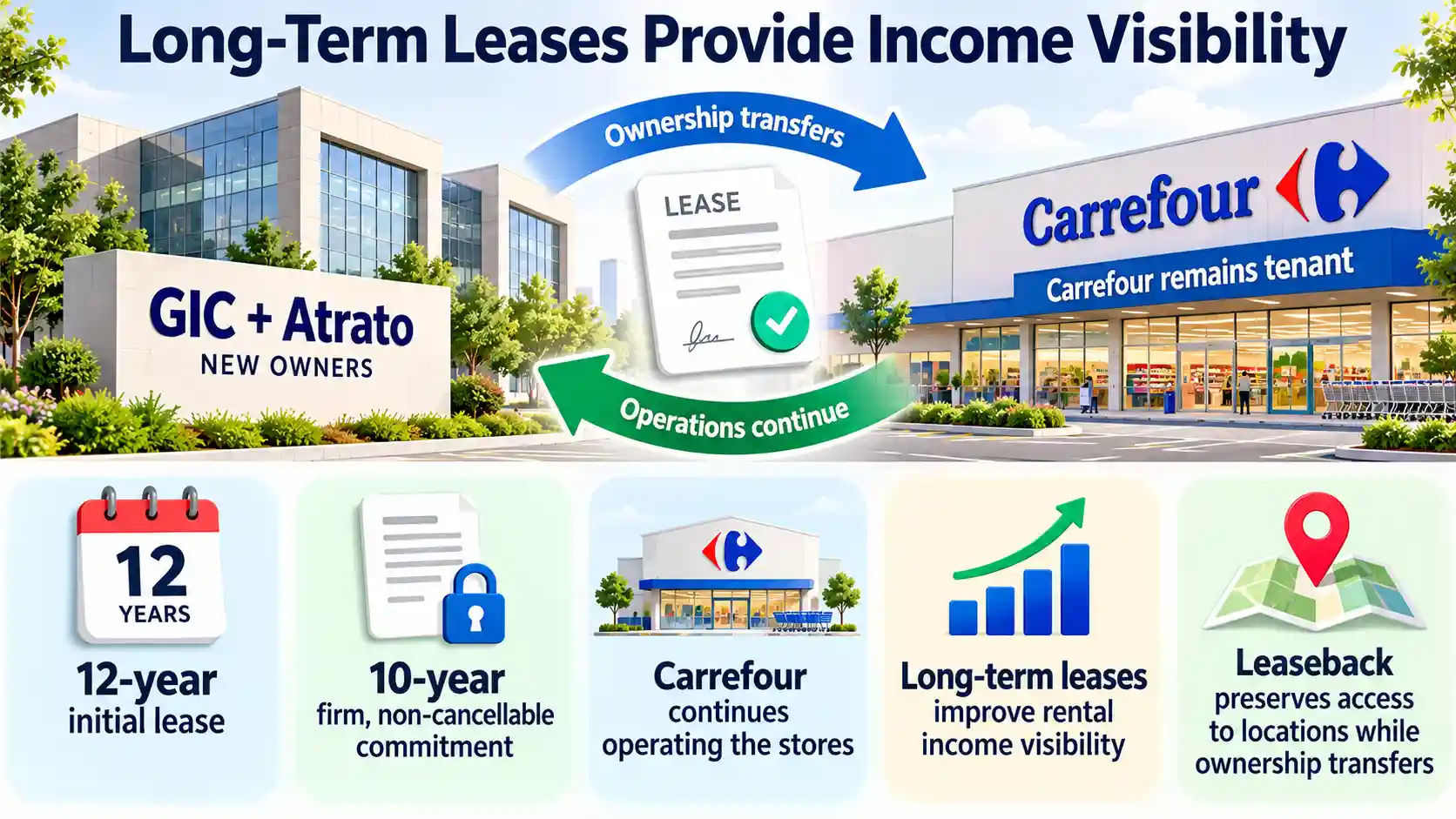
The properties will be leased back to Carrefour for an initial period of 12 years, with the first 10 years constituting a firm, non-cancellable commitment. This arrangement gives the new owners a long-term contractual rental relationship with an established retail operator.
For property investors, long leases can provide greater visibility over rental income than arrangements with short or frequently renewable terms. Grocery stores may also appeal to investors seeking assets tied to essential retail activity, although the investment outcome will depend on factors such as rent levels, property costs, tenant performance and the eventual value of the assets.
For Carrefour, the leaseback structure preserves access to the locations while transferring ownership of the buildings and associated real estate interests. The retailer will therefore continue to bear rental obligations under the new agreements rather than owning the properties outright.
Context is everything. Stay ahead of shifting trends with today’s market updates, and uncover emerging opportunities using the Serrari Group Market Index and Marketplace. Then, take control of your own financial future by exploring our Money & Life Reset Transformation Blueprint ™ to build stronger habits, create better systems, and design a path toward lasting wealth.
Carrefour’s Strategy to Unlock Real Estate Value
The sale aligns with Carrefour’s broader strategy of managing its property portfolio to release capital and improve the use of its assets. The company’s Carrefour 2030 plan includes real estate asset rotation, through which the retailer can sell selected properties while retaining the stores needed for its core business.
The group has described the transaction as a way to crystallise the value of its real estate holdings. It also expects the disposal to generate a significant capital gain without materially affecting recurring operating income.
This approach allows Carrefour to separate property ownership from retail operations. Instead of tying capital to buildings, the company can continue using the stores under lease agreements while directing the released funds towards other corporate priorities.
However, the strategy also changes the economics of the affected locations: properties that previously sat on Carrefour’s balance sheet will become leased premises, bringing ongoing rental commitments.
Why the Deal Matters to Property Investors
The transaction highlights the appeal of sale-and-leaseback arrangements in retail real estate. Investors acquire income-generating properties, while retailers obtain capital without having to relocate or discontinue operations.
GIC brings substantial institutional investment capacity, while Atrato has experience in supermarket property investment and management. Their partnership gives the buyers access to an established portfolio of grocery stores with long-term leases.
The deal also illustrates how real estate transactions can support corporate capital management without requiring a change in the underlying retail business. Its long-term success will depend on the performance of the stores, the sustainability of rental payments and the value of the properties over time.
Outlook
Carrefour’s €290 million property disposal demonstrates how retailers can unlock capital from real estate while maintaining their operating footprint. The long-term leases provide GIC and Atrato with contracted rental income, while Carrefour retains the ability to run the stores and serve customers at the existing locations.
The arrangement could appeal to other retailers seeking to release capital from owned property without disrupting day-to-day operations. For investors, however, the value of such transactions depends on the quality of the properties, lease conditions, tenant strength and future market demand.
Going forward, Carrefour’s execution of its real estate strategy will be important in determining how effectively it can balance property monetisation with the costs of leasing stores. For GIC and Atrato, the focus will be on managing the portfolio and preserving the income and long-term value of the assets.
FAQs
1. How much is Carrefour receiving from the transaction?
Carrefour expects approximately €290 million in net proceeds from the sale of the 35-store property portfolio.
2. Which properties are included in the deal?
The portfolio includes 26 Carrefour Market supermarkets and six hypermarkets in France, plus three hypermarkets in Spain.
3. Will Carrefour stop operating the stores after the sale?
No. Carrefour will continue operating all the stores under lease agreements with the new property owners.
4. Why is Carrefour selling the properties but leasing them back?
The sale-and-leaseback structure allows Carrefour to unlock capital tied up in real estate while retaining use of the stores for its retail business.
Sources: Carrefour official announcement | Mingtiandi | RetailDetail | Idéal Investisseur
Your financial future isn’t something you wait for—it’s something you build.
The real question is: when do you begin?
Move beyond simply staying informed.
Navigate the markets with clarity—track trends through the Serrari Group Market Index, uncover opportunities in the Serrari Marketplace, and build practical knowledge with our Curated Wealth Builder Platform.
Stay connected to what truly matters.
Get daily insights on macro trends and financial movements across Kenya, Africa, and global markets—delivered through the Serrari Newsletter.
Growth opens doors.
Advance your career through professional programs including ACCA, HESI A2, ATI TEAS 7 , HESI EXIT , NCLEX – RN and NCLEX – PN, Financial Literacy!🌟—designed to move you forward with confidence.
See where money is flowing—clearly and in real time.
Track Money Market Funds, Treasury Bills, Treasury Bonds, Green Bonds, and Fixed Deposits, alongside global and African indexes, key economic indicators, and the evolving Crypto and stablecoin landscape—all within Serrari’s Market Index.