East Africa’s electric mobility market has reached an inflection point.
In a development that signals growing institutional confidence in the region’s clean transport ecosystem, the International Finance Corporation (IFC) has proposed an equity investment of up to $5 million (KES 645 million) in Arc Ride, a Nairobi-based battery-as-a-service (BaaS) startup.
The investment is intended to support Arc Ride’s upcoming Series A financing round, enabling the company to scale its battery-swapping infrastructure, deepen partnerships with electric mobility operators, and expand into new African markets.
For Arc Ride, the commitment is more than capital.
For East Africa, it represents a structural vote of confidence in electric mobility as a viable climate and economic solution.
Build the future you deserve. Get started with our top-tier Online courses: ACCA, HESI A2, ATI TEAS 7, HESI EXIT, NCLEX-RN, NCLEX-PN, and Financial Literacy. Let Serrari Ed guide your path to success. Enroll today.
Who Is Arc Ride?
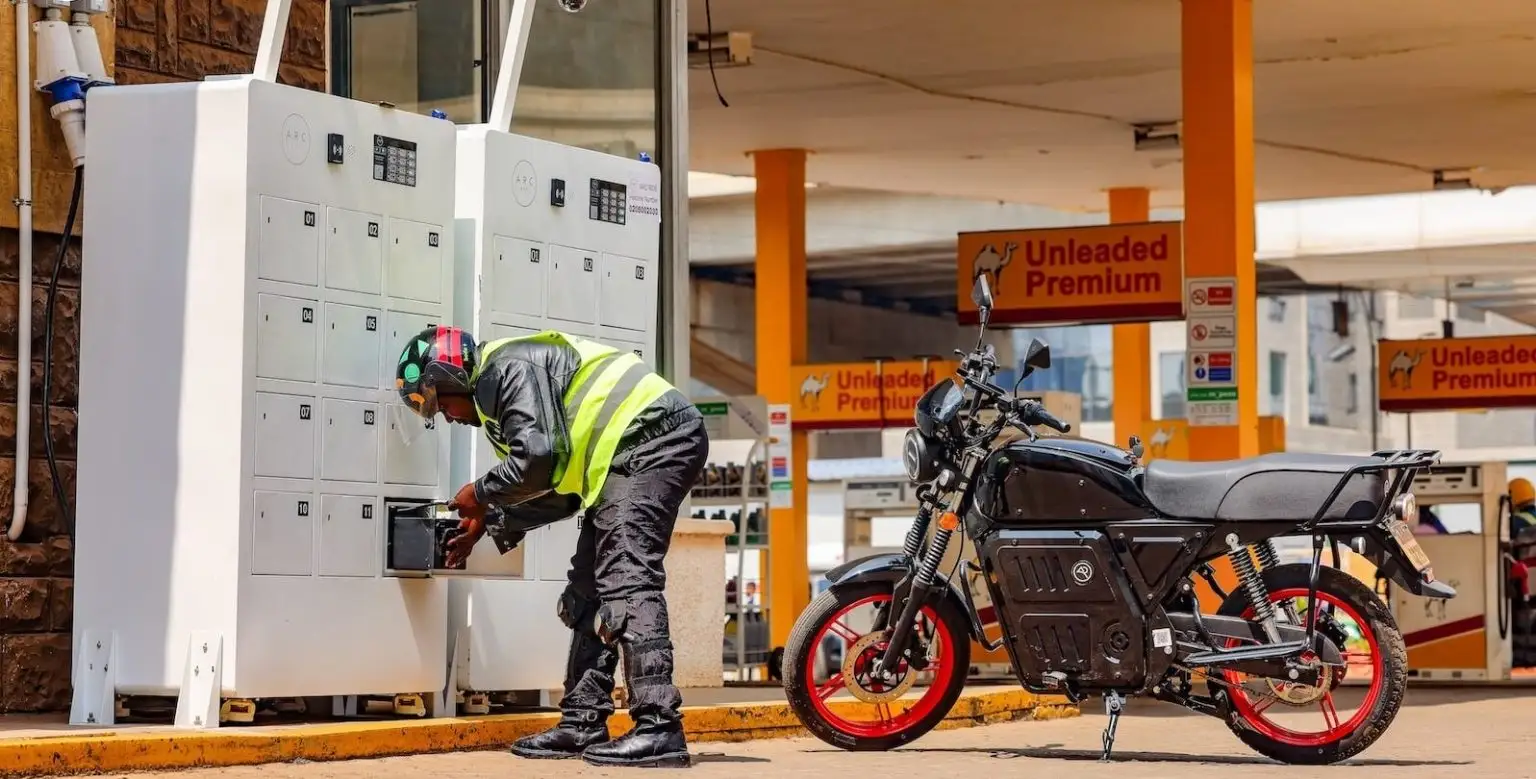
Arc Ride was founded in Nairobi in 2019 by Joseph Hurst-Croft. The company operates a Battery-as-a-Service (BaaS) model designed to lower the upfront cost of electric motorcycles by separating battery ownership from vehicle ownership.
Instead of buying batteries outright, riders:
- Purchase or lease electric motorcycles
- Swap depleted batteries at Arc Ride stations
- Pay per swap or via subscription models
This approach removes one of the biggest barriers to EV adoption: battery cost.
In Africa’s informal transport economy — especially among boda boda riders — affordability determines viability.
The Economics Behind Electric Motorcycles
Electric motorcycles are gaining traction because they offer tangible financial advantages.
Riders can reportedly reduce daily fuel and maintenance costs by up to 40%.
In Kenya, where boda bodas form the backbone of urban and peri-urban transport:
- Millions depend on motorcycles for income
- Fuel costs are volatile
- Maintenance expenses erode margins
- Income unpredictability compounds financial stress
Lower operating costs translate directly into:
- Higher net daily income
- Faster asset payback
- Reduced vulnerability to fuel price shocks
This is not merely a climate story.
It is an income resilience story.
IFC’s Strategic Entry
The IFC’s proposed $5 million equity investment is structured to support Arc Ride’s Series A round.
According to disclosures, the capital will be used to:
- Scale network density in Kenya
- Expand into additional African markets
- Strengthen R&D capabilities
- Upgrade systems to meet international compliance standards
The IFC’s involvement also includes long-term capital and board-level participation.
That matters.
Unlike short-term venture capital, IFC capital:
- Signals governance credibility
- Enhances environmental and social compliance
- Attracts co-investors
- De-risks future fundraising
In climate-focused sectors, IFC backing often acts as a catalytic endorsement.
A Funding Journey Reflecting Market Maturity
Arc Ride’s trajectory shows layered capital formation:
- Early 2025: $5 million debt from British International Investment (BII)
- September 2025: $10 million five-year debt from Mirova
- Additional $5 million BII debt facility supporting deployment of ~5,000 electric two-wheelers
This combination of:
- Development finance
- Senior secured debt
- Impact capital
- Equity commitment
Suggests institutional belief in both the climate case and the commercial model.
Why East Africa Is Ripe for Battery Swapping
East Africa’s transport ecosystem is uniquely suited to two-wheeler electrification.
1. Dominance of Motorcycles
In Kenya alone, hundreds of thousands of boda bodas operate daily.
They:
- Provide last-mile connectivity
- Serve as informal employment hubs
- Fill gaps in public transit
Replacing internal combustion motorcycles with electric alternatives reduces:
- Fuel imports
- Urban pollution
- Rider cost burdens
2. Fuel Price Volatility
Global oil price shocks disproportionately affect African informal transport operators.
Battery-swapping models stabilize daily energy costs.
3. Urban Congestion and Emissions
Nairobi’s congestion and pollution levels make electric mobility not only economically viable but environmentally necessary.
One decision can change your entire career. Take that step with our Online courses in ACCA, HESI A2, ATI TEAS 7, HESI EXIT, NCLEX-RN, NCLEX-PN, and Financial Literacy. Join Serrari Ed and start building your brighter future today.
Climate Finance and Strategic Alignment
The IFC’s participation fits within broader global climate finance priorities.
Climate-focused investors increasingly prioritize:
- Electrification of transport
- Decarbonization of urban logistics
- Distributed energy systems
- Asset-light mobility models
Battery-swapping reduces:
- Grid strain compared to mass home charging
- Upfront EV costs
- Range anxiety
By embedding infrastructure density early, Arc Ride aims to create network effects.
The Battery-as-a-Service Advantage
Traditional EV ownership requires:
- Large upfront capital
- Battery replacement risk
- Long charging times
BaaS solves these constraints.
Swapping stations enable:
- 2–3 minute battery exchange
- High vehicle uptime
- Standardized fleet operations
- Scalable deployment
For fleet operators and delivery services, uptime equals revenue.
Competitive Landscape
Arc Ride operates in an increasingly competitive regional ecosystem.
Key players in East African electric mobility include:
- Electric motorcycle manufacturers
- Charging infrastructure startups
- Fintech-enabled mobility lenders
- Regional logistics electrification firms
The competitive edge lies in:
- Infrastructure density
- Battery lifecycle management
- Strategic fleet partnerships
- Access to affordable capital
IFC backing strengthens Arc Ride’s position relative to peers.
Risks to Monitor: Structural, Financial, and Execution Challenges
While the momentum behind Arc Ride and the broader East African electric mobility ecosystem is strong, the path forward is not linear. Scaling a capital-intensive, infrastructure-driven model in emerging markets carries layered risk. Institutional investors — including the IFC — will be evaluating these dimensions closely.
1. Capital Intensity and Infrastructure Density Risk
Battery-swapping businesses are infrastructure-first models.
Unlike pure software startups, Arc Ride must deploy:
- Swapping cabinets
- Battery inventory pools
- Maintenance teams
- Charging back-end systems
- Data and fleet monitoring infrastructure
Each new market entry requires:
- Site acquisition or leasing
- Regulatory compliance
- Logistics setup
- Grid connection reliability
If swap density is insufficient, riders face inconvenience — which can slow adoption. If density is too aggressive relative to demand, capital efficiency deteriorates.
This creates a delicate balance between:
- Speed of deployment
- Capital preservation
- Demand forecasting accuracy
Infrastructure-heavy startups often fail not because demand is absent, but because capital timing and scaling are misaligned.
2. Unit Economics and Battery Lifecycle Risk
Battery degradation is one of the most critical cost variables in BaaS models.
Lithium-ion batteries:
- Degrade over time
- Lose storage capacity
- Require recycling or replacement
If degradation is faster than modeled, replacement costs rise, compressing margins.
The company must manage:
- Real-time battery health monitoring
- Optimal charging cycles
- Fleet distribution balancing
- End-of-life battery disposal compliance
Battery economics improve over time as global prices decline, but lifecycle modeling precision remains essential for profitability.
3. Currency and Financing Exposure
Much of Arc Ride’s funding — including debt from international development finance institutions — is denominated in foreign currency.
Revenue, however, is earned in Kenyan shillings and potentially other local currencies as the company expands regionally.
This introduces:
- FX volatility risk
- Currency mismatch exposure
- Debt servicing pressure in depreciating environments
Emerging markets have historically experienced:
- Periodic currency shocks
- External liquidity tightening
- Dollar strength cycles
Mitigation strategies may include:
- Hedging instruments
- Revenue-linked financing structures
- Blended local-currency capital
Currency management will be a defining factor in long-term resilience.
4. Competitive Acceleration Risk
Electric mobility is becoming crowded.
Competitors may include:
- Direct-to-rider EV manufacturers
- Alternative swapping networks
- Charging-based infrastructure models
- Traditional OEM-backed electrification initiatives
- Fintech-integrated vehicle leasing platforms
As capital flows into climate mobility, competition can:
- Increase rider incentives
- Compress pricing margins
- Raise customer acquisition costs
First-mover advantage matters — but infrastructure businesses ultimately win through scale efficiency and network density.
The risk lies in:
- Over-fragmentation of battery standards
- Interoperability disputes
- Market confusion for riders
Standardization across platforms will determine ecosystem stability.
5. Regulatory and Policy Uncertainty
Electric mobility policy in Africa is evolving.
Governments may introduce:
- EV import tax adjustments
- Subsidies
- Grid pricing changes
- Environmental compliance standards
- Battery disposal regulation
While supportive policy environments can accelerate adoption, abrupt regulatory shifts can disrupt business models.
Long-term success will require:
- Close government collaboration
- Policy advocacy
- Alignment with national climate commitments
6. Grid and Energy Infrastructure Risk
Electric vehicles depend on reliable electricity.
In markets where:
- Grid stability is inconsistent
- Blackouts are frequent
- Industrial tariffs fluctuate
Charging infrastructure costs and reliability may be impacted.
Arc Ride must consider:
- On-site solar augmentation
- Energy storage buffers
- Load management optimization
Energy infrastructure risk is often underestimated but materially affects uptime economics.
Structural Advantages That Mitigate Risk
Despite these risks, several structural tailwinds support Arc Ride’s model.
1. Urbanization Trends
East Africa’s urban population continues to grow rapidly.
Urban congestion increases:
- Two-wheeler demand
- Delivery fleet expansion
- Need for last-mile mobility
Electric motorcycles offer a scalable urban solution.
2. Oil Import Dependency
Countries like Kenya import significant volumes of petroleum.
Electric mobility reduces:
- Foreign exchange outflows
- Exposure to global oil price shocks
- Trade deficit volatility
This aligns Arc Ride’s model with macroeconomic stability objectives.
3. Climate Finance Availability
Global climate capital pools have expanded significantly over the past decade.
Development finance institutions and impact investors increasingly target:
- Electrification
- Emission reduction infrastructure
- Scalable climate solutions
Arc Ride sits squarely within this mandate.
Long-Term Outlook: Can Arc Ride Become a Regional Infrastructure Platform?
To assess long-term potential, we must examine three dimensions:
- Market scale
- Capital scalability
- Competitive defensibility
1. Market Scale Potential
The addressable market is substantial.
Millions of two-wheelers operate across:
- Kenya
- Uganda
- Tanzania
- Rwanda
- Nigeria
Even modest electrification penetration rates could support:
- Hundreds of thousands of electric motorcycles
- Thousands of swap stations
- Massive battery inventory ecosystems
If Arc Ride captures a meaningful share, it could evolve from startup to essential infrastructure provider.
2. Capital Scalability
Arc Ride’s funding pattern suggests institutional appetite.
The presence of:
- IFC equity
- BII debt
- Mirova senior secured financing
Indicates layered capital confidence.
Future growth may include:
- Green bond issuance
- Climate securitization
- Asset-backed financing structures
- Carbon credit monetization
Electric mobility infrastructure may increasingly resemble utilities rather than startups.
3. Competitive Defensibility
Battery-swapping networks benefit from:
- Network effects
- Geographic density
- Fleet loyalty
- Switching costs
As density increases, riders face fewer incentives to switch providers.
Infrastructure ecosystems often consolidate around leaders.
The key question: Can Arc Ride scale quickly enough to lock in first-mover dominance?
Broader Regional Impact
Beyond company-level analysis, the implications extend to East Africa’s economic transformation.
1. Informal Sector Formalization
Battery-swapping subscriptions create:
- Digital transaction trails
- Predictable income records
- Potential credit scoring improvements
This could integrate informal riders into formal financial systems.
2. Environmental Impact
Electric motorcycles reduce:
- Carbon emissions
- Urban particulate pollution
- Noise pollution
Improved air quality has measurable public health benefits.
3. Employment Creation
Infrastructure deployment generates:
- Technical jobs
- Maintenance roles
- Data analytics positions
- Operational staff employment
Green transition creates new labor markets.
What Could Derail the Model?
Even strong structural alignment does not eliminate macro risk.
Potential derailment scenarios include:
- Global capital tightening reducing climate funding
- Severe currency devaluation increasing debt stress
- Battery supply chain disruptions
- Geopolitical instability
- Prolonged regulatory delays in expansion markets
Execution quality will determine whether Arc Ride navigates these successfully.
Looking Ahead: The Next Five Years
Several milestones will signal trajectory strength:
1. Successful Series A Close
Validation of private capital confidence beyond development finance.
2. Expansion Beyond Kenya
Entry into neighboring markets proves scalability.
3. Swap Density Metrics
High utilization rates demonstrate sustainable demand.
4. Margin Stabilization
Clear path to positive operating leverage.
5. Regulatory Integration
Formal EV policy support and incentives.
Conclusion: From Climate Narrative to Economic Infrastructure
Arc Ride’s evolution reflects a broader transformation.
The electrification of Africa’s two-wheeler economy is not a speculative climate experiment.
It is a cost-efficiency revolution.
The IFC’s $5 million commitment is modest relative to global capital flows, but symbolically powerful.
It signals:
- Institutional validation
- Governance maturity
- Financial structuring sophistication
- Climate alignment
Battery-as-a-Service redefines access.
Instead of asking riders to absorb high upfront capital, it converts electrification into an operational expense.
This lowers barriers.
Reduces income volatility.
Enhances resilience.
If execution aligns with capital discipline, Arc Ride could become a foundational infrastructure player in East Africa’s green transition.
The opportunity is clear.
The risks are manageable but real.
The coming decade will determine whether Arc Ride evolves from promising startup to indispensable regional mobility backbone.
One thing is certain:
Electric mobility in East Africa is no longer experimental.
It is strategic.
And capital — increasingly institutional, disciplined, and climate-focused — is taking notice.
Ready to take your career to the next level? Join our Online courses: ACCA, HESI A2, ATI TEAS 7 , HESI EXIT , NCLEX – RN and NCLEX – PN, Financial Literacy!🌟 Dive into a world of opportunities and empower yourself for success. Explore more at Serrari Ed and start your exciting journey today! ✨
Track GDP, Inflation and Central Bank rates for top African markets with Serrari’s comparator tool.
See today’s Treasury bonds and Money market funds movement across financial service providers in Kenya, using Serrari’s comparator tools.
photo source: Google
By: Elsie Njenga
26th February,2026