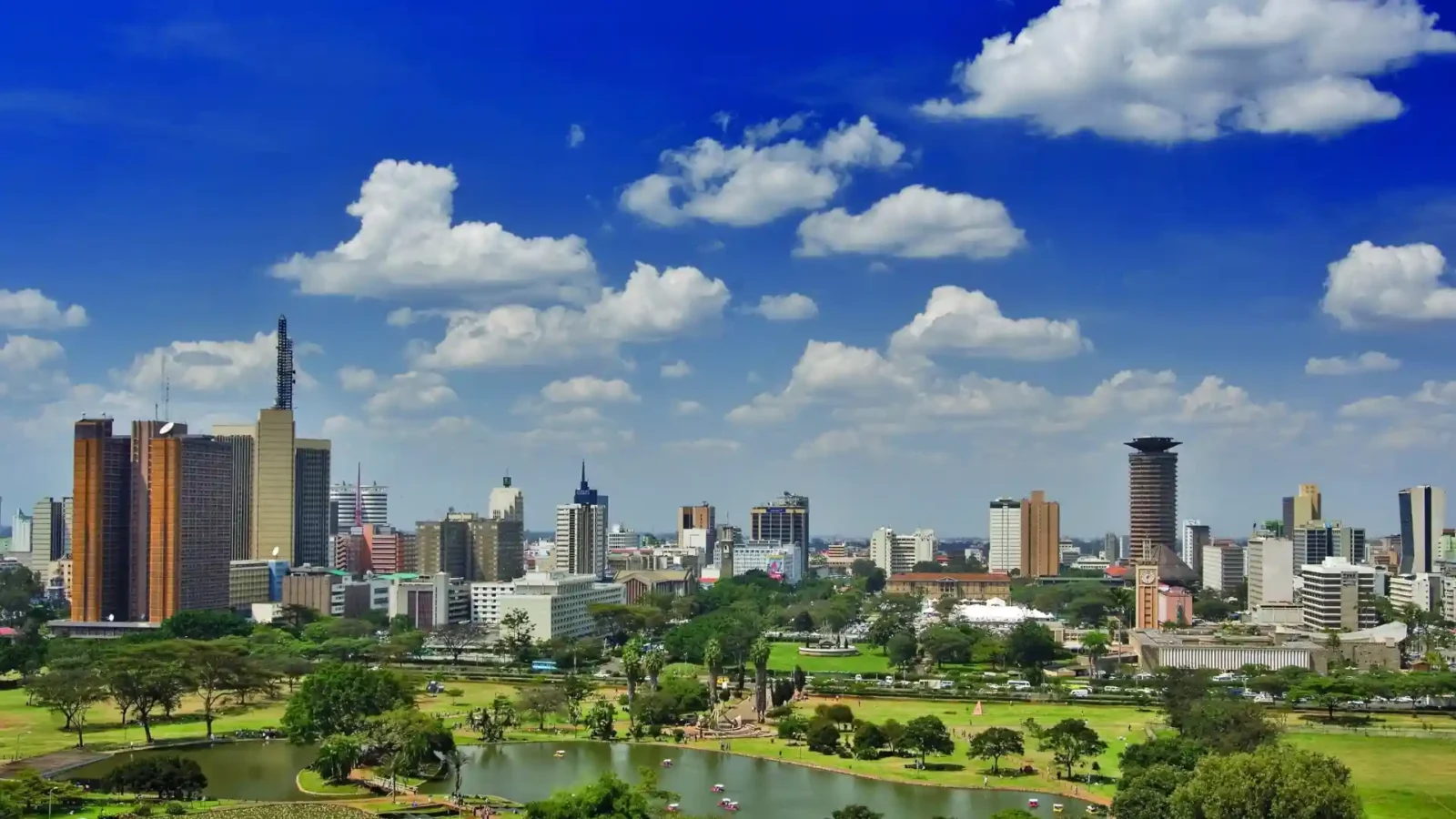
A $5.2 million initiative funded by the Global Environment Facility has been launched to accelerate low-carbon, climate-resilient urban development in Nairobi, targeting integrated “green neighbourhood” solutions in Kamukunji.
Implemented by the United Nations Environment Programme and UN-Habitat, the project aims to improve living conditions for over 85,000 residents while reducing emissions, restoring ecosystems, and strengthening urban infrastructure and planning systems.
It also seeks to unlock scalable climate investment models by using catalytic funding to attract additional public and private capital, positioning Nairobi as a potential model for sustainable urban transformation across rapidly growing cities.
Key Overview
- $5.2M climate funding backed by GEF
- Targets 85,000+ residents in Kamukunji
- Focus on green neighbourhoods & urban resilience
- Restores ecosystems along Nairobi River corridor
- Integrates renewable energy & sustainable mobility
- Designed to unlock $40M+ additional investment
- Strengthens urban planning & digital systems
The United Nations Environment Programme and UN-Habitat have launched a $5.2 million initiative to support low-carbon, climate-resilient, and nature-positive urban development in Nairobi, marking a significant step in repositioning cities at the center of global climate action.
Funded by the Global Environment Facility, the five-year project will pilot integrated “green neighbourhood” approaches in Kamukunji, aiming to improve living conditions for more than 85,000 residents while reducing emissions and restoring ecosystems along the Nairobi River corridor.
The initiative comes at a time when Nairobi is experiencing rapid urban growth, placing increasing pressure on infrastructure, natural resources, and essential services, and highlighting the need for more sustainable and resilient development models.
The initiative reflects a broader shift toward place-based climate solutions, where cities are seen as both the source of emissions and the key to solving them.
By focusing on neighbourhood-level interventions, the project aims to translate high-level climate commitments into practical, on-the-ground solutions that directly improve urban living conditions while contributing to global sustainability goals.
Markets move fast; don’t get left behind. We’ve paired the Serrari Group Market Index with a curated Marketplace and a comprehensive Wealth Builder Platform to ensure you have the data—and the skills—to act on it.
A New Model for Urban Climate Development
At its core, the project introduces a neighbourhood-level approach to urban development, integrating climate mitigation, ecosystem restoration, and infrastructure planning into a single, coordinated framework that addresses multiple urban challenges simultaneously.
This includes investments in climate-resilient infrastructure, renewable energy systems, sustainable mobility, green public spaces, and improved waste management, all designed to create healthier, more inclusive, and environmentally sustainable urban environments.
Urban planning is shifting from fragmented, sector-specific interventions toward integrated systems that deliver multiple benefits across environmental, social, and economic dimensions.
The initiative will also strengthen policy frameworks, institutional capacity, and digital planning tools, enabling more effective, data-driven urban management and improving the ability of local authorities to respond to climate risks and development pressures.
By embedding climate considerations directly into planning processes, the project supports a transition toward proactive rather than reactive urban development strategies.
This systems-based approach reflects a growing recognition that climate resilience requires coordination across sectors, institutions, and levels of governance, particularly in rapidly urbanizing cities where challenges are interconnected and complex.
Unlocking Climate Finance at Scale
While the initial funding stands at $5.2 million, the project is designed to unlock significantly larger investment flows, including up to $40 million in additional public funding, alongside technical and in-kind support from development partners.
This blended finance model uses catalytic capital to attract further investment, a strategy that is increasingly being adopted in climate finance to scale impact beyond the limitations of initial funding.
Small, targeted investments are being used strategically to crowd in much larger pools of capital.
By demonstrating the viability of integrated urban solutions, the project aims to build investor confidence and create a pipeline of bankable green investments that can be replicated across Nairobi and other cities.
The programme will also focus on developing incentive frameworks and financing mechanisms that encourage both public and private sector participation in sustainable urban development.
In this context, Nairobi is positioned not just as a beneficiary of climate funding, but as a proof of concept for climate-linked urban financing in Africa, showcasing how cities can attract investment while addressing infrastructure and environmental challenges.
The success of this approach could influence how future urban projects across the continent are financed and scaled.
Addressing Rapid Urbanisation Challenges
The initiative comes at a time when Nairobi is facing mounting urban pressures, driven by rapid population growth, the expansion of informal settlements, and increasing environmental degradation.
As one of Africa’s fastest-growing cities, Nairobi is experiencing significant strain on its infrastructure systems, natural ecosystems, and essential services, creating challenges that are becoming more complex and interconnected over time.
Unplanned urbanisation has contributed to rising levels of pollution, increased flooding risks due to poor drainage and encroachment on waterways, and declining air quality, all of which have direct implications for public health and economic productivity.
Cities are increasingly becoming the frontline of both climate and development challenges.
These pressures are particularly acute in low-income areas, where limited access to basic services such as clean water, sanitation, and reliable energy intersects with heightened vulnerability to climate risks, including heatwaves and extreme weather events.
This creates a compounding effect, where environmental stress and socio-economic inequality reinforce each other, making sustainable urban development more difficult to achieve.
The Kamukunji pilot aims to address these challenges through community-led interventions, ensuring that solutions are locally relevant, inclusive, and responsive to the specific needs of residents.
Embedding local participation is critical for ensuring long-term sustainability and impact.
By focusing on neighbourhood-level implementation, the project seeks to demonstrate how targeted interventions can deliver meaningful improvements while creating a foundation for broader urban transformation.
Context is everything. While you follow today’s updates, use the Serrari Group Market Index and Marketplace to spot emerging shifts. Need to sharpen your edge? Our Wealth Builder Platform turns these insights into a professional-grade strategy.
Multi-Agency Collaboration and Governance
The project brings together multiple stakeholders, including the Nairobi City County Government, the State Department for Housing and Urban Development, the Nairobi Rivers Commission, and the Ministry of Environment, Climate Change and Forestry.
This “whole-of-government” approach reflects the complexity of urban governance, where effective solutions require coordination across multiple institutions, each with distinct mandates and responsibilities.
By aligning these stakeholders under a shared framework, the initiative aims to improve policy coherence, streamline implementation, and enhance the overall effectiveness of urban planning and development efforts.
Coordinated governance is becoming a key requirement for delivering large-scale urban transformation.
However, such multi-agency frameworks also introduce challenges related to coordination, decision-making processes, and accountability, which can affect implementation speed and project outcomes.
Historically, large-scale urban projects have faced delays due to bureaucratic overlap and institutional fragmentation, making execution a critical factor in determining success.
Execution will be the defining factor in whether the project can transition from pilot phase to large-scale transformation.
Ensuring clear roles, effective communication, and strong oversight mechanisms will be essential in overcoming these challenges and delivering measurable results.
What This Means for Climate and Urban Investment
The initiative highlights several key trends shaping the future of climate policy and urban development, particularly in rapidly growing cities across emerging markets.
First, cities are becoming central to climate action, as they account for nearly 70% of global greenhouse gas emissions, making them critical to achieving global climate targets.
This places increasing pressure on policymakers and investors to rethink how urban environments are planned, financed, and managed.
Second, integrated urban planning is emerging as a key solution, combining infrastructure development, environmental management, and social inclusion into a unified approach that addresses multiple challenges simultaneously.
Fragmented approaches are being replaced by more holistic and systems-based models of urban development.
Third, blended finance models are gaining traction, using public funding and catalytic capital to unlock larger investment flows from private and institutional investors.
This approach is becoming essential in scaling climate solutions, particularly in cities where funding requirements exceed available public resources.
Urban transformation is increasingly driven by the intersection of climate policy, finance, and infrastructure development.
As a result, cities are evolving into key platforms for innovation in climate finance, where integrated projects can attract investment while delivering both environmental and socio-economic benefits.
Outlook: Can Nairobi Scale the Model?
In the short term, the immediate focus will be on implementing the Kamukunji pilot, ensuring that planned interventions—ranging from green infrastructure to improved waste management and renewable energy integration—are delivered effectively and on schedule.
This phase will be critical in demonstrating measurable improvements in infrastructure, emissions reduction, and living conditions, providing tangible evidence of how integrated neighbourhood-level approaches can address urban challenges.
Early results will play a key role in building confidence among policymakers, investors, and development partners.
Over the medium term, the success of the pilot will determine whether similar models can be scaled across Nairobi and other Kenyan cities, particularly in areas facing similar pressures from rapid urbanisation and climate vulnerability.
Scaling will depend not only on funding availability, but also on the ability to replicate the model across different urban contexts while maintaining effectiveness and efficiency.
Replication will require strong institutional capacity, policy alignment, and sustained investment.
In the long term, Nairobi has the potential to emerge as a regional model for sustainable urban development, attracting climate finance, influencing urban policy, and shaping how cities across Africa approach climate resilience and infrastructure planning.
This could position the city as a leading example of how integrated urban development can deliver both environmental and socio-economic outcomes at scale.
The real test will be whether pilot success can translate into system-wide transformation, moving from isolated projects to a fully integrated urban development strategy.
Ultimately, the initiative’s long-term impact will depend on its ability to bridge the gap between demonstration and large-scale implementation, ensuring that early successes lead to sustained and inclusive urban transformation.
Your financial future isn’t something you wait for—it’s something you build.
The real question is: when do you begin?
Move beyond simply staying informed.
Navigate the markets with clarity—track trends through the Serrari Group Market Index, uncover opportunities in the Serrari Marketplace, and build practical knowledge with our Curated Wealth Builder Platform.
Stay connected to what truly matters.
Get daily insights on macro trends and financial movements across Kenya, Africa, and global markets—delivered through the Serrari Newsletter.
Growth opens doors.
Advance your career through professional programs including ACCA, HESI A2, ATI TEAS 7 , HESI EXIT , NCLEX – RN and NCLEX – PN, Financial Literacy!🌟—designed to move you forward with confidence.
See where money is flowing—clearly and in real time.
Track Money Market Funds, Treasury Bills, Treasury Bonds, Green Bonds, and Fixed Deposits, alongside global and African indexes, key economic indicators, and the evolving Crypto and stablecoin landscape—all within Serrari’s Market Index.