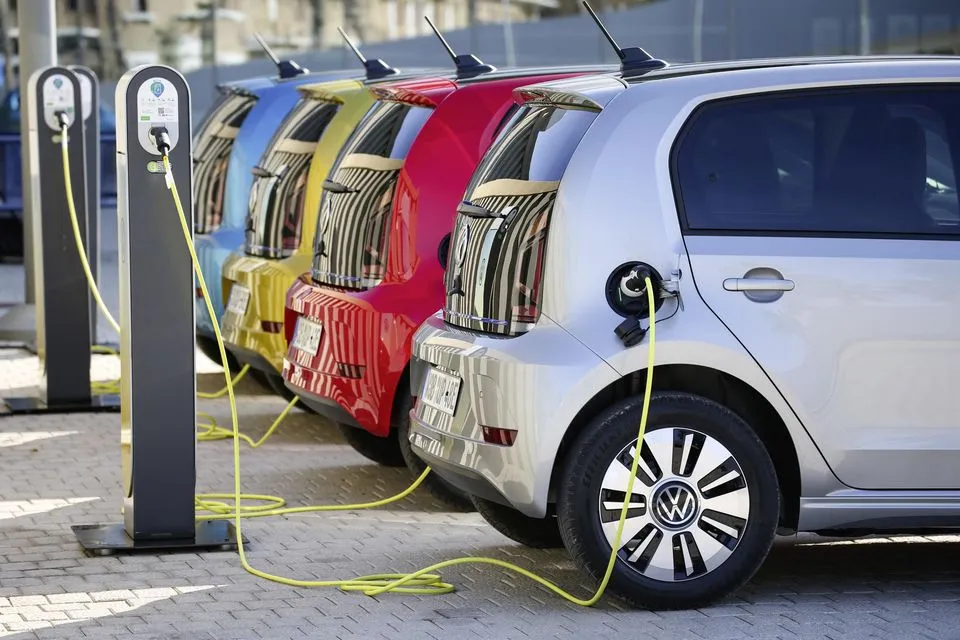
Europe’s transition toward electric mobility continued to gather pace in February, as rising consumer interest in electric vehicles (EVs), supportive government policies, and the arrival of more affordable models helped push new car registrations slightly higher across the region.
According to data released by the European Automobile Manufacturers’ Association, new vehicle registrations across the European Union, the United Kingdom, and EFTA countries rose 1.7 percent year-on-year to 979,321 units in February.
While the overall growth rate appears modest, the underlying market dynamics reveal a much more significant shift: electrified vehicles are increasingly replacing traditional fuel-powered cars at a rapid pace.
Battery-electric vehicles (BEVs), plug-in hybrid vehicles (PHEVs), and hybrid cars collectively accounted for 67 percent of total registrations, a sharp increase from 58.5 percent during the same period in 2025.
This change reflects a combination of policy incentives, technological progress, and evolving consumer preferences that are accelerating the continent’s move away from internal combustion engines.
In effect, Europe’s automotive sector is entering a new phase of the energy transition—one where electric vehicles are no longer a niche option but are quickly becoming the mainstream choice for many buyers.
Markets move fast; don’t get left behind. We’ve paired the Serrari Group Market Index with a curated Marketplace and a comprehensive Wealth Builder Course to ensure you have the data—and the skills—to act on it.
Electrified Vehicles Drive Market Growth
Much of February’s market growth was driven by rising demand for electrified vehicles.
Registrations for battery-electric vehicles increased by 15.8 percent, while plug-in hybrid vehicles surged 33 percent compared with the same month last year.
Hybrid vehicles also posted solid gains, rising 10.4 percent, reinforcing the trend toward electrified drivetrains across Europe’s automotive landscape.
In contrast, traditional fuel-powered vehicles continued to lose ground.
Sales of petrol-powered cars declined 17 percent, while diesel vehicle registrations fell 13.5 percent, highlighting the structural shift underway in the market.
This rapid growth in electrified vehicles reflects both policy intervention and changing economics.
As battery costs decline and production scales up, electric vehicles are becoming more competitive with conventional cars—particularly when combined with government subsidies and tax incentives.
According to analysts at Citigroup, the expansion of the EV market is being fueled by the arrival of lower-cost models that appeal to mainstream consumers.
“Passenger car sales continue to be driven by battery and plug-in vehicles as new, cheaper models are coming into the market and country policies are encouraging EV adoption,” analysts led by Harald Hendrikse wrote in a recent research note.
Affordable Electric Models Reshape the Market
The growing availability of affordable electric vehicles has become one of the most important drivers of demand across Europe.
New models such as the Renault 5 Electric, Škoda Elroq, and the BYD Dolphin are helping bring EV ownership within reach of a broader range of consumers.
These vehicles represent a shift in the electric vehicle market, which until recently was dominated by higher-priced premium models.
Manufacturers are now focusing increasingly on compact cars and mid-range SUVs that appeal to everyday drivers.
For many buyers, the decision to switch to electric vehicles is becoming less about environmental ideals and more about practical economics.
Lower operating costs, government incentives, and growing charging infrastructure are making EVs a viable alternative for households that previously considered them too expensive.
The impact of these developments can be seen clearly in the market data.
During the first two months of the year, battery-electric vehicles and plug-in hybrids accounted for more than one-third of total vehicle sales in Europe, marking a significant milestone in the continent’s electrification journey.
National Policies Continue to Shape EV Adoption
Government policies remain a key factor influencing electric vehicle demand across Europe.
In Germany, for example, sales of plug-in vehicles jumped 27 percent after the introduction of a new subsidy scheme targeting low- and middle-income households.
The program is designed to make electric vehicles more accessible by reducing the upfront purchase price.
Meanwhile, France recorded a 28 percent surge in battery-electric vehicle demand, even as overall car sales declined sharply.
France’s broader automotive market fell nearly 15 percent in February, largely due to changes in environmental tax rules and the conclusion of the country’s social leasing program that had helped lower-income households purchase EVs.
Despite the decline in overall sales, the continued growth of electric vehicles suggests that electrification remains a structural trend rather than a temporary policy-driven phenomenon.
Other major European markets also contributed to February’s growth.
Vehicle registrations increased in Italy, Spain, Germany, and the United Kingdom, offsetting the slowdown in France and helping keep the broader European market in positive territory.
Tesla Shows Signs of Recovery
Competition in Europe’s electric vehicle market is intensifying as established automakers and new entrants battle for market share.
Among the most closely watched companies is Tesla, which has experienced a turbulent period in Europe over the past year.
After enduring a prolonged decline in registrations across several European markets, the U.S. automaker recorded 11.8 percent growth in February, capturing a 1.8 percent share of the regional market.
The rebound marks a partial recovery following a 13-month slump, during which Tesla faced increasing competition from Chinese manufacturers and established European brands.
Some analysts have also suggested that public reactions to the political activities of Tesla chief executive Elon Musk may have contributed to weakening demand in certain markets.
Despite these challenges, Tesla remains a significant player in the European EV market thanks to its strong brand recognition, advanced technology, and well-established charging network.
Chinese Automakers Expand Their European Presence
While Tesla attempts to regain momentum, Chinese automakers are rapidly expanding their presence across Europe.
One of the most prominent examples is BYD, which more than doubled its European registrations in February.
The company now holds approximately the same 1.8 percent market share as Tesla, underscoring how quickly Chinese brands are gaining ground in the region.
BYD’s growth has been driven by several factors.
The company has adopted aggressive pricing strategies, expanded its dealership network across European markets, and introduced a diverse lineup of electric and plug-in hybrid vehicles.
This flexibility has allowed the company to respond quickly to changing regulatory and market conditions.
Chinese manufacturer Zhejiang Leapmotor Technology has also increased its footprint in Europe, gaining market share in multiple countries.
Analysts at Jefferies say the rapid expansion of Chinese automakers is reshaping the competitive landscape of Europe’s EV market.
Context is everything. While you follow today’s updates, use the Serrari Group Market Index and Marketplace to spot emerging shifts. Need to sharpen your edge? Our Wealth Builder Course turns these insights into a professional-grade strategy.
Tariffs Have Slowed—but Not Stopped—Chinese EV Growth
The rise of Chinese automakers has not gone unnoticed by European policymakers.
In recent months, the European Union introduced tariffs of up to 45.3 percent on Chinese electric vehicles, including a 27 percent tariff specifically targeting BYD models.
The goal of these measures is to protect European manufacturers from what regulators describe as unfair competition driven by state subsidies.
However, the impact of the tariffs has been more limited than some policymakers expected.
Instead of abandoning the European market, Chinese manufacturers have adapted their strategies.
Many companies are now emphasizing plug-in hybrid vehicles, which are not subject to the same tariffs as fully electric cars.
This shift has allowed Chinese brands to maintain strong sales growth while navigating Europe’s evolving trade policies.
War-Driven Economic Uncertainty Clouds Outlook
Although electric vehicle demand remains strong, broader economic risks could affect the automotive market in the coming months.
The escalation of geopolitical tensions following the war in Iran has raised concerns about rising energy prices, inflation, and weakening consumer confidence.
According to analysts at Bloomberg Intelligence, prolonged conflict could significantly affect Europe’s car market.
Analyst Gillian Davis warned that war-related economic uncertainty could deter consumers from making large purchases such as new vehicles.
“War-driven economic uncertainty and faster inflation, potentially prompting rate hikes, could knock consumer confidence,” Davis said.
Bloomberg Intelligence has revised its long-term outlook accordingly.
Instead of a 2 percent increase in European vehicle sales in 2026, analysts now warn that the market could decline by as much as 4 percent if geopolitical tensions persist.
Rising Fuel Prices Could Accelerate EV Demand
Paradoxically, geopolitical instability could also accelerate the transition toward electric vehicles.
Since the outbreak of conflict in the Middle East, gasoline prices across Europe have risen approximately 8 percent, raising concerns about the cost of operating traditional vehicles.
While fuel prices have not yet crossed the psychological threshold of around €2.30 per litre, which historically triggers major shifts in consumer behavior, analysts say further increases could significantly boost EV demand.
Early indicators already suggest rising interest in electric vehicles.
Online searches for EVs on the German car-buying platform MeinAuto increased 40 percent in early March, while EV-related inquiries across several European platforms rose at a similar pace.
Because vehicle registration data reflects completed deliveries rather than new orders, these changes in consumer behavior may not become visible in official sales figures until later in the year.
Electrification Remains the Defining Trend
Despite economic uncertainties and regional variations, the long-term trajectory of Europe’s automotive sector remains clear.
Electrification is steadily transforming the industry.
Stricter emissions regulations, expanding charging infrastructure, and ongoing technological improvements are pushing both manufacturers and consumers toward electric mobility.
At the same time, the competitive landscape is becoming increasingly complex.
European manufacturers, American EV pioneers, and rapidly expanding Chinese brands are all vying for leadership in what is quickly becoming one of the most important markets for electric vehicles worldwide.
For consumers, the growing competition is likely to bring greater choice, lower prices, and faster technological innovation.
Outlook: Europe’s EV Market Enters a New Phase
The latest sales data suggests that Europe’s transition toward electric mobility is entering a new stage of maturity.
Electric vehicles are no longer confined to early adopters or environmentally conscious buyers.
Instead, they are becoming a central part of the mainstream automotive market.
Affordable models, supportive government policies, and intensifying competition among manufacturers are accelerating this shift.
At the same time, geopolitical and economic uncertainties continue to shape the broader market environment.
How these forces interact will determine whether Europe’s automotive sector experiences a rapid electric transformation or a more gradual transition.
What is already clear, however, is that the electric vehicle revolution in Europe is no longer a distant possibility—it is unfolding in real time.
Your financial future isn’t something you wait for—it’s something you build.
The real question is: when do you begin?
Move beyond simply staying informed.
Navigate the markets with clarity—track trends through the Serrari Group Market Index, uncover opportunities in the Serrari Marketplace, and build practical knowledge with our Curated Wealth Builder Course.
Stay connected to what truly matters.
Get daily insights on macro trends and financial movements across Kenya, Africa, and global markets—delivered through the Serrari Newsletter.
Growth opens doors.
Advance your career through professional programs including ACCA, HESI A2, ATI TEAS 7 , HESI EXIT , NCLEX – RN and NCLEX – PN, Financial Literacy!🌟—designed to move you forward with confidence.
See where money is flowing—clearly and in real time.
Track Money Market Funds, Treasury Bills, Treasury Bonds, Green Bonds, and Fixed Deposits, alongside global and African indexes, key economic indicators, and the evolving Crypto and stablecoin landscape—all within Serrari’s Market Index.