Vietnam has taken a major step toward reviving its nuclear energy ambitions after signing a landmark agreement with Russia to construct a large-scale nuclear power project in the country’s southern region.
The agreement establishes the legal framework for the development of the Ninh Thuan 1 nuclear power plant, a project expected to strengthen Vietnam’s long-term electricity security while supporting its transition toward cleaner and more reliable energy sources.
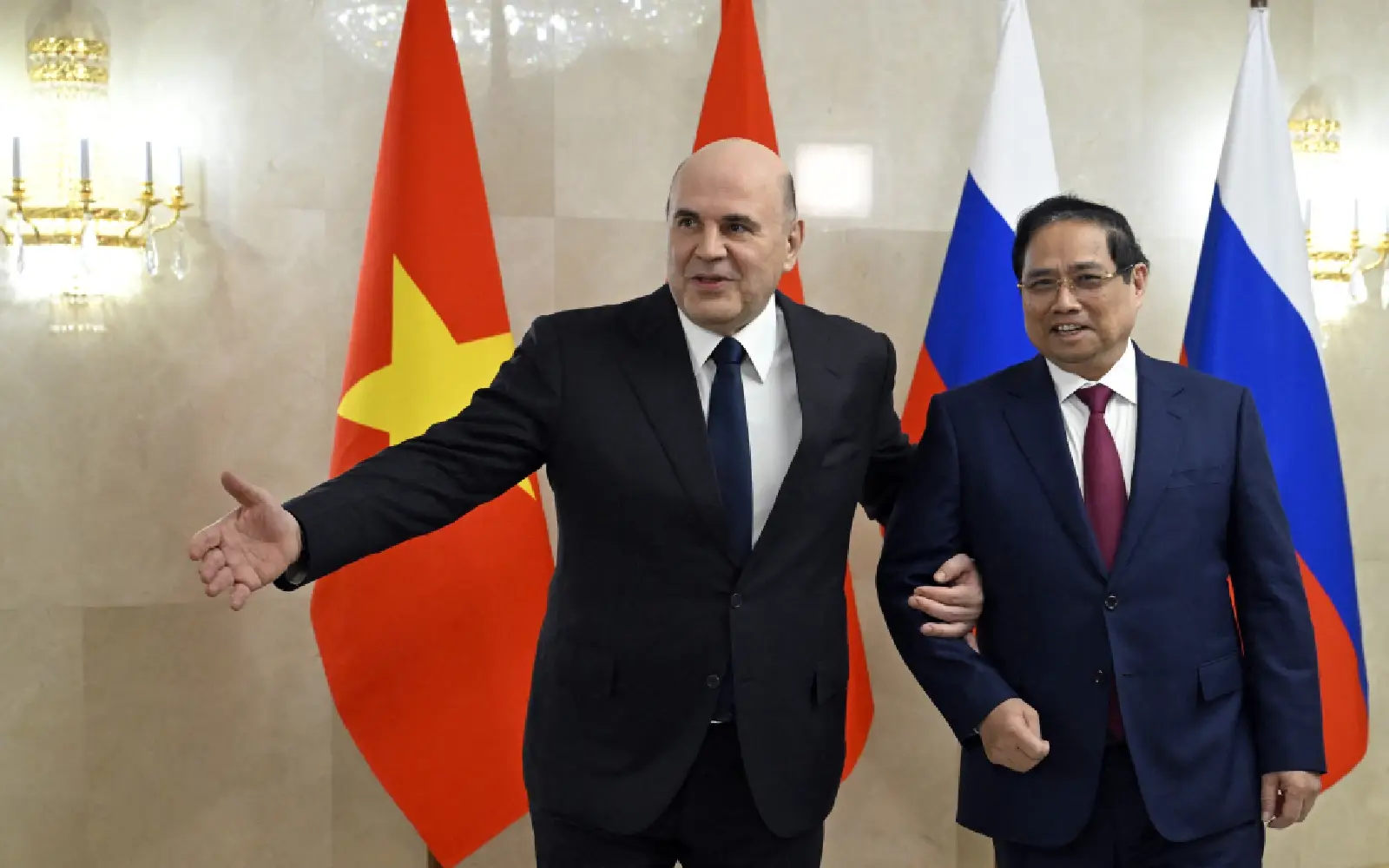
The document was signed on March 23 by Alexey Likhachev, director general of Rosatom, and Tran Van Son, Minister and Head of the Vietnamese Government Office. The signing ceremony took place in the presence of Russian Prime Minister Mikhail Mishustin and Vietnamese Prime Minister Pham Minh Chinh, underscoring the political significance of the project.
Under the agreement, Russia will construct two nuclear power units equipped with VVER-1200 reactors, delivering a combined installed capacity of 2,400 megawatts (MW). The project will be based on the design of the Leningrad Nuclear Power Plant II, which serves as the reference model for the development.
For Vietnam, the deal represents more than the construction of a power plant. It marks the revival of a nuclear program that had been shelved for nearly a decade and signals the country’s intention to incorporate nuclear power into its long-term energy strategy.
Markets move fast; don’t get left behind. We’ve paired the Serrari Group Market Index with a curated Marketplace and a comprehensive Wealth Builder Course to ensure you have the data—and the skills—to act on it.
A Foundation for Long-Term Industrial Cooperation
Russian officials have emphasized that the agreement is intended to establish a long-term industrial partnership rather than simply deliver a single infrastructure project.
According to Rosatom chief Alexey Likhachev, the collaboration will deepen technological and economic cooperation between the two countries while supporting Vietnam’s growing energy needs.
“For us, this is not merely an agreement to build two nuclear power units,” Likhachev said following the signing ceremony. “We see it as the foundation for a long-term industrial partnership that will strengthen Vietnam’s energy independence and open up new opportunities for economic growth.”
The partnership will involve far more than reactor construction. Russia is expected to provide reactor technology, nuclear fuel supply, operational training, and long-term technical support for the project.
This model reflects Rosatom’s approach to international nuclear projects, which typically combine engineering, financing, technology transfer, and operational cooperation.
For Vietnam, such support is essential as the country works to rebuild technical expertise and regulatory capacity after pausing its nuclear program nearly a decade ago.
VVER-1200 Reactors to Power the Project
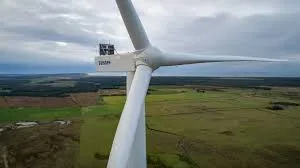
The Ninh Thuan facility will utilize VVER-1200 reactors, one of Rosatom’s most advanced and widely exported nuclear technologies.
VVER-1200 reactors belong to the Generation III+ class of nuclear reactors, which incorporate advanced safety systems and improved efficiency compared with earlier designs.
The technology includes passive safety systems capable of maintaining cooling and stability even in extreme conditions without external power supply. These systems are designed to reduce the likelihood of severe accidents and improve overall operational reliability.
The reactors have already been deployed in several nuclear facilities in Russia and other countries, forming a central component of Rosatom’s international nuclear export portfolio.
Because the design has already been tested and operated successfully, it provides Vietnam with a relatively low-risk pathway for entering the nuclear energy sector.
The Long History of the Ninh Thuan Nuclear Project
The Ninh Thuan project has a long and complex history that reflects shifting economic and political priorities within Vietnam.
Vietnam initially approved plans to develop nuclear power in the early 2010s as electricity demand began rising rapidly alongside the country’s industrial expansion.
Two nuclear power plants were planned in Ninh Thuan Province, a coastal region in south-central Vietnam.
The first plant, Ninh Thuan 1, was planned for Phuoc Dinh commune in Thuan Nam District, while the second facility, Ninh Thuan 2, was proposed for Vinh Hai commune in Ninh Hai District.
Construction preparations began soon after the initial agreements were signed. Two villages near the planned sites were relocated, and major upgrades to local infrastructure were undertaken.
However, in 2016, the Vietnamese government suspended its nuclear power program due to rising costs, budget constraints, and concerns about public finances.
At the time, officials argued that cheaper alternatives such as coal and natural gas would be sufficient to meet the country’s energy needs.
Energy Security Concerns Drive Policy Reversal
Nearly a decade later, Vietnam’s energy outlook has changed significantly.
Rapid economic growth and expanding manufacturing industries have dramatically increased electricity demand across the country.
At the same time, periodic power shortages and blackouts have highlighted vulnerabilities in the national power system.
In response to these pressures, Vietnam has begun reconsidering nuclear power as part of its long-term energy mix.
In November 2024, the National Assembly of Vietnam approved a proposal to revive the Ninh Thuan nuclear project.
Officials have framed the decision as essential to maintaining reliable baseload electricity supply while reducing dependence on coal.
Vietnam has also committed to reducing greenhouse gas emissions under international climate agreements, making low-carbon electricity sources increasingly important for the country’s energy strategy.
Context is everything. While you follow today’s updates, use the Serrari Group Market Index and Marketplace to spot emerging shifts. Need to sharpen your edge? Our Wealth Builder Course turns these insights into a professional-grade strategy.
Nuclear Power in Southeast Asia’s Energy Transition
Vietnam’s renewed interest in nuclear energy reflects a broader trend across Southeast Asia.
Many rapidly growing economies in the region are seeking stable and scalable electricity sources to support industrial expansion.
While renewable energy projects such as solar and wind have expanded rapidly, they often require complementary power sources capable of delivering continuous electricity supply.
Nuclear energy is increasingly being viewed as one possible solution to this challenge.
Unlike intermittent renewable sources, nuclear reactors can operate continuously, providing stable baseload electricity regardless of weather conditions.
Supporters also argue that modern nuclear plants produce far fewer carbon emissions than coal or gas-fired power plants, making them a potential component of long-term decarbonization strategies.
For Vietnam, which continues to rely heavily on coal for electricity generation, nuclear power could play an important role in diversifying the country’s energy mix.
Expanding Scientific Cooperation
Beyond the construction of nuclear reactors, the agreement between Russia and Vietnam includes plans to deepen cooperation in nuclear science and research.
One of the key initiatives is the development of a Centre for Nuclear Science and Technology (CNST) in Vietnam.
The project will include a Russian-designed research reactor as well as facilities dedicated to nuclear research, training, and technological development.
Feasibility studies for the CNST project are expected to be completed soon, after which the two countries will begin negotiating contracts for the construction of the research facility.
The center will play a crucial role in developing Vietnam’s nuclear expertise by training engineers, scientists, and technicians required to operate nuclear power infrastructure.
Decades of Nuclear Collaboration
Vietnam and Russia already have a long history of cooperation in nuclear technology.
One example is the Dalat Research Reactor, which operates using Russian-supplied nuclear fuel.
The facility produces radioactive isotopes used in medical treatments, scientific research, and industrial applications.
Vietnam has also expressed interest in participating in an international consortium developing the Multipurpose Fast Research Reactor, an advanced research platform designed to test next-generation nuclear technologies.
These initiatives demonstrate how nuclear cooperation between the two countries extends beyond electricity generation into scientific and technological development.
Broader Energy and Economic Partnerships
The nuclear agreement forms part of a broader expansion of economic cooperation between Vietnam and Russia.
During recent discussions in Moscow, the two countries explored additional partnerships in oil and gas exploration, logistics, and technology.
Russia’s major liquefied natural gas producer Novatek recently signed a preliminary agreement to supply LNG to a Vietnamese buyer.
The two governments have also discussed expanding cooperation in offshore oil and gas development as well as transportation infrastructure.
Although economic ties between the two countries remain relatively modest compared with Vietnam’s trade with China and the United States, energy cooperation continues to play a central role in their bilateral relationship.
Trade between Russia and Vietnam increased from approximately $3.63 billion in 2023 to $4.77 billion in 2025, reflecting gradual growth in commercial exchanges.
Outlook: Nuclear Power Returns to Vietnam’s Energy Strategy
Vietnam’s decision to revive the Ninh Thuan nuclear project marks a significant shift in the country’s long-term energy planning.
The construction of two VVER-1200 reactors will provide a large source of stable electricity capable of supporting Vietnam’s expanding industrial economy.
However, nuclear projects typically require long construction timelines, extensive regulatory oversight, and significant financial investment.
Construction at the Ninh Thuan site is expected to unfold over several years, with the first units potentially entering operation in the early 2030s.
If completed successfully, the plant could become a cornerstone of Vietnam’s electricity system, helping to stabilize power supply while reducing reliance on fossil fuels.
The broader partnership between Vietnam and Russia could also accelerate the development of nuclear science, technical expertise, and industrial capacity within the country.
As electricity demand continues to grow across Southeast Asia, nuclear energy may play an increasingly important role in balancing renewable energy expansion with the need for reliable baseload power.
For Vietnam, the revival of the Ninh Thuan project represents not only the return of nuclear energy but also a strategic effort to secure long-term energy stability in a rapidly evolving global energy landscape.
Your financial future isn’t something you wait for—it’s something you build.
The real question is: when do you begin?
Move beyond simply staying informed.
Navigate the markets with clarity—track trends through the Serrari Group Market Index, uncover opportunities in the Serrari Marketplace, and build practical knowledge with our Curated Wealth Builder Course.
Stay connected to what truly matters.
Get daily insights on macro trends and financial movements across Kenya, Africa, and global markets—delivered through the Serrari Newsletter.
Growth opens doors.
Advance your career through professional programs including ACCA, HESI A2, ATI TEAS 7 , HESI EXIT , NCLEX – RN and NCLEX – PN, Financial Literacy!🌟—designed to move you forward with confidence.
See where money is flowing—clearly and in real time.
Track Money Market Funds, Treasury Bills, Treasury Bonds, Green Bonds, and Fixed Deposits, alongside global and African indexes, key economic indicators, and the evolving Crypto and stablecoin landscape—all within Serrari’s Market Index.