The government of South Korea is making one of its most significant financial commitments yet toward tackling climate change, announcing plans to invest 3.4217 trillion won—approximately $2.3 billion—in climate change response technologies in 2026. This marks a 14.1% increase compared to the previous year, signaling a clear intensification of efforts to meet both domestic and global climate obligations.
At a time when countries are under increasing pressure to translate climate pledges into actionable outcomes, this move reflects a broader shift toward implementation. Rather than focusing solely on policy frameworks or long-term goals, South Korea is channeling substantial capital into tangible technological solutions that can deliver measurable impact.
The announcement, made by the Ministry of Science and ICT, forms part of the government’s comprehensive implementation plan aimed at achieving its 2035 Nationally Determined Contribution (NDC) targets. These targets, aligned with global climate agreements, require substantial emissions reductions across key sectors of the economy.
What sets this initiative apart is its scale, structure, and strategic clarity. It is not merely an increase in spending—it is a deliberate effort to accelerate innovation, bridge the gap between research and commercialization, and position the country at the forefront of the global climate technology race.
Markets move fast; don’t get left behind. We’ve paired the Serrari Group Market Index with a curated Marketplace and a comprehensive Wealth Builder Platform to ensure you have the data—and the skills—to act on it.
Three Strategic Pillars Driving the Plan
At the heart of the 2026 investment strategy are three core pillars: greenhouse gas reduction, climate change adaptation, and innovation ecosystem creation. These pillars are designed to work in tandem, ensuring that efforts to cut emissions are complemented by resilience-building and long-term capacity development.
The largest allocation—2.2269 trillion won—is directed toward greenhouse gas reduction, reflecting a 20.5% increase from the previous year. This underscores the urgency of cutting emissions at scale, particularly in sectors that have historically been difficult to decarbonize.
Meanwhile, 429.1 billion won is earmarked for climate change adaptation. This funding is intended to strengthen the country’s ability to cope with the increasingly visible impacts of climate change, from extreme weather events to shifting environmental conditions.
The remaining 720.1 billion won is allocated to fostering an innovation ecosystem. Although this category has seen a more modest increase, its importance cannot be overstated. By supporting infrastructure, partnerships, and technology dissemination, it lays the groundwork for sustained progress beyond the immediate investment cycle.
Together, these three pillars form a holistic framework that addresses not just the symptoms of climate change, but its underlying drivers and long-term implications.
Scaling Carbon-Free Energy Technologies
A central component of the investment plan is the aggressive expansion of carbon-free energy technologies. These technologies are essential for reducing reliance on fossil fuels and transitioning toward a low-carbon energy system.
Among the key focus areas is next-generation solar energy. The government has allocated 5 billion won to further develop advanced solar cell technologies, including perovskite-based solutions. These cells have already achieved a world-leading efficiency of 24.84%, highlighting their potential to significantly outperform traditional photovoltaic systems.
This progress is not just a technical milestone—it represents a pathway to more efficient and cost-effective renewable energy deployment. As solar technology becomes more efficient, it becomes more accessible, accelerating adoption across both urban and rural settings.
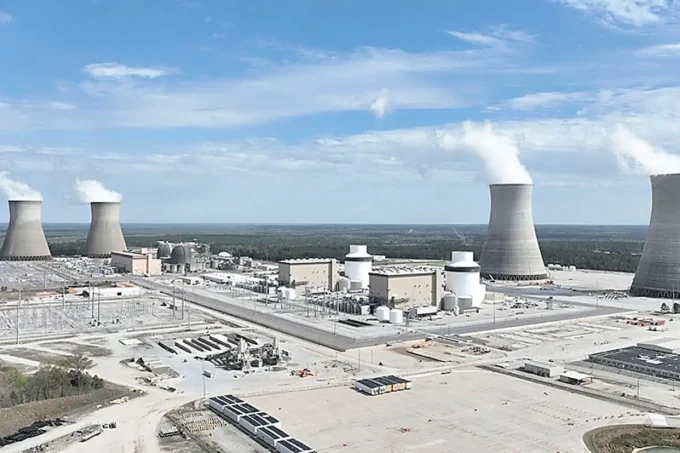
In parallel, nuclear innovation is receiving renewed attention through investments in small modular reactors (SMRs) and fusion energy. A total of 15.67 billion won has been allocated to localize SMR manufacturing technology, while 2.1 billion won will support the design of a Korean-style innovative fusion reactor.
SMRs are particularly noteworthy due to their modular design, which allows for faster construction, lower upfront costs, and enhanced safety features. Unlike traditional nuclear plants, SMRs can be deployed in smaller units, making them more flexible and adaptable to different energy needs.
Fusion energy, although still in the experimental stage, represents a long-term opportunity for virtually limitless, clean energy. By investing early in fusion research, South Korea is positioning itself to be a key player in what could become a transformative energy breakthrough.
Hydrogen and Sustainable Fuels Take Center Stage
In addition to electricity generation, the government is targeting emissions from industrial processes and transportation through the development of alternative fuels, particularly hydrogen.
Clean hydrogen is emerging as a critical component of global decarbonization strategies, especially for sectors where electrification is not easily feasible. These include heavy industries such as steel and cement, as well as long-distance transport.
South Korea’s investment plan includes new funding to advance hydrogen production technologies and build a foundation for a hydrogen-based economy. This includes research into efficient production methods, storage solutions, and distribution infrastructure.
At the same time, the government is supporting the development of Sustainable Aviation Fuel (SAF), recognizing the need to address emissions in the aviation sector. By investing in the raw materials and technologies required for SAF production, South Korea is taking steps toward reducing the carbon footprint of air travel.
These efforts reflect a broader understanding that achieving climate targets will require a diverse set of solutions, tailored to the unique challenges of different sectors.
Expanding Carbon Capture and Utilization (CCU)
Carbon capture and utilization (CCU) is another major focus of the 2026 plan, receiving a significant increase in funding. Investment in this area will rise by 89% compared to the previous year, underscoring its growing importance in the climate technology landscape.
CCU technologies work by capturing carbon dioxide emissions from industrial sources and converting them into useful products, such as fuels, chemicals, or construction materials. This not only reduces emissions but also creates new economic opportunities.
A key initiative under this category is the “CCU Mega Project,” which has been allocated 20 billion won. This large-scale demonstration project aims to test CCU technologies in real industrial environments, bridging the gap between laboratory research and commercial application.
The emphasis on demonstration is particularly important. Many climate technologies face challenges not in development, but in scaling. By investing in real-world applications, the government is helping to de-risk these technologies and accelerate their adoption.
Strengthening Climate Adaptation Through AI and Digital Tools
While mitigation efforts are essential, the government recognizes that some level of climate impact is unavoidable. As such, a significant portion of the investment is dedicated to adaptation strategies, with a strong focus on digital and AI-driven solutions.
AI-based climate prediction technologies are being developed to enhance forecasting capabilities, enabling more accurate predictions of extreme weather events. This can improve preparedness and reduce the impact of disasters on communities and infrastructure.
Digital twin technology is another key area of focus. By creating virtual replicas of cities and ecosystems, digital twins allow for detailed simulations of climate scenarios. This enables policymakers to test different strategies and identify the most effective interventions.
In addition, new investments are being made in disaster response technologies, particularly for water-related events such as floods and heavy rainfall. These technologies are designed to improve response times, minimize damage, and enhance overall resilience.
Context is everything. While you follow today’s updates, use the Serrari Group Market Index and Marketplace to spot emerging shifts. Need to sharpen your edge? Our Wealth Builder Platform turns these insights into a professional-grade strategy.
Building a Robust Climate Innovation Ecosystem
The third pillar of the investment plan focuses on creating an environment that supports continuous innovation. This includes expanding infrastructure for testing and demonstration, as well as fostering collaboration between government, industry, and academia.
One notable project is the construction of the Chungnam Hydrogen Turbine Test and Research Center, which will serve as a hub for hydrogen-related innovation. Such facilities are critical for advancing new technologies from concept to commercialization.
The government is also investing in regional innovation clusters, designed to concentrate expertise and resources in specific areas. These clusters can drive efficiency, encourage collaboration, and accelerate the pace of development.
International cooperation is another key component. By supporting climate technology projects in developing countries, South Korea is not only contributing to global climate efforts but also creating opportunities for its own technologies to gain international traction.
Coordinated Effort Across Government Ministries
Given the scale and complexity of the investment plan, coordination across multiple government agencies is essential. The Ministry of Environment will receive the largest share of funding, followed by the Ministry of Trade, Industry and Energy, and the Ministry of Science and ICT.
To ensure effective implementation, an inter-agency consultative body will oversee the execution of projects and monitor outcomes. This collaborative approach is designed to align priorities, avoid duplication, and maximize the impact of investments.
Such coordination is particularly important in the climate space, where challenges are interconnected and solutions often span multiple sectors.
From Research to Real-World Impact
A defining feature of South Korea’s approach is its emphasis on the full lifecycle of technology development. Rather than focusing solely on early-stage research, the government is investing across the entire spectrum—from basic science to commercialization.
This approach is already yielding tangible results. Recent achievements include record-breaking efficiency in next-generation solar cells and the successful construction of a carbon dioxide processing facility through public-private collaboration.
By building on these successes, the government aims to accelerate the transition from innovation to deployment, ensuring that new technologies deliver real-world benefits.
Positioning for Global Climate Leadership
South Korea’s expanded investment is not just about meeting domestic targets—it is also about positioning the country as a global leader in climate technology.
As demand for clean technologies continues to grow worldwide, countries that can develop and export innovative solutions stand to gain significant economic advantages. By investing heavily in key areas such as solar, hydrogen, and carbon capture, South Korea is laying the groundwork for long-term competitiveness.
The focus on “ultra-gap technologies”—those that offer significant performance improvements over existing solutions—highlights a forward-looking strategy. Rather than simply adopting existing technologies, the country is aiming to lead in the development of next-generation solutions.
Economic and Industrial Implications
Beyond environmental benefits, the investment plan is expected to have significant economic implications. By supporting the development of new industries and technologies, the government is creating opportunities for job creation, industrial growth, and export expansion.
Sectors such as renewable energy, hydrogen, and carbon capture are likely to see increased activity, attracting both domestic and international investment. This, in turn, can stimulate innovation and drive further technological advancements.
Moreover, by reducing reliance on imported fossil fuels, South Korea can enhance its energy security and improve its balance of trade.
A Long-Term Commitment to Climate Action
The 2026 investment plan reflects a broader, long-term commitment to climate action. Rather than treating climate change as a short-term challenge, the government is embedding it into its broader economic and technological strategy.
This long-term perspective is crucial, as many climate technologies require sustained investment and development over several years. By maintaining a consistent focus, South Korea can build momentum and achieve lasting impact.
Outlook: What Comes Next?
South Korea’s expanded push into climate technology signals a shift from ambition to execution, with the next phase likely to focus on translating investments into measurable, real-world impact. As funding flows into key areas like clean energy, hydrogen, and carbon capture, the immediate priority will be scaling pilot projects and demonstration initiatives into commercially viable solutions.
In the short to medium term, the success of this strategy will largely depend on how effectively these technologies are deployed across industries. If implementation keeps pace with investment, sectors such as energy, manufacturing, and transport could begin to see tangible reductions in emissions, alongside improvements in efficiency and cost competitiveness.
At the same time, growing investment in AI-driven climate prediction and digital tools could strengthen the country’s ability to manage climate risks, particularly in urban and high-density areas. This adds an important layer of resilience, ensuring that mitigation efforts are complemented by stronger adaptation capabilities.
Looking further ahead, South Korea’s focus on advanced, “next-generation” technologies positions it to compete in the global clean tech market. If these innovations mature successfully, they could open up export opportunities and reinforce the country’s role as a technology leader in the low-carbon transition.
However, delivery will be key. Continued coordination across government, strong private sector participation, and consistent policy support will be critical in ensuring that these investments translate into lasting impact. If these elements align, South Korea could not only meet its climate targets but also turn its climate strategy into a long-term economic advantage.
Your financial future isn’t something you wait for—it’s something you build.
The real question is: when do you begin?
Move beyond simply staying informed.
Navigate the markets with clarity—track trends through the Serrari Group Market Index, uncover opportunities in the Serrari Marketplace, and build practical knowledge with our Curated Wealth Builder Platform.
Stay connected to what truly matters.
Get daily insights on macro trends and financial movements across Kenya, Africa, and global markets—delivered through the Serrari Newsletter.
Growth opens doors.
Advance your career through professional programs including ACCA, HESI A2, ATI TEAS 7 , HESI EXIT , NCLEX – RN and NCLEX – PN, Financial Literacy!🌟—designed to move you forward with confidence.
See where money is flowing—clearly and in real time.
Track Money Market Funds, Treasury Bills, Treasury Bonds, Green Bonds, and Fixed Deposits, alongside global and African indexes, key economic indicators, and the evolving Crypto and stablecoin landscape—all within Serrari’s Market Index.