



1: How do I buy treasury bonds in Kenya?
To buy treasury bonds in Kenya, follow these steps:
Step 1: Open a CDS Account
You must have a Central Depository System (CDS) account with the Central Bank of Kenya (CBK). This can be done directly with CBK or through an authorized agent such as a commercial bank.
Step 2: Monitor CBK Prospectus
CBK regularly publishes a prospectus detailing upcoming bond issues, including tenure, interest rate (coupon), and the auction date. You can find information on treasury bonds on offer Kenya directly on the CBK website.
Step 3: Fill out an Application Form
Submit a bond application form indicating:
- The bond issue
- Amount you want to invest
- Whether you’re bidding competitively or non-competitively
Step 4: Payment
If successful in the auction, you’ll receive a results notification. You must then pay the investment amount through your commercial bank to CBK.
Step 5: Receive Allotment & Interest
Once the bond is allotted, it will reflect in your CDS account. You’ll receive semi-annual interest payments directly into your linked bank account. For more guidance on buying treasury bonds in Kenya, visit serrarigroup.com/.
One decision can change your entire career. Take that step with courses in ACCA, HESI A2, ATI TEAS 7, HESI EXIT, NCLEX-RN, NCLEX-PN, and Financial Literacy. Join Serrari Ed and start building your brighter future today.
2: What is the minimum investment amount for treasury bonds?
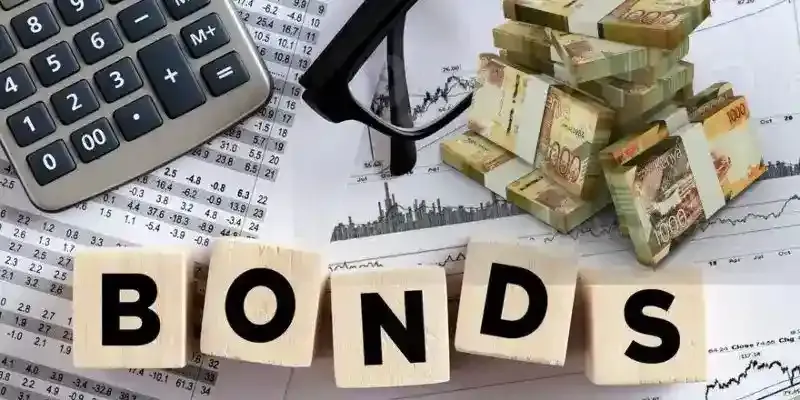
The minimum amount required to invest in treasury bonds in Kenya is KSh 50,000.
Any amount above the minimum can be invested in multiples of KSh 50,000.
This relatively low entry point makes government bonds Kenya accessible to individual investors, not just institutions.
3: What is the interest rate on treasury bonds and how is it paid?
The interest rate, also known as the coupon rate, on treasury bonds in Kenya is either:
- Fixed-rate (constant throughout the bond’s life), or
- Floating-rate (tied to a reference rate like 182-day Treasury Bill rate).
Interest is paid semi-annually, meaning you receive two payments each year for the life of the bond. This is crucial for understanding treasury bonds interest rates in Kenya.
Example Formula (Fixed Rate):
To calculate the interest received per period:
Interest = (Face Value × Coupon Rate) / 2
Example:
If you invest KSh 100,000 in a bond with a 12% coupon rate:
Interest = (100,000 × 0.12) / 2 = KSh 6,000 every 6 months
4: How long is the maturity period for treasury bonds?
Kenyan treasury bonds typically range in maturity from:
1 year to 30 years
Types of bonds by duration:
- Short-term bonds: 1–5 years
- Medium-term bonds: 6–12 years
- Long-term bonds: Over 12 years (can go up to 30 years)
You can select the maturity period that aligns with your financial goals, cash flow needs, or risk appetite.
5: Are treasury bonds in Kenya a safe investment?
Yes, treasury bonds in Kenya are considered one of the safest investment options in Kenya because:
- They are backed by the Government of Kenya, which has the power to raise taxes and control monetary policy.
- They are low-risk, especially when compared to equities or corporate bonds.
- Your principal is protected unless the government defaults, which is historically very rare.
- They are regulated by the Central Bank of Kenya under well-established monetary systems. This provides confidence in CBK Kenya bonds.
However, interest rate risk and inflation can affect your real return, especially if you hold the bond to maturity in a high-inflation environment.
Push boundaries, reach goals, achieve more. Whether it’s ACCA, HESI A2, ATI TEAS 7, HESI EXIT, NCLEX-RN, NCLEX-PN, or Financial Literacy, we’ve got the course to match your ambition. Start with Serrari Ed now.
6: How do I calculate the yield of a Treasury bond?
To calculate the yield (also called yield to maturity or YTM) of a Treasury bond, you consider the bond’s purchase price, face value, coupon interest, and time to maturity. A simplified version of the yield formula for fixed coupon bonds is:
Yield ≈ [Annual Interest Payment + (Face Value – Price) / Years to Maturity] ÷ [(Face Value + Price) / 2]
Where:
Annual Interest Payment = Face Value × Coupon Rate
Face Value = The amount paid at maturity
Price = The amount you paid to buy the bond
Years to Maturity = Time left until bond matures
💡 Note: This is an approximation. Professional investors use more complex iterative YTM formulas, but this method gives a quick benchmark for understanding treasury bonds kenya interest rate.
7: Can I sell my Treasury bond before maturity?
Yes. Treasury bonds in Kenya are tradeable in the secondary market through the Nairobi Securities Exchange (NSE) or via the Central Bank’s interdealer market. If you want to liquidate before maturity:
- You must place a sell order through your agent bank or licensed investment dealer.
- The price you receive depends on prevailing market interest rates and bond demand.
- If interest rates have risen since you bought the bond, your bond may sell at a discount. If rates have fallen, you may sell at a premium.
8: Are Treasury bonds taxed in Kenya?
Yes. Treasury bond earnings are subject to withholding tax, depending on the bond’s tenor:
- 15% for bonds with tenors of less than 10 years
- 10% for bonds with tenors of 10 years and above
The tax applies to the interest income only, not the principal or capital gains from secondary market trading. For official tax information, refer to the Kenya Revenue Authority (KRA) website.
9: How often do Treasury bonds pay interest?
In Kenya, Treasury bonds typically pay interest semi-annually. This means you’ll receive two interest payments each year until the bond matures. This is a key aspect of treasury bonds interest rates in Kenya.
For example:
A KES 1,000,000 bond with a 10% coupon rate would pay:
KES 50,000 every six months
Totaling KES 100,000 per year in interest
The exact dates are specified in the bond’s prospectus and are usually fixed (e.g., every 15th January and 15th July).
10: What is the difference between Treasury bonds and Treasury bills?
This distinction is important for understanding treasury bills and bonds in Kenya.
Treasury Bonds:
- Long-term instruments (2 to 30 years)
- Interest-bearing, with semi-annual payments
- Can be traded in the secondary market
- Used for long-term financing by the government
Treasury Bills:
- Short-term instruments (91, 182, or 364 days)
- Sold at a discount, with no periodic interest
- Maturity amount is the face value
- Used for short-term government cash flow needs
In essence:
- T-bills give a lump-sum return
- T-bonds give regular interest income
Ready to take your career to the next level? Join our dynamic courses: ACCA, HESI A2, ATI TEAS 7 , HESI EXIT , NCLEX – RN and NCLEX – PN, Financial Literacy!🌟 Dive into a world of opportunities and empower yourself for success. Explore more at Serrari Ed and start your exciting journey today! ✨















