Kenya’s economy is projecting a measured but growing confidence as the first quarter of 2026 unfolds. The Treasury has outlined an ambitious 5.3% growth target for the year, inflation has cooled to its lowest level in seven months, the Kenyan shilling is holding firm against the U.S. dollar, and the country’s foreign exchange reserves have strengthened. Beneath these encouraging macroeconomic indicators, however, lies a more complex story: an unresolved public debt burden, persistent revenue shortfalls, and the twin imperatives of preparing the country’s youth for an evolving economy while continuing to modernise its agricultural base.
Kenya’s economic trajectory in 2026 must be understood in its regional and global context. East Africa’s largest economy is navigating a global environment characterised by energy price volatility, geopolitical uncertainty, and a tightening of global financial conditions. Yet Kenya’s relatively diversified economic base — spanning services, agriculture, manufacturing, and a growing technology sector — and its deep integration with regional and global trade flows give it a degree of structural resilience that many peer economies lack.
Build the future you deserve. Get started with our top-tier Online courses: ACCA, HESI A2, ATI TEAS 7, HESI EXIT, NCLEX-RN, NCLEX-PN, and Financial Literacy. Let Serrari Ed guide your path to success. Enroll today.
Treasury’s 5.3% Growth Projection: Ambition Meets Fiscal Reality
Cabinet Secretary for National Treasury and Economic Planning, John Mbadi, has tabled the 2026 Budget Policy Statement, projecting Kenya’s economy will expand by 5.3% in the current fiscal year. The projection builds on an estimated 5.0-5.2% outturn for 2025 and reflects confidence in a multi-sector growth recovery. Key sectors expected to drive the acceleration include information and communications technology (ICT), financial services, manufacturing, and a rebound in tourism following a period of subdued visitor numbers.
The ICT sector — Kenya’s fastest-growing major economic segment — has been the consistent outperformer in recent years. The expansion of data connectivity, mobile money penetration, and digital financial services is driving productivity improvements across the broader economy, as well as directly generating employment for a highly educated urban workforce. Nairobi’s positioning as a regional hub for technology startups and multinational African headquarters is attracting foreign direct investment and creating a self-reinforcing cluster of innovation.
However, the 5.3% growth target is not without its risks. Kenya’s public debt remains elevated, and the government faces a delicate balancing act between fiscal consolidation — as demanded by the IMF and international creditors — and the public investment required to sustain growth momentum. The Kenya Revenue Authority has been operating under aggressive revenue collection targets, and any shortfall in tax collection could force spending cuts that would directly undermine the growth projection. The government’s debt servicing costs are consuming an increasingly large share of total revenue, leaving limited space for discretionary investment.
Kenya GDP Growth Forecast (2026): 5.3%
Key Growth Sectors: ICT, Financial Services, Tourism, Manufacturing
Inflation Hits 7-Month Low at 4.3%
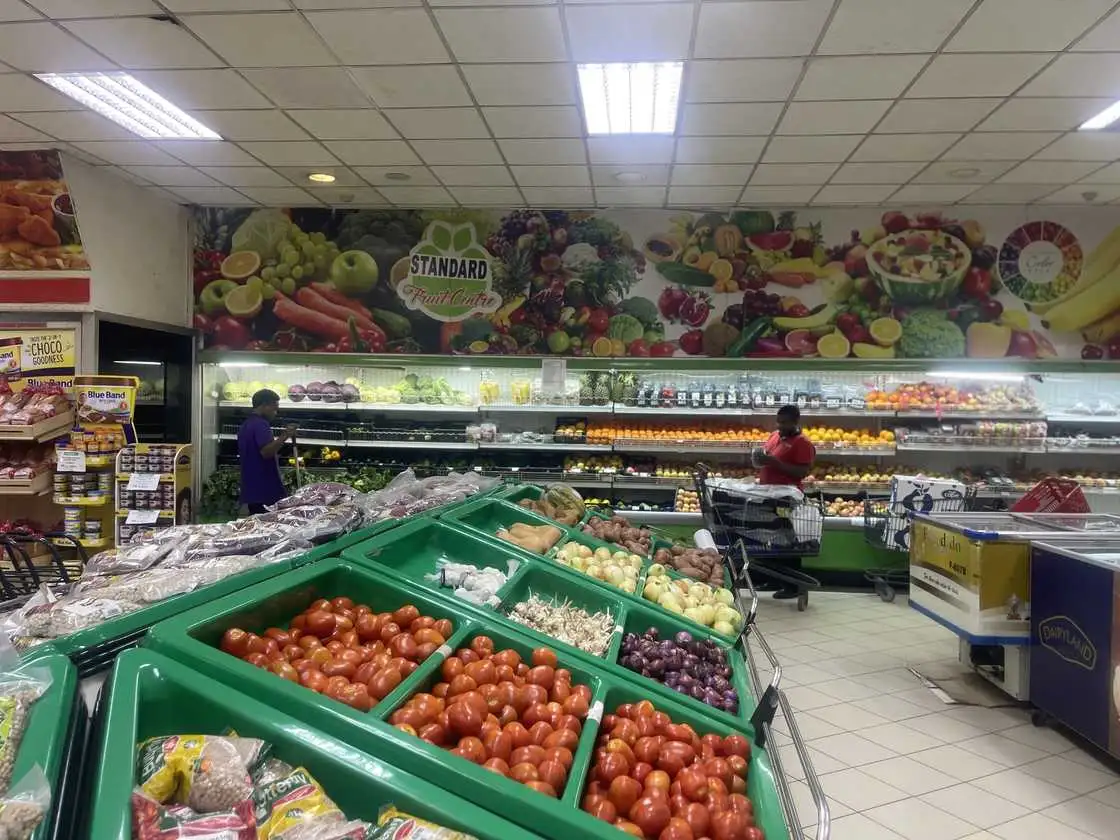
Kenya’s Central Bank Governor has cause for measured satisfaction as the latest inflation data lands. The annual inflation rate cooled to 4.3% in February 2026 — the lowest reading since July 2025 — providing meaningful relief to households that have faced sustained pressure on purchasing power over the past two years. The deceleration has been driven primarily by easing food prices, which carry the heaviest weighting in Kenya’s consumer price index given the proportion of household income spent on food, particularly among lower-income groups.
Food price relief has been supported by improved domestic agricultural conditions — including better-than-expected short rains performance in key farming regions — alongside the recent stabilisation of global commodity prices. Core inflation, which strips out food and fuel prices, has also moderated, suggesting that the broader demand-side pressures that characterised the inflation surge of 2023-2024 have now substantially eased.
The improved inflation backdrop gives the Central Bank of Kenya (CBK) additional room for manoeuvre in its monetary policy stance. The CBK has been gradually reducing its benchmark Central Bank Rate from the peak levels of 2024, and the latest inflation data increases the probability of a further reduction at the next Monetary Policy Committee meeting, potentially providing a modest stimulus to credit growth and private investment.
Kenya Inflation Rate (February 2026): 4.3% (7-month low)
Previous Low: July 2025
One decision can change your entire career. Take that step with our Online courses in ACCA, HESI A2, ATI TEAS 7, HESI EXIT, NCLEX-RN, NCLEX-PN, and Financial Literacy. Join Serrari Ed and start building your brighter future today.
Shilling Stability and Strengthening Forex Reserves
The Kenyan shilling has maintained relative stability in recent weeks, holding below the KSh 129 mark against the U.S. dollar. The currency’s resilience is notably different from the dramatic depreciation of 2023, when the shilling fell to all-time lows against the dollar amid concerns about dollar liquidity and Kenya’s ability to service its external debt obligations. The recovery since then reflects a combination of improved export performance, sustained diaspora remittances — Kenya’s largest source of foreign exchange — and the proceeds of recent government external borrowing.
Kenya’s foreign exchange reserves have climbed to KSh 1.59 trillion, representing approximately 4.3 months of import cover. The CBK targets a minimum of 4.0 months of import cover as a reserve adequacy benchmark, meaning Kenya is currently modestly above its own threshold. This provides a meaningful buffer against external shocks — including the energy price surge from the Middle East crisis — that might otherwise put renewed pressure on the shilling and Kenya’s external accounts.
USD/KES Exchange Rate: Below 129
Forex Reserves: KSh 1.59 trillion (~4.3 months import cover)
Youth, Skills, and the Green Economy Imperative
At commemorations of Wangari Maathai Day and Africa Environment Day held in Kenya this week, Nobel Peace Prize laureates and international development leaders issued a pointed challenge to African governments: urgently reform education and policy frameworks to integrate youth into the emerging green economy. Kenya, given its pioneering role in renewable energy — particularly geothermal power (where it ranks among the world’s top five producers), wind energy from Lake Turkana, and solar installation — is seen as among the best-positioned African nations to lead and benefit from the global energy transition.
However, experts and policymakers alike acknowledge a significant mismatch between the skills that Kenya’s current education system produces and those that the green economy demands. Green jobs — in renewable energy installation and maintenance, energy efficiency auditing, sustainable construction, and climate-smart agriculture — require technical skills that are still underrepresented in Kenya’s vocational and tertiary education curriculum. Without deliberate and sustained curriculum reform, the employment dividend of Kenya’s renewable energy advantage may flow disproportionately to imported skilled workers rather than Kenyan youth.
The stakes are high. Kenya has one of Africa’s youngest populations, with approximately 75% of its 55 million people under the age of 35. Channelling this demographic dividend into a growing, skills-intensive green economy is not merely an educational policy question — it is the central long-term economic challenge facing the Kenyan state. The government has announced initial steps, including expanded technical and vocational education training (TVET) enrolments and partnerships with the private sector on green job apprenticeship programmes, but observers argue the pace of reform needs to accelerate significantly.
Agricultural Transformation: From Barren to Bountiful
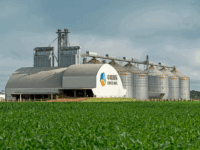
Kenya’s agricultural sector — which employs approximately 40% of the formal labour force and underpins rural livelihoods across the country — is receiving renewed attention and investment. A World Bank-backed programme is actively helping Kenyan farming communities in arid and semi-arid regions transform marginal dryland into productive fodder businesses that sustain pastoral economies. The initiative involves the introduction of drought-tolerant fodder crops, improved water harvesting techniques, and the development of market linkages that allow pastoralists to sell surplus fodder during good seasons and access emergency supplies during drought.
The programme is part of a broader global development agenda to enhance climate resilience in fragile agricultural systems, and Kenya is being positioned as a model for how targeted investment in dryland agriculture can create economic returns, reduce food insecurity, and build climate-adaptive livelihoods. For a country that has experienced increasing frequency and intensity of drought in recent years — driven by the El Nino/La Nina weather cycle amplified by climate change — the ability to sustain pastoral productivity even in lean seasons is an increasingly critical economic and humanitarian priority.
Beyond the dryland initiative, Kenya’s agricultural sector is undergoing a broader modernisation that includes the expansion of irrigation infrastructure, the introduction of precision agriculture techniques, improvements to post-harvest storage and cold chain logistics, and the development of agri-processing capacity to move up the value chain. These structural changes are gradually improving Kenya’s agricultural productivity and reducing the sector’s vulnerability to weather shocks — a critical foundation for sustained economic growth in a country where agricultural performance has historically been a major determinant of overall GDP outcomes.
Ready to take your career to the next level? Join our Online courses: ACCA, HESI A2, ATI TEAS 7 , HESI EXIT , NCLEX – RN and NCLEX – PN, Financial Literacy!🌟 Dive into a world of opportunities and empower yourself for success. Explore more at Serrari Ed and start your exciting journey today! ✨
Track GDP, Inflation and Central Bank rates for top African markets with Serrari’s comparator tool.
See today’s Treasury bonds and Money market funds movement across financial service providers in Kenya, using Serrari’s comparator tools.
photo source: Google
By: Montel Kamau
Serrari Financial Analyst
4th March, 2026