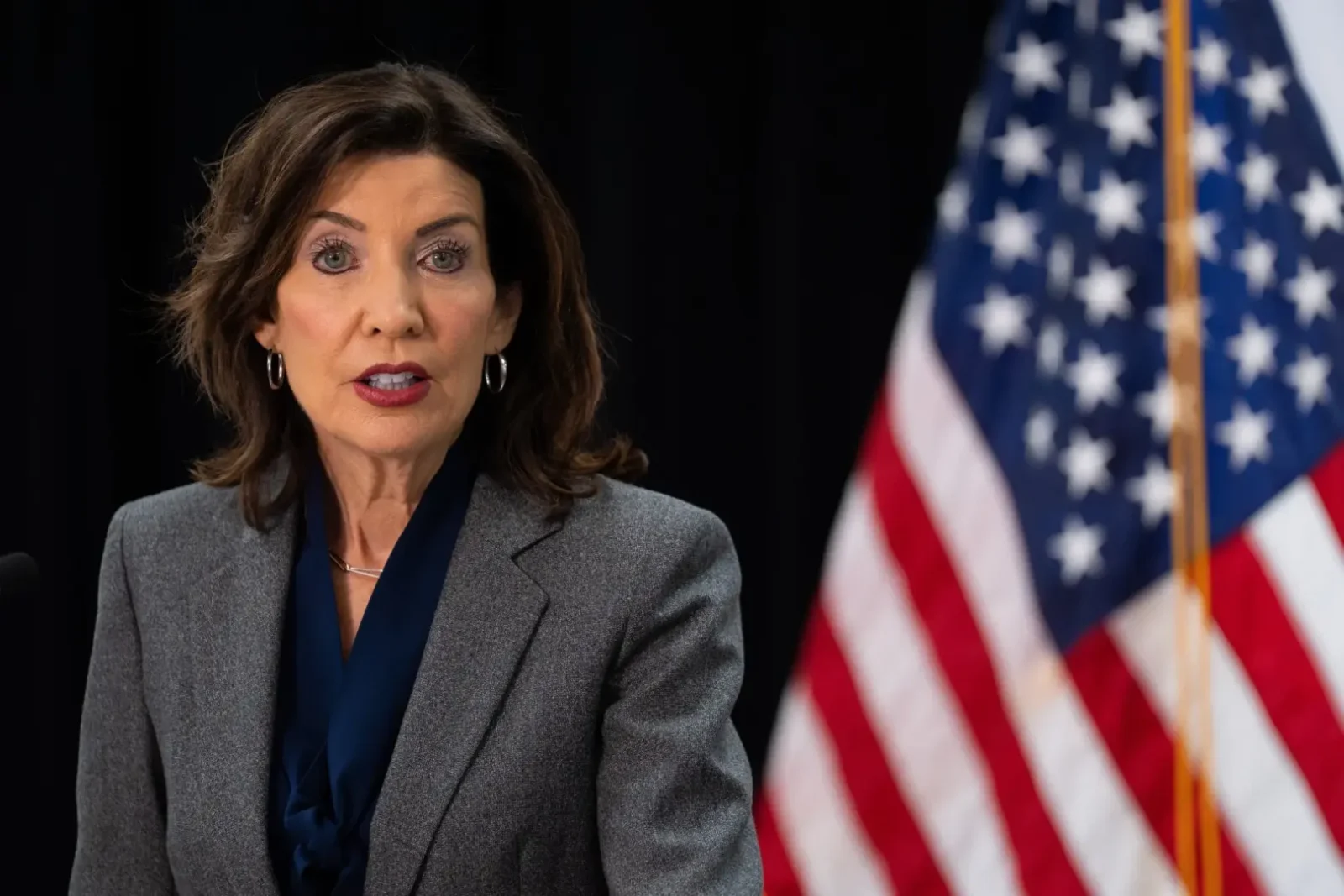
New York’s ambitious climate agenda has entered a new and controversial phase after Governor Kathy Hochul proposed revisions to the state’s landmark climate law, arguing that its near-term emissions targets have become unrealistic and financially burdensome.
In an opinion piece published on the governor’s official website, Hochul said the state must reconsider the timeline for implementing regulations under the Climate Leadership and Community Protection Act (Climate Act). The law, signed in 2019 by former Governor Andrew Cuomo, established one of the most aggressive climate frameworks in the United States.
The legislation requires New York to reduce economy-wide greenhouse gas emissions by 40 percent by 2030 and at least 85 percent by 2050 compared with 1990 levels. The remaining emissions would be addressed through carbon removal technologies and offsets, a growing field that includes solutions such as carbon capture and nature-based climate strategies.
But according to Hochul, economic realities, global disruptions and political shifts in Washington have dramatically altered the conditions under which the law was originally designed.
“The undeniable fact,” she wrote, “is that we cannot meet the Climate Act’s 2030 targets without imposing crushing costs on New York businesses and residents.”
Her proposal has triggered intense debate across the political spectrum, raising broader questions about how states can pursue ambitious climate goals while maintaining economic stability.
Markets move fast; don’t get left behind. We’ve paired the Serrari Group Market Index with a curated Marketplace and a comprehensive Wealth Builder Course to ensure you have the data—and the skills—to act on it.
Understanding New York’s Landmark Climate Law
The Climate Act is widely regarded as one of the most comprehensive state-level climate policies in the United States. It not only set emissions reduction targets but also mandated that New York transition toward a clean energy economy while prioritizing environmental justice communities.
The law required the New York Department of Environmental Conservation to develop regulations to enforce emissions reductions by 2024. These regulations were expected to include market-based mechanisms such as a cap-and-invest carbon pricing system, which would charge companies for pollution while generating revenue for clean-energy investments.
However, those rules have yet to be finalized.
In late 2025, the New York State Supreme Court ordered the Department of Environmental Conservation to issue the required regulations by early 2026 unless lawmakers amended the legislation.
That legal pressure has placed the state in a difficult position. Regulators must either implement complex climate policies rapidly or seek legislative changes to adjust the timeline.
Hochul has chosen the latter path.
Hochul’s Proposal: Delaying Regulations and Resetting Targets
Under the governor’s proposal, the requirement for issuing emissions-reduction regulations would be pushed back to the end of 2030.
This shift would effectively provide the state with additional time to design policies that reduce emissions without imposing sudden economic shocks.
Hochul argues that the world has changed dramatically since the law was enacted in 2019.
Among the factors she highlighted are post-COVID inflation, global supply-chain disruptions, and rising energy costs, all of which have complicated the transition to a cleaner energy system.
She also emphasized the importance of affordability for households and businesses already grappling with high living costs.
“As Governor,” Hochul wrote, “I cannot ignore the financial pressure facing New Yorkers today.”
The Federal Factor and Political Tensions
A major component of Hochul’s argument centers on the evolving federal policy landscape.
She has criticized the administration of Donald Trump, accusing federal officials of undermining renewable energy initiatives and rolling back incentives designed to accelerate the clean energy transition.
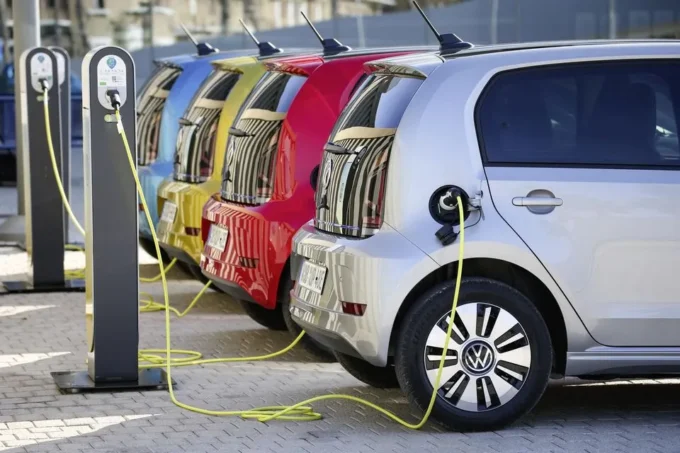
According to Hochul, federal decisions to scale back support for offshore wind projects, electric vehicles, and other clean-energy incentives have made it significantly harder for states to pursue aggressive decarbonization strategies.
“Without a federal partner,” she said, “there is only so much states can do on their own.”
This dynamic reflects a broader challenge in climate governance. While states can implement policies independently, large-scale energy transitions often require coordinated national strategies and significant federal funding.
When federal support weakens, the burden on state governments increases dramatically.
A Divided Response Among Policymakers
Hochul’s proposal has already generated mixed reactions among lawmakers in Albany.
Some legislators acknowledge that New York is not currently on track to meet its 2030 emissions reduction target.
State Assembly Members Carrie Woerner and John T. McDonald noted that the state faces serious implementation challenges.
“The reality is difficult to ignore,” they said in a joint statement. “New York is not on track to meet the Climate Act’s targets on the timeline written into law.”
Still, many lawmakers remain deeply concerned that delaying regulations could undermine the entire climate strategy.
State Senator Pete Harckham, who chairs the Senate Environmental Conservation Committee, emphasized that the legislature must find a balance between environmental ambition and economic practicality.
“We set a law for ourselves,” Harckham said. “We should be held accountable to it.”
Context is everything. While you follow today’s updates, use the Serrari Group Market Index and Marketplace to spot emerging shifts. Need to sharpen your edge? Our Wealth Builder Course turns these insights into a professional-grade strategy.
Environmental Groups Push Back
Environmental organizations have responded strongly to the governor’s proposal.
Advocacy groups argue that delaying regulations could stall climate action for years at a time when rapid emissions reductions are essential to limiting global warming.
Rachel Spector of Earthjustice, an environmental law organization, said the proposed changes could allow the state government to avoid taking meaningful action.
Environmental advocates also worry about proposed changes to the way emissions are measured.
New York currently evaluates emissions using a 20-year time horizon, which highlights the climate impact of methane emissions, a powerful but short-lived greenhouse gas that is the main component of natural gas.
Switching to a 100-year measurement framework would align New York with international greenhouse gas accounting standards, but critics argue it would reduce the urgency of cutting methane pollution.
The Cost Debate
At the heart of the controversy lies a fundamental policy question: how much should climate action cost?
Supporters of Hochul’s proposal argue that implementing the Climate Act too quickly could place an unsustainable financial burden on households.
A memo released by the New York State Energy Research and Development Authority (NYSERDA) estimated that strict implementation of the 2030 emissions targets could raise annual energy costs for some households by more than $4,000.
These projections have been widely cited by business groups and political leaders advocating changes to the law.
The Business Council of New York State, which represents companies across the state, has warned that the current timeline could worsen the affordability crisis and make it harder for businesses to remain competitive.
But environmental groups and many Democratic lawmakers dispute the idea that climate policy drives higher costs.
Instead, they argue that expanding renewable energy infrastructure and energy-efficiency programs could reduce long-term energy expenses while strengthening economic resilience.
Energy Security and the Global Context
Another factor shaping the debate is global energy volatility. Energy markets have become increasingly sensitive to geopolitical developments, making energy security a central concern for policymakers.
Recent geopolitical tensions, including the Iran conflict and its impact on global oil markets, have highlighted the vulnerability of fossil-fuel markets to supply disruptions and sudden price spikes. When major oil-producing regions face instability, the effects are often felt far beyond those borders, influencing fuel prices, transportation costs, and overall economic activity.
Some lawmakers argue that accelerating the transition to renewable energy systems could help shield consumers from these shocks. By expanding sources such as wind, solar, and other clean energy technologies, countries may reduce their dependence on imported fossil fuels and build more resilient energy systems.
Clean-energy advocates also contend that delaying climate action could ultimately increase costs over time. Prolonging reliance on volatile fossil-fuel markets, they argue, exposes households and businesses to continued price fluctuations, while investment in renewable energy could provide greater stability in the long run.
Labor, Industry, and Infrastructure Challenges
The governor’s proposal has also drawn support from labor organizations and industry groups.
Leaders from the New York State AFL-CIO and the New York State Building and Construction Trades Council argue that a balanced approach is necessary to maintain jobs and economic growth.
Infrastructure challenges also complicate the transition.
Much of New York’s electricity grid is aging, reflecting a broader issue across the United States power grid infrastructure, where many systems were built decades ago and require significant upgrades.
Transitioning such a complex energy system requires massive investment in transmission networks, renewable generation capacity and grid modernization.
Without those developments in place, some policymakers believe meeting the law’s original timeline may be unrealistic.
Outlook: The Future of Climate Policy in New York
New York now stands at a pivotal crossroads in its climate journey.
The debate over the Climate Act highlights the complex balance between environmental ambition, economic reality and political feasibility.
If the governor’s proposal is adopted, the state would gain additional time to design policies that gradually reduce emissions while minimizing economic disruption.
But critics warn that delaying regulations could weaken momentum at a time when climate action is urgently needed.
As one of the largest economies in the United States, New York has long been viewed as a model for state climate leadership in the U.S.
Whether it continues on that path — or adopts a slower approach — will likely influence climate policy discussions across the country for years to come.
Your financial future isn’t something you wait for—it’s something you build.
The real question is: when do you begin?
Move beyond simply staying informed.
Navigate the markets with clarity—track trends through the Serrari Group Market Index, uncover opportunities in the Serrari Marketplace, and build practical knowledge with our Curated Wealth Builder Course.
Stay connected to what truly matters.
Get daily insights on macro trends and financial movements across Kenya, Africa, and global markets—delivered through the Serrari Newsletter.
Growth opens doors.
Advance your career through professional programs including ACCA, HESI A2, ATI TEAS 7 , HESI EXIT , NCLEX – RN and NCLEX – PN, Financial Literacy!🌟—designed to move you forward with confidence.
See where money is flowing—clearly and in real time.
Track Money Market Funds, Treasury Bills, Treasury Bonds, Green Bonds, and Fixed Deposits, alongside global and African indexes, key economic indicators, and the evolving Crypto and stablecoin landscape—all within Serrari’s Market Index.