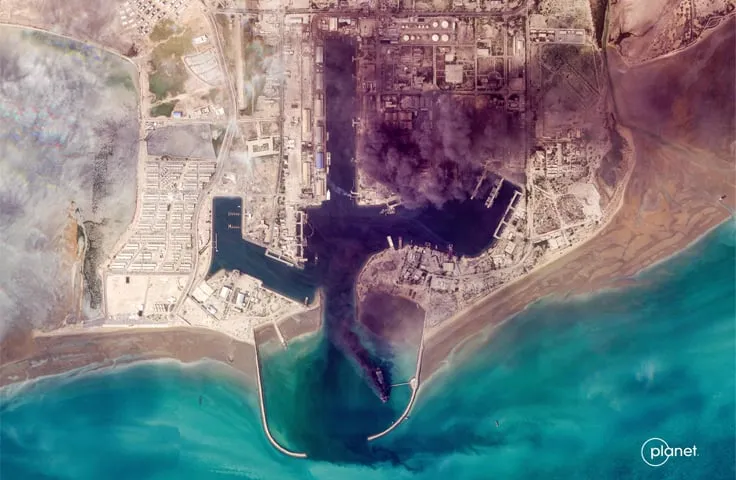
The global economy is navigating one of its most turbulent weeks in recent memory as March 2026 begins. A sudden and dramatic escalation of conflict in the Middle East has triggered an energy supply crisis of historic proportions, while manufacturing-sector data confirms that tariff-driven cost pressures are intensifying at their fastest pace in nearly four years. Against this charged backdrop, the world’s leading financial institutions are offering a picture of cautious but resilient growth — a paradox that market participants are struggling to price in real time.
What distinguishes this moment from prior geopolitical crises is the convergence of risk vectors. The energy shock, the cost-of-goods shock, the monetary policy uncertainty, and the trade fragmentation story are all playing out simultaneously, creating compounding effects that are proving difficult for policymakers in Washington, Brussels, Beijing, and Tokyo to manage independently.
Build the future you deserve. Get started with our top-tier Online courses: ACCA, HESI A2, ATI TEAS 7, HESI EXIT, NCLEX-RN, NCLEX-PN, and Financial Literacy. Let Serrari Ed guide your path to success. Enroll today.
The Strait of Hormuz Crisis: A Shock to the Global Energy System
The single most consequential development rattling global markets is the closure of the Strait of Hormuz. Following a campaign of U.S.-Israeli airstrikes on Iranian military infrastructure, Iran’s Islamic Revolutionary Guard Corps (IRGC) declared the Strait closed and threatened to fire on any vessel attempting passage. The Strait of Hormuz — a narrow but strategically vital chokepoint through which approximately one-fifth of the world’s total oil supply transits daily — has effectively been paralysed, with tanker traffic estimated to have dropped by as much as 70% almost overnight.
The market response was immediate and savage. West Texas Intermediate (WTI) crude surged 8.4% to $72.74 per barrel, while Brent crude jumped 9% to $79.45. Adding further fuel to the fire, Qatar — operator of the world’s largest liquefied natural gas (LNG) export complex — suspended LNG production following a drone attack on its facilities, sending European natural gas prices soaring more than 50% in a single session. The aviation sector has not been spared either, with widespread flight cancellations and diversions around the conflict zone projected to cost the global industry over $1 billion.
The broader consequences of a prolonged Strait of Hormuz closure would be severe. Energy-importing economies in Europe and East Asia — which rely heavily on Gulf crude — face the prospect of sharply higher energy costs, a rekindling of inflation that policymakers had only recently brought under control, and potential disruptions to industrial production if fuel supply chains cannot be rerouted via alternative maritime corridors such as the Cape of Good Hope. The logistical cost and time penalties of such rerouting are substantial, adding weeks to voyages and hundreds of millions of dollars to freight costs.
Gold — traditionally the refuge of last resort in periods of extreme geopolitical stress — has surged in response. Spot gold briefly touched $5,408 per troy ounce before settling around $5,376, its highest sustained level in over a month. The U.S. dollar simultaneously strengthened, with the Bloomberg Dollar Index rising as much as 0.7% to a high not seen since early February 2026, as investors scrambled for safe-haven assets.
WTI Crude: +8.4% to $72.74/barrel
Brent Crude: +9.0% to $79.45/barrel
European Gas Prices: +50%+ surge (single session)
Gold Spot Price: ~$5,376/oz (intraday high: $5,408)
Strait of Hormuz Tanker Traffic: ~70% decline
Tariffs Drive the Biggest Manufacturing Cost Jump Since 2022
Well before the Middle East crisis erupted, a separate and equally concerning economic story was unfolding in the manufacturing sector. The ISM Manufacturing Prices Paid index — a closely watched barometer of input cost pressures across U.S. industry — exploded to 70.5 in February 2026, a staggering 11.5-point jump from January’s reading of 59.0. This represents the highest reading since June 2022, when the post-pandemic inflation surge was at its most acute.
Economists widely attribute the surge to the cumulative impact of sweeping U.S. tariff policy, which has significantly raised the price of imported raw materials, intermediate goods, and components across a vast range of industries. The Q1 2026 Macroeconomic Global Report notes that while the overall manufacturing PMI held at a solid 52.4 — above the 51.8 consensus estimate, signalling ongoing expansion — the cost dynamics underneath the headline number paint a more troubling picture. Firms are absorbing higher costs at a rate they have not encountered since the height of the post-COVID inflationary wave.
The concern is that these cost pressures will not stay contained within the manufacturing sector. As businesses face squeezed margins, they have two choices: absorb the costs at the expense of profitability, or pass them on to consumers. Early indicators suggest that a growing number of companies are beginning to do the latter, raising the spectre of a second wave of goods-driven inflation precisely as central banks are hoping to ease monetary conditions.
Supply chain stress indicators are also worsening. The New York Federal Reserve’s Global Supply Chain Pressure Index rose to 0.51 at the turn of the year, reversing the easing trend seen through much of 2024 and 2025. The drivers are multiple: geopolitical frictions in the Middle East and East Asia, new tariff barriers disrupting established supplier networks, ongoing labour disputes in key logistics hubs, and the rising frequency and intensity of climate disruptions affecting critical transport infrastructure.
ISM Prices Paid (Feb 2026): 70.5 (highest since June 2022)
Manufacturing PMI: 52.4 (above 51.8 estimate)
NY Fed Supply Chain Pressure Index: 0.51 (rising)
One decision can change your entire career. Take that step with our Online courses in ACCA, HESI A2, ATI TEAS 7, HESI EXIT, NCLEX-RN, NCLEX-PN, and Financial Literacy. Join Serrari Ed and start building your brighter future today.
Global Growth: Resilient, but the Forecast Gap Is Narrowing
Despite the turbulence, the macro growth picture remains one of cautious optimism. Goldman Sachs Research forecasts global real GDP growth of 2.9% in 2026, above the consensus estimate of 2.7%, with the United States projected to expand 2.8% — also well above the 2.2% consensus. The bank’s distinctive bullishness on the U.S. reflects confidence in labour market resilience, strong consumer spending, and the productivity-enhancing effects of AI adoption across services industries.
Goldman is equally bullish on China, projecting 4.8% real GDP growth against a consensus of 4.6%, and expects China’s current account surplus to widen to 4.1% of GDP in 2026 from 3.5% in 2025. The surplus expansion reflects a continued shift in China’s economy toward exports, as domestic consumption remains structurally constrained by the property sector downturn and cautious household spending.
The Eurozone has offered the most positive surprise in the growth story. The Eurozone’s manufacturing PMI reached a 44-month high of 50.8, with Germany — Europe’s industrial powerhouse — crossing back above the 50-point expansion threshold (reaching 50.9) for the first time since June 2022. The German recovery is being driven by a landmark fiscal expansion, increased defence spending following NATO commitments, and the gradual rebuilding of industrial competitiveness in the aftermath of the energy shock triggered by Russia’s invasion of Ukraine.
However, the World Trade Organisation has struck a note of caution. The WTO has sharply revised down its 2026 forecast for global merchandise trade volume growth to just 0.5%, from an earlier projection of 2.5%. The dramatic downgrade reflects the cumulative drag of elevated tariff barriers, policy-induced uncertainty discouraging long-term investment commitments, and the inventory destocking cycle that is expected to reduce frontloaded purchasing by businesses that had stockpiled goods ahead of anticipated tariff hikes.
Goldman Sachs Global GDP Forecast: 2.9%
U.S. GDP Forecast (Goldman): 2.8% (vs. 2.2% consensus)
China GDP Forecast (Goldman): 4.8%
Eurozone Manufacturing PMI: 50.8 (44-month high)
WTO Trade Volume Growth (2026): 0.5% (revised from 2.5%)
The Federal Reserve: Waiting on Rate Cuts
On the monetary policy front, the U.S. Federal Reserve is in a carefully calibrated waiting mode. The January 2026 Consumer Price Index came in at 2.4% year-on-year — close to, but still above, the Fed’s 2% target. Moody’s Analytics notes that the figure would have been a more concerning 2.7% absent statistical distortions introduced by the government shutdown, suggesting underlying inflationary pressure remains above the headline reading.
Futures markets now broadly price no interest rate cuts until June 2026 at the earliest, with the bulk of anticipated easing expected in the second half of the year. This timeline could dovetail with the anticipated start of Kevin Warsh’s tenure as the new Federal Reserve Chair in May. Warsh is viewed as a more hawkish figure than outgoing leadership, and financial markets will be closely scrutinising his early communications for signals on the pace and magnitude of any rate reduction cycle.
The energy price surge from the Middle East conflict, if sustained, adds a fresh complication to the Fed’s calculus. A significant and durable rise in energy prices would re-stoke inflation, potentially pushing the Fed’s preferred inflation gauge — the Personal Consumption Expenditure (PCE) deflator — back above 3%, and forcing policymakers to reconsider the timeline for easing. Markets are increasingly nervous that the window for rate cuts in 2026 may be narrowing even before it has fully opened.
What Comes Next: Key Risks and Watching Points
Looking ahead, economists and strategists have identified three principal risk scenarios that could materially alter the global economic trajectory. First, a widening of the Middle East conflict into a full-scale regional war involving multiple state actors would trigger a severe and sustained energy supply shock, pushing global recession probabilities sharply higher. Second, a re-escalation of U.S.-China trade tensions — fuelled by the upcoming U.S. trade policy review — could further suppress global trade volumes and investment flows, particularly in technology-sector supply chains. Third, any surprise deterioration in the U.S. labour market — where job openings have been gradually declining through late 2025 — could undercut consumer spending and trigger a sharper-than-expected U.S. growth slowdown.
On the upside, the rapid deployment of AI-driven productivity tools across services industries continues to be the most powerful structural tailwind supporting growth above consensus. Central bank rate cut cycles, when they do materialise in the second half of 2026, should provide additional support to interest-rate-sensitive sectors, particularly residential construction and capital investment. The combination of AI-driven productivity gains and eventual monetary easing represents the scenario that equity markets are, for now, still broadly pricing in as their base case.
Ready to take your career to the next level? Join our Online courses: ACCA, HESI A2, ATI TEAS 7 , HESI EXIT , NCLEX – RN and NCLEX – PN, Financial Literacy!🌟 Dive into a world of opportunities and empower yourself for success. Explore more at Serrari Ed and start your exciting journey today! ✨
Track GDP, Inflation and Central Bank rates for top African markets with Serrari’s comparator tool.
See today’s Treasury bonds and Money market funds movement across financial service providers in Kenya, using Serrari’s comparator tools.
photo source: Google
By: Montel Kamau
Serrari Financial Analyst
4th March, 2026