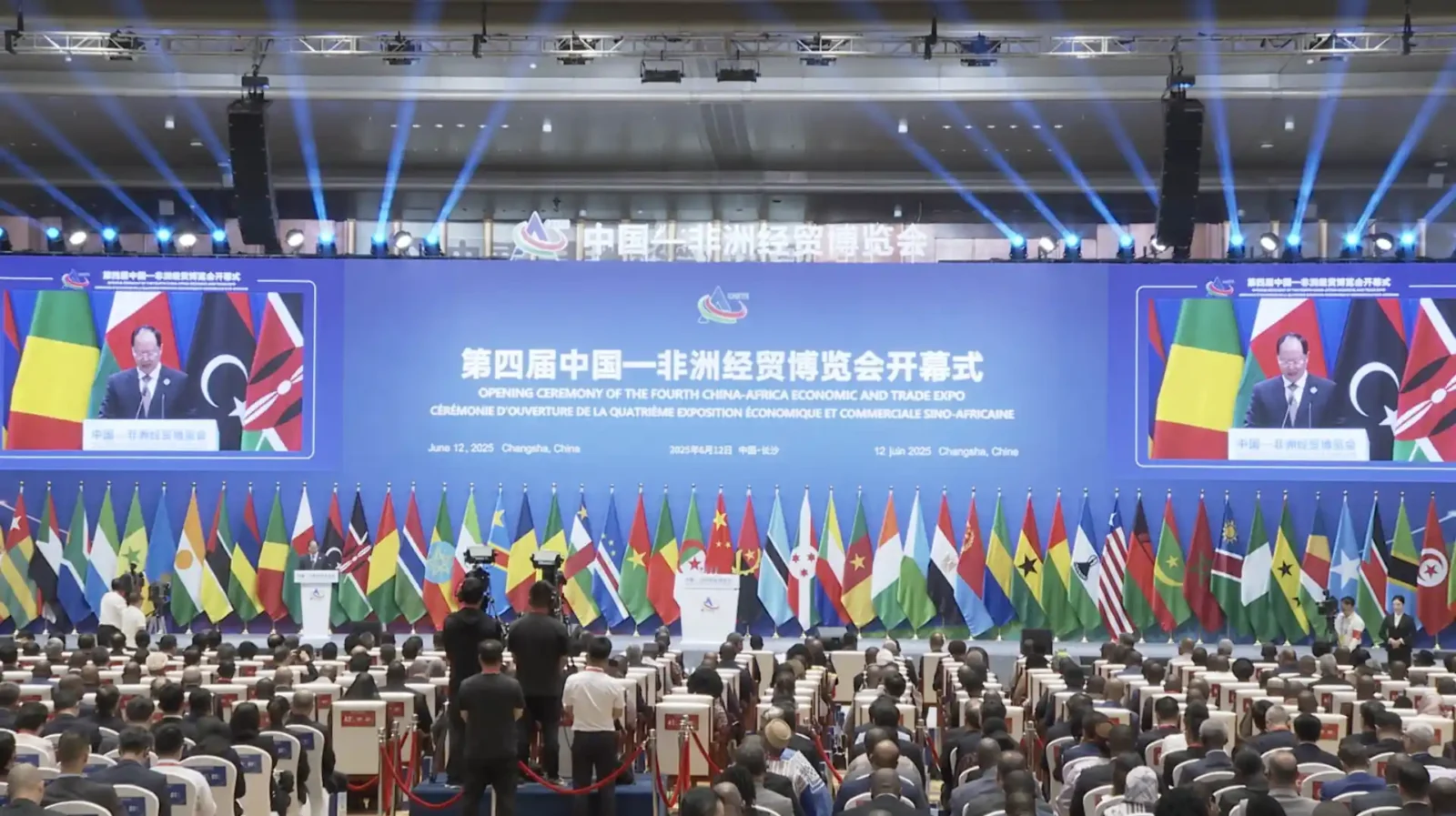
The fourth China-Africa Economic and Trade Expo (CAETE), which concluded on Sunday, June 15, 2025, in Changsha, has set new benchmarks for collaboration, announcing a remarkable 176 signed projects valued at $11.4 billion. This represents a significant 45.8% increase in the number of projects and a 10.6% rise in total value compared to the previous edition, underscoring the deepening economic and trade ties between China and the African continent.
The four-day event, co-hosted by the Hunan Provincial People’s Government and China’s Ministry of Commerce, served as a vibrant platform for fostering mutual understanding, facilitating trade, and exploring investment opportunities. The sheer scale of participation was unprecedented, attracting representatives from 53 African countries, 11 international organizations, 27 Chinese provincial regions, and over 4,700 enterprises, chambers of commerce, and financial institutions. The main exhibition hall alone saw visitor numbers surge past 200,000 by Sunday noon, effectively doubling the attendance figures of the previous expo.
Beyond the signed deals, on-site transactions and intended sales at the main venue reached approximately 2.5 billion yuan (equivalent to $348 million). The Gaoqiao market, a permanent display and trading center for African products, hosted over 40 concurrent events and inspection tours. A notable highlight was the official unveiling of permanent country pavilions for Zambia and Namibia, symbolizing a long-term commitment to enhancing market access for African goods in China.
In a parallel exhibition, an engineering machinery remanufacturing show in Xiangtan drew over 150 exhibitors, 2,400 purchasers, and more than 12,000 visitors, generating intended orders exceeding 200 million yuan. This specialized event underscored the growing collaboration in high-value manufacturing and industrial upgrading, a key area of focus in China-Africa cooperation.
The expo’s success was further evident in the diverse representation of participants, with 26 African nations and 23 Chinese provincial regions establishing dedicated pavilions. Nearly 2,100 enterprises actively participated, including 764 exhibitors from 43 African countries, engaging with approximately 12,000 domestic and international buyers.
Unprecedented Project Matchmaking and Trade Facilitation
One of the most impressive outcomes of the fourth CAETE was the extraordinary success in project matchmaking. A staggering 293 project opportunities, valued at $43.16 billion, were announced. This represents a monumental 208% increase in quantity and a massive 410% surge in value compared to the previous expo. Ten African nations, including Namibia, proactively presented 200 project cooperation demands, significantly exceeding past records and demonstrating Africa’s strong desire for partnerships that align with its development priorities.
The expo facilitated significant trade connections designed to boost African exports to the vast Chinese market. An innovative online shopping event for African products successfully promoted over 200 premium African agricultural and food items through livestreams and collaborations with supermarkets. This initiative aims to streamline market entry for African produce, addressing historical trade imbalances where China’s exports to Africa have typically outweighed its imports from the continent. Over the past decade, China has actively provided platforms such as the China International Import Expo and the Africa Good Things Online Shopping Festival to showcase African agricultural products.
Furthermore, six parallel events were held during the expo, complementing the main exhibition. Fourteen African countries, including Rwanda and Angola, hosted specialized trade exchanges and promotion events, providing tailored platforms for businesses to connect, negotiate, and forge partnerships.
The Evolution of China-Africa Economic and Trade Expo (CAETE)
The China-Africa Economic and Trade Expo is a crucial component of the broader Forum on China-Africa Cooperation (FOCAC) framework, which serves as the primary mechanism for collective dialogue and cooperation between China and African countries. Established in 2019, CAETE is held biennially in Changsha, Hunan Province, marking a follow-up action of the “Eight Major Initiatives” announced at previous FOCAC summits.
The expo’s objectives are multifaceted:
- Implement FOCAC Initiatives: Serve as a tangible platform for implementing economic and trade initiatives agreed upon under FOCAC, such as the Partnership Action for Industrial Chain Cooperation and agricultural modernization plans.
- Promote Trade and Investment: Facilitate bilateral and multilateral business cooperation, encouraging Chinese investment in Africa and boosting African exports to China.
- Showcase Products and Technologies: Exhibit high-quality specialty products from Africa (e.g., agri-products, handicrafts, consumer goods) and advanced Chinese technologies (e.g., smart mining, clean energy, agricultural machinery).
- Foster Industrial Cooperation: Advance production-trade integration, support the development of industrial parks, and promote synergy across industrial chains between China and Africa.
- Enhance People-to-People Exchange: Beyond commerce, the expo also serves as a platform for cultural exchange and fostering deeper understanding.
The growth from previous editions to the fourth CAETE is indicative of its increasing importance. The first three sessions (June 2019, September 2021, and June 2023) cumulatively saw the signing of 336 projects with a total investment of $53.32 billion, demonstrating a consistent upward trend in engagement and commitment. The latest expo’s record-breaking numbers solidify its position as a major window for China-Africa economic and trade relations.
Key Sectors of China-Africa Cooperation
China’s engagement with Africa spans a wide array of sectors, reflecting a comprehensive approach to partnership. The projects and discussions at CAETE highlight several key areas of focus:
Infrastructure Development: The Backbone of Growth
Infrastructure development has historically been a cornerstone of China-Africa cooperation. Over the last quarter-century, Chinese companies have helped African countries build or upgrade:
- More than 10,000 km of railways
- Nearly 100,000 km of highways
- 1,000 bridges
- 100 ports
- 66,000 km of power transmission and distribution lines
These projects, often linked to China’s Belt and Road Initiative (BRI), aim to enhance connectivity, reduce logistical costs, and unlock economic potential across the continent. The BRI, a global infrastructure development strategy launched in 2013, invests in over 150 countries and international organizations, connecting Asia, Europe, and Africa through overland and maritime routes. Approximately 50% of countries that have signed BRI cooperation agreements are in sub-Saharan Africa. The continued focus on projects like the engineering machinery remanufacturing exhibition at CAETE underscores the ongoing commitment to supporting Africa’s infrastructure needs and industrial capacity building.
Renewable Energy and Green Infrastructure
As Africa prioritizes sustainable development and addresses energy access challenges, collaboration with China in renewable energy is gaining momentum. China is increasingly investing in hydropower, wind power, and solar energy projects across the continent. This aligns with global efforts to transition to a low-carbon economy and helps African nations harness their vast renewable energy potential. The focus on clean energy and environmental protection at the expo reflects this growing area of cooperation, contributing to Africa’s energy security and climate change response efforts.
Agricultural Modernization and Food Security
Agriculture is vital for Africa’s economic development and food security. China has actively supported Africa’s agricultural modernization through various initiatives:
- Setting up 24 agricultural technology demonstration centers across Africa.
- Popularizing over 300 advanced agricultural technologies, increasing local crop yields by an average of 30% to 60%, benefiting more than 1 million farmers.
- The “China Plan for Africa’s Agricultural Modernization,” issued after the China-Africa Leaders’ Dialogue in August 2024, further emphasizes this commitment.
The online shopping event at CAETE, promoting premium African agricultural and food items, is a direct effort to boost market access for African farmers and agro-processors in China. This initiative helps African countries diversify their exports beyond raw commodities and move towards value-added products, addressing the long-standing trade imbalance where Africa primarily exports natural resources to China in exchange for manufactured goods.
Industrialization and Manufacturing Capacity
Beyond large-scale infrastructure, China is increasingly supporting Africa’s industrialization drive. The expo’s emphasis on industrial chain cooperation and the establishment of “pilot zones for in-depth China-Africa economic and trade cooperation” (like the one in Hunan) are geared towards developing manufacturing capabilities in Africa. This includes fostering local production, promoting technology transfer, and integrating African enterprises into global value chains. The ultimate goal is to shift from a primary commodity-based trade relationship to one that supports diversified industrial growth in Africa.
Digital Economy Advancements
The digital economy is another rapidly expanding area of cooperation. This includes the development of telecommunications infrastructure, e-commerce platforms, and digital skills training. As Africa’s digital transformation accelerates, Chinese companies are playing a significant role in providing technology solutions and investments in this sector.
The Role of Hunan Province: A Gateway to China-Africa Trade
Hunan Province has emerged as a critical hub for China-Africa economic and trade cooperation. Its selection as the permanent host of the CAETE underscores its strategic importance. In January 2024, China’s State Council approved a general plan to establish a “pilot zone for in-depth China-Africa economic and trade cooperation” in Hunan, further solidifying the province’s role as a new frontier for bilateral trade.
Hunan’s initiatives include:
- Establishing a consultation mechanism with the Ministry of Commerce.
- Forming cooperative partnerships between 14 cities and prefectures in Hunan and 28 African countries.
- Creating a dedicated cooperation service fund.
- Pioneering China’s first pre-assessment system for African food exports, streamlining their entry into the Chinese market.
- Launching a pilot program to explore new forms of barter trade with Africa.
- Implementing over 40 industrial projects across 16 African countries.
These efforts position Hunan as a key facilitator, actively working to bridge the trade and investment gap between China and Africa and setting a model for sub-national engagement.
Addressing the Trade Imbalance and Future Outlook
While China has been Africa’s largest trading partner for 15 consecutive years, with bilateral trade reaching $295.56 billion in 2024, a structural imbalance persists. In 2024, Chinese exports to Africa amounted to $178.76 billion, while imports from Africa to China were $116.79 billion, resulting in a trade deficit for Africa of $61.93 billion. African countries primarily export raw materials like crude oil, copper, cobalt, iron ore, and agricultural products such as sesame, peanuts, and citrus fruits. Chinese exports to Africa, conversely, are mainly finished products like textiles, machinery, and electronics.
To address this, China has taken steps to boost African exports:
- Removing tariffs on 98% of products imported from 21 African countries, including Ethiopia, Guinea, Mozambique, Rwanda, and Togo.
- Applying zero tariffs on all imports from the least developed countries (LDCs) with which it has diplomatic relations (including 33 African nations) since December 1, 2024.
- Chinese President Xi Jinping announced at the 8th FOCAC Ministerial Conference in Dakar (November 2021) a goal to raise China’s total imports from Africa to $100 billion per year starting in 2022 and to $300 billion annually by 2035.
Despite these efforts, challenges remain, including non-tariff barriers, complex customs procedures, and the need for African countries to enhance their production capacity and diversify into higher-value processed goods. The continued success of initiatives like the CAETE’s online shopping event and permanent country pavilions are crucial in overcoming these hurdles.
The future of China-Africa economic relations will likely see a continued evolution, with a growing emphasis on “small but beautiful” FDI projects that target innovation and strategic impact, diversifying Chinese stakeholders beyond traditional state-owned enterprises. There is also a trend towards new contracting models, moving from traditional Engineering, Procurement, and Construction (EPC) contracts towards Public-Private Partnerships (PPP) and Build-Operate-Transfer (BOT) models, allowing African governments to self-finance more projects. This shift indicates a maturing partnership, moving towards more equitable and sustainable engagement.
The China-Africa Economic and Trade Expo stands as a testament to a dynamic and evolving partnership. By fostering direct connections, facilitating crucial deals, and showcasing opportunities across diverse sectors, CAETE plays a vital role in translating high-level policy commitments into tangible economic outcomes. As both China and Africa navigate a complex global landscape, these expos are instrumental in strengthening a relationship poised to significantly influence the future of global trade and development.
Ready to take your career to the next level? Join our dynamic courses: ACCA, HESI A2, ATI TEAS 7 , HESI EXIT , NCLEX – RN and NCLEX – PN, Financial Literacy!🌟 Dive into a world of opportunities and empower yourself for success. Explore more at Serrari Ed and start your exciting journey today! ✨
Photo Source: Google
By: Montel Kamau
Serrari Financial Analyst
16th June, 2025