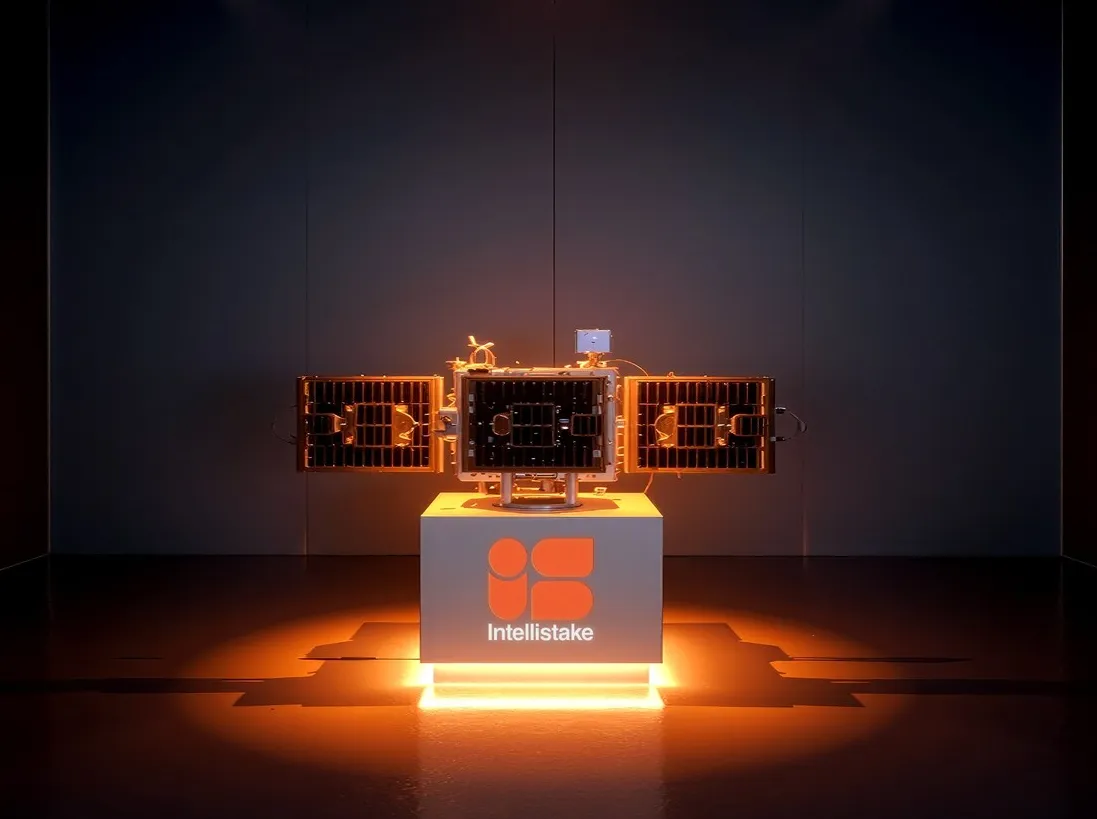
The intersection of decentralized ledger technology (DLT), artificial intelligence (AI), and aerospace is no longer confined to science fiction. Intellistake Technologies Corp. (CSE: ISTK), a developer specializing in decentralized AI and blockchain infrastructure, has announced a landmark partnership with Orbit AI, a Singapore-based aerospace company, to create the Orbital Cloud. This ambitious project seeks to establish the world’s first AI-enabled space infrastructure, moving critical data processing, computation, and verification functions entirely off-Earth and into Low Earth Orbit (LEO).
This move represents a radical departure from traditional satellite infrastructure, which relies heavily on ground stations and centralized data centers. The Orbital Cloud is designed to be a self-sustaining satellite network combining NVIDIA-powered AI computing (DeStarAI), global connectivity (DeStarlink), and Ethereum-based blockchain verification (Intellistake). By doing so, the partners aim to create a framework where data can be generated, processed, and verified directly in orbit without dependence on terrestrial networks, addressing growing demands for data sovereignty, security, and ultra-low latency.
Build the future you deserve. Get started with our top-tier Online courses: ACCA, HESI A2, ATI TEAS 7, HESI EXIT, NCLEX-RN, NCLEX-PN, and Financial Literacy. Let Serrari Ed guide your path to success. Enroll today.
The Strategic Role of Decentralized Verification in Orbit
Intellistake’s primary contribution to the Orbital Cloud is the deployment of validator and node infrastructure, establishing the essential blockchain verification layer within Orbit AI’s Coordination Layer. This blockchain backbone, underpinned by Ethereum-based technology, is critical for several reasons unique to the space environment.
Firstly, it ensures data authenticity and integrity. In an environment where communication signals can be intercepted or manipulated, having a trustless and tamper-proof ledger is paramount. The blockchain layer will enable satellites to authenticate data, verify sensor readings, and record verified transactions independently. This is essential for high-stakes applications like monitoring climate change data, autonomous navigation, and military intelligence, where the chain of custody for information must be absolute.
Secondly, the decentralized layer allows for trustless coordination of AI workloads. As AI capabilities expand beyond Earth, autonomous decision-making among satellites—such as managing a mesh network, performing orbital maneuvers, or distributing computing tasks—requires a robust, censorship-resistant, and secure system. The blockchain allows for satellites to coordinate these processes autonomously, relying on cryptographic proof rather than centralized command, making the network inherently more secure and resilient against single points of failure.
Jason Dussault, CEO of Intellistake Technologies Corp., emphasized the pioneering nature of the project, stating, “The Orbital Cloud depends on blockchain infrastructure that can function autonomously and securely in orbit. Intellistake’s validator and verification technology completes the trust layer of our architecture, ensuring that data and AI processing in space remain transparent and independently verifiable.”
Market Dynamics: The Lure of Space Infrastructure
The investment into space-based compute and data infrastructure is driven by staggering market forecasts. The global orbital infrastructure market is already a multi-billion dollar sector, projected by The Business Research Company to expand from USD $13.5 billion in 2024 to $21.3 billion by 2029. The broader satellite market is even more expansive, forecast to reach USD $615.7 billion by 2032.
However, the most compelling financial target for the Intellistake and Orbit AI partnership is the specialized market of in-orbit data centers. This nascent segment, central to Orbit AI’s DeStarAI vision, is projected to surge from USD $1.77 billion in 2029 to a potential $39.1 billion by 2035. This exponential growth reflects the anticipated demand from industries requiring low-latency data processing—including real-time logistics, remote sensing, and even advanced financial trading—that cannot be met by conventional terrestrial cloud providers due to the inherent time delay in sending and receiving data signals from Earth.
Furthermore, the satellite data-services market, which involves processing and delivering the information gathered by these orbiting assets, is forecast to grow dramatically from USD $12.16 billion in 2024 to $55.24 billion by 2034. By establishing the Coordination Layer (the blockchain and AI compute platform), Intellistake and Orbit AI are positioning themselves to capture a significant share of this high-value data processing and verification market.
One decision can change your entire career. Take that step with our Online courses in ACCA, HESI A2, ATI TEAS 7, HESI EXIT, NCLEX-RN, NCLEX-PN, and Financial Literacy. Join Serrari Ed and start building your brighter future today.
Technical Architecture: The Orbital Cloud’s Three Pillars
The Orbital Cloud is structured around three interconnected technological pillars, each providing a unique function that collectively creates the world’s first intelligent satellite network:
1. DeStarAI (AI Computing)
This component focuses on high-performance, radiation-hardened computing capabilities necessary for running complex AI models in the harsh environment of LEO. By integrating NVIDIA-powered hardware, the system enables “edge computing” in space. This means that raw data collected by the satellite’s sensors (e.g., thermal imaging, spectral analysis) can be immediately processed, analyzed, and condensed into actionable intelligence before being transmitted back to Earth. This process dramatically reduces data latency and the burden on ground-based infrastructure, leading to significant energy efficiency gains as only the synthesized results, not the massive raw datasets, need to be downlink.
2. DeStarlink (Global Connectivity)
This mesh network of low-Earth orbit satellites handles decentralized communication. Unlike traditional satellite communications, which rely on large, centrally controlled terrestrial gateway stations, DeStarlink aims to create a more resilient network. Decentralized design ensures the network is not dependent on single jurisdictions or centralized systems, enhancing the service’s resilience and digital sovereignty. This capability is crucial for providing global connectivity that is censorship-resistant and accessible even in regions with restricted access to traditional internet infrastructure.
3. Intellistake (Blockchain Verification)
As the verification layer, Intellistake ensures trustless and tamper-proof operation. The use of Ethereum-based blockchain verification means that every critical AI decision, data transfer, and transactional event within the Orbital Cloud is logged to a decentralized ledger. This design prevents any single entity—whether terrestrial or orbital—from unilaterally altering the network’s operational history or the integrity of the data processed by the AI systems. This feature is particularly attractive for enterprise and government clients who prioritize transparency and integrity in their space-based data infrastructure.
Gus Liu, Co-Founder of Orbit AI, stated that “Intellistake’s validator and verification technology completes the trust layer of our architecture, ensuring that data and AI processing in space remain transparent and independently verifiable.”
Execution Timeline and Financial Commitment
The partnership is not merely a conceptual agreement; it includes a defined roadmap and financial commitments designed to rapidly accelerate the deployment of the Orbital Cloud.
Orbit AI has scheduled two key satellite launches to demonstrate the foundational technology:
- December 2025: The launch of Genesis-1, Orbit AI’s first satellite. This initial mission will feature onboard Ethereum wallet and blockchain-node capabilities, marking the first tangible step toward establishing decentralized infrastructure in LEO.
- March 2026 (Expected): The deployment of Genesis-2, a small network of satellites integrating the full suite of AI computing and blockchain verification technologies.
The full constellation rollout is ambitiously anticipated between 2028 and 2030. This timeline coincides with a period of massive expansion in the overall satellite industry, where over 500 orbital rocket launches have occurred in the past two years, demonstrating the increasing accessibility of space for private ventures.
In connection with the Collaboration Framework Agreement, Intellistake has committed an initial investment of US$500,000 in Orbit AI in return for a 1% equity interest. Furthermore, Intellistake has secured an option to invest an additional US$1 million at a valuation tied to Orbit AI’s next financing round, with potential to increase this commitment up to US$10 million contingent on final terms and completion prior to the launch of Genesis-2. This significant financial backing, combined with Intellistake’s pending acquisition of Singularity Venture Hub, positions the company with the necessary technical leadership and industry resources to deliver the blockchain foundation for this large-scale infrastructure project.
Regulatory and Ethical Implications of Orbital AI
The move to place decentralized AI and data centers in orbit introduces complex regulatory and ethical questions that extend beyond terrestrial concerns. Current international space law, including the Outer Space Treaty of 1967, governs national activities in space but offers limited precedent for decentralized, non-sovereign digital infrastructure. The implementation of a globally accessible, censorship-resistant network like the Orbital Cloud will likely trigger new discussions regarding orbital debris mitigation, frequency allocation, and the jurisdictional control over data that never physically touches a specific country’s soil.
The concept of data sovereignty is particularly significant. By operating outside the direct legislative reach of any single government, the Orbital Cloud offers unprecedented security against data seizure or censorship, a key selling point for organizations operating in highly sensitive sectors. However, this same feature may lead to regulatory challenges from nations seeking to impose compliance with local data privacy laws, such as the European Union’s General Data Protection Regulation (GDPR), on data that is processed globally and anonymously in space.
Moreover, the ethical governance of AI systems running autonomously in orbit is a critical consideration. The transparency and auditability provided by Intellistake’s blockchain verification layer will be essential for satisfying future international standards regarding the verifiability and integrity of space-based AI decisions. As global frameworks for AI governance evolve, like Canada’s proposed Artificial Intelligence and Data Act, the ability to prove that orbital AI systems are operating within defined parameters will become a non-negotiable requirement.
The partnership between Intellistake and Orbit AI represents a powerful merger of aerospace engineering and decentralized finance technology. It is a bold, capital-intensive venture that is not just aiming to build a better satellite network, but to redefine the physical location of the cloud and the trust model upon which global data and AI systems operate for the coming decades. The market has taken notice, anticipating that this groundbreaking architecture could fundamentally change how digital assets and AI applications are secured, computed, and experienced worldwide.
Catch Up With Our Other Headlines
4th December, 2025
South Africa’s Economic Growth Moderates to 0.5% in Q3 2025 as Mining Sector Propels Recovery
Kenya’s November 2025 Inflation Eases to 4.5% as Transport Costs Surge Despite Stable Fuel Prices
Ready to take your career to the next level? Join our Online courses: ACCA, HESI A2, ATI TEAS 7 , HESI EXIT , NCLEX – RN and NCLEX – PN, Financial Literacy!🌟 Dive into a world of opportunities and empower yourself for success. Explore more at Serrari Ed and start your exciting journey today! ✨
Track GDP, Inflation and Central Bank rates for top African markets with Serrari’s comparator tool.
See today’s Treasury bonds and Money market funds movement across financial service providers in Kenya, using Serrari’s comparator tools.
Photo source: Google
By: Montel Kamau
Serrari Financial Analyst
4th December, 2025