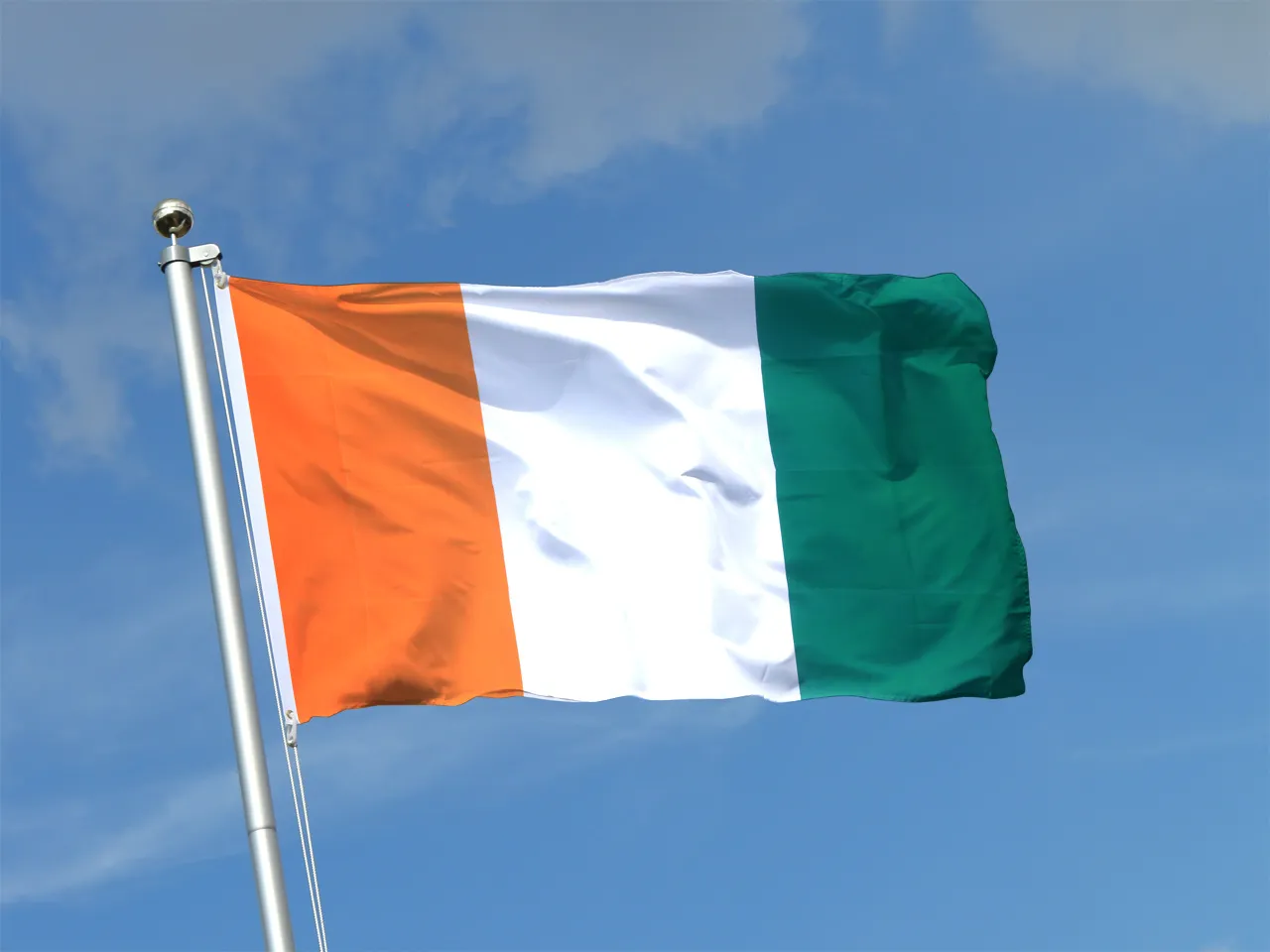
Côte d’Ivoire has once again confirmed its status as Africa’s most reliable frontier market borrower, raising $1.3 billion in a 15-year Eurobond that was oversubscribed nearly five times and priced at the country’s lowest effective financing cost in five years. Executed on 18 February 2026, the transaction drew an order book of $6.3 billion from approximately 270 institutional investors spanning Europe, Asia, and the Middle East — a vote of confidence that carries weight well beyond the West African nation’s own borders. For a region that spent the better part of two years locked out of international capital markets, the transaction is a bellwether.
Markets move fast; don’t get left behind. We’ve paired the Serrari Group Market Index with a curated Marketplace and a comprehensive Financial Literacy Course to ensure you have the data—and the skills—to act on it.
The Deal in Detail
The bond carries a final maturity of 15 years and was priced at a yield of 7.125% in dollars. After a hedging operation converting the exposure to euros, the effective financing cost came to a strikingly competitive 5.39% in euros, the lowest rate Abidjan has achieved in half a decade. The tightening during the placement day was dramatic: yields compressed by 63 basis points intraday as orders piled in, a signal of deep institutional conviction rather than marginal interest.
Even more telling was the negative new issue premium of 25 basis points. In bond market parlance, a negative new issue premium means investors were willing to accept a yield below what Ivorian bonds already in secondary circulation were trading at — a rare concession from a market that typically demands a premium to take on new supply. In practice, it means global fund managers were competing to get into the Ivorian credit story, not merely tolerating it. The proceeds will be used to finance the country’s 2026 budget and support debt management through longer maturities, consistent with Abidjan’s multi-year strategy to smooth out its debt repayment schedule and reduce near-term refinancing risks.
Côte d’Ivoire: Sub-Saharan Africa’s Most Prolific Eurobond Issuer
To understand the 2026 transaction fully, it helps to trace the arc of Côte d’Ivoire’s relationship with international debt markets. The country was among the first on the continent to tap Eurobonds regularly, and when the frontier market window slammed shut in 2022 and 2023 — crushed by high global interest rates and widening spreads that rendered dollar-denominated borrowing prohibitively expensive for most African sovereigns — Côte d’Ivoire was also the first to force it open again.
In January 2024, Abidjan executed a landmark dual-tranche issuance worth $2.6 billion — a nine-year sustainable bond and a conventional 13-year note — becoming the first sub-Saharan African country to return to international capital markets after the two-year hiatus. That reopening catalysed a broader revival: Benin followed with a $750 million debut dollar bond, and Kenya issued a $1.5 billion seven-year Eurobond shortly after. Together, the three countries raised approximately $4.9 billion in Q1 2024, all heavily oversubscribed, demonstrating that investor appetite for African sovereign risk had survived the global rate cycle — albeit at higher cost than the pre-2022 era.
In 2025, Côte d’Ivoire continued to diversify its funding toolkit. It issued the first bond denominated in CFA Francs on international markets, a significant milestone in the country’s financial diversification strategy. It also completed a debt-for-education swap, secured a sustainability-linked loan, and issued an ESG-certified Japanese samurai bond in July 2025 — moves that signal a government not merely managing debt but actively building a diversified investor base that spans geographies and instrument types. The government is also reported to be arranging its debut Asian syndicated loan, further widening its access to global funding pools.
The cumulative effect is that Côte d’Ivoire enters 2026 as arguably the most financially sophisticated sovereign borrower in francophone Africa, with a track record, institutional infrastructure, and macroeconomic credibility that clearly distinguishes it from regional peers facing debt distress.
The Macro Story Behind the Investor Confidence
Investors do not over-subscribe a sovereign bond five times on a whim. Behind Côte d’Ivoire’s market access lies a decade of macroeconomic outperformance that has genuinely differentiated it within a challenging regional context. The IMF notes that over the past decade, the country’s GDP growth has been about 3 percentage points higher and inflation almost 4.4 percentage points lower than the respective sub-Saharan African averages. That combination — high growth, low inflation — is the recipe for sustained investor confidence.
Real GDP growth reached 6.5% in 2025 and is projected at 6.7% in 2026, well above the IMF’s sub-Saharan Africa regional average of around 4.2% for the same year. In the West African Economic and Monetary Union (WAEMU), Côte d’Ivoire accounts for more than 39% of regional GDP, an economic weight that gives it systemic importance in francophone West Africa. The budget deficit has narrowed from 4% of GDP in 2024 to 3% in 2025, meeting the WAEMU regional fiscal ceiling — a target that had been suspended during the pandemic but has now been restored.
This fiscal consolidation has been underpinned by a $3.5 billion IMF programme combining an Extended Credit Facility, an Extended Fund Facility, and a Resilience and Sustainability Facility, approved in May 2023 and running through late 2026. The programme has delivered results: the IMF has completed multiple positive reviews, and the government has met its quantitative targets and structural benchmarks. The medium-term revenue mobilisation strategy, adopted in May 2024, targets a gain of 0.5 percentage points of GDP in tax revenue each year through 2028, targeting an eventual ratio of around 20% — up from the current 13% of GDP, one of the lowest in the region.
On the credit rating front, the progress has been tangible. In March 2024, Moody’s upgraded Côte d’Ivoire from Ba3 to Ba2, two notches into sub-investment grade territory and on par with Brazil and South Africa. The agency cited the country’s economic resilience and rising private sector investment. S&P Global upgraded the sovereign to BB with a positive outlook in late 2024. As of mid-2025, Fitch reaffirmed the rating at BB-, while S&P and Moody’s maintained their ratings at BB and Ba2 respectively — placing Côte d’Ivoire among the best credit ratings in sub-Saharan Africa, second only to Botswana and on par with South Africa.
Context is everything. While you follow today’s updates, use the Serrari Market Index and Marketplace to spot emerging shifts. Need to sharpen your edge? Our Financial Literacy Course turns these insights into a professional-grade strategy.
Cocoa, Gold, and an Economy Diversifying Beyond Its Commodity Base
Any serious analysis of Côte d’Ivoire’s creditworthiness must grapple with the outsized role of cocoa in the national economy. As the world’s largest producer and exporter of cocoa beans, with the commodity contributing roughly 14–20% of GDP and approximately 45% of export earnings, the country’s macroeconomic fortunes remain deeply intertwined with bean prices and growing conditions. More than 6 million Ivoirians make their livelihoods from the sector.
Cocoa prices surged in 2024 to historic highs, providing a significant tailwind to export earnings, terms of trade, and fiscal revenues — and supporting the current account deficit’s narrowing to 4.2% of GDP in 2024, down sharply from 8.2% the prior year. However, 2025 has seen more difficult growing conditions: the USDA projects that Ivorian cocoa bean production will improve only modestly toward 1.8 million metric tons in the 2024/25 marketing year, with disease pressure and Harmattan winds constraining recovery after the prior season’s 24% production decline.
The structural response to this vulnerability is already underway. The government has set a target to process at least 50% of national cocoa production domestically by 2026, a push that could retain significantly more value within the country’s borders. Processing approximately 44% of the 2024 harvest locally, and with installed capacity now exceeding 1.06 million tonnes, the country is within reach of that target. Each tonne processed within Côte d’Ivoire adds an estimated $900–1,200 in value compared to exporting it as raw bean — a meaningful economic lever.
Simultaneously, the export profile is diversifying: gold is now Côte d’Ivoire’s single largest export by value at $4.28 billion in 2023, ahead of cocoa beans at $3.68 billion, with rubber ($2.43 billion) and refined petroleum ($2.34 billion) also significant. The government’s new National Development Plan for 2026–2030 is designed to accelerate this diversification, targeting a reduction in the poverty rate to below 20% by 2030 and a doubling of average per capita income to approximately €3,400.
What the 2026 Bond Signals for African Sovereign Debt Markets
The Côte d’Ivoire transaction does not occur in a vacuum. It lands in a broader context of renewed — but selective — investor appetite for sub-Saharan African sovereign bonds after one of the most challenging two-year periods the region’s borrowers have experienced in decades. The average debt ratio in sub-Saharan Africa nearly doubled in the decade to 2022, rising from 30% to almost 60% of GDP, and many countries remain in or near debt distress.
What the 2026 Côte d’Ivoire Eurobond demonstrates is that the international capital market has become highly discriminating. Investors are no longer treating Africa as a monolith; they are differentiating sharply between countries based on fiscal consolidation, macroeconomic management, and debt sustainability. Countries with functioning IMF programmes, credible revenue mobilisation strategies, and proven track records of debt management — like Côte d’Ivoire — can access the market at progressively tighter spreads. Countries without those foundations remain locked out.
This is precisely why market observers described Côte d’Ivoire as “the obvious and strongest issuer in sub-Saharan Africa” even during the more difficult conditions of 2024. The 2026 transaction confirms that the premium has only strengthened: a five-times oversubscription at a below-secondary-market yield is a market signal as clear as any.
For other African sovereigns watching from the sidelines, the message is instructive. The path back to international markets runs through structural reform, fiscal discipline, and sustained engagement with multilateral institutions — not just improved global risk appetite. The broader regional context, where several countries face waves of Eurobond repayments in the coming years with limited alternative financing options, makes the Ivorian model both a template and a warning: the market is open, but only on its own terms.
The Road Ahead: Risks and Ambitions
Notwithstanding the 2026 Eurobond’s success, analysts are careful to note the vulnerabilities that remain embedded in Côte d’Ivoire’s economic architecture. Public debt stood at 59.3% of GDP at the end of 2024, with over half classified as external — a level that requires prudent management to prevent debt service costs from crowding out productive public expenditure. The IMF’s Debt Sustainability Analysis highlights that the space to absorb external shocks remains limited, with the debt-service-to-revenue ratio remaining close to threshold levels through the projection period.
The cocoa sector’s exposure to climate change and the EU Deforestation Regulation — which requires that products sold in European markets not originate from deforested land — adds a structural risk to the country’s most important export earner. Some 12% of Ivorian cocoa producers operate in protected forest areas, creating real exposure to European market access risk. Addressing this challenge through GPS farm mapping, traceability systems, and sustainability certification is now a government priority, but the transition will take time and carry costs.
Domestically, the 2025 presidential election cycle adds a degree of political uncertainty to the near-term outlook, as does the structural challenge of tax revenues that remain among the lowest in the WAEMU region at 13% of GDP — well below the levels needed to fund the ambitious National Development Plan without continued reliance on external borrowing.
Yet the 2026 Eurobond, priced at the country’s lowest cost in five years and oversubscribed five times over, suggests that global capital markets have already priced in a strong probability that Côte d’Ivoire navigates these challenges successfully. That confidence is hard-won and easily lost — but for now, it is unmistakably there.
Don’t just read the news—navigate it. Track trends with the Serrari Group Market Index, discover your next move in the Serrari Marketplace, and master the “how” with our Financial Literacy Course.
Photo Source: Google
By: Montel Kamau
Serrari Financial Analyst
12th March, 2026