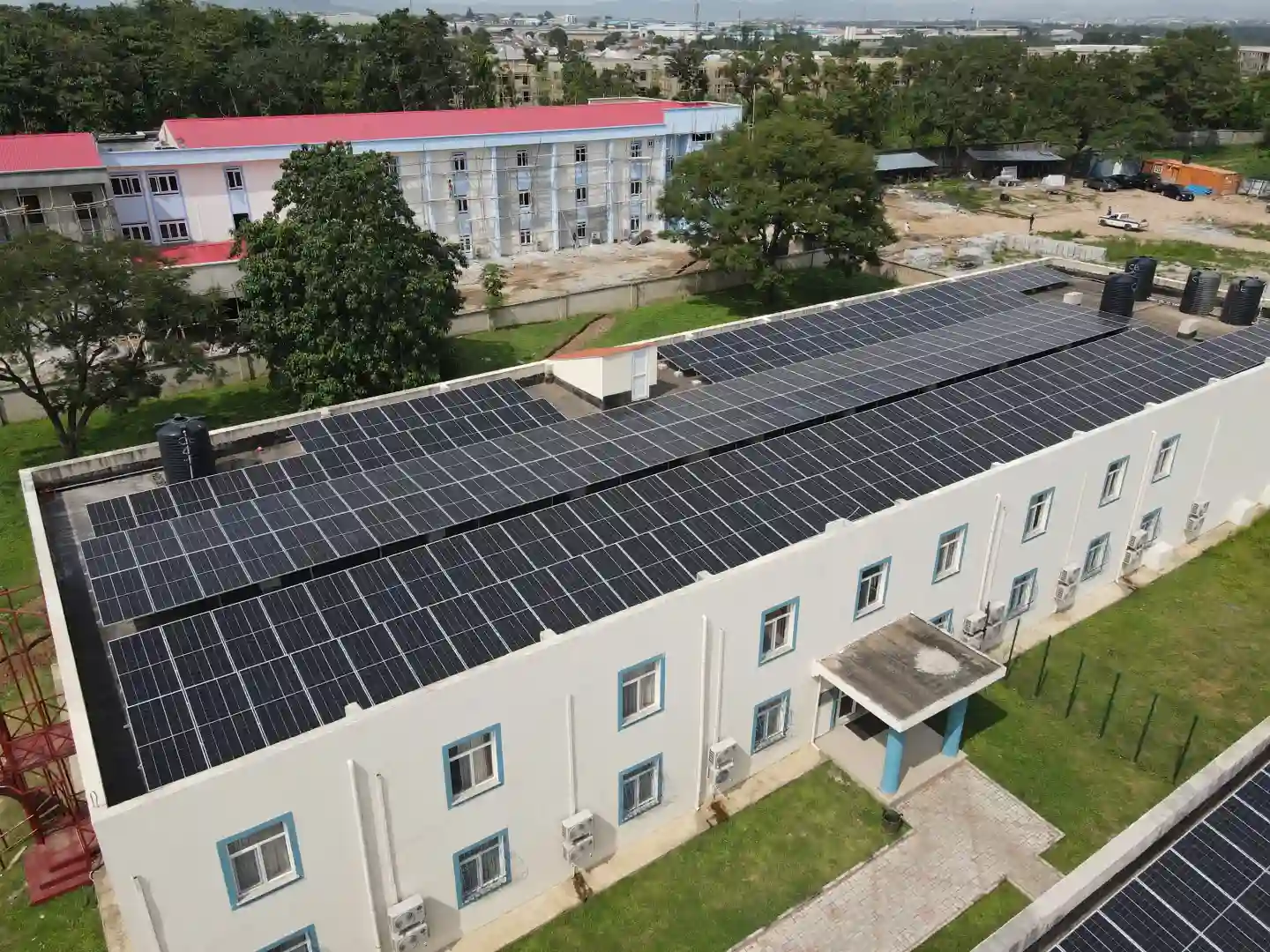
The UK’s development finance institution British International Investment (BII) has provided $15 million in mezzanine debt financing to Starsight Energy Africa Group, in a move aimed at accelerating the deployment of commercial and industrial (C&I) solar solutions across West Africa.
The capital will primarily support operations in Nigeria and Ghana, two of the region’s most important but energy-constrained markets, where unreliable national grids continue to hinder business productivity and economic growth.
The investment reflects a growing trend of development finance institutions stepping in to fund distributed renewable energy platforms, particularly in regions where centralized electricity systems remain unstable or underdeveloped.For Starsight, a leading provider of solar and energy efficiency solutions for commercial clients, the financing will be used to expand its renewable energy pipeline, upgrade existing assets, and deepen its operational footprint in key West African markets.The UK’s development finance institution British International Investment (BII) has provided $15 million in mezzanine debt financing to Starsight Energy Africa Group, in a move aimed at accelerating the deployment of commercial and industrial (C&I) solar solutions across West Africa.
The capital will primarily support operations in Nigeria and Ghana, two of the region’s most important but energy-constrained markets, where unreliable national grids continue to hinder business productivity and economic growth.
The investment reflects a growing trend of development finance institutions stepping in to fund distributed renewable energy platforms, particularly in regions where centralized electricity systems remain unstable or underdeveloped.For Starsight, a leading provider of solar and energy efficiency solutions for commercial clients, the financing will be used to expand its renewable energy pipeline, upgrade existing assets, and deepen its operational footprint in key West African markets.
Markets move fast; don’t get left behind. We’ve paired the Serrari Group Market Index with a curated Marketplace and a comprehensive Wealth Builder Course to ensure you have the data—and the skills—to act on it.
Addressing a Deep Structural Power Deficit
The transaction comes at a time when West Africa continues to face a persistent energy deficit, with businesses forced to rely heavily on self-generated power due to unreliable national grids.
In Nigeria, Starsight’s second-largest market, the electricity system has long struggled with generation shortfalls, transmission constraints, and frequent outages, making grid power inconsistent and often insufficient for commercial needs.
As a result, businesses have turned to diesel and petrol generators as a primary source of electricity.
Starsight estimates that up to 40 gigawatts (GW) of electricity in Nigeria is currently generated through off-grid diesel and petrol systems, a figure that highlights the scale of the country’s energy gap.
This reliance creates a challenging operating environment for businesses, leading to:
- High and unpredictable energy costs driven by fuel price volatility
- Increased exposure to global oil market fluctuations
- Significant carbon emissions and environmental impact
- Reduced productivity due to inconsistent power supply
In this context, distributed solar energy is emerging as a practical and scalable alternative, offering businesses a more reliable, cost-efficient, and sustainable power source.
Strategic Use of Mezzanine Debt
The choice of mezzanine debt financing is a key feature of the transaction, reflecting both the capital needs of renewable energy companies and the evolving nature of infrastructure financing in emerging markets.
Mezzanine financing sits between senior debt and equity, providing companies with access to growth capital without immediately diluting existing shareholders.
For Starsight, this structure offers financial flexibility, allowing it to scale operations while preserving equity ownership.
The $15 million facility will be deployed across three key areas:
Infrastructure Rollout
Funding new solar installations for commercial and industrial clients, helping businesses transition away from diesel-powered generation.
Asset Lifecycle Management
Maintaining, upgrading, and replacing existing solar infrastructure to ensure reliability and performance.
Market Deepening
Expanding operational density in Nigeria and Ghana, rather than entering new markets, to maximize efficiency and scale.
This targeted strategy suggests a focus on strengthening existing operations and improving service delivery, rather than rapid geographic expansion.
Replacing Diesel With Solar Power
At the core of the investment is a clear objective: replacing diesel-based electricity generation with clean, renewable solar energy.
Diesel generators remain the dominant energy source for many businesses across Sub-Saharan Africa, but they come with significant drawbacks.
They are expensive to operate, dependent on imported fuel, and contribute heavily to greenhouse gas emissions.
Solar energy, by contrast, offers a more stable and predictable cost structure once installed, reducing long-term energy expenses for businesses.
Paul van Zijl, Group CEO of Starsight, described the investment as a direct response to the “vacuum in reliable grid power” across the region.
He noted that the funding will enable the company to accelerate its efforts to replace diesel generation with solar solutions for commercial clients.
This transition is not only environmentally beneficial but also economically advantageous, helping businesses improve cost efficiency and operational stability.
Investor Perspective: Economic Growth Meets Climate Action
From BII’s perspective, the investment aligns with its mandate to support sustainable economic development in emerging markets.
Benson Adenuga, BII’s Regional Director for West Africa, emphasized the importance of reliable energy in driving business growth.
“Nigeria’s businesses need dependable and affordable power to grow,” Adenuga said.
He added that distributed solar solutions can reduce reliance on refined petroleum products, which are subject to price volatility and supply disruptions.
The investment reflects a broader shift among development finance institutions toward projects that deliver both economic and environmental impact.
Key outcomes expected from the investment include:
- Improved energy access for businesses
- Reduced reliance on fossil fuels
- Lower carbon emissions
- Enhanced economic productivity
Context is everything. While you follow today’s updates, use the Serrari Market Index and Marketplace to spot emerging shifts. Need to sharpen your edge? Our Wealth Builder Course turns these insights into a professional-grade strategy
Supporting Broader UK Development Strategy
The transaction also aligns with the United Kingdom’s broader development and climate strategy in Africa, which increasingly prioritises sustainable infrastructure, private-sector growth, and climate resilience as key drivers of long-term economic stability.
According to Jonny Baxter, British Deputy High Commissioner in Lagos, the investment represents a practical and targeted approach to strengthening economic resilience in one of Africa’s most energy-constrained yet economically important regions.
He noted that expanding access to reliable and affordable energy can:
- Unlock business growth by enabling companies to operate without costly power disruptions
- Improve industrial productivity across sectors such as manufacturing, logistics, and services
- Reduce dependence on polluting and expensive diesel-based energy sources
Beyond these immediate benefits, the investment also supports broader UK objectives of fostering inclusive economic development and low-carbon growth pathways in emerging markets. By backing scalable renewable energy solutions, the UK is helping to create an environment where businesses can thrive while simultaneously advancing climate goals.
This reflects a broader policy shift toward supporting private-sector-led infrastructure solutions, particularly in energy and climate-related sectors, where capital efficiency, speed of deployment, and innovation are critical. It also signals growing recognition that distributed renewable energy systems can play a central role in bridging Africa’s energy access gap, complementing public investment in national grid infrastructure.
The Bigger Financing Gap in Africa’s Energy Transition
The Starsight investment also highlights the broader financing challenge facing Africa’s energy transition.
Across the continent, electricity demand continues to grow rapidly due to urbanisation, industrialisation, and population growth.
However, investment in grid infrastructure has not kept pace with this demand, leaving many countries with persistent energy shortages.
Industry estimates suggest that Sub-Saharan Africa will require hundreds of billions of dollars in energy investment over the coming decades to meet demand and achieve climate targets.
Large-scale infrastructure projects, such as national grids and centralized power plants, often face long development timelines and funding constraints.
In contrast, distributed energy solutions like C&I solar can be deployed more quickly and financed through private capital.
This has led to increasing interest from investors in modular, scalable energy platforms that can deliver immediate impact while complementing national energy systems.
Why Mezzanine Financing Matters in Clean Energy Scaling
The use of mezzanine debt in this transaction reflects evolving financing strategies within the renewable energy sector.
Unlike traditional loans, mezzanine financing offers greater flexibility, often including features such as deferred repayment or performance-linked returns.
Compared to equity financing, it allows companies to raise capital without diluting ownership, which is particularly valuable for growth-stage infrastructure companies.
In capital-intensive sectors like renewable energy, mezzanine financing serves as a bridge between early-stage investment and large-scale project financing.
For investors, it offers a balance of risk and return, providing higher yields than senior debt while offering more protection than equity investments.
This hybrid financing model is becoming increasingly important in emerging markets, where access to traditional capital can be limited.
A Growing Market for Distributed Energy Solutions
The Starsight deal reflects a broader global trend toward decentralized energy systems.
In many emerging markets, centralized grids are unable to meet growing demand, creating opportunities for distributed solutions such as solar and battery storage.
These systems offer several advantages:
- Faster deployment
- Greater resilience to grid disruptions
- Lower long-term energy costs
- Flexibility for commercial users
For businesses, distributed solar provides energy certainty, which is critical for operations in sectors such as manufacturing, telecommunications, and logistics.
Michael Chuchu, Group Commercial Director at Starsight, emphasized that the company’s focus remains on providing reliable power in markets where energy instability is a major barrier to growth.
Climate and Economic Impact
The shift from diesel to solar energy has significant implications for both climate and economic outcomes.
Environmentally, the transition reduces greenhouse gas emissions and air pollution.
Economically, businesses benefit from lower energy costs, improved reliability, and reduced exposure to fuel price volatility.
These benefits make distributed solar solutions particularly attractive in regions where energy reliability is closely tied to economic performance.
Outlook: Scaling Solar to Close the Energy Gap
The $15 million investment in Starsight Energy highlights growing investor confidence in the role of distributed renewable energy in addressing Africa’s energy challenges.
While relatively small in scale compared to large infrastructure projects, the investment demonstrates how targeted capital deployment can deliver meaningful impact.
By focusing on commercial and industrial clients, Starsight is addressing a segment that plays a critical role in economic growth and energy demand.
As more businesses seek alternatives to unreliable grid power, demand for distributed solar solutions is expected to rise.
For development finance institutions, investments like this illustrate how private capital can be leveraged to support sustainable development while delivering measurable returns.
Ultimately, the partnership between BII and Starsight signals a broader shift in how energy infrastructure is financed and deployed in emerging markets—toward flexible, decentralized, and climate-aligned solutions that address both immediate energy needs and long-term sustainability goals.
Your financial future isn’t something you wait for—it’s something you build.
The real question is: when do you begin?
Move beyond simply staying informed.
Navigate the markets with clarity—track trends through the Serrari Group Market Index, uncover opportunities in the Serrari Marketplace, and build practical knowledge with our Curated Wealth Builder Course.
Stay connected to what truly matters.
Get daily insights on macro trends and financial movements across Kenya, Africa, and global markets—delivered through the Serrari Newsletter.
Growth opens doors.
Advance your career through professional programs including ACCA, HESI A2, ATI TEAS 7 , HESI EXIT , NCLEX – RN and NCLEX – PN, Financial Literacy!🌟—designed to move you forward with confidence.