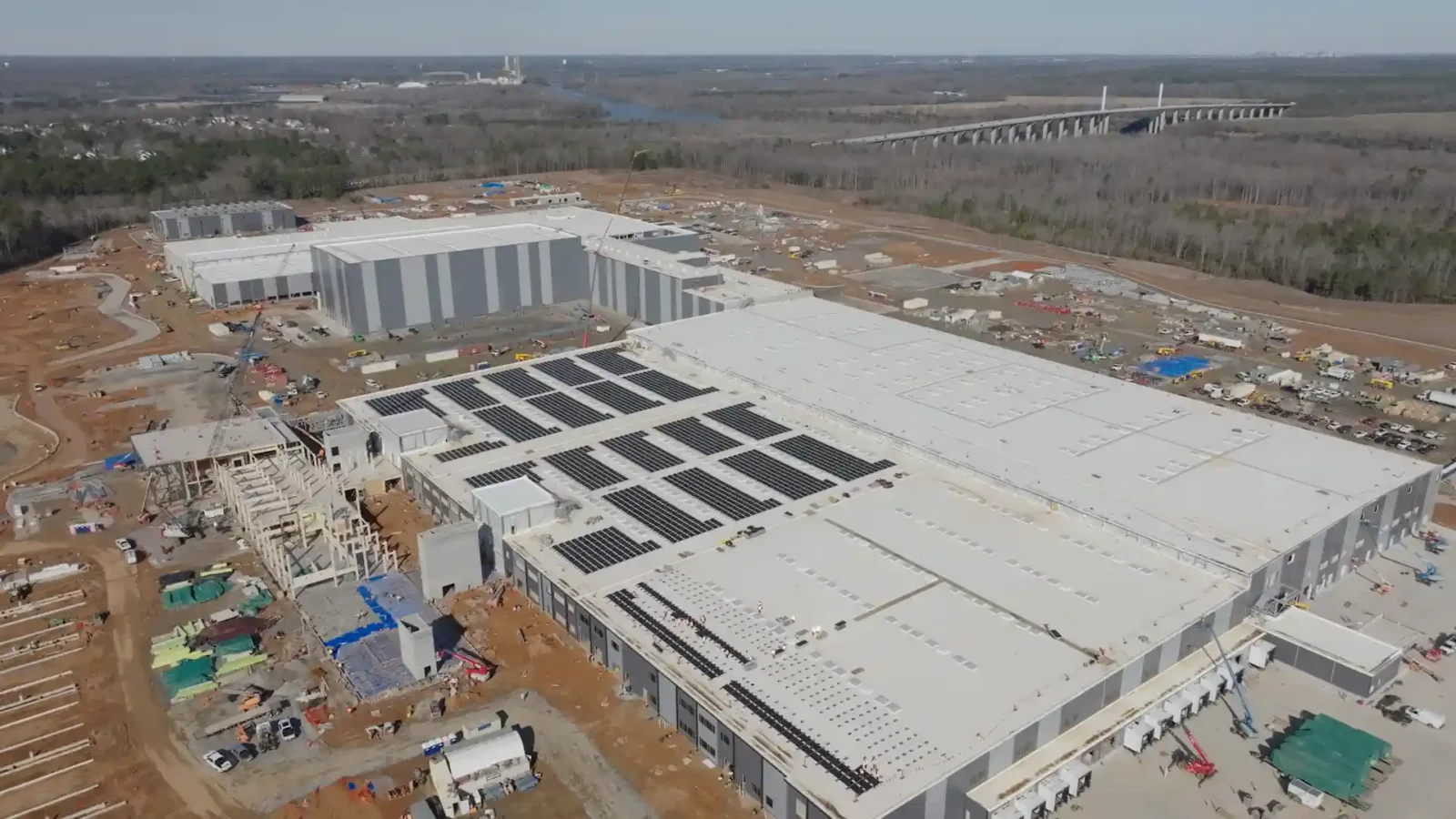
The LEGO Group is accelerating its transition toward cleaner manufacturing with plans to build a large solar park at its new $1.5 billion production facility in Virginia, United States. The renewable energy project is designed to help power the site’s operations while supporting the company’s broader ambition to match its annual electricity demand with renewable energy.
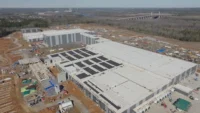
Located in Chesterfield County, the LEGO Manufacturing Virginia facility is currently under construction and represents one of the company’s most significant industrial investments in North America. Once completed, it will serve as LEGO’s first manufacturing site in the United States, strengthening the company’s regional production network while introducing a new benchmark for sustainable factory design.
Central to this vision is the construction of an 80-acre solar park that will generate renewable electricity directly at the site. By combining large-scale solar generation with rooftop installations across the factory’s buildings, LEGO aims to embed renewable energy infrastructure into the facility from the outset.
For manufacturers increasingly facing pressure to reduce emissions and improve energy resilience, projects like this illustrate how sustainability is becoming a core element of industrial planning rather than an afterthought.
Markets move fast; don’t get left behind. We’ve paired the Serrari Group Market Index with a curated Marketplace and a comprehensive Wealth Builder Course to ensure you have the data—and the skills—to act on it.
Inside LEGO’s First U.S. Manufacturing Facility
The Virginia factory represents a strategic step in LEGO’s global expansion. The project was first announced in 2022 as part of the company’s effort to strengthen supply chains and expand production closer to major consumer markets.
Spanning approximately 340 acres, the campus will house a complex network of manufacturing and operational infrastructure. The site will include 13 buildings, supporting various functions ranging from molding and packing operations to logistics and administration.
Among the key structures planned for the site are advanced molding facilities where LEGO bricks are produced, packaging buildings, office spaces, an energy center, and a high-bay automated warehouse designed to streamline inventory management and distribution.
Once fully operational, the complex will cover roughly 1.7 million square feet of manufacturing and operational space. It will be equipped with highly automated machinery capable of producing LEGO bricks with the exact precision that the company is known for.
However, the Virginia project is not only about expanding manufacturing capacity. From the earliest stages of planning, LEGO committed to designing the facility as a carbon-neutral manufacturing site, meaning that its energy needs would be matched by renewable energy while efficiency measures reduce overall consumption.
This design philosophy is now taking shape as construction progresses and renewable energy infrastructure becomes integrated into the site’s development.
Large-Scale Solar Power at the Core of the Project
At the center of the sustainability strategy for the Virginia factory is the construction of a solar park designed to generate renewable electricity on site.
According to the company, construction of the solar installation is expected to begin this summer. Once completed, the solar park will feature more than 30,700 ground-mounted solar panels installed across nearly 80 acres of land.
These panels will provide approximately 22 megawatts peak (MWp) of solar generation capacity, making the installation one of the largest renewable energy systems associated with a consumer goods manufacturing facility in the region.
To further expand renewable energy generation, LEGO also plans to install 10,080 rooftop solar panels across several of the factory’s buildings. These rooftop installations will contribute an additional 6.11 MWp of capacity.
Together, the ground-mounted and rooftop solar arrays will generate more than 28 MWp of renewable electricity, enabling the facility to produce a significant share of the power required for its operations.
For energy-intensive manufacturing processes such as plastic molding and automated packaging, generating electricity directly on-site can significantly reduce emissions while improving long-term energy reliability.
Jesus Ibañez, General Manager of LEGO Manufacturing Virginia, highlighted the importance of the initiative.
“We’re proud of the progress we continue to make,” he said. “These initiatives are key to increasing our use of renewable energy and support our ongoing commitment towards more sustainable operations.”
Designing a Carbon-Neutral Manufacturing Hub
While solar energy forms the most visible part of the sustainability strategy, the Virginia facility incorporates several additional environmental features aimed at reducing its overall footprint.
One of the company’s key goals for the factory is achieving zero waste from factory to landfill. This means that manufacturing waste generated during operations will be reused, recycled, or otherwise diverted rather than disposed of in landfill sites.
Such initiatives align with LEGO’s broader corporate sustainability commitments, which focus on circular resource use and responsible production practices.
The company is also aiming to achieve LEED Platinum certification for the facility. The Leadership in Energy and Environmental Design (LEED) framework evaluates buildings across a range of environmental criteria including energy efficiency, water usage, materials selection, and waste management.
Achieving the highest level of LEED certification would position the Virginia factory among the most environmentally advanced manufacturing facilities globally.
These measures demonstrate that the sustainability strategy for the site extends beyond energy generation to encompass the entire lifecycle of the facility.
Innovative Construction and Low-Carbon Materials
Another distinctive feature of the Virginia project is the use of mass timber in the construction of the facility’s office buildings.
Mass timber is an engineered wood product that offers structural strength comparable to traditional construction materials while providing significant environmental advantages. Unlike steel or concrete, which can generate substantial carbon emissions during production, mass timber acts as a carbon storage material, locking carbon within the building structure.
By using mass timber in its office spaces, LEGO is reducing the embodied carbon associated with the construction phase of the project.
Construction progress has already reached several key milestones. The steel framework for the manufacturing buildings was completed in late 2025, marking a major step toward the final stages of construction.
Meanwhile, the office structures built using mass timber are expected to reach completion soon, further advancing the company’s goal of combining innovative building materials with sustainable design.
Context is everything. While you follow today’s updates, use the Serrari Market Index and Marketplace to spot emerging shifts. Need to sharpen your edge? Our Wealth Builder Course turns these insights into a professional-grade strategy.
Workforce Expansion and Economic Impact
In addition to its environmental objectives, the Virginia factory is expected to generate significant economic benefits for the surrounding region.
Currently, around 500 employees are working at the construction site and a nearby temporary packing facility. As the project advances, LEGO plans to expand its workforce to support future operations.
The company expects employment at the site to grow to approximately 900 workers by the end of 2026, as teams prepare to operate advanced molding and packaging equipment.
Over the longer term, the facility is projected to support about 1,700 jobs, making it one of the most significant manufacturing investments in the region.
The scale of the site itself is equally impressive. Covering an area comparable to roughly 260 football fields, the complex will represent a major industrial hub dedicated to producing LEGO’s iconic plastic bricks with remarkable precision.
For the local economy, the project brings new employment opportunities, infrastructure investment, and long-term economic activity.
Community Investment and Social Commitment
As the Virginia facility takes shape, LEGO has also been working to build strong relationships with the surrounding communities.
The company recently announced $1.3 million in grants to eight nonprofit organizations in the Richmond area. These funds aim to support initiatives that expand opportunities for children through play and learning programs.
Since announcing the Virginia factory project in 2022, LEGO and the LEGO Foundation have donated more than $3.5 million to community initiatives in the region.
These contributions reflect the company’s broader commitment to social responsibility and its belief that large industrial investments should also generate positive social outcomes.
By supporting local organizations and programs, LEGO is seeking to ensure that the benefits of the project extend beyond employment and economic growth.
Renewable Energy as a Strategic Manufacturing Advantage
The solar initiative at the Virginia facility also reflects a broader shift taking place across the global manufacturing sector.
As companies face growing pressure to reduce carbon emissions while managing energy costs, many are investing in on-site renewable energy systems to power their operations.
Solar generation offers particular advantages for large industrial campuses. By producing electricity directly where it is consumed, companies can reduce reliance on external power markets, improve energy resilience, and stabilize long-term energy costs.
For LEGO, integrating solar power into the design of the Virginia facility helps align manufacturing expansion with its climate commitments while supporting a more sustainable production model.
It also demonstrates how renewable energy infrastructure can be incorporated into new industrial projects at scale.
Outlook: A New Model for Sustainable Manufacturing
The LEGO Manufacturing Virginia project offers an important glimpse into the future of industrial development.
Rather than retrofitting sustainability measures into existing factories, companies are increasingly designing new facilities that integrate renewable energy, efficient building systems, and circular resource management from the outset.
If the project achieves its goals, the Virginia site could become one of the most advanced examples of sustainable manufacturing in the consumer goods sector.
By combining large-scale solar power, innovative building materials, resource efficiency strategies, and community engagement, LEGO is creating a manufacturing facility that reflects the evolving expectations placed on modern industry.
As construction continues and the solar park begins to take shape, the Virginia factory will likely attract attention as a benchmark for how renewable energy and industrial production can operate together.
For LEGO, the project signals that the factories of the future will not only be technologically advanced—but also designed to operate within a cleaner and more sustainable energy system.
Your financial future isn’t something you wait for—it’s something you build.
The real question is: when do you begin?
Move beyond simply staying informed.
Navigate the markets with clarity—track trends through the Serrari Group Market Index, uncover opportunities in the Serrari Marketplace, and build practical knowledge with our Curated Wealth Builder Course.
Stay connected to what truly matters.
Get daily insights on macro trends and financial movements across Kenya, Africa, and global markets—delivered through the Serrari Newsletter.
Growth opens doors.
Advance your career through professional programs including ACCA, HESI A2, ATI TEAS 7 , HESI EXIT , NCLEX – RN and NCLEX – PN, Financial Literacy!🌟—designed to move you forward with confidence.
See where money is flowing—clearly and in real time.
Track Money Market Funds, Treasury Bills, Treasury Bonds, Green Bonds, and Fixed Deposits, alongside global and African indexes, key economic indicators, and the evolving Crypto and stablecoin landscape—all within Serrari’s Market Index.