










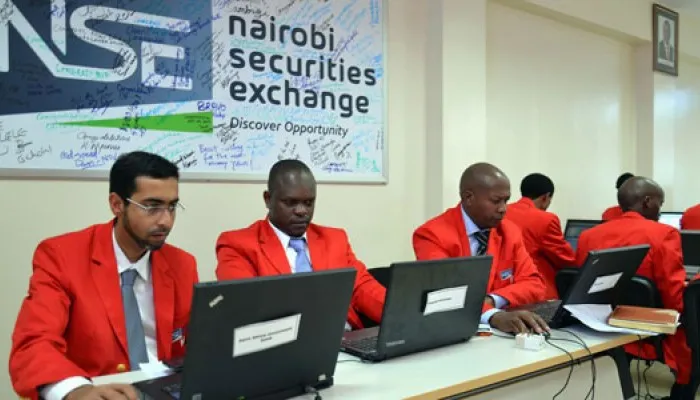
Two of sub-Saharan Africa’s largest and most influential stock exchanges are taking a significant step toward regional capital market integration. The Nairobi Securities Exchange (NSE) and the Nigerian Exchange Group (NGX) have announced a virtual cross-border investment summit scheduled for March 24, 2026 — a platform that aims to bring together investors, issuers, regulators and market infrastructure providers from Kenya, Nigeria and the broader African continent to explore mechanisms for cross-border listings, joint product development and the creation of more seamless pathways for capital to flow between the continent’s most active markets.
The announcement arrives at a moment when African financial markets are increasingly asserting their relevance in the global investment landscape. Both Kenya and Nigeria have experienced periods of significant volatility in recent years, but both exchanges have also demonstrated resilience — and in Kenya’s case, the NSE’s 13.24% year-to-date gain in the NASI as of March 2026 suggests that investor confidence is returning. Nigeria, meanwhile, hosts one of the continent’s most dynamic equity markets, with the NGX recording a market capitalisation of NGN 129.1 trillion and attracting growing interest from both local and foreign institutional investors.
Markets move fast; don’t get left behind. We’ve paired the Serrari Group Market Index with a curated Marketplace and a comprehensive Wealth Builder Course to ensure you have the data—and the skills—to act on it.
Understanding the Two Exchanges
The Nairobi Securities Exchange, established in 1954, is the leading stock exchange in East Africa. It demutualized and listed on its own exchange in 2014 and is regulated by the Capital Markets Authority of Kenya. The NSE operates under an 11-member board and maintains four listing categories: the Main Investment Market Segment, Alternate Investment Market Segment, Fixed Income Securities Market Segment and Growth Enterprises Market Segment. The exchange introduced the Unquoted Securities Platform in 2020 to provide a transparent over-the-counter market for unquoted companies, a move that has facilitated the listing of innovative instruments including Kenya’s pioneering student accommodation REITs.
The Nigerian Exchange Group is an integrated stock exchange group founded in Lagos in 1961. Following its demutualization in 2021, NGX Group now operates through three subsidiaries: Nigerian Exchange Limited (the operating exchange), NGX Regulation (the independent regulatory company) and NGX Real Estate. The operating exchange lists 151 companies across Premium Board, Main Board and Growth Board categories, along with 157 fixed income securities — including Green Bonds and Sukuk — and 12 Exchange Traded Products. NGX publishes the benchmark value-weighted All-Share Index formulated in January 1984, as well as sector indices covering banking, consumer goods, insurance, industrial and oil and gas.
The NGX CEO, Jude Chiemeka, has been a consistent advocate for widening market participation, stating that when more participants engage with the capital market, the market deepens and the foundation for sustainable growth strengthens. The NGX Group Managing Director, Temi Popoola, has similarly emphasised that capital markets are powerful engines for economic transformation. Both leaders have championed the view that African exchanges can no longer afford to operate in isolation — and the March 24 summit is a concrete expression of that conviction.
The Case for Cross-Border Investment in Africa
Africa’s capital markets fragmentation is one of the continent’s most persistent structural challenges. Despite representing a combined GDP of more than $3 trillion, the continent’s equity markets are balkanised along national lines, with different regulatory frameworks, listing requirements, settlement systems and trading hours. This fragmentation increases transaction costs, reduces liquidity for cross-border securities and limits the pool of potential investors for any individual issuer. An investor based in Nairobi who wishes to purchase shares in a Nigerian company faces a maze of foreign exchange restrictions, correspondent banking relationships and regulatory approvals that effectively put most Nigerian equities out of reach.
Efforts to address this problem are not new. The African Securities Exchanges Association (ASEA), of which both the NSE and NGX are members, has long advocated for greater coordination among African exchanges. The NGX is also an observer at meetings of the International Organization of Securities Commissions (IOSCO) and a founding member of ASEA. The NSE has pursued bilateral partnerships and joint initiatives with exchanges across the continent, including the Johannesburg Stock Exchange and the Uganda Securities Exchange. Yet progress has been slow, hampered by the practical difficulties of aligning regulatory systems and the political sensitivities of ceding sovereignty over key financial infrastructure.
The March 24 virtual summit is positioned as a deal-making and dialogue platform rather than a regulatory harmonisation exercise. By convening investors, issuers and market participants in a structured but accessible online format, the NSE and NGX aim to lower the practical barriers to cross-border investment without waiting for the lengthy legislative processes required to formally integrate the two markets’ regulatory frameworks. The summit’s virtual format is also significant: by removing the need for physical attendance, it extends the reach of the event to a broader range of participants — including smaller fund managers, family offices and retail investors who would otherwise be unable to participate in an in-person conference in Lagos or Nairobi.
Context is everything. While you follow today’s updates, use the Serrari Market Index and Marketplace to spot emerging shifts. Need to sharpen your edge? Our Wealth Builder Course turns these insights into a professional-grade strategy.
What Cross-Border Listings Could Mean for African Companies
One of the most valuable potential outcomes of deeper NSE-NGX integration is the facilitation of dual or cross-border listings. A Nairobi-based company seeking to access Nigeria’s deep pool of domestic savings — or a Lagos-listed firm wanting exposure to Kenya’s growing institutional investor base — currently faces significant structural obstacles. Cross-border listings require compliance with two sets of regulatory requirements, disclosure standards and corporate governance codes, as well as the management of two sets of shareholder communications, dividend payments and transfer agent relationships.
However, the potential benefits are substantial. A company that can access both the Kenyan and Nigerian investor bases broadens its shareholder register, increases liquidity in its shares and gains visibility with institutional investors from two of Africa’s largest economies. The Nigerian government listed a ₦100 billion Real Estate Investment Fund on the NGX as part of its broader capital markets development agenda — a transaction type that could potentially be replicated across borders if the regulatory framework for cross-listed instruments is simplified.
Nigeria has also abolished legislation that previously prevented the flow of foreign capital into the country, allowing foreign brokers to enlist as dealers on the exchange and enabling investors of any nationality to freely invest. Nigerian companies are also permitted multiple and cross-border listings on foreign markets. Kenya’s Capital Markets Authority has similarly pursued regulatory reforms aimed at deepening market access and investor protection. These parallel liberalisation agendas create a foundation on which bilateral exchange cooperation can be built.
The Broader Context: Africa’s Capital Markets Moment
The NSE-NGX summit comes at a particularly opportune moment for African capital markets. Several macro-level trends are converging to create conditions for a structural expansion of the continent’s investment ecosystem. Africa’s demographic dividend — with more than 1.4 billion people and a median age below 20 — is creating a growing middle class of savers and investors. Digital financial infrastructure, from mobile money to robo-advisory platforms, is extending the reach of capital markets to populations previously served only by informal savings and credit mechanisms. The OECD’s Africa Capital Markets Report 2025 highlighted digital technology as the key driver for African retail investor participation — a finding that both the NSE and NGX are actively working to translate into products and platforms.
At the same time, global institutional investors are increasingly recognising Africa as an allocation destination rather than an afterthought. The recent surge of institutional inflows into NSE-listed equities — driven by the Kenya Pipeline Company IPO and the return of foreign buyers to Safaricom — is one visible manifestation of this trend. Nigeria’s market has seen similar dynamics, with periodic surges of foreign portfolio investment responding to improving macroeconomic fundamentals and currency stabilisation.
The green bonds and sukuk market on the NGX, combined with Kenya’s growing ESG and REIT ecosystem, point to the emergence of a more sophisticated African capital markets landscape that can accommodate a wider range of financial instruments and investor preferences. The March 24 summit is, in many respects, a symbol of a larger ambition: that Africa’s two largest English-speaking economies can lead the continent’s capital markets integration agenda and demonstrate that cross-border investment within Africa need not be more complicated than investment between any two markets in the developed world.
Looking Ahead: Outcomes to Watch From the Summit
Participants in the March 24 virtual summit will likely be watching for several concrete outcomes. A framework agreement on mutual recognition of certain regulatory filings would reduce compliance costs for issuers seeking to list on both exchanges. A joint initiative on market data sharing would improve price discovery and reduce information asymmetries for cross-border investors. A pilot programme for a limited number of cross-listed securities — potentially starting with large-cap companies that already have shareholders in both countries — would provide a real-world test of operational feasibility.
Beyond the immediate deliverables, the summit matters because it sends a signal to the global investment community: Africa’s major exchanges are serious about building the infrastructure needed to attract long-term capital. In an environment where global investors have more options than ever and are acutely sensitive to market quality indicators, the willingness of the NSE and NGX to invest in deepening bilateral cooperation is itself a credible signal of commitment to market development.
The NGX’s commitment to a “multi-player AV world” philosophy — embracing diversity of issuers, investors and instruments — mirrors the NSE’s own expansion strategy. Together, these exchanges represent a combined market capitalisation in excess of $110 billion, a pool of capital that, if made more accessible to cross-border investors through smarter regulatory architecture, could become one of the most dynamic capital markets clusters in the emerging world.
Your financial future isn’t something you wait for—it’s something you build.
The real question is: when do you begin?
Move beyond simply staying informed.
Navigate the markets with clarity—track trends through the Serrari Group Market Index, uncover opportunities in the Serrari Marketplace, and build practical knowledge with our Curated Wealth Builder Course.
Stay connected to what truly matters.
Get daily insights on macro trends and financial movements across Kenya, Africa, and global markets—delivered through the Serrari Newsletter.
Growth opens doors.
Advance your career through professional programs including ACCA, HESI A2, ATI TEAS 7 , HESI EXIT , NCLEX – RN and NCLEX – PN, Financial Literacy!🌟—designed to move you forward with confidence.
See where money is flowing—clearly and in real time.
Track Money Market Funds, Treasury Bills, Treasury Bonds, Green Bonds, and Fixed Deposits, alongside global and African indexes, key economic indicators, and the evolving Crypto and stablecoin landscape—all within Serrari’s Market Index.
Photo Source: Google
By: Montel Kamau
Serrari Financial Analyst
19th March, 2026
Article, Financial and News Disclaimer
The Value of a Financial Advisor
While this article offers valuable insights, it is essential to recognize that personal finance can be highly complex and unique to each individual. A financial advisor provides professional expertise and personalized guidance to help you make well-informed decisions tailored to your specific circumstances and goals.
Beyond offering knowledge, a financial advisor serves as a trusted partner to help you stay disciplined, avoid common pitfalls, and remain focused on your long-term objectives. Their perspective and experience can complement your own efforts, enhancing your financial well-being and ensuring a more confident approach to managing your finances.
Disclaimer: This article is for informational purposes only and does not constitute financial advice. Readers are encouraged to consult a licensed financial advisor to obtain guidance specific to their financial situation.
Article and News Disclaimer
The information provided on www.serrarigroup.com is for general informational purposes only. While we strive to keep the information up to date and accurate, we make no representations or warranties of any kind, express or implied, about the completeness, accuracy, reliability, suitability, or availability with respect to the website or the information, products, services, or related graphics contained on the website for any purpose. Any reliance you place on such information is therefore strictly at your own risk.
www.serrarigroup.com is not responsible for any errors or omissions, or for the results obtained from the use of this information. All information on the website is provided on an as-is basis, with no guarantee of completeness, accuracy, timeliness, or of the results obtained from the use of this information, and without warranty of any kind, express or implied, including but not limited to warranties of performance, merchantability, and fitness for a particular purpose.
In no event will www.serrarigroup.com be liable to you or anyone else for any decision made or action taken in reliance on the information provided on the website or for any consequential, special, or similar damages, even if advised of the possibility of such damages.
The articles, news, and information presented on www.serrarigroup.com reflect the opinions of the respective authors and contributors and do not necessarily represent the views of the website or its management. Any views or opinions expressed are solely those of the individual authors and do not represent the website's views or opinions as a whole.
The content on www.serrarigroup.com may include links to external websites, which are provided for convenience and informational purposes only. We have no control over the nature, content, and availability of those sites. The inclusion of any links does not necessarily imply a recommendation or endorsement of the views expressed within them.
Every effort is made to keep the website up and running smoothly. However, www.serrarigroup.com takes no responsibility for, and will not be liable for, the website being temporarily unavailable due to technical issues beyond our control.
Please note that laws, regulations, and information can change rapidly, and we advise you to conduct further research and seek professional advice when necessary.
By using www.serrarigroup.com, you agree to this disclaimer and its terms. If you do not agree with this disclaimer, please do not use the website.
www.serrarigroup.com, reserves the right to update, modify, or remove any part of this disclaimer without prior notice. It is your responsibility to review this disclaimer periodically for changes.
Serrari Group 2025