










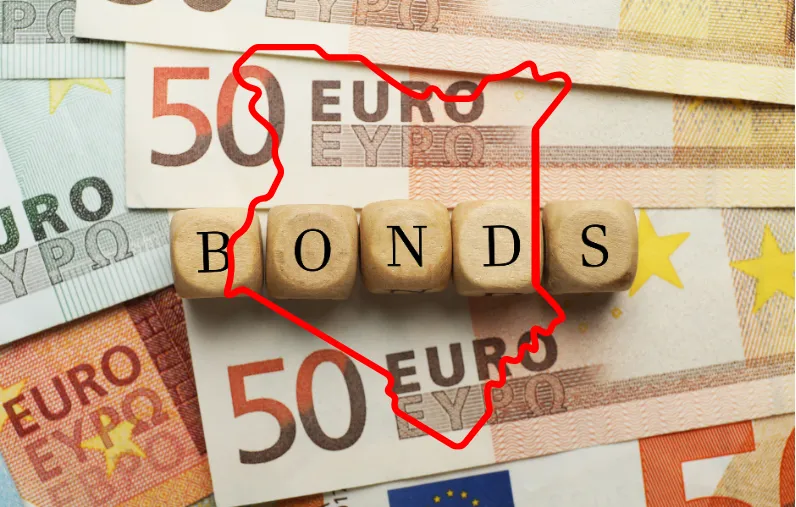
The Republic of Kenya has formally closed a tender offer for two series of U.S. dollar-denominated sovereign bonds, repurchasing $415.4 million in notes — a transaction that represents the latest and most complex move in what has become a sustained multi-year strategy by the National Treasury to manage and extend the country’s external debt maturity profile.
The buyback, which expired at 5:00 p.m. New York time on February 25, 2026, was heavily oversubscribed on one of the two series, forcing Treasury officials to apply a proration factor — a technical mechanism used to proportionally scale back accepted tenders when demand exceeds the cap. The operation was funded entirely through a fresh $2.25 billion dual-tranche Eurobond issuance priced just days earlier, and marks the fourth such buyback Kenya has executed in just over two years, according to Business Daily Africa.
Build the future you deserve. Get started with our top-tier Online courses: ACCA, HESI A2, ATI TEAS 7, HESI EXIT, NCLEX-RN, NCLEX-PN, and Financial Literacy. Let Serrari Ed guide your path to success. Enroll today.
The Numbers: What Was Tendered, Accepted, and Cancelled
Kenya targeted two specific bond series in this operation. The first was its $1 billion 7.25% notes due February 28, 2028, of which $371.56 million in principal remained outstanding following a prior buyback in October 2025. The second was its $1.2 billion 8.00% amortizing notes due May 22, 2032.
The tender offer invited holders to submit their notes for cash repurchase within capped amounts: up to $150 million of the 2028 notes and up to $350 million of the 2032 notes. The results revealed a sharp divergence in investor behavior between the two series.
For the 2028 notes, Kenya received valid tenders of $90.5 million — well below the $150 million cap. All tendered 2028 notes were accepted in full, with no proration required. For the 2032 notes, however, bondholder interest was dramatically higher: tenders of $892.1 million were submitted against a cap of $350 million. Kenya applied a proration factor of 0.329471, accepting just $324.8 million of that series. In aggregate, the accepted notes totaled $415.4 million across both series.
The purchase prices were set at $1,035 per $1,000 principal for the 2028 notes — a 3.5% premium to par — and $1,055 per $1,000 principal for the 2032 notes, equivalent to a 5.5% premium, plus accrued interest in both cases. All accepted notes will be cancelled and not reissued, reducing Kenya’s outstanding external commercial debt on a nominal basis. Settlement for the repurchased notes is scheduled for March 3, 2026. Notes not tendered or accepted under the proration will remain outstanding.
Citigroup Global Markets Limited and The Standard Bank of South Africa Limited served as dealer managers for the transaction, with Citibank N.A., London Branch acting as tender agent — the same arrangement used in Kenya’s October 2025 buyback.
The Financing Engine: Kenya’s $2.25 Billion New Eurobond
The buyback was made possible by a simultaneous new bond issuance — a dual-tranche Eurobond that Kenya priced on February 19, 2026, raising $2.25 billion from international capital markets.
The structure of the new issuance was carefully designed to extend Kenya’s borrowing curve and spread repayment obligations over a longer horizon. The first tranche comprised $900 million in notes maturing in 2034, priced at a yield of 7.875%. These notes will amortize in three equal instalments in 2032, 2033, and 2034 — giving them a weighted average life of approximately seven years and avoiding a concentrated bullet repayment. The second tranche comprised $1.35 billion in notes maturing in 2039, priced at 8.700%, with amortization in three equal instalments in 2037, 2038, and 2039, for a weighted average life of roughly 12 years.
Treasury Cabinet Secretary John Mbadi, announcing the pricing, described the demand as strong and high-quality. The order book significantly exceeded the amount on offer, with the seven-year tranche attracting bids of $1.8 billion and the 12-year tranche drawing orders of $2.8 billion, according to Serrari Group’s coverage of the transaction. “The successful pricing of this dual-tranche Eurobond demonstrates continued investor confidence in Kenya’s economic reform agenda and our commitment to prudent public debt management,” Mbadi said.
The proceeds from the new issuance were earmarked primarily for the buyback, with the remainder — approximately $1.75 billion — directed toward general budgetary support, providing the government with additional fiscal flexibility under its Bottom-Up Economic Transformation Agenda (BETA). As CNBC Africa reported, the settlement for the new bonds closed on February 26, 2026 — one day before the buyback results were announced and a week before the March 3 settlement date for the repurchased notes.
The new notes are structured as senior unsecured instruments under 144A/Reg S regulations, accessible to qualified institutional buyers globally. The minimum denomination of $200,000 per note signals that this was, by design, a transaction for institutional and sovereign wealth fund participants rather than retail investors.
Understanding Proration: What It Signals About Market Appetite
The proration factor applied to the 2032 notes is analytically significant. Kenya had capped its buyback of the 2032 series at $350 million — yet it received $892.1 million in valid tenders, more than 2.5 times the available allocation. The proration factor of approximately 0.329 means that for every $1,000 in 2032 notes tendered, a bondholder received back only about $329 worth of accepted principal, with the remainder staying in circulation.
This extraordinary oversubscription tells a clear story: institutional holders of the 2032 notes were eager to exit their positions at the offered premium. Several factors likely drove this demand. At a 5.5% premium to par and with accrued interest included, the buyback offered holders an attractive cash exit — particularly as secondary market yields on the 2032 notes had declined toward 7.14% in the days around the announcement, suggesting the bonds were trading at a premium to face value already. For holders that had acquired the notes at a discount during Kenya’s turbulent 2023–2024 period, the buyback represented a meaningful crystallization of gains.
The buyback also offered a strategic incentive the Treasury had made explicit: bondholders who tendered, or indicated a firm intention to tender, were given priority consideration for allocation in the new issuance. This “roll-and-replace” incentive encouraged institutional holders to rotate their exposure from the shorter 2032 paper into the new longer-dated 2034 and 2039 notes — exactly the maturity extension outcome Kenya’s liability management team sought.
Mwango Capital analysis noted that while the structure meaningfully smooths the 2028 and 2032 redemption profile, only about 22% of the $2.25 billion raised was allocated to buybacks, with the balance constituting incremental external financing. This distinction matters for debt sustainability: Kenya is not simply rotating old obligations, but adding to its overall external debt stock, even as it extends the maturity timeline.
One decision can change your entire career. Take that step with our Online courses in ACCA, HESI A2, ATI TEAS 7, HESI EXIT, NCLEX-RN, NCLEX-PN, and Financial Literacy. Join Serrari Ed and start building your brighter future today.
The Pattern: Kenya’s Fourth Buyback in Two Years
This February 2026 operation must be understood within a trajectory. It is, as Business Daily Africa noted, Kenya’s fourth Eurobond buyback in just over two years — a pattern that reflects deliberate and systematic liability management.
The sequence began with a buyback operation in February 2024, followed by another targeting the 2027-maturity bond in early 2025, and then a major operation in October 2025 when Kenya repurchased $628.44 million of its 2028 notes after raising $1.5 billion through a dual-tranche Eurobond. In that October transaction, all valid tenders were accepted without proration, indicating demand was below the cap at the time — a contrast to the oversubscription seen in the 2032 series this time around.
Together, the buyback series has seen Kenya raise roughly $3 billion in new long-term Eurobond financing to retire or reduce its shorter-dated obligations, as Bloomberg reported ahead of the February 2026 transaction. The cumulative effect has been to push Kenya’s next major external debt repayment beyond 2030, extending the runway for fiscal adjustment.
The Rating Upgrade That Opened the Door
Kenya’s ability to execute this operation at competitive terms was substantially enabled by a credit rating upgrade from Moody’s Investors Service in late January 2026. On January 27, 2026, Moody’s raised Kenya’s sovereign credit rating from Caa1 to B3 and revised the outlook from positive to stable — a two-notch upgrade that, while still within non-investment-grade territory (six notches below investment grade), represented a meaningful improvement in perceived creditworthiness.
Moody’s cited a marked improvement in Kenya’s external liquidity position: foreign exchange reserves had risen to $12.2 billion by end-2025, equivalent to approximately 5.3 months of import cover, up from $9.2 billion a year earlier. The current account deficit had narrowed, the Kenyan shilling had stabilised against major currencies, and the government had materially improved its access to international capital markets. The series of Eurobond buybacks and refinancing operations since 2024 were cited as having smoothed Kenya’s maturity profile and reduced immediate rollover risks.
The Moody’s action was complemented by a separate affirmation from Fitch Ratings, which maintained Kenya’s B- rating with a stable outlook — the equivalent of Moody’s B3 — and noted that proactive buybacks and refinancing had helped reduce short-term pressures on Kenya’s finances. Fitch estimated gross foreign exchange reserves at $12.4 billion by end-2025. S&P had also previously upgraded Kenya to B with a stable outlook in August 2025. The convergence of all three major rating agencies toward the B-band in 2025 and early 2026 reflects what Mwango Capital described as a broad-based reassessment of Kenya’s sovereign risk profile, driven by liquidity buffers and refinancing management.
Despite the upgrade, Moody’s was explicit about the remaining vulnerabilities. The rating is constrained by weak debt affordability — interest costs continue to absorb more than 30% of government revenue — and limited progress on fiscal consolidation. The fiscal deficit is projected to remain near 6% of GDP, with public debt broadly stable at around 67% of GDP. With approximately half of government debt in foreign currency and external amortizations of $2.5 billion to $3.0 billion per year over the rest of the decade, Kenya’s credit profile remains highly sensitive to exchange rate movements and shifts in global investor sentiment.
The Broader Sovereign Strategy
Kenya’s February 2026 buyback is part of a deliberate framework of liability management that the National Treasury has been executing since the shilling’s nadir in early 2024, when currency weakness and elevated global interest rates made Kenya’s debt servicing costs highly visible.
The strategy has three interconnected components. First, it involves active retirement of shorter-dated obligations to eliminate near-term refinancing risk concentrations. Second, it involves replacing those obligations with longer-dated amortizing notes that spread repayment obligations over multiple years rather than creating bullet maturity events. Third — and increasingly — it involves signalling to international capital markets that Kenya can access external financing regularly and predictably, building credibility that itself reduces risk premiums over time.
HapaKenya reported that the National Treasury has also signalled an intention to issue a $500 million Sustainability-Linked Bond in March 2026, which would represent a further diversification of the sovereign’s financing instruments into thematic and performance-linked structures. Such bonds tie a borrower’s interest costs to the achievement of specific environmental or social targets, potentially offering a lower cost of capital if targets are met — a strategy increasingly adopted by emerging market sovereigns seeking to broaden their investor base.
Kenya’s operation also took place against a backdrop of regional activity. The Republic of Congo completed a $354.3 million buyback of its 2032 notes in the same week, funded by a $700 million 2035 bond issuance, while Ivory Coast raised $1.3 billion in a 14-year Eurobond that attracted more than $4.2 billion in demand. The pattern across these frontier markets reflects a common theme: declining yields on African sovereign debt in early 2026 have opened a favorable window for liability management that governments across the continent are actively exploiting.
IMF Engagement and Fiscal Context
The February 2026 debt operations occurred as Kenya was simultaneously engaged in delicate negotiations with the International Monetary Fund over a successor lending arrangement. Kenya’s previous $3.6 billion Extended Fund Facility and Extended Credit Facility program, which expired in April 2025 without completion of its ninth and final review, left a gap in the country’s external financing anchor.
An IMF staff mission arrived in Nairobi on February 24, 2026, just days before the buyback results were announced, with the stated aim of laying groundwork for a new program that would provide both policy support and potentially financial assistance. The government disclosed the IMF talks directly in the Eurobond prospectus used to market the $2.25 billion issuance — an unusual step that underscored how closely Kenya’s capital markets credibility is tied to its institutional relationships.
The Central Bank of Kenya reports that Kenya’s total public debt stands at KSh 12.25 trillion. Kenya plans to rely primarily on the domestic market in the 2026/2027 fiscal year, with local sources expected to cover 82% of the budget deficit, estimated at KSh 1.1 trillion. Only 18% of gross borrowing needs are expected to come from external sources in the coming fiscal year — a meaningful shift toward domestic financing that, combined with the buyback strategy, is intended to reduce Kenya’s vulnerability to swings in international capital market conditions.
For now, Kenya’s February 2026 bond buyback stands as a technically successful execution of a complex liability management operation under favorable conditions — one that extended the country’s maturity runway while demonstrating continued institutional investor appetite for East African sovereign credit at a time when the continent’s broader capital markets story is gaining momentum.
Ready to take your career to the next level? Join our Online courses: ACCA, HESI A2, ATI TEAS 7 , HESI EXIT , NCLEX – RN and NCLEX – PN, Financial Literacy!🌟 Dive into a world of opportunities and empower yourself for success. Explore more at Serrari Ed and start your exciting journey today! ✨
Track GDP, Inflation and Central Bank rates for top African markets with Serrari’s comparator tool.
See today’s Treasury bonds and Money market funds movement across financial service providers in Kenya, using Serrari’s comparator tools.
photo source: Google
By: Montel Kamau
Serrari Financial Analyst
27th February, 2026
Article, Financial and News Disclaimer
The Value of a Financial Advisor
While this article offers valuable insights, it is essential to recognize that personal finance can be highly complex and unique to each individual. A financial advisor provides professional expertise and personalized guidance to help you make well-informed decisions tailored to your specific circumstances and goals.
Beyond offering knowledge, a financial advisor serves as a trusted partner to help you stay disciplined, avoid common pitfalls, and remain focused on your long-term objectives. Their perspective and experience can complement your own efforts, enhancing your financial well-being and ensuring a more confident approach to managing your finances.
Disclaimer: This article is for informational purposes only and does not constitute financial advice. Readers are encouraged to consult a licensed financial advisor to obtain guidance specific to their financial situation.
Article and News Disclaimer
The information provided on www.serrarigroup.com is for general informational purposes only. While we strive to keep the information up to date and accurate, we make no representations or warranties of any kind, express or implied, about the completeness, accuracy, reliability, suitability, or availability with respect to the website or the information, products, services, or related graphics contained on the website for any purpose. Any reliance you place on such information is therefore strictly at your own risk.
www.serrarigroup.com is not responsible for any errors or omissions, or for the results obtained from the use of this information. All information on the website is provided on an as-is basis, with no guarantee of completeness, accuracy, timeliness, or of the results obtained from the use of this information, and without warranty of any kind, express or implied, including but not limited to warranties of performance, merchantability, and fitness for a particular purpose.
In no event will www.serrarigroup.com be liable to you or anyone else for any decision made or action taken in reliance on the information provided on the website or for any consequential, special, or similar damages, even if advised of the possibility of such damages.
The articles, news, and information presented on www.serrarigroup.com reflect the opinions of the respective authors and contributors and do not necessarily represent the views of the website or its management. Any views or opinions expressed are solely those of the individual authors and do not represent the website's views or opinions as a whole.
The content on www.serrarigroup.com may include links to external websites, which are provided for convenience and informational purposes only. We have no control over the nature, content, and availability of those sites. The inclusion of any links does not necessarily imply a recommendation or endorsement of the views expressed within them.
Every effort is made to keep the website up and running smoothly. However, www.serrarigroup.com takes no responsibility for, and will not be liable for, the website being temporarily unavailable due to technical issues beyond our control.
Please note that laws, regulations, and information can change rapidly, and we advise you to conduct further research and seek professional advice when necessary.
By using www.serrarigroup.com, you agree to this disclaimer and its terms. If you do not agree with this disclaimer, please do not use the website.
www.serrarigroup.com, reserves the right to update, modify, or remove any part of this disclaimer without prior notice. It is your responsibility to review this disclaimer periodically for changes.
Serrari Group 2025