










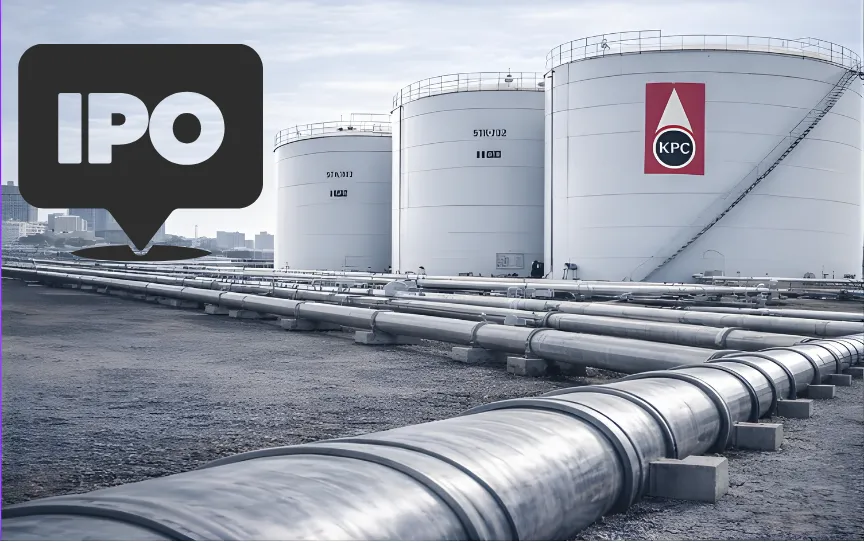
Kenya Pipeline Company’s landmark initial public offering has closed oversubscribed, with institutional investors providing the decisive demand that allowed East Africa’s largest-ever IPO in local currency terms to cross the line, the deal’s lead transaction adviser confirmed on Wednesday — pushing back against weeks of reports depicting an offer struggling to attract interest.
The IPO, which ran from January 19 to February 24, 2026, offered a 65% stake in Kenya Pipeline Company at Sh9 per share, targeting Sh106.3 billion ($825.31 million) in proceeds. Belgrad Kenne, lead adviser for the transaction at Nairobi-based Faida Investment Bank, declined to disclose the oversubscription level or name the institutional investors involved, but confirmed they had generated excess demand beyond the shares on offer, supplemented by what he described as a “sizeable” retail investor participation. Final reconciliation of the IPO’s results is scheduled for March 4, with KPC shares set to begin trading on the Nairobi Securities Exchange on March 9, 2026.
The oversubscription announcement marks a significant turnaround for a deal that had been widely described as struggling. Reports from multiple top stockbrokers indicated that at one point only approximately 20% of the offer had been sold — roughly Sh23 billion — prompting the Capital Markets Authority to approve an extension of the offer period by three working days to February 24. The extension, the Privatisation Authority’s managing director Janerose Omondi said, was “aimed at ensuring broader participation and will provide investors adequate time to finalise their investment decisions.”
Build the future you deserve. Get started with our top-tier Online courses: ACCA, HESI A2, ATI TEAS 7, HESI EXIT, NCLEX-RN, NCLEX-PN, and Financial Literacy. Let Serrari Ed guide your path to success. Enroll today.
What Kenya Pipeline Company Is — and Why It Matters
Before assessing the IPO’s ultimate success or failure, it is worth understanding the nature of the asset being offered to the public. Kenya Pipeline Company (KPC) is not a startup or a speculative growth story. Established in 1973 and operational since 1978, it is a natural monopoly that controls approximately 91% of Kenya’s refined petroleum transportation market, operating a pipeline network spanning approximately 1,342 kilometres from the port of Mombasa to Nairobi, Nakuru, Eldoret, Kisumu and beyond — and onward by road to Uganda, Rwanda, Burundi, and the Democratic Republic of Congo.
The company’s financial profile is that of a regulated infrastructure monopoly. For the financial year ended June 30, 2025, KPC reported revenue of Sh38.6 billion and profit after tax of Sh7.49 billion, with net cash from operating activities of Sh14.3 billion. Revenue grew from Sh28 billion in FY2021, representing a five-year CAGR of approximately 8%. EBITDA margins sit in the mid-40% range — a structural indicator of the pricing power embedded in an asset that faces no meaningful direct competition. The company has paid as much as Sh10.5 billion annually to the Treasury in dividends, and has committed post-listing to distributing 50% of net earnings as dividends — a significant reduction from its pre-IPO payout ratio of over 90% to the state.
KPC’s infrastructure extends well beyond pipelines. The company operates a 96-core fibre optic cable network running the length of its pipeline corridor, licensed by the Communications Authority of Kenya in 2018 to offer telecommunications services — a revenue diversification that complements core petroleum logistics. It also wholly owns the Morendat Institute of Oil and Gas, a regional training institution for the oil and gas sector. In a further strategic move, KPC recently acquired Kenya Petroleum Refineries Limited (KPRL) as a fully owned subsidiary, increasing storage capacity and positioning KPC as a more vertically integrated energy infrastructure company.
The Offer Structure and Stakeholder Breakdown
The Kenya Pipeline IPO is structured as an Offer for Sale by the Government of Kenya — meaning that the proceeds flow directly to the National Treasury rather than into KPC’s own operations or capital expenditure. This distinction matters for investors: the IPO does not fund expansion; it funds the state’s fiscal position. The government is divesting a 65% stake while retaining a 35% holding.
Of the total stake on offer, the allocation framework is as follows: 15% is reserved for oil marketing companies, 5% for KPC employees, and the remaining 80% is divided equally — at 20% each — among local retail investors, local institutional investors, East African investors, and foreign investors. The KPC investor memorandum specifies that in the event of oversubscription, Kenyan investors will be given priority, while undersubscribed categories will have their allocations reallocated in order of local retail, local institutional, East African, international, and then oil marketing companies.
The IPO’s price of Sh9 per share, applied to 11,812,644,350 ordinary shares representing the 65% stake, implies a total company valuation of approximately Sh163.6 billion at listing. Critics — including several banks and financial institutions — argued the price represented a premium to fair value, with lower independent valuations casting doubt on the offer price. These concerns, combined with payment delays among high-net-worth investors who expressed interest but failed to complete applications, contributed significantly to the slow initial subscription pace.
Uganda Secures a Strategic 20% Stake
The most politically significant dimension of the IPO is Uganda’s participation. The government of Uganda confirmed it secured a 20.15% shareholding in Kenya Pipeline Company through the offering — a stake that comes with two seats on KPC’s board of directors, according to The Africa Report.
Uganda’s Energy Minister Ruth Nankabirwa explained the rationale directly at a news briefing on February 24: “Imports through Kenya account for over 95% of Uganda’s monthly demand.” That single statistic encapsulates the strategic logic of the investment. Uganda, a landlocked country of approximately 50 million people, is entirely dependent on the Kenyan pipeline corridor — running from the Indian Ocean port of Mombasa through Kenya’s interior — to receive the petroleum products that power its economy. KPC derives 35% of its revenue from Uganda alone. Owning a 20% stake in the infrastructure that moves over 95% of your country’s fuel imports is not a passive financial investment; it is strategic economic self-insurance.
Uganda’s direct participation also resolves a long-standing vulnerability for Kampala. As a non-owner relying entirely on a foreign state-controlled entity for fuel transit, Uganda had limited leverage in tariff negotiations and no formal governance role in the company’s decisions. The IPO stake and accompanying board seats change that calculus fundamentally, giving Uganda a formal voice in the management of an asset it depends on absolutely. The terms were supported by the Kenyan government as part of negotiations that helped shore up late-stage investor demand.
One decision can change your entire career. Take that step with our Online courses in ACCA, HESI A2, ATI TEAS 7, HESI EXIT, NCLEX-RN, NCLEX-PN, and Financial Literacy. Join Serrari Ed and start building your brighter future today.
A Turbulent Road to the Finish Line
The path to oversubscription was neither smooth nor straightforward. When the offer opened on January 19, 2026, KPC was widely positioned as Kenya’s most significant public offering since the 2008 Safaricom IPO, which raised just over Sh50 billion and remains the region’s largest in dollar terms despite the weakening of the Kenyan shilling over the intervening years. Analysts and bankers initially described the KPC offering as a transformative moment for the Nairobi Securities Exchange — a chance to democratise ownership of nationally critical infrastructure and revive retail investor participation in capital markets.
Instead, the early weeks brought a stream of troubling reports. By mid-February, brokers indicated that only around 20% of the offer had been subscribed. Valuation concerns dominated investment circles, with several banks issuing lower valuations than the Sh9 offer price. High-net-worth investors who signalled interest failed to convert, citing payment logistics and uncertainty about the post-listing liquidity profile. The illiquidity concern was particularly pointed: unlike retail investors, pension funds and banks tend to hold shares for longer periods, raising concerns that once listed, KPC’s stock could become thinly traded — a deterrent for sophisticated investors seeking an active secondary market.
Serrari Group’s earlier analysis of the IPO noted that the extension bought time but not necessarily confidence, arguing that the government needed a combination of institutional anchor commitments, Uganda’s strategic stake, and a strong last-minute retail push to rescue the offer. That analysis proved prescient — the oversubscription announcement on February 25 suggests that all three factors ultimately converged in the final days of the offer window.
Part of a Broader Privatisation Push Under President Ruto
The KPC IPO does not stand alone. It is part of a systematic privatisation programme that President William Ruto has accelerated since taking office, driven by Kenya’s acute fiscal challenges. Annual debt repayments now absorb 40% of government revenues, leaving successive budgets squeezed between a ballooning public debt stock and constrained tax revenues. The Privatisation Act, 2025, passed and took effect on October 21, 2025, providing a legislative framework for the government to sell state assets.
Running in parallel to the KPC listing is the government’s proposed sale of a 15% stake in Safaricom to South Africa’s Vodacom for Sh204 billion, subject to parliamentary approval. Vodacom would additionally acquire Vodafone’s remaining 12.5% stake for Sh68.1 billion, lifting its effective holding to 55% and leaving the government with 20%. Together with an upfront payment of Sh40.2 billion on future dividend rights, the total proceeds to the government from the Safaricom transaction are estimated at Sh244.5 billion. Treasury Cabinet Secretary John Mbadi told parliamentary committees in January 2026 that the government had established a National Infrastructure Fund as a dedicated vehicle to hold and deploy privatisation proceeds toward roads, dams, and other commercially viable infrastructure.
President Ruto personally directed that some portion of these proceeds would support research and innovation in Kenyan universities, speaking at the National Intelligence and Research University’s graduation ceremony on February 17, 2026. The broader message is consistent: the government views asset monetisation as a substitute for debt and a lever for long-term development spending — rather than a sign of financial distress. Whether markets and voters accept that framing will depend heavily on how KPC performs once its shares begin trading on March 9.
What the IPO Result Means for East Africa’s Capital Markets
The oversubscription of the Kenya Pipeline IPO — however fragile and last-minute it may have been — carries significance well beyond KPC itself. The Nairobi Securities Exchange has struggled with liquidity and depth in recent years, and a high-profile failure of East Africa’s largest-ever local currency IPO would have been damaging to the market’s credibility as a venue for large listings.
The fact that the deal closed above target, even after a slow start and a deadline extension, suggests that the Nairobi market retains the institutional capacity to absorb large infrastructure transactions — provided the price is right and anchor investors are properly secured. The deal team’s choice to keep institutional identities confidential raises questions about concentration of ownership, but the structural participation of Uganda as a sovereign investor adds a dimension of regional institutional depth that is unusual for East African public offerings.
The Kenyan Wallstreet’s pre-IPO analysis described the transaction as a “once-in-a-generation listing” designed to revive retail participation and deepen market liquidity. Whether that ambition is realised will ultimately depend on the post-listing price trajectory — and whether the retail investors who subscribed during the offer find themselves holding a dividend-paying infrastructure stock or trapped in an illiquid position. With KPC’s 50% dividend payout policy in place and a dominant market position that faces no near-term competitive threat, the fundamental investment case remains intact. The market opens on March 9.
Ready to take your career to the next level? Join our Online courses: ACCA, HESI A2, ATI TEAS 7 , HESI EXIT , NCLEX – RN and NCLEX – PN, Financial Literacy!🌟 Dive into a world of opportunities and empower yourself for success. Explore more at Serrari Ed and start your exciting journey today! ✨
Track GDP, Inflation and Central Bank rates for top African markets with Serrari’s comparator tool.
See today’s Treasury bonds and Money market funds movement across financial service providers in Kenya, using Serrari’s comparator tools.
photo source: Google
By: Montel Kamau
Serrari Financial Analyst
26th February, 2026
Article, Financial and News Disclaimer
The Value of a Financial Advisor
While this article offers valuable insights, it is essential to recognize that personal finance can be highly complex and unique to each individual. A financial advisor provides professional expertise and personalized guidance to help you make well-informed decisions tailored to your specific circumstances and goals.
Beyond offering knowledge, a financial advisor serves as a trusted partner to help you stay disciplined, avoid common pitfalls, and remain focused on your long-term objectives. Their perspective and experience can complement your own efforts, enhancing your financial well-being and ensuring a more confident approach to managing your finances.
Disclaimer: This article is for informational purposes only and does not constitute financial advice. Readers are encouraged to consult a licensed financial advisor to obtain guidance specific to their financial situation.
Article and News Disclaimer
The information provided on www.serrarigroup.com is for general informational purposes only. While we strive to keep the information up to date and accurate, we make no representations or warranties of any kind, express or implied, about the completeness, accuracy, reliability, suitability, or availability with respect to the website or the information, products, services, or related graphics contained on the website for any purpose. Any reliance you place on such information is therefore strictly at your own risk.
www.serrarigroup.com is not responsible for any errors or omissions, or for the results obtained from the use of this information. All information on the website is provided on an as-is basis, with no guarantee of completeness, accuracy, timeliness, or of the results obtained from the use of this information, and without warranty of any kind, express or implied, including but not limited to warranties of performance, merchantability, and fitness for a particular purpose.
In no event will www.serrarigroup.com be liable to you or anyone else for any decision made or action taken in reliance on the information provided on the website or for any consequential, special, or similar damages, even if advised of the possibility of such damages.
The articles, news, and information presented on www.serrarigroup.com reflect the opinions of the respective authors and contributors and do not necessarily represent the views of the website or its management. Any views or opinions expressed are solely those of the individual authors and do not represent the website's views or opinions as a whole.
The content on www.serrarigroup.com may include links to external websites, which are provided for convenience and informational purposes only. We have no control over the nature, content, and availability of those sites. The inclusion of any links does not necessarily imply a recommendation or endorsement of the views expressed within them.
Every effort is made to keep the website up and running smoothly. However, www.serrarigroup.com takes no responsibility for, and will not be liable for, the website being temporarily unavailable due to technical issues beyond our control.
Please note that laws, regulations, and information can change rapidly, and we advise you to conduct further research and seek professional advice when necessary.
By using www.serrarigroup.com, you agree to this disclaimer and its terms. If you do not agree with this disclaimer, please do not use the website.
www.serrarigroup.com, reserves the right to update, modify, or remove any part of this disclaimer without prior notice. It is your responsibility to review this disclaimer periodically for changes.
Serrari Group 2025