











Trading volumes surged on March 19, 2026 for the Acorn Student Accommodation Real Estate Investment Trusts, with the Income REIT (I-REIT) closing at KSh 23.24 per unit on the Nairobi Securities Exchange’s Unquoted Securities Platform (USP). The renewed activity in Acorn’s two REITs — the Development REIT (D-REIT) and the I-REIT — arrives at a moment of structural significance for Kenya’s property fund market, which has nearly tripled in value to KSh 24.6 billion since 2021 and is attracting a widening class of investors drawn by consistent income, favourable tax treatment, and the ongoing decline in government securities yields. For Acorn specifically, today’s trading reflects growing confidence in a business model that has quietly become one of the most distinctive investment stories on the Kenyan capital markets.
Markets move fast; don’t get left behind. We’ve paired the Serrari Group Market Index with a curated Marketplace and a comprehensive Wealth Builder Course to ensure you have the data—and the skills—to act on it.
What Acorn’s REITs Are and How They Work
To appreciate why today’s volume surge matters, it helps to understand the structure that underpins Acorn’s two funds. Both were launched on February 8, 2021 and are managed by Acorn Investment Management Limited (AIML), a wholly owned subsidiary of Acorn Holdings. They operate as Kenya’s first — and Africa’s first — student accommodation REITs, and the D-REIT holds the additional distinction of being the world’s first Development REIT of its kind, making Kenya a genuine pioneer in this asset class.
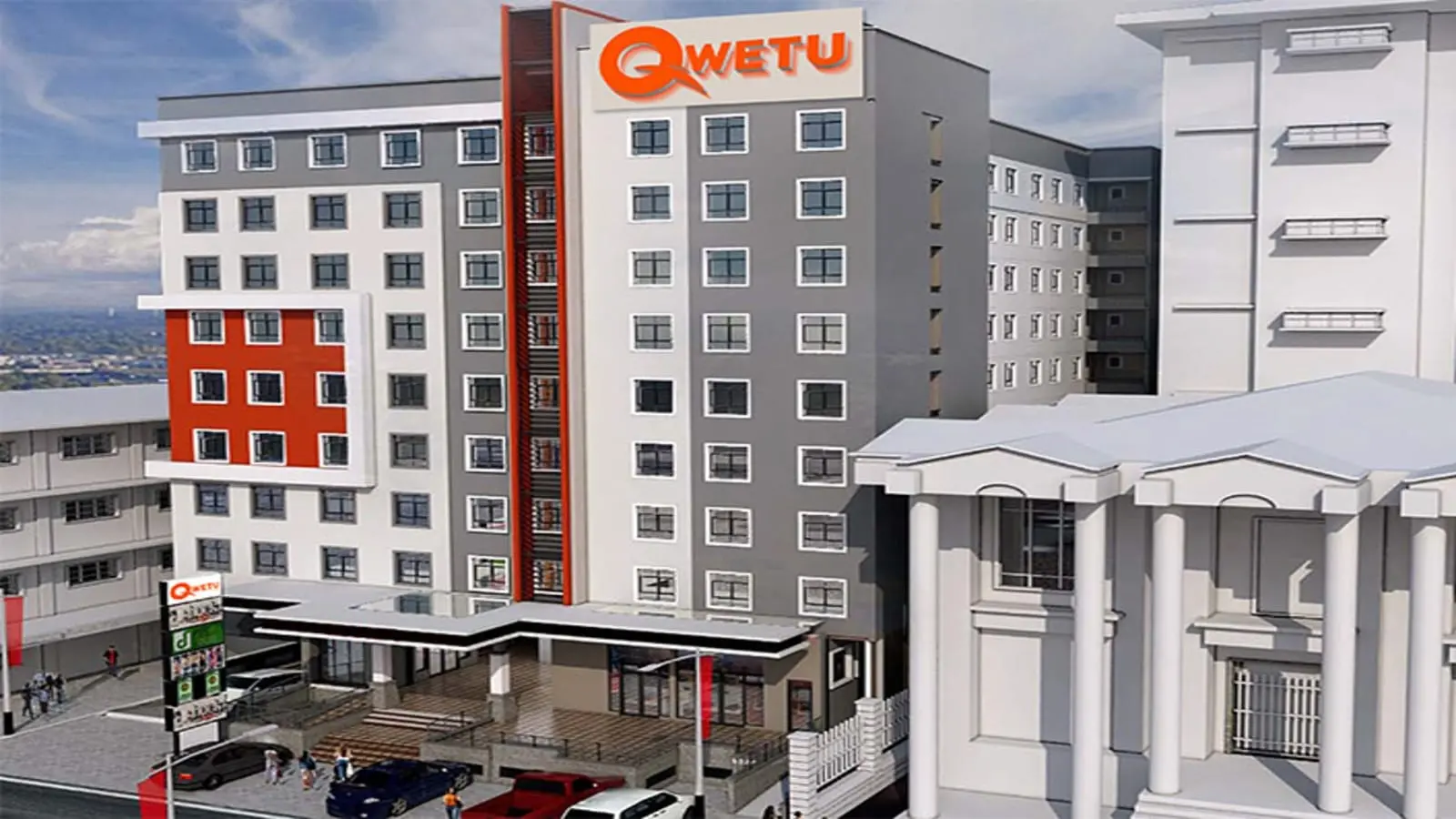
The two funds operate in tandem but serve different investment profiles. The D-REIT is the development vehicle: it borrows funds — typically in a 65% debt, 35% equity mix — to finance the construction of new student hostels near universities. Once a hostel is completed and stabilised, the D-REIT sells it to the I-REIT and uses the proceeds to repay its construction debt. The I-REIT then holds the completed properties — branded under the premium Qwetu and affordable Qejani labels — and generates income from rent and utilities, which is distributed as dividends to unit holders. Both trade on the NSE’s Unquoted Securities Platform, an over-the-counter segment that allows institutional and accredited retail investors to transact without the instrument being formally listed on the main board.
The I-REIT has 330.29 million units in issue, while the D-REIT has 226.25 million units. At the I-REIT’s current closing price of KSh 23.24, total I-REIT market capitalisation stands at approximately KSh 7.68 billion — a substantial figure for a fund that launched at KSh 20 per unit just five years ago.
Financial Performance: Consistent Profit Growth
The surge in trading volumes today follows a track record of improving financial performance across both REITs. In the half year to June 2025, Acorn reported a combined net profit growth of 32.2% to KSh 456.63 million across the two funds. The I-REIT led this growth, with net profit jumping 53% to KSh 251.63 million, while the D-REIT posted a 13% increase to KSh 205 million. The D-REIT’s strong result was driven by a 78% increase in fair value gains on investments, reaching KSh 634.6 million, coming from completed properties including Qejani at Hurlingham, Qwetu and Qejani at Kenyatta University, and Qejani in Juja.
On the I-REIT side, the Kenyan Wall Street reported that net profit rose 54% to KSh 252 million in HY2025, with Net Asset Value (NAV) per unit rising to KSh 21.02. Occupancy at flagship properties was strong: Qwetu WilsonView and Qwetu Aberdare Heights posted 98% and 97% occupancy respectively, with operating margins above 60% across all assets. The I-REIT managed 4,403 beds across four properties with a blended occupancy rate of 94% — a metric that reflects the structural demand underpinning the entire portfolio.
As a result of the I-REIT’s strong performance, Acorn declared an interim dividend of KSh 0.29 per unit to its investors, backed by distributable income of KSh 95.78 million. That distribution continues a streak: since inception in 2021, the ASA I-REIT has delivered nine consecutive half-year distributions to its approximately 7,300 unit holders, a consistency that few alternative investment products in Kenya can match.
Debt Optimisation: The I-REIT’s Financial Efficiency Drive
One of the most consequential operational developments for the I-REIT’s future earnings has been an aggressive deleveraging and refinancing strategy. The fund has cut its total debt from KSh 2.5 billion to KSh 1.9 billion, while the effective weighted interest rate on its debt was reduced from 17% at the end of 2024 to 11.1% as of July 2025. This is a remarkable 590 basis point reduction in borrowing costs achieved in a single year — savings that flow directly into distributable income and, ultimately, into investors’ pockets.
This debt optimisation has been partly enabled by the Central Bank of Kenya’s monetary easing cycle, which has brought the policy rate down to 8.75% as of February 2026. As interest rates have fallen across the economy, Acorn has been able to refinance existing obligations at meaningfully lower rates, turning the macroeconomic environment into a tangible balance sheet advantage. Acorn’s executive director Mathew Maina noted that the REITs remain on course to deliver improved returns in 2025, driven by debt optimisation, project delivery, and increasing occupancy.
The I-REIT also achieved a significant milestone in 2023 when it completed the full redemption of its KSh 5.7 billion corporate bond, a five-year medium term note issued in November 2019 that had financed the construction of hostels in Chiromo, Hurlingham, Karen, Thika Road (USIU), and Madaraka. That successful bond redemption removed a significant near-term liability and demonstrated Acorn’s ability to execute complex capital recycling within a regulated REIT framework.
The Portfolio: 99 University Partnerships and ~20,000 Beds
The financial numbers draw strength from an on-the-ground property portfolio that continues to expand in both scale and institutional depth. Acorn’s student housing assets operate under two distinct brands. Qwetu is the premium offering — fully serviced, modern residences situated near top universities and designed for students seeking a high-quality living environment. Qejani, by contrast, is the affordable variant, providing budget-conscious students with clean, safe, and well-located accommodation at lower price points.
As of mid-2025, the combined D-REIT and I-REIT portfolio spans approximately 20,000 beds across Kenya under these two brands, making Acorn the largest Purpose-Built Student Accommodation (PBSA) provider on the African continent. Key I-REIT properties include Qwetu USIU, Qwetu Parklands, Qwetu Chiromo, Qwetu Bogani in Karen, and Qwetu Hurlingham, as well as Qejani Juja, Qejani USIU, Qejani Karen, and Qejani Nairobi West.
Critically, the I-REIT has moved beyond just owning properties to building a network of institutional relationships that underpin occupancy stability. It has established partnerships with 99 institutions of higher learning as of 2025, up from 92 at the start of the year. These alliances — which span universities, polytechnics, and colleges — create a pipeline of students who are directed to Qwetu and Qejani properties, reducing vacancy risk and stabilising rent income. Business Watch reported that these partnerships position the I-REIT as a preferred student housing provider, with occupancy rates above 90% at flagship properties, directly benefiting the fund’s approximately 7,300 registered unit holders.
The D-REIT’s development pipeline extends this story geographically. It has started construction of a 2,100-bed hostel in Eldoret’s central business district and is acquiring land in Kakamega to serve students from Masinde Muliro University of Science and Technology. These moves into Tier 2 university towns signal that Acorn’s geographic strategy is no longer limited to Nairobi, and that Kenya’s student housing deficit is being addressed on a national basis.
Context is everything. While you follow today’s updates, use the Serrari Market Index and Marketplace to spot emerging shifts. Need to sharpen your edge? Our Wealth Builder Course turns these insights into a professional-grade strategy.
The Build-to-Rent D-REIT: Acorn’s New Frontier
In January 2026, Acorn took a significant step beyond student housing when it received CMA approval for a KSh 2.2 billion Build-to-Rent D-REIT targeting affordable urban rental accommodation for young professionals aged 20 to 30. This new instrument — separate from the existing ASA D-REIT — aims to address a well-documented gap in Nairobi’s rental housing market for young workers who have graduated from university but cannot afford to purchase property.
Global multilateral organisations and the Private Infrastructure Development Group (PIDG) have committed KSh 1.3 billion in equity to the Build-to-Rent D-REIT, while Shelter Afrique Development Bank has pledged an additional USD 2 million (approximately KSh 258 million). PIDG’s Head of Investment Management, Claire Jarratt, described the initiative as one that will enable young urbanites to live closer to their workplaces while simultaneously helping develop Kenya’s domestic capital markets and unlocking further capital for scaling housing access across the city.
CEO Edwin Kirathe called the Build-to-Rent D-REIT a major milestone in Acorn’s mission to provide urban Africa with sustainable rental housing. The new product deepens Acorn’s footprint across the entire housing lifecycle — from student beds to young professional rentals — and suggests that the capital markets infrastructure built around student housing is now being leveraged for a broader affordable housing mandate.
Retail Access: Vuka Democratises the REIT
A critical enabler of today’s trading volume surge is the growing accessibility of Acorn’s REITs to retail investors. Through Vuka — Kenya’s first regulated, tech-enabled real estate investment platform — individuals can now invest in the ASA I-REIT from as little as KSh 500, becoming in effect fractional landlords in the Qwetu and Qejani student housing network. The Vuka Imara portfolio, which targets a 7%+ annual return, invests 100% of its funds into the ASA I-REIT, offering stable income, low volatility, and capital preservation.
Vuka Prime, the platform’s second portfolio, combines stable rental income with capital growth from the D-REIT’s development activities, providing investors with a blended return profile. Both portfolios enjoy capital gains tax exemptions, with dividends subject to only a 5% withholding tax — a highly competitive tax treatment compared to alternative asset classes, including bank deposits, equities, and even government bonds.
The Serrari Group noted that the combination of falling interest rates, improved financial technology, and a pipeline of new REIT listings is creating conditions for a structural expansion of the REIT asset class in Kenya. Vuka is at the centre of that democratisation story, widening the investor base from institutional-only to include the mass retail segment.
Kenya’s REIT Market: The Bigger Picture
Acorn’s REITs do not exist in isolation — they are part of a rapidly evolving REIT ecosystem that is attracting new instruments and new capital. Kenya’s total REIT market capitalisation has grown from KSh 9.8 billion in 2021 to KSh 24.6 billion by early 2026, nearly tripling in five years. The currently listed REITs on the NSE include the Acorn D-REIT, Acorn I-REIT, LapTrust Imara I-REIT, and the recently debuted Africa Logistics Properties (ALP) REIT — which achieved a subscription rate of 98.5% at its March 11, 2026 listing and made history as both East Africa’s first industrial REIT and the first US dollar-denominated security listed on the NSE.
Further deepening the pipeline, the KSh 5 billion TRIFIC Income REIT — backed by rental income from the fully-occupied North Tower within the Two Rivers International Finance and Innovation Centre Special Economic Zone — is expected to list in the first half of 2026, pending regulatory approval.
Data from the REIT Association of Kenya shows that the Kenya REITs Price Only Index and the Kenya REITs Total Index have outperformed the NSE All-Share Index in three of the past five years, making REITs a compelling alternative for yield-seeking investors. Crispus Kamau, Executive Director at Sterling Investment Bank, noted that continued expansion of REITs into specialised assets — affordable housing, industrial formats, and student accommodation — means investors are likely to get consistently higher returns than those currently achievable in traditional real estate or fixed income.
The structural demand driver for Acorn’s student housing product remains firmly intact. At the time of the REITs’ launch in 2021, Kenya had approximately 550,000 students enrolled in universities against a bed capacity of just 40,000 — a chronic shortage that has only widened as tertiary enrolment has grown. With Kenya’s median age at 18 years and 75% of the population under 35, the demographic runway for purpose-built student accommodation is long and well-defined.
Why Today’s Volume Surge Is Significant
The volume surge in Acorn’s REITs on March 19 is not occurring in a vacuum. It sits within a context of falling interest rates, a maturing REIT market, and growing retail participation through platforms like Vuka. For investors who have been benchmarking alternatives to the 91-day T-bill — now at 7.56% — a REIT targeting 7%+ annual returns with tax-exempt capital gains begins to look increasingly competitive, particularly given the additional upside from property appreciation and the structural security of an income-generating, regulated real estate portfolio.
The I-REIT’s closing price of KSh 23.24 represents a meaningful premium over the KSh 20 inception price, even as unit prices have fluctuated since the fund’s 2021 launch. For context, Acorn’s D-REIT and I-REIT traded at KSh 25.4 and KSh 22.2 per unit respectively as of January 2025, representing gains of 27% and 11% from their KSh 20 inception prices. Today’s I-REIT closing price of KSh 23.24 reflects incremental recovery from the January 2025 reading, signalling gradual unit price appreciation alongside the income distributions.
For the approximately 7,300 unit holders who currently participate in Acorn’s REIT ecosystem, the message from today’s trading session is clear: institutional confidence in these instruments is growing, retail access is deepening, and the underlying property portfolio continues to generate stable, high-occupancy income in a market where student housing demand remains structurally undersupplied. Whether measured by bed count, dividend consistency, university partnerships, or portfolio expansion into new cities, Acorn’s student REITs are making a compelling case for why purpose-built student accommodation belongs in a well-diversified Kenyan investment portfolio.
Your financial future isn’t something you wait for—it’s something you build.
The real question is: when do you begin?
Move beyond simply staying informed.
Navigate the markets with clarity—track trends through the Serrari Group Market Index, uncover opportunities in the Serrari Marketplace, and build practical knowledge with our Curated Wealth Builder Course.
Stay connected to what truly matters.
Get daily insights on macro trends and financial movements across Kenya, Africa, and global markets—delivered through the Serrari Newsletter.
Growth opens doors.
Advance your career through professional programs including ACCA, HESI A2, ATI TEAS 7 , HESI EXIT , NCLEX – RN and NCLEX – PN, Financial Literacy!🌟—designed to move you forward with confidence.
See where money is flowing—clearly and in real time.
Track Money Market Funds, Treasury Bills, Treasury Bonds, Green Bonds, and Fixed Deposits, alongside global and African indexes, key economic indicators, and the evolving Crypto and stablecoin landscape—all within Serrari’s Market Index.
Photo Source: Google
By: Montel Kamau
Serrari Financial Analyst
19th March, 2026
Article, Financial and News Disclaimer
The Value of a Financial Advisor
While this article offers valuable insights, it is essential to recognize that personal finance can be highly complex and unique to each individual. A financial advisor provides professional expertise and personalized guidance to help you make well-informed decisions tailored to your specific circumstances and goals.
Beyond offering knowledge, a financial advisor serves as a trusted partner to help you stay disciplined, avoid common pitfalls, and remain focused on your long-term objectives. Their perspective and experience can complement your own efforts, enhancing your financial well-being and ensuring a more confident approach to managing your finances.
Disclaimer: This article is for informational purposes only and does not constitute financial advice. Readers are encouraged to consult a licensed financial advisor to obtain guidance specific to their financial situation.
Article and News Disclaimer
The information provided on www.serrarigroup.com is for general informational purposes only. While we strive to keep the information up to date and accurate, we make no representations or warranties of any kind, express or implied, about the completeness, accuracy, reliability, suitability, or availability with respect to the website or the information, products, services, or related graphics contained on the website for any purpose. Any reliance you place on such information is therefore strictly at your own risk.
www.serrarigroup.com is not responsible for any errors or omissions, or for the results obtained from the use of this information. All information on the website is provided on an as-is basis, with no guarantee of completeness, accuracy, timeliness, or of the results obtained from the use of this information, and without warranty of any kind, express or implied, including but not limited to warranties of performance, merchantability, and fitness for a particular purpose.
In no event will www.serrarigroup.com be liable to you or anyone else for any decision made or action taken in reliance on the information provided on the website or for any consequential, special, or similar damages, even if advised of the possibility of such damages.
The articles, news, and information presented on www.serrarigroup.com reflect the opinions of the respective authors and contributors and do not necessarily represent the views of the website or its management. Any views or opinions expressed are solely those of the individual authors and do not represent the website's views or opinions as a whole.
The content on www.serrarigroup.com may include links to external websites, which are provided for convenience and informational purposes only. We have no control over the nature, content, and availability of those sites. The inclusion of any links does not necessarily imply a recommendation or endorsement of the views expressed within them.
Every effort is made to keep the website up and running smoothly. However, www.serrarigroup.com takes no responsibility for, and will not be liable for, the website being temporarily unavailable due to technical issues beyond our control.
Please note that laws, regulations, and information can change rapidly, and we advise you to conduct further research and seek professional advice when necessary.
By using www.serrarigroup.com, you agree to this disclaimer and its terms. If you do not agree with this disclaimer, please do not use the website.
www.serrarigroup.com, reserves the right to update, modify, or remove any part of this disclaimer without prior notice. It is your responsibility to review this disclaimer periodically for changes.
Serrari Group 2025