The Private Infrastructure Development Group (PIDG) has committed €4.3 million to Afreenergy Solar to scale solar and battery solutions for commercial and industrial businesses in Senegal. The investment targets the expansion of distributed renewable energy systems that improve electricity reliability, reduce costs, and support clean energy adoption. By combining infrastructure deployment with flexible financing models, the initiative also positions the platform for expansion across West and Central Africa.
Key Overview
- PIDG invests €4.3 million to scale solar and battery solutions in Senegal.
- The project targets commercial and industrial (C&I) energy users.
- Plans include 30 MW solar capacity and 10 MWh battery storage.
- Uses flexible financing models (PPAs, lease-to-own) to drive adoption.
The Private Infrastructure Development Group (PIDG) has committed €4.3 million to support the expansion of Afreenergy Solar, a specialized clean energy platform focused on providing solar and battery solutions to commercial and industrial customers in Senegal.
The investment was announced during the Future of Energy Summit held in Amsterdam and was made through PIDG’s project development arm, InfraCo.
The funding marks an important step in scaling renewable energy solutions for businesses that rely heavily on consistent and affordable electricity. By supporting Afreenergy Solar’s growth, PIDG aims to accelerate access to reliable power while contributing to broader climate and development goals.
Beyond its immediate impact in Senegal, the investment also lays the foundation for Afreenergy Solar to expand its clean energy platform into selected markets across West and Central Africa, regions where businesses continue to face significant electricity supply challenges.
Markets move fast; don’t get left behind. We’ve paired the Serrari Group Market Index with a curated Marketplace and a comprehensive Wealth Builder Course to ensure you have the data—and the skills—to act on it.
Scaling Solar and Battery Infrastructure for Businesses
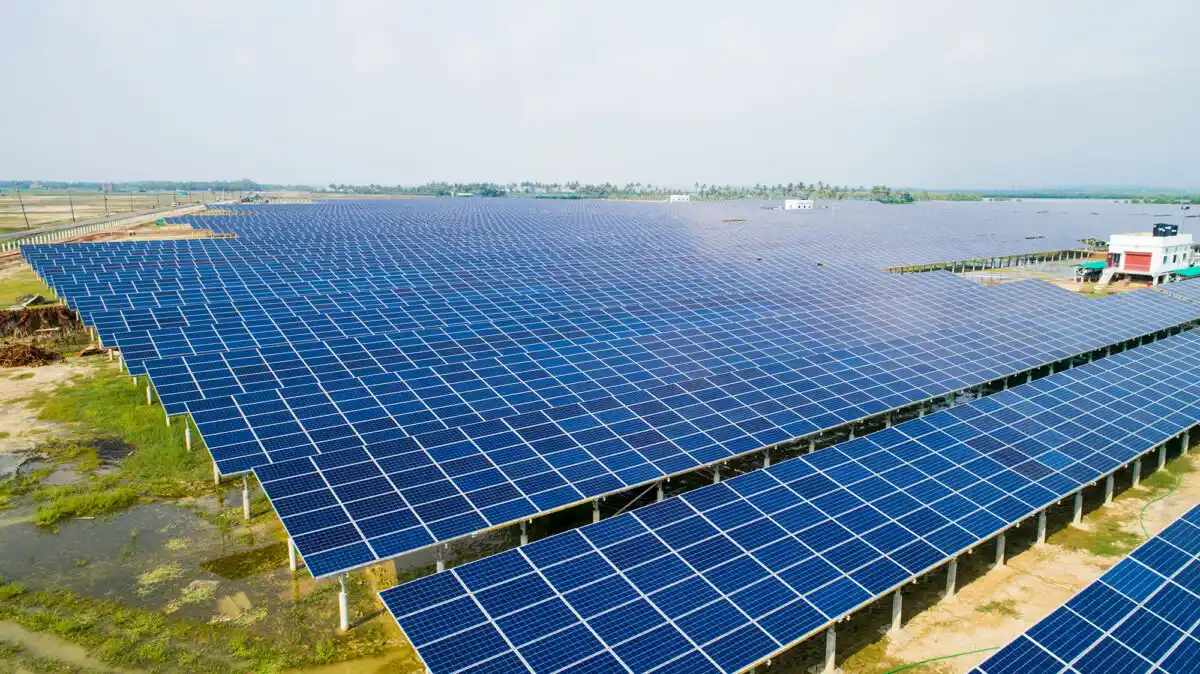
With the new funding in place, Afreenergy Solar plans to significantly expand its clean energy platform. The project will support the development of up to 30 megawatts (MW) of solar power capacity alongside 10 megawatt-hours (MWh) of battery energy storage systems (BESS).
These installations will be rolled out in two phases, allowing the company to gradually build capacity while meeting growing demand from commercial and industrial clients.
The integrated solar-and-storage model is designed to provide companies with reliable on-site energy generation. Solar panels will produce electricity during the day, while battery storage systems will capture excess energy for use during periods of low solar output or power interruptions.
For businesses that rely on uninterrupted electricity to maintain operations, this combination can provide a crucial layer of energy security.
Serving Energy-Intensive Sectors
Afreenergy Solar plans to work with companies across several sectors where energy demand is particularly high. These include:
- Agro-industrial processing facilities
- Logistics and distribution companies
- Manufacturing operations
- Other energy-intensive commercial activities
By targeting these industries, the company hopes to support businesses that are most affected by power reliability challenges.
The platform’s strategy involves aggregating multiple client sites, allowing Afreenergy Solar to deploy solar installations across a network of facilities rather than focusing on single locations. This approach reduces the cost of each installation and enables economies of scale that make solar energy more financially viable for participating businesses.
Flexible Energy Models for Customers
One of the key features of Afreenergy Solar’s offering is the use of flexible financing and ownership structures that make renewable energy easier for businesses to adopt.
Instead of requiring companies to make large upfront investments in solar infrastructure, the platform offers solutions through:
- Lease-to-own arrangements, where customers gradually pay for the system and eventually own it
- Offtake agreements or power purchase agreements (PPAs), where businesses pay for the electricity generated rather than the equipment itself
These models help reduce the financial barriers that often prevent companies from investing in renewable energy technologies.
By spreading costs over time, businesses can transition to solar power while maintaining financial flexibility.
Lower Energy Costs and Improved Reliability
Beyond improving energy security, the solar and battery systems developed by Afreenergy Solar are expected to deliver meaningful cost savings.
According to the company, businesses using its solutions could see energy costs reduced by as much as 30 percent compared with relying solely on the national electricity grid.
Such savings can be significant for commercial and industrial operators, particularly in sectors where electricity represents a major operational expense.
At the same time, on-site solar generation helps reduce exposure to power outages or fluctuations in electricity supply, allowing companies to maintain production schedules and improve operational resilience.
Leadership Perspective: Building a Scalable Clean Energy Platform
For Afreenergy Solar’s leadership, the investment represents more than just financial backing—it provides the resources needed to build a scalable clean energy platform.
According to Christian Cachat, Chief Executive Officer of Afreenergy Solar, the partnership with PIDG will enable the company to accelerate its growth in Senegal while preparing for expansion into other markets.
“This transaction gives Afreenergy Solar the means to scale a specialised C&I clean energy platform in Senegal, while laying the foundations for disciplined expansion over time,” Cachat said.
He emphasized that the company’s priority is to deliver practical and bankable renewable energy solutions that address the real operational needs of businesses.
“Our focus is on delivering practical, bankable solar and storage solutions that help businesses secure more reliable power, lower energy costs and strengthen operational resilience,” he added.
Cachat also noted that Senegal represents a particularly attractive market for the company’s model.
“Senegal is a priority market for us and a strong base for future scale.”
PIDG’s Role in Climate and Infrastructure Finance
The investment also reflects the broader strategy of PIDG to mobilize infrastructure financing that supports both economic development and climate action.
Through its project development arm InfraCo, PIDG provides early-stage funding that helps infrastructure projects move from concept to implementation.
This type of financing is particularly important in emerging markets, where projects often struggle to secure funding during their initial development stages.
According to Omar Jabri, Head of Business Development for Africa at InfraCo, the partnership highlights the role infrastructure finance can play in accelerating the transition to cleaner energy.
“We are excited to work with Afreenergy Solar to scale access to reliable, clean energy for Senegal’s commercial and industrial customers,” Jabri said.
“PIDG is committed to getting infrastructure finance moving and multiplying to accelerate action on climate change and to deliver sustainable development outcomes.”
He added that the investment demonstrates how infrastructure finance can support economic growth while simultaneously reducing emissions.
“The Afreenergy Solar transaction epitomises this work, facilitating sustainable economic growth whilst driving down emissions.”
Context is everything. While you follow today’s updates, use the Serrari Group Market Index and Marketplace to spot emerging shifts. Need to sharpen your edge? Our Wealth Builder Course turns these insights into a professional-grade strategy.
Addressing Energy Challenges in Sub-Saharan Africa
Reliable electricity remains a major challenge for many businesses across sub-Saharan Africa.
According to enterprise surveys conducted by the World Bank, approximately 39 percent of firms identify electricity access as a major constraint to their operations.
Power outages, limited grid coverage, and fluctuating electricity supply can disrupt production processes and increase operational costs.
As a result, many businesses rely heavily on diesel generators to ensure a stable power supply.
While diesel generators provide a reliable backup solution, they come with several disadvantages:
- High and volatile fuel costs
- Exposure to fuel supply disruptions
- Significant carbon emissions
Solar energy combined with battery storage offers an alternative that can address many of these challenges while supporting long-term sustainability goals.
Supporting Senegal’s Renewable Energy Targets
The expansion of Afreenergy Solar’s platform also aligns with Senegal’s national energy transition strategy.
The government aims to increase the share of renewable energy in the country’s electricity mix to 40 percent by 2030.
This target is part of Senegal’s €2.5 billion Just Energy Transition Partnership (JETP) agreement signed with G7 member countries in 2024.
By supporting the development of distributed solar power for commercial and industrial users, the Afreenergy Solar project contributes to these national objectives.
Such initiatives help diversify the energy mix while reducing dependence on fossil fuels.
PIDG’s Growing Presence in Senegal
The latest investment also reflects PIDG’s expanding presence in Senegal’s energy sector.
The organization is involved in several projects across the country, including renewable energy and electric mobility initiatives.
Among these investments is Walo Solar, an on-grid solar power facility combined with battery storage.
The project received support from the Emerging Africa and Asia Infrastructure Fund, a debt financing vehicle associated with PIDG.
These initiatives demonstrate the organization’s broader commitment to strengthening clean energy infrastructure in Senegal.
Previous Expansion of Afreenergy Solar
The new investment builds on Afreenergy Solar’s earlier expansion efforts in the country.
In July 2024, the company acquired a portfolio of three rooftop solar plants from the company GreenYellow.
The installations have a combined capacity of 2.6 megawatts peak (MWp) and supply electricity for self-consumption by commercial and industrial customers.
The acquisition provided the company with operational assets and experience in delivering solar power directly to businesses.
With PIDG’s investment, Afreenergy Solar now aims to significantly scale this model.
Catalysing Private Investment in Clean Energy
Once the platform reaches full operational scale, Afreenergy Solar is expected to attract additional private capital into the commercial and industrial solar sector.
Early-stage investment from organizations such as PIDG often helps demonstrate the viability of new business models, making them more attractive to institutional investors and infrastructure funds.
As more capital flows into the sector, the availability of renewable energy solutions for businesses could expand rapidly.
This would not only accelerate the adoption of clean energy technologies but also help strengthen energy security across the region.
Regional Expansion Across West and Central Africa
Although Senegal is the immediate focus of the project, Afreenergy Solar ultimately plans to extend its operations beyond the country.
The company sees potential opportunities in West and Central African markets, where demand for reliable electricity continues to grow alongside expanding industrial activity.
By establishing a successful model in Senegal, the company hopes to replicate its approach in other markets facing similar energy challenges.
This regional expansion strategy could help build a broader network of distributed solar projects serving commercial and industrial clients.
Outlook: A Growing Role for Solar in Africa’s Energy Future
The €4.3 million investment from PIDG marks an important milestone for Afreenergy Solar as it scales its clean energy platform in Senegal.
With plans to deploy 30 MW of solar capacity and 10 MWh of battery storage, the project represents a significant step toward expanding reliable renewable energy solutions for businesses.
If successful, the platform could demonstrate how distributed solar systems combined with flexible financing models can help companies reduce energy costs while improving reliability.
Beyond Senegal, the initiative could also serve as a template for expanding commercial and industrial solar solutions across West and Central Africa, helping attract further investment into the region’s growing renewable energy sector.
As African economies continue to industrialize and demand for electricity rises, projects like this highlight the increasing role that solar power and energy storage will play in building resilient and sustainable energy systems.
Your financial future isn’t something you wait for—it’s something you build.
The real question is: when do you begin?
Move beyond simply staying informed.
Navigate the markets with clarity—track trends through the Serrari Group Market Index, uncover opportunities in the Serrari Marketplace, and build practical knowledge with our Curated Wealth Builder Course.
Stay connected to what truly matters.
Get daily insights on macro trends and financial movements across Kenya, Africa, and global markets—delivered through the Serrari Newsletter.
Growth opens doors.
Advance your career through professional programs including ACCA, HESI A2, ATI TEAS 7 , HESI EXIT , NCLEX – RN and NCLEX – PN, Financial Literacy!🌟—designed to move you forward with confidence.
See where money is flowing—clearly and in real time.
Track Money Market Funds, Treasury Bills, Treasury Bonds, Green Bonds, and Fixed Deposits, alongside global and African indexes, key economic indicators, and the evolving Crypto and stablecoin landscape—all within Serrari’s Market Index.