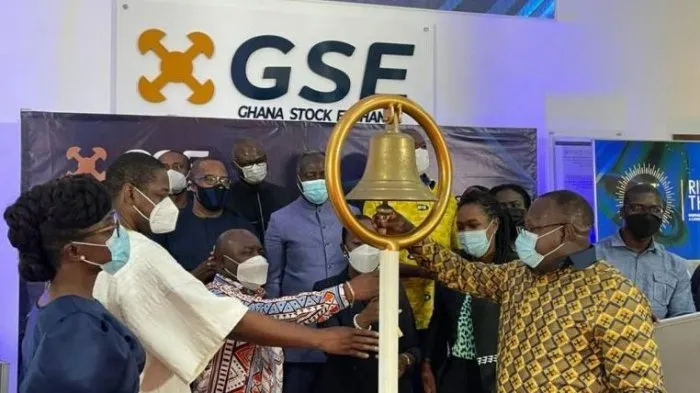
At a time when global financial markets have been shaken by geopolitical tensions and widespread selloffs, Ghana’s equity market has emerged as a striking outlier. While many economies have struggled under the weight of uncertainty linked to the Iran conflict and rising energy prices, the Ghana Stock Exchange (GSE) has delivered one of the most remarkable performances in the world.
The GSE Composite Index surged nearly 20% in U.S. dollar terms since late February, driven by a powerful combination of rising oil prices and an exceptionally strong banking sector rally. Over this period, the market recorded an extraordinary 41-session winning streak, a rare feat in any equity market, before the rally finally paused on March 19.
In a global environment where only a handful of markets have managed to post gains, Ghana’s performance stands out not just for its magnitude, but for what it reveals about shifting capital flows, sectoral dynamics, and investor sentiment in emerging markets.
Markets move fast; don’t get left behind. We’ve paired the Serrari Group Market Index with a curated Marketplace and a comprehensive Wealth Builder Course to ensure you have the data—and the skills—to act on it.
A Rally Against the Odds
The timing of Ghana’s market surge is particularly noteworthy.
Globally, financial markets have been under pressure following heightened tensions involving Iran, which have raised concerns about energy supply disruptions and broader economic instability. Many major indices have recorded declines, reflecting investor caution and a shift toward risk aversion.
Out of 92 global stock indices tracked by Bloomberg, only twelve managed to post gains in March, highlighting the widespread nature of the downturn. Among those few outperformers, Ghana has taken the lead, with Norway trailing behind at a comparatively modest 6.5% increase.
This divergence raises an important question: why is Ghana moving in the opposite direction of global markets?
The Dual Engine: Oil and Banking Stocks
The answer lies in a powerful combination of sectoral forces.
The first driver of the rally has been the energy sector. As geopolitical tensions pushed oil prices higher, companies linked to the oil industry experienced significant gains. Ghana Oil Company (GOIL), for example, saw its stock price rise by approximately 75% since the onset of the conflict, benefiting directly from the surge in energy prices.
However, the more dominant force behind the rally has been the banking sector.
Several financial institutions have delivered exceptional returns. Republic Bank Ghana rose by 126%, more than doubling in value. Standard Chartered Bank Ghana and Ecobank Transnational Incorporated also posted gains of around 100%, reflecting strong investor confidence in the sector.
This performance suggests that the rally is not merely a reaction to external factors like oil prices, but also a reflection of domestic economic conditions—particularly within the financial system.
Understanding the Banking Sector Surge
The strength of Ghana’s banking stocks can be linked to several underlying factors.
In a high-interest-rate environment, banks often benefit from widening net interest margins (NIMs)—the difference between the interest they earn on loans and the interest they pay on deposits. As rates rise, this margin can expand, boosting profitability.
At the same time, expectations of economic stabilization and improved credit conditions may be contributing to investor optimism. If banks are perceived as better positioned to manage risks and generate earnings, their stock prices tend to reflect that confidence.
The rally in banking stocks, therefore, is not just about short-term gains—it signals a broader shift in how investors view the sector’s prospects.
Context is everything. While you follow today’s updates, use the Serrari Group Market Index and Marketplace to spot emerging shifts. Need to sharpen your edge? Our Wealth Builder Course turns these insights into a professional-grade strategy.
A Market Moving Against Global Trends
What makes Ghana’s performance particularly compelling is its contrast with global market behavior.
During periods of geopolitical uncertainty, investors typically reduce exposure to emerging markets, which are often seen as higher risk. Capital flows tend to move toward safer assets, leading to declines in equity markets across developing economies.
Yet Ghana has defied this pattern.
The country’s stock market has not only resisted the global downturn but has also delivered substantial gains. This suggests that local factors—such as sectoral strength, investor positioning, and market structure—are playing a more significant role than global sentiment.
It also highlights the possibility that certain emerging markets can decouple from global trends under the right conditions.
Why This Matters
The implications of Ghana’s rally extend beyond the immediate gains in stock prices.
For investors, it demonstrates that opportunities can exist even in challenging global environments. Markets are not monolithic, and localized dynamics can create pockets of outperformance.
For policymakers, the rally reflects the importance of maintaining stable financial systems and fostering sectors that can attract investment. Strong banking performance, in particular, plays a critical role in supporting economic activity and investor confidence.
At a broader level, Ghana’s performance challenges the assumption that emerging markets are uniformly vulnerable to global shocks. Instead, it suggests a more nuanced reality, where individual markets can respond differently based on their internal conditions.
Risks and Challenges
Despite the impressive gains, several risks could affect the sustainability of the rally.
One of the most immediate concerns is valuation risk. Rapid price increases can push stocks beyond their fundamental value, increasing the likelihood of corrections.
There is also concentration risk. The rally has been heavily driven by specific sectors—particularly banking and oil. If these sectors experience downturns, the overall market could be significantly impacted.
Another important factor is external dependency. While oil prices have supported the rally, they are inherently volatile and influenced by geopolitical developments. A decline in oil prices could reverse some of the gains seen in energy-related stocks.
Currency risk must also be considered. Although the index has gained nearly 20% in dollar terms, fluctuations in the Ghanaian cedi could influence returns for international investors.
Finally, there is the broader issue of market liquidity. Emerging markets often have lower trading volumes, which can amplify price movements and increase volatility.
A Critical Perspective: Momentum or Structural Shift?
The key question facing investors is whether this rally represents a sustainable trend or a temporary surge driven by specific conditions.
On one hand, the strong performance of banking stocks and the benefits of high oil prices suggest that there are underlying fundamentals supporting the market.
On the other hand, the speed and magnitude of the rally raise concerns about momentum-driven investing. When markets rise rapidly, there is a risk that prices become disconnected from long-term fundamentals.
Understanding this balance will be crucial in determining the next phase of the market.
Looking Ahead: What Comes Next for Ghana’s Market
The future trajectory of the Ghana Stock Exchange will depend on several factors.
If oil prices remain elevated and banking sector performance continues to improve, the market could maintain its upward momentum. Continued investor confidence and stable economic conditions would further support this trend.
However, global developments will also play a role. Changes in geopolitical tensions, shifts in monetary policy, and fluctuations in commodity prices could all influence market dynamics.
For investors, the key will be to monitor both local and global indicators, recognizing that the factors driving the current rally may evolve over time.
Conclusion
Ghana’s stock market rally is a powerful example of how local dynamics can override global trends. In a period marked by uncertainty and widespread declines, the GSE has delivered exceptional performance, driven by strong gains in banking and energy sectors.
While the rally highlights significant opportunities, it also comes with risks that cannot be ignored. The sustainability of these gains will depend on a complex interplay of factors, including sector performance, global conditions, and investor sentiment.
As markets continue to navigate an uncertain landscape, Ghana’s experience serves as both an opportunity and a cautionary tale—reminding investors that while outperformance is possible, it must always be viewed through the lens of risk and long-term fundamentals.
Your financial future isn’t something you wait for, it’s something you build.
The real question is: when do you begin?
Move beyond simply staying informed.
Navigate the markets with clarity—track trends through the Serrari Group Market Index, uncover opportunities in the Serrari Marketplace, and build practical knowledge with our Curated Wealth Builder Course.
Stay connected to what truly matters.
Get daily insights on macro trends and financial movements across Kenya, Africa, and global markets—delivered through the Serrari Newsletter.
Growth opens doors.
Advance your career through professional programs including ACCA, HESI A2, ATI TEAS 7 , HESI EXIT , NCLEX – RN and NCLEX – PN, Financial Literacy!🌟—designed to move you forward with confidence.
See where money is flowing—clearly and in real time.
Track Money Market Funds, Treasury Bills, Treasury Bonds, Green Bonds, and Fixed Deposits, alongside global and African indexes, key economic indicators, and the evolving Crypto and stablecoin landscape—all within Serrari’s Market Index.