The Federal Reserve’s Hawkish Holding Pattern
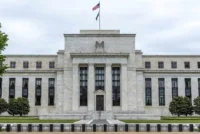
On March 18, 2026, the Federal Reserve announced its monetary policy decision following a two-day meeting of the Federal Open Market Committee. The central bank decided to maintain the federal funds rate target at its existing 5.25-5.50% range, a decision that aligned with market expectations but whose accompanying messaging proved more significant than the rate decision itself. The Fed’s statement and economic projections provided little encouragement to those banking on near-term rate reductions, instead suggesting that inflation dynamics warranted sustained monetary restraint.
The Fed’s decision to hold rates steady came amid mixed economic data and persistent inflation concerns. While some economic indicators suggested moderating growth, others pointed to resilience in employment and consumer spending that made aggressive rate cuts seem premature. The central bank’s written statement reflected this uncertainty, maintaining language about the risks to both inflation and employment while avoiding explicit commitments to future rate reductions.
Critically, the Fed’s economic projections suggested that committee members anticipated only one rate cut through the remainder of 2026. This forecast represented a substantial decline in expected rate cuts compared to market expectations that had been prevalent in late 2025 and early 2026, when investors had anticipated multiple cuts throughout the year. The gap between what markets had been pricing and what the Fed signaled created an immediate and painful adjustment in equity valuations.
Markets move fast; don’t get left behind. We’ve paired the Serrari Group Market Index with a curated Marketplace and a comprehensive Wealth Builder Course to ensure you have the data—and the skills—to act on it.
Market Expectations Meet Fed Reality
In the period preceding the March 18 Federal Reserve announcement, equity markets had been pricing in a scenario of gradual rate reductions beginning in the spring or early summer of 2026. Investors had hypothesized that the Fed would respond to moderating inflation by cutting rates, thereby providing fuel for equity valuations that depend on lower discount rates to justify current prices. This optimistic scenario had contributed to relatively buoyant equity performance during the first two months of 2026.
The Fed’s cautious stance and projection of only one rate cut for the entire year effectively dismantled this narrative. The meeting’s messaging signaled that the central bank was in no rush to abandon its restrictive monetary stance. From the Fed’s perspective, inflation remained a concern worthy of elevated caution, and only if economic data deteriorated substantially would the Fed feel comfortable beginning to reduce rates.
This messaging created an immediate repricing in equity markets, particularly among the most rate-sensitive sectors and companies. Technology stocks, which had led the market rally in the initial months of 2026, faced particularly sharp selling pressure. The high growth rates and long-duration cash flows that make tech stocks attractive when interest rates are falling become significantly less appealing when the prospect of rate cuts recedes. The market’s reaction on March 18-19 reflected this fundamental reassessment of relative valuations.
The Nasdaq’s Particular Vulnerability
The Nasdaq Composite Index, which is heavily weighted toward technology and high-growth companies, experienced sharper declines than the broader S&P 500 in the wake of the Fed announcement and subsequent energy market volatility. The structural composition of the index—concentrating significant weight in companies with elevated valuations that depend on favorable interest rate environments—made it particularly vulnerable to the kind of repricing that the Fed decision triggered.
Major technology stocks, including companies in cloud computing, semiconductor manufacturing, and artificial intelligence infrastructure, all experienced meaningful selloffs. These companies had accumulated substantial share price gains during the initial months of 2026 based on enthusiasm about AI opportunities and assumptions of declining interest rates. The Fed’s hawkish hold effectively pulled the rug out from under these assumptions.
The Nasdaq’s decline continued beyond March 20 as additional negative catalysts emerged. The spike in Treasury yields to 4.39% on the 10-year, driven by energy market volatility and inflation concerns, further deteriorated the relative appeal of high-growth technology companies. The combination of the Fed’s cautious stance and rising long-term interest rates created a double headwind for the index.
Energy Volatility Compounds the Weakness
The energy market shocks that drove up Treasury yields and mortgage rates on March 20 created additional headwinds for equities beyond the direct impact of rising interest rates. When crude oil prices surge, investors become concerned about inflationary consequences that might prompt the Fed to maintain or even increase its rate-holding stance. The energy market volatility that materialized during the week following the Fed announcement reinforced the message that inflation remained a meaningful concern.
Higher energy prices also impact corporate profit margins across many sectors of the economy. When oil prices rise sharply, transportation, manufacturing, and chemical companies face increased input costs. These margin compression concerns trigger selling pressure on industrial and consumer discretionary stocks. The energy shocks of March 20 therefore created selling pressure across multiple sectors, not just in interest-rate-sensitive technology names.
The relationship between energy prices and equity valuations operates through complex channels. On one hand, higher oil prices benefit energy sector companies whose profitability is tied to commodity prices. On the other hand, broadly higher energy costs pressure the broader market’s profitability and increase uncertainty about the inflation and monetary policy outlook. In the March 2026 episode, the negative effects on equity valuations from inflation concerns and interest rate implications substantially exceeded any positive impact on energy sector profits.
The Super Micro Scandal Accelerates Selling
The criminal charges against Super Micro Computer executives on March 20 added another significant negative catalyst to the already-deteriorating equity market backdrop. The shocking allegations of systematic export control violations by a leading artificial intelligence infrastructure provider triggered immediate reassessment of risk profiles across the tech sector. Super Micro’s 28% plunge on the day reflected the severity of the scandal, but the broader market impact extended well beyond the individual stock.
The scandal raised questions about governance standards and regulatory compliance across the technology industry more broadly. Investors began asking whether similar issues might exist at other technology companies. This loss of confidence created a contagion effect, with selling pressure spreading across semiconductor manufacturers, AI infrastructure providers, and other companies dependent on exports of sensitive technologies.
The Super Micro case proved particularly damaging to market sentiment because it was so unexpected and involved such a respected company. Super Micro had been viewed as a beneficiary of the AI infrastructure boom, and the criminal charges suggested that investors’ faith in company management and governance might be misplaced. This realization triggered broader portfolio reassessment among institutional investors.
Context is everything. While you follow today’s updates, use the Serrari Group Market Index and Marketplace to spot emerging shifts. Need to sharpen your edge? Our Wealth Builder Course turns these insights into a professional-grade strategy.
Risk Asset Rotation and Portfolio Rebalancing
The combination of factors—Fed hawkishness, rising Treasury yields, energy market volatility, and the Super Micro scandal—triggered systematic selling pressure in equity markets that extended across multiple trading sessions. Beginning immediately after the Fed announcement on March 18, portfolio managers began rotating capital away from riskier, higher-beta equity positions toward more defensive alternatives.
The selling dynamic exhibited classic characteristics of a risk-off environment. Technology and discretionary consumer stocks, which typically exhibit beta values well above 1.0, faced disproportionate selling pressure. Conversely, more defensive sectors including utilities, healthcare, and consumer staples experienced more modest declines. Bond prices also benefited from the risk-off dynamics, as investors shifted capital into safer fixed-income positions despite the recent rise in Treasury yields.
The S&P 500’s decline proved more moderate than the Nasdaq’s, reflecting the index’s greater exposure to more defensive and less rate-sensitive business models. While both indices declined meaningfully, the relative weakness in the Nasdaq reflected the concentration of rate-sensitive and high-growth companies within that index.
Valuation Reassessment and Price Discovery
The March 2026 selloff in equities represented a significant repricing that reflected changing expectations for corporate profitability, economic growth, and financial conditions. The initial months of 2026 had seen equity valuations expand on the assumption that rates would decline and that the Fed would provide monetary support for economic growth. The Fed’s March 18 decision destroyed this assumption, requiring investors to reassess what reasonable equity valuations should be in an environment of sustained high interest rates.
Forward price-to-earnings ratios on major equity indices compressed significantly during the March 20-21 period as share prices fell. This repricing occurred even as corporate earnings forecasts were revised downward only modestly, indicating that the primary driver was a change in the multiple that investors were willing to pay for a given level of earnings. This multiple compression reflected the impact of higher discount rates on equity valuations.
The Broader Economic Implications
The sharp selloff in equity markets starting from the Fed announcement raised questions about the broader economic outlook. Stock market declines can trigger negative wealth effects, as households with exposure to equities see their net worth decline. These wealth effects can potentially translate into reduced consumer spending, which in turn can weaken economic growth prospects.
Additionally, the market decline raised questions about financial stability. If equity market stress persisted and deepened, some institutional investors with leverage or margin positions might face forced selling. The financial system had experienced instability in previous episodes when equity market stress combined with leverage to create systemic vulnerabilities.
Sector-Specific Implications
Beyond the broad-based market decline, the March 2026 selling triggered by the Fed announcement and subsequent catalysts created distinct implications for specific sectors. The technology sector, which had driven much of the market’s performance in early 2026, faced the sharpest repricing. Companies with expensive valuations and long-duration growth expectations experienced substantial share price declines.
Financial sector stocks, which theoretically benefit from higher interest rates through wider lending margins, showed mixed performance. While some bank stocks exhibited resilience, others fell as investor concerns about credit quality and economic slowdown offset the potential benefits of wider net interest margins. Insurance companies, which hold large portfolios of fixed-income securities, faced mark-to-market losses as bond values declined with the rise in Treasury yields.
Market Outlook and Forward Expectations
As of March 21, 2026, equity markets were pricing in a scenario of sustained high interest rates, continued inflation concerns, and weakening economic growth. The confluence of Fed hawkishness, energy market shocks, and the Super Micro scandal had generated a fundamental reassessment of market conditions. The question facing investors in the days and weeks following the March 20 selloff centered on whether the sharp repricing represented an appropriate adjustment to new realities, or whether the selling would prove excessive and create subsequent buying opportunities.
Historical precedent suggested that sharp equity market declines following shifts in monetary policy could eventually stabilize once investors became accustomed to the new interest rate environment. However, if economic growth subsequently deteriorated materially or if inflation surprises continued to emerge, the March 2026 selloff could prove to be merely the opening phase of a more sustained bear market. The balance between these scenarios would depend critically on the path of inflation, Fed policy decisions, and economic data in the months ahead.
The market’s weakness through March 21 reflected genuine uncertainty about these critical variables. Investors were grappling with the realization that the benign scenario of declining rates and supportive monetary conditions that had animated markets in early 2026 was no longer plausible, at least in the near to intermediate term. The adjustment from that optimistic scenario to the new reality of sustained rate constraints and inflation concerns drove the equity market weakness that characterized the second half of March 2026.
Your financial future isn’t something you wait for—it’s something you build.
The real question is: when do you begin?
Move beyond simply staying informed.
Navigate the markets with clarity—track trends through the Serrari Group Market Index, uncover opportunities in the Serrari Marketplace, and build practical knowledge with our Curated Wealth Builder Course.
Stay connected to what truly matters.
Get daily insights on macro trends and financial movements across Kenya, Africa, and global markets—delivered through the Serrari Newsletter.
Growth opens doors.
Advance your career through professional programs including ACCA, HESI A2, ATI TEAS 7 , HESI EXIT , NCLEX – RN and NCLEX – PN, Financial Literacy!🌟—designed to move you forward with confidence.
See where money is flowing—clearly and in real time.
Track Money Market Funds, Treasury Bills, Treasury Bonds, Green Bonds, and Fixed Deposits, alongside global and African indexes, key economic indicators, and the evolving Crypto and stablecoin landscape—all within Serrari’s Market Index.