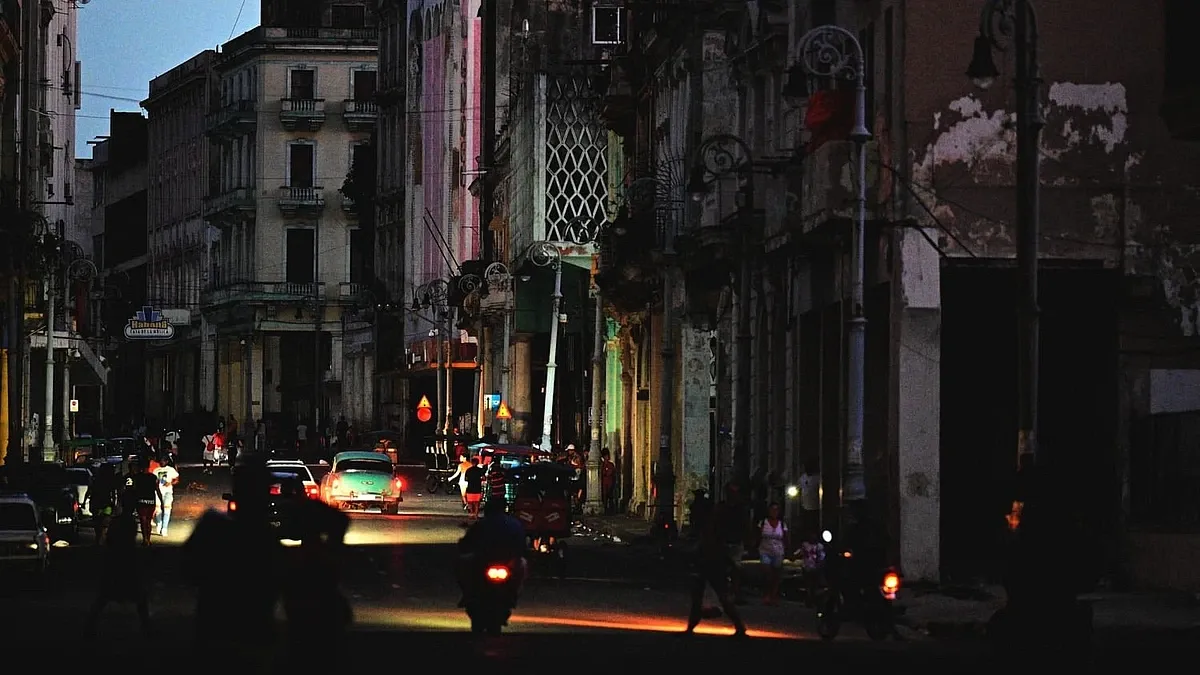
On Monday, March 16, 2026, Cuba’s national electricity grid suffered a complete collapse, plunging the island nation of roughly 10 million people into total darkness. The Ministry of Energy and Mines confirmed a “complete disconnection” of the electrical system on social media, noting that no failures had been detected in the units operating at the time the grid went down. It was the third major blackout in just four months — and the most significant since the United States effectively cut off the flow of oil to the island.
This latest blackout is not merely a technical failure. It is the culmination of decades of infrastructure neglect, a crippling fuel shortage, intensifying U.S. economic pressure, and a government struggling to keep an aging power system alive. For millions of Cubans, it means spoiled food, darkened hospitals, stalled transportation, and a daily existence defined by uncertainty.
Markets move fast; don’t get left behind. We’ve paired the Serrari Group Market Index with a curated Marketplace and a comprehensive Financial Literacy Course to ensure you have the data—and the skills—to act on it.
A Grid on Life Support
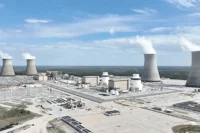
Cuba’s electrical infrastructure has been deteriorating for years. The island’s thermoelectric plants — the backbone of its power generation — are decades old and well past their intended service life. William LeoGrande, a professor at American University who has studied Cuba extensively, told the Associated Press that the grid has not been properly maintained and its infrastructure is “way past its normal useful life.” He praised the technicians keeping the system running as “magicians,” given the state of the equipment they work with.
The problems have compounded rapidly. A massive outage roughly a week earlier had already knocked out power across two-thirds of the country, largely in the centre and west, following a breakdown at the Antonio Guiteras power plant — the island’s largest generating facility. Another major blackout struck western Cuba in early December 2025. In 2025, the country also suffered a catastrophic grid failure that left the entire nation without electricity for days.
Lázaro Guerra, the electricity director at the Ministry of Energy and Mines, told state media on Monday night that technicians were attempting to restart several thermoelectric plants. He cautioned that restoration had to proceed gradually to avoid setbacks, explaining that weakened systems are far more vulnerable to repeated failures. By late Monday, state media reported that crews had managed to restore power to roughly five percent of Havana’s residents — approximately 42,000 customers — along with several hospitals across the island. Officials said they would prioritise the communications sector next, while warning that even the small circuits restored thus far could fail again.
The underlying problem, however, extends far beyond aging equipment. LeoGrande noted that the thermoelectric plants have been burning heavy oil with high sulphur content, which corrodes the equipment and accelerates deterioration. The Cuban government, meanwhile, lacks the hard currency needed to import spare parts or upgrade any part of the grid. LeoGrande described the situation as “a perfect storm of collapse.”
The Oil Blockade
The immediate trigger for the crisis is a severe fuel shortage. Cuban President Miguel Díaz-Canel confirmed on Friday, March 13, that the island had not received oil shipments in more than three months and was relying on a combination of solar power, natural gas, and its remaining thermoelectric capacity.
The disruption of Cuba’s oil supply traces back to January 2026, when the United States launched a military operation in Venezuela that resulted in the capture of then-President Nicolás Maduro. Venezuela had long been Cuba’s most important foreign oil supplier, and the seizure of Maduro effectively severed that lifeline overnight.
Shortly after, President Donald Trump signed an executive order threatening tariffs against any country that directly or indirectly sells or provides oil to Cuba. The order had an immediate chilling effect: Mexico, another key supplier, announced it would stop supplying oil to Cuba. Russia, while publicly condemning the blockade, has offered little more than symbolic support. According to Reuters, Cuba has received only two small vessels carrying oil imports in all of 2026.
On Monday, prior to the blackout, the system was already operating under extreme strain. Official data from the state-run electrical utility showed that at 6:00 a.m., electricity availability stood at just 1,140 megawatts against a demand of 2,347 megawatts — a deficit of more than half the country’s needs.
Cuba does produce roughly 40 percent of its own petroleum, but domestic output is low-grade and insufficient to power the island’s grid on its own. Without reliable imports, the country has been forced into a daily cycle of rolling blackouts that in some areas have lasted up to 20 hours.
A Humanitarian Emergency
The energy crisis has cascading effects that touch every aspect of Cuban life. Food spoils rapidly without refrigeration. Water pumps stop during outages. Garbage trucks lack the fuel to make collections, and uncollected waste is piling up in city streets, raising the risk of disease.
For ordinary Cubans, the situation is unbearable. Tomás David Velázquez Felipe, a 61-year-old Havana resident, told the Associated Press that the relentless outages make him believe anyone who can leave the island should. Mercedes Velázquez, a 71-year-old, said she recently gave away fresh soup to neighbours before it went bad, lamenting that “everything goes bad.”
The healthcare system is under particular strain. Cuba’s Health Minister, José Ángel Portal Miranda, has said that more than 96,000 patients are on surgical waiting lists, including over 11,000 children. Power outages lasting up to 20 hours have forced hospitals to suspend non-urgent surgeries and limit diagnostics, as X-ray machines, ultrasound equipment, and CT scanners sit idle without stable electricity. In some facilities, doctors have been forced to rely entirely on traditional clinical examination methods. Díaz-Canel himself acknowledged that the government has had to postpone surgeries for tens of thousands of people.
The island’s airports have also been affected. Flights carrying vital supplies have reportedly stopped because Havana is no longer able to refuel departing aircraft, further isolating the country.
Patients rely on informal chat groups to purchase medicines on the black market at prices up to 50 times higher than their official cost. Families are reported to be bringing their own supplies to hospitals. The Pan American Health Organization has flagged the elevated risk of communicable disease outbreaks due to extended flooding, lack of access to clean water, and poor hygiene in shelters.
Protests and Social Unrest
The grinding crisis has fuelled rare public dissent in a country where protest carries serious risk. On the night of March 13, residents of the central Cuban city of Morón took to the streets in what began as a peaceful rally against power cuts and food shortages. The demonstration escalated into violence in the early hours of Saturday morning, with protesters attacking the local Communist Party headquarters, breaking windows, and setting furniture on fire.
Videos shared on social media showed crowds chanting “Libertad” — “Freedom” — in the darkness. According to the state-run newspaper Invasor, what initially began as a peaceful exchange with authorities turned into vandalism directed at the party building, a pharmacy, and a government market. Authorities said five people were arrested. Morón was also a focal point during the July 11, 2021 anti-government protests, the largest demonstrations in Cuba since Fidel Castro’s 1959 revolution.
In the preceding week, residents across multiple neighbourhoods in Havana had been banging pots at night as a sign of discontent. University students staged a sit-in on the steps of the University of Havana to protest the suspension of in-person classes, caused by fuel shortages that have made transportation nearly impossible.
Rights groups have warned against any external efforts to use the worsening living conditions as a tool for cultivating political dissent.
Context is everything. While you follow today’s updates, use the Serrari Market Index and Marketplace to spot emerging shifts. Need to sharpen your edge? Our Financial Literacy Course turns these insights into a professional-grade strategy.
Trump’s “Friendly Takeover”
As Cuba’s crisis deepened, President Trump escalated his rhetoric. On Monday, he told reporters at the White House that he believed he would have “the honor of taking Cuba,” describing it as a very weakened nation. His comments echoed earlier suggestions of a “friendly takeover” of the island.
The Trump administration has framed its approach as leverage for political change. Washington is demanding that Cuba release political prisoners and move toward political and economic liberalisation in exchange for a lifting of sanctions. According to NPR, the administration is also seeking Díaz-Canel’s departure from power, though sources familiar with the talks did not specify who Washington would prefer to see replace him.
Cuban Deputy Foreign Minister Carlos Fernández de Cossío responded sharply on Monday, saying officials in Washington “must be feeling very happy by the harm caused to every Cuban family,” according to CNN.
Despite the tensions, both sides have acknowledged that talks are underway. Díaz-Canel confirmed on Friday that Cuba was holding discussions with the U.S. government. On March 12, the government announced the release of 51 prisoners as what appeared to be a goodwill gesture, though it remained unclear how many were political detainees.
International Response
The crisis has prompted a modest international response. Canada announced $8 million in food aid to be delivered through the World Food Programme and UNICEF. Canadian Foreign Affairs Minister Anita Anand said the government had not consulted Washington before making the decision, emphasising that it reflected independent Canadian foreign policy.
Mexico dispatched two navy vessels carrying 1,193 tonnes of humanitarian supplies. Russia’s Deputy Prime Minister Alexander Novak said Moscow was discussing the possibility of providing fuel to Cuba, though concrete shipments have not materialised. The United States itself offered $6 million in humanitarian aid earlier in the year, stipulating that it be distributed through intermediaries such as the Catholic Church rather than the Cuban government.
Critics have noted that these efforts, while welcome, fall far short of what is needed. Canada’s National Observer argued that Ottawa’s $8 million package was thin compared to its support for other crises, pointing out that Canada has provided at least $25.5 billion in aid to Ukraine since 2022.
China and the Solar Gamble
Amid the darkness, one development offers a glimmer of hope. With Chinese support, Cuba has embarked on one of the most rapid renewable energy transitions undertaken by any developing nation. Over the past 12 months, Cuba’s solar power share has tripled from 5.8 percent to over 20 percent of total electricity generation, driven by 49 new solar parks connected to the grid with Chinese financing and equipment.
China has committed to building 92 solar parks by 2028 with a combined capacity of approximately 2,000 megawatts — nearly matching Cuba’s entire current fossil fuel generation capacity. In February 2026, solar energy accounted for 38 percent of electricity generation during daytime hours. However, Cuba’s peak demand occurs between 7 and 8 p.m., after the sun sets, and the country cannot yet afford the battery storage needed to bridge that gap.
In addition to large-scale solar parks, China has provided 10,000 solar panel kits for individual homes and public buildings, along with 5,000 systems for critical facilities including maternity homes, nursing homes, and emergency rooms. Following Monday’s blackout, Chinese Ambassador Hua Xin reaffirmed that Beijing would expand energy cooperation with Cuba, particularly in solar power development.
The challenge remains enormous. The estimated cost of imported equipment alone exceeds $1.5 billion, a staggering sum for a country facing acute fiscal constraints. Cuba’s Prime Minister Manuel Marrero Cruz has suggested repayment would come through shipments of crude oil and nickel.
What Comes Next
LeoGrande has warned that if Cuba drastically reduces consumption and expands renewables, it may be able to struggle along for a time without oil shipments. But the price would be immense: constant misery for the general population, a potential economic collapse, social chaos, and mass migration.
For now, Cuba sits at a crossroads. Talks with Washington continue, but the terms being demanded — political liberalisation, the release of prisoners, and potentially the removal of Díaz-Canel himself — would represent a fundamental transformation of the Cuban state. Whether the government is willing to make such concessions, or whether the pressure will instead fuel further unrest and migration, remains the defining question of the island’s immediate future.
As Havana resident Dayana Machin told CNN, civilians should prepare themselves “with wood-burning stoves, with solar panels for those who could get them, with some water reserves.” It is a survival playbook for a nation in the dark — waiting, with no certainty about when the lights will come back on.
Don’t just read the news—navigate it. Track trends with the Serrari Group Market Index, discover your next move in the Serrari Marketplace, and master the “how” with our Financial Literacy Course.
Photo Source: Google
By: Montel Kamau
Serrari Financial Analyst
17th March, 2026